Why "Which Crystal Do I Need?" Is Harder Than It Looks
You have probably arrived here in one of two ways. Either you are standing in front of a wall of tumbled stones and bracelets, drawn to five of them at once, and you cannot explain why any single one should come home with you. Or you have a specific feeling you want to work with—a need for calm before a big transition, more focus during a demanding season, a sense of protection when life feels exposed—and you want a stone that matches that feeling rather than a pretty object that sits in a drawer.
Both situations are normal, and neither requires you to already "know" crystals. The shelves are designed to overwhelm; every stone has a story, a color, and a claimed benefit, and when everything looks meaningful, nothing stands out. The most reliable way through is not to memorize dozens of stones. It is to start from your intention and work backward to the crystal.
This guide walks you through a simple three-question method, then goes further: how to match an intention to a family of stones, how to choose an individual piece, what to look for in quality and sizing, realistic price expectations, and how to care for what you buy. We also separate what the tradition claims from what we can actually verify—because a trustworthy crystal practice should be honest about both.
The Problem: Too Many Beautiful Choices
Walk into any crystal shop and the shelves all but shout for attention. When every stone looks meaningful, choosing can feel like guessing—and a stone chosen purely for color may not match what you actually want to work on. The reliable shortcut is to start not from the crystal, but from the intention. A stone you chose because it was the prettiest on the tray is a decoration. A stone you chose because it connects to something you are actively working on becomes a daily reminder—a physical anchor you can hold, wear, or place where you will see it.
Step One: Name One Intention
Before looking at a single stone, finish this sentence: "Right now, I want more ______." Common answers include calm, focus, protection, confidence, love, or a sense of being grounded. One clear intention beats a vague wish for "good energy," because it gives you a filter for every choice that follows.
A few practical notes on naming your intention well:
- Keep it to one. If you list five things, you will end up buying five stones and using none of them deliberately. Pick the one that feels most urgent this month.
- Make it about you, not an outcome. "I want to feel steadier during this job search" is workable. "I want this stone to get me the job" is not something any stone can promise—and framing it that way sets you up for disappointment.
- Be honest about the season. A stone for grief and a stone for celebration are different choices. Name what is actually true right now, not what you wish were true.
Write your sentence down. It becomes the reference point for everything below.
Step Two: Match the Intention to a Family of Stones
You do not need to know every crystal. You need to know which family of stones is traditionally associated with your intention, then choose within it. These groupings reflect long-standing folk and spiritual traditions—not clinical claims.
| Your intention | Traditional stone family | Good starting pieces |
|---|---|---|
| Calm, rest, quieting a busy mind | Amethyst, moonstone, aquamarine | Amethyst bracelet, raw amethyst cluster, aquamarine necklace |
| Focus, clarity, concentration | Clear quartz, fluorite | Clear quartz pendant, fluorite bracelet |
| Protection and grounding | Black tourmaline, obsidian | Black tourmaline bracelet, obsidian pendant |
| Confidence, courage, motivation | Tiger's eye, carnelian, citrine | Tiger's eye bracelet, carnelian bracelet |
| Love and self-compassion | Rose quartz, rhodonite | Rose quartz bracelet or pendant, rhodonite ring |
| Intuition and new beginnings | Moonstone, labradorite | Moonstone bracelet, labradorite bracelet |
| Wisdom and clear communication | Lapis lazuli, aquamarine | Lapis lazuli pendant, aquamarine necklace |
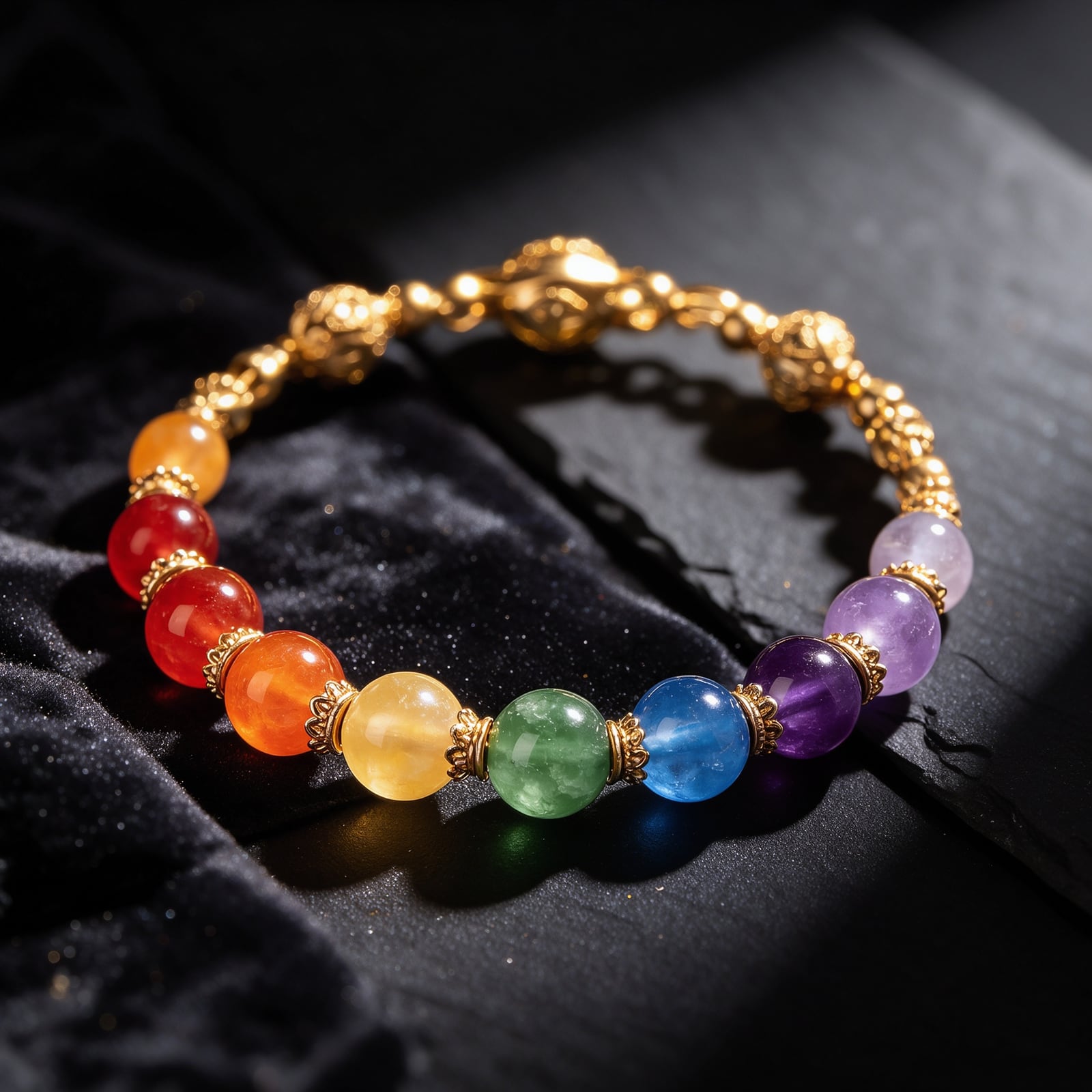
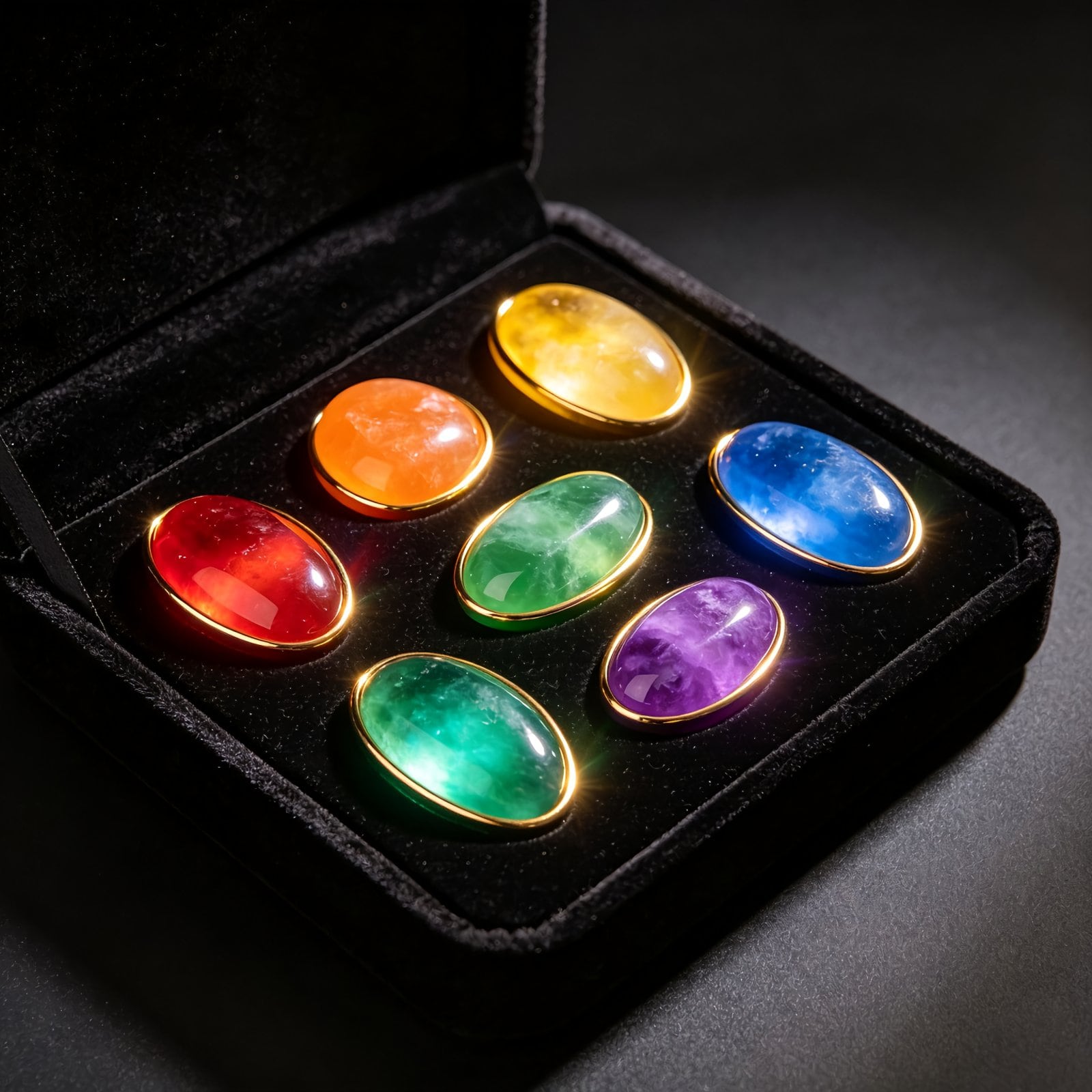
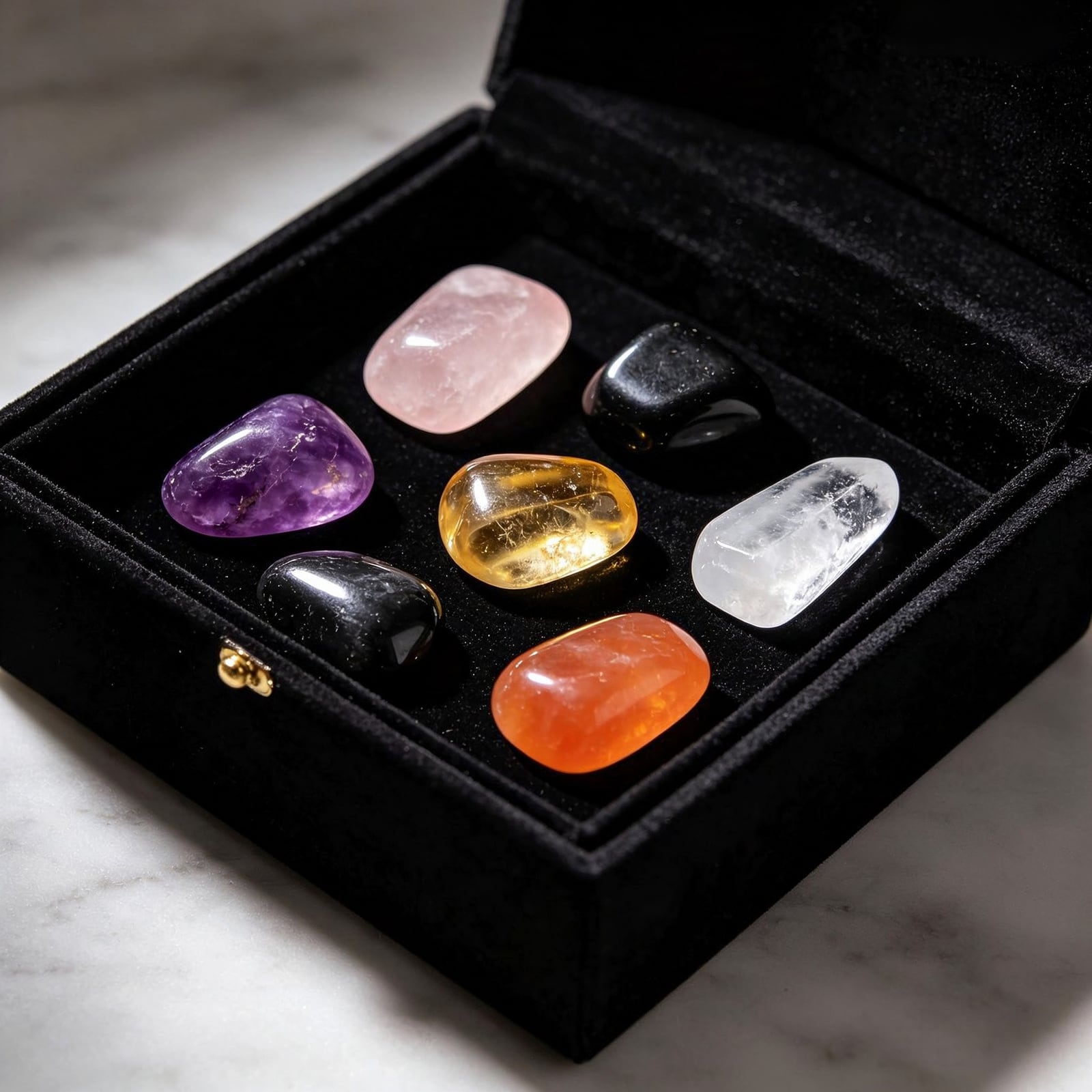
If your intention does not fit neatly into one row—or you want a little of everything—a balanced set like the 7 Chakra Balancing Bracelet or the 7 Chakra Stone Set covers the traditional chakra correspondences in one purchase. For a first purchase where you are still learning what you are drawn to, the Healing Crystal Starter Kit lets you meet several families at once, with a guide to help you tell them apart.
Step Three: Let a Stone "Catch" You
Within the right family, notice the piece you return to. Practitioners often describe a stone that feels right in the hand or keeps drawing the eye. Intention narrows the field; attraction picks the individual piece. This is not mystical gatekeeping—it is simply how attention works. If you keep drifting back to one bracelet, that is useful information about what you are ready to focus on.
When you are comparing pieces, use this checklist:
- Color and clarity: Look for even color and natural variation. Perfectly uniform, glassy stones at a very low price are often dyed glass or reconstituted material—be suspicious of "too perfect."
- Weight and temperature: Real stone feels cool at first touch and has heft for its size. Plastic and resin feel warm and light.
- Surface: Natural stones have small inclusions, veining, and tiny imperfections. Those are usually a sign of authenticity, not a defect.
- Fit (for jewelry): Measure your wrist with a soft tape before ordering a bracelet. A beaded bracelet should sit snug but not tight—typically about 0.5 inch (1.25 cm) larger than your wrist measurement. Rings should match your usual ring size; check the product page for the sizing scale used.
- Setting and hardware: For pendants, confirm the metal (sterling silver, gold-plated, etc.) and the chain length. Gold-plated means a layer over a base metal—fine for occasional wear, but it will wear over time.
The traditional view, and what is verifiable
Crystal traditions are old and worth respecting, but they are not the same as measurable fact. Here is an honest split.
What the tradition says
In folk and spiritual practice, stones are traditionally associated with qualities like calm, protection, clarity, and love. Amethyst is believed to support a quieter mind; black tourmaline is believed to ground and shield; rose quartz is traditionally associated with the heart and self-compassion. These are meaningful frameworks for reflection and ritual—they may support your own intention-setting—but they are not diagnoses or treatments, and no stone can promise love, wealth, or exam results. A crystal invites you to slow down and pay attention; what you do with that attention is yours.
What we can verify
What is measurable is the stone itself: its hardness, how it reacts to water and sunlight, and how to keep it looking good. This is where a lot of well-meaning advice goes wrong.
- Hardness (Mohs scale): Quartz-family stones (clear quartz, amethyst, citrine, rose quartz) sit around 7, which is durable for daily wear but can still scratch softer materials. Selenite is very soft (about 2) and scratches easily—keep it away from other stones in a bag. Fluorite is around 4 and chips with knocks. Obsidian is roughly 5–5.5 and fractures rather than scratches.
- Water sensitivity: Selenite dissolves and damages in water—never soak it; "cleanse" it with sound or moonlight instead. Lapis lazuli and malachite dislike prolonged soaking. Quartz and amethyst tolerate a quick rinse, but prolonged sun exposure can fade amethyst's color.
- Sunlight: Amethyst, rose quartz, and fluorite can fade with long direct sun. Store them away from a bright windowsill.
- Cleaning: A soft dry or slightly damp cloth is enough for most pieces. Avoid ultrasonic cleaners and harsh chemicals on plated metals and porous stones.
Crystals are for reflection and are not medical devices. They do not diagnose, treat, cure, or prevent any condition.
How to Choose in Practice: Bracelet, Pendant, or Cluster?
Form matters as much as stone, because the piece you actually use is the one that fits your life.
- Bracelets are the most wearable and the easiest to keep in contact with your skin throughout the day. Good for calm (amethyst), grounding (black tourmaline), confidence (tiger's eye), and intuition (labradorite or moonstone).
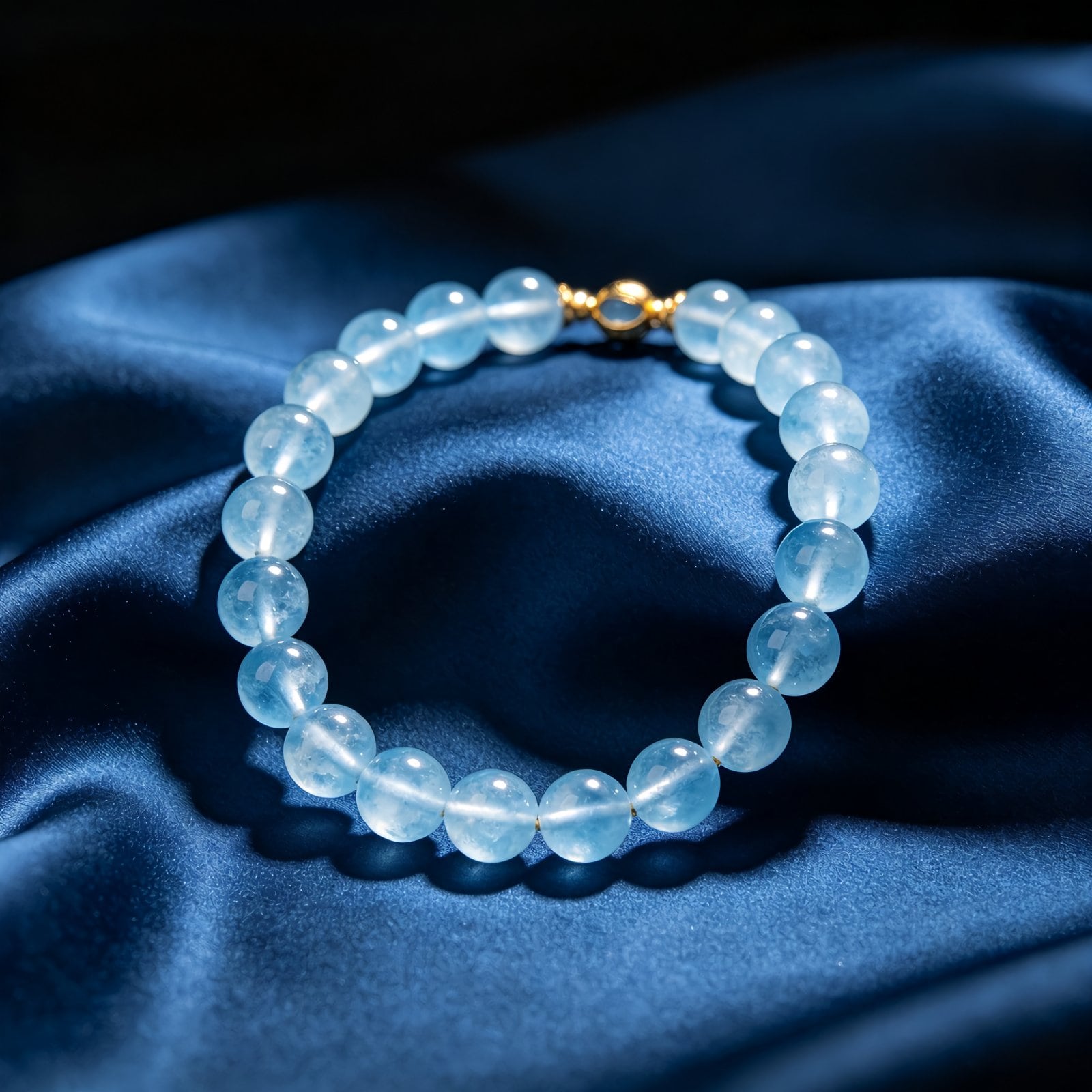
- Pendants sit close to the heart or throat and suit intentions about communication and inner steadiness—an Aquamarine Serenity Necklace for calm communication, or a Lapis Lazuli Wisdom Pendant for considered speech.
- Clusters and wands are for a space rather than a body—an altar, a desk, a bedside table. A Raw Amethyst Cluster suits a meditation corner; a Selenite Cleansing Wand is traditionally used to "clear" other stones (remember: keep selenite dry).
- Rings are a small, constant reminder—a Rhodonite Heart Ring for self-forgiveness work is a gentle, everyday choice.
If you want to keep it simple, choose the form you will actually wear or see every day. A stone in a drawer does nothing for your intention.
Realistic Expectations: Price, Quality, and What "Authentic" Means
Crystal pricing varies enormously, and it helps to know roughly what you are paying for. Beaded bracelets of common stones typically run from about $20 to $60; pendants with sterling silver or gold-plated settings usually fall in the $30 to $90 range; raw clusters and larger display pieces can run from $25 into the low hundreds depending on size and quality. Rare stones and large, clean specimens cost more. If a price seems impossibly low for a "rare" stone, it usually is.
There is no universal certification for "genuine" crystals the way there is for, say, diamonds. What you can do is buy from sellers who describe the stone honestly, show real photos of the actual piece, and do not overpromise. Treat any claim of guaranteed healing, guaranteed luck, or guaranteed results as a red flag—no honest seller can promise those.
The Shortcut: A Free Three-Question Reading
If choosing still feels uncertain, you do not have to do it alone. The Dao Compass combines your intention with a simple casting and the Five Elements to suggest a specific stone. It is built for exactly this moment—when you know you want support but cannot yet name the crystal. The free Dao Compass reading asks three short questions about your intention and suggests a matching crystal and hexagram. You can see your result without entering an email, and choose either a quick self-guided answer or a deeper, personally guided practice.
When Browsing Is Enough—and When It Is Not
Browsing works well when your goal is general and you enjoy the process. A personalized reading earns its place when the situation feels specific or tangled—a career decision, a transition, repeated patterns—and you want someone to read the details and, if you wish, hand-select a stone for you. If you would rather have your situation read personally, explore the personalized crystal readings: a written Digital Energy Report, or a hand-selected Crystal Prescription that includes a physical stone chosen for your intention. Everything is delivered by email, so there are no calls to schedule.
Frequently Asked Questions
How do I know which crystal I need?
Start by naming one intention, match it to a traditional stone family, then choose the individual piece you feel drawn to. A free three-question reading can do the matching for you when you are unsure.
What is the best first crystal for a beginner?
Clear quartz is a versatile, amplifying first stone, and amethyst is a gentle choice for calm; choosing by your current intention is more reliable than picking a "most popular" stone.
How should I care for and "cleanse" my crystal?
Keep most stones dry and wipe them with a soft cloth. Selenite should never touch water, and amethyst, rose quartz, and fluorite should be kept out of long direct sun. For traditional cleansing, moonlight, sound (a bell or singing bowl), or resting a stone on selenite are all gentle, water-free options.
Do I need a paid reading to choose a crystal?
No. Many people choose stones themselves using intention and intuition. A reading is optional and most useful for specific, personal situations where you want expert guidance.
Find Your Stone in Three Questions
Not sure where to begin? The free Dao Compass reading asks three short questions about your intention and suggests a matching crystal and hexagram. You can see your result without entering an email, and choose either a quick self-guided answer or a deeper, personally guided practice.
Browse the Curated Collection
If you already know your intention, start with the family that matches it. If you are still exploring, a starter kit or a balanced chakra set is the gentlest way in. See the bestsellers →
Shop the Stones
- Healing Crystal Starter Kit, 7 Stones + Guide
- Clear Quartz Point Pendant Necklace, Sterling Silver
- Amethyst Healing Bracelet for Calm & Clarity
- Black Tourmaline Protection Bracelet for Grounding
- Rose Quartz Love Bracelet for Self-Love & Heart
Keep Exploring
Beginner Guide · Choose Your First Crystal · Crystals for Decisions
Crystals and readings are offered for reflection, wellness, and spiritual support, not as medical, psychological, or financial advice, and outcomes are not guaranteed. Crystals are not medical devices. If you are dealing with a health condition or a crisis, please reach out to a licensed professional.