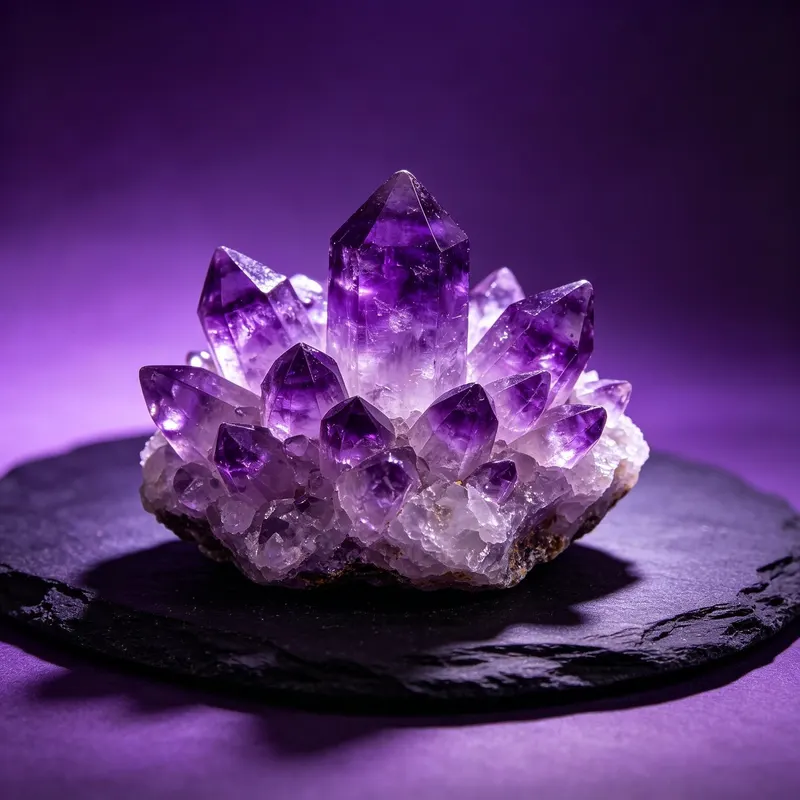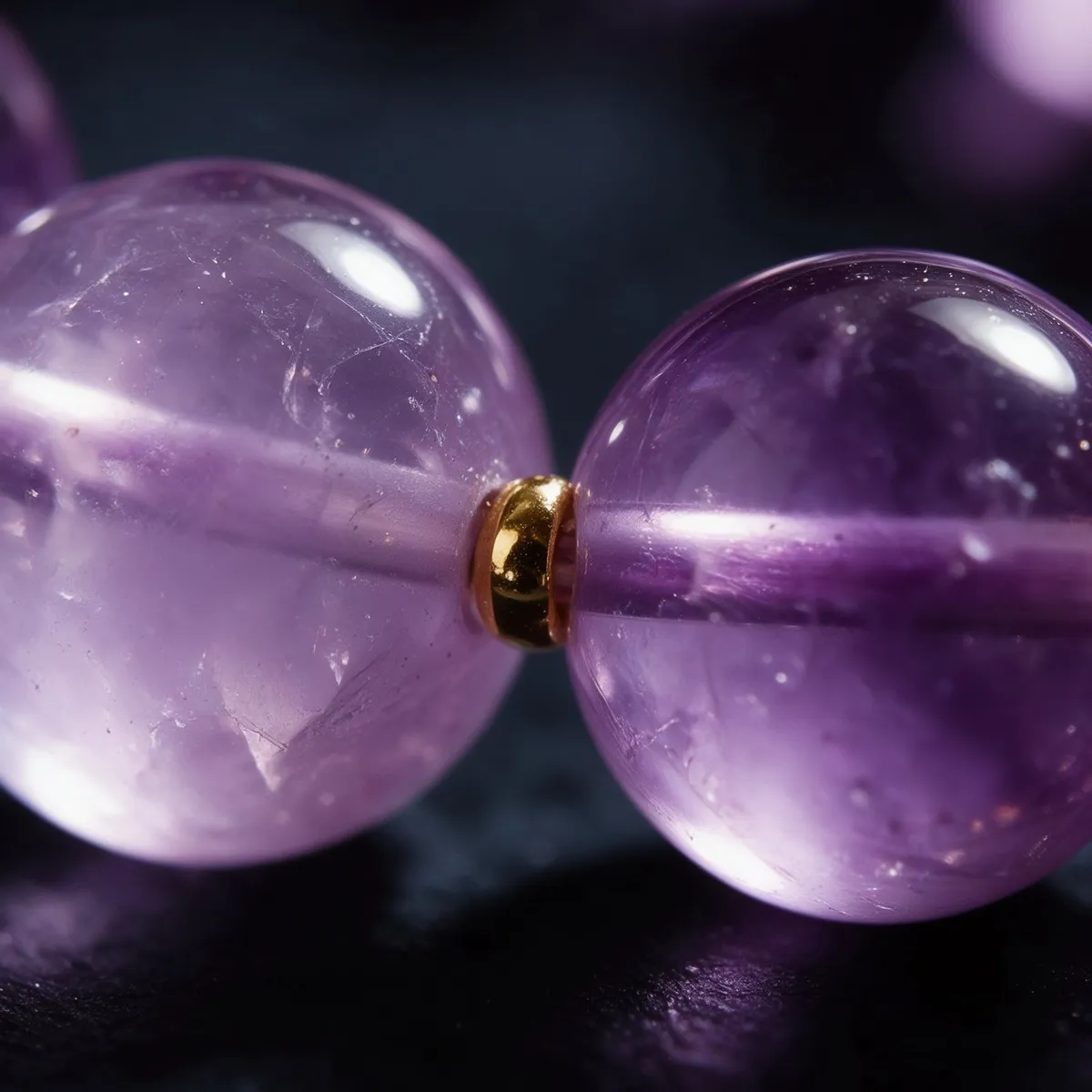
- Amethyst is the purple variety of quartz (silicon dioxide), coloured by trace iron and natural irradiation; it ranks 7 on the Mohs scale.
- Traditionally chosen for calm, sleep and clear thinking; linked with the crown and third-eye chakras, and it is February's birthstone.
- Main sources are Brazil, Uruguay, Zambia and (historically) Siberia — colour runs from pale lilac to deep royal violet.
- Durable enough for daily jewellery, but prolonged direct sunlight will fade the colour.
Amethyst: An In-Depth Look at the Violet Quartz
Amethyst is the violet to purple variety of quartz, colored by trace iron and natural irradiation. It is one of the few gemstones with continuous cultural value across 3,000 years — prized by Egyptian royalty, Greek thinkers, European clergy, and modern collectors alike. This is the deep reference: geology, history, varieties, properties, chakras, zodiac, and care. (For the February birthstone angle, jewelry, and gifting, see our February birthstone guide.)
What Amethyst Is (Geology)
Amethyst is crystalline quartz (silicon dioxide) whose purple color comes from iron impurities exposed to natural radiation within the earth. The depth of color depends on iron concentration and the dose of irradiation — pale lilac to deep royal violet. It ranks 7 on the Mohs hardness scale, making it durable enough for daily jewelry, yet still best kept from hard knocks.
A Short History
- Ancient Greece: The name derives from amethystos, "not drunk" — drinkers carved cups from it hoping to stay clear-headed.
- Egypt & Rome: Worn as protective intaglios and beads; found in Tutankhamun's grave goods.
- Medieval Europe: The stone of clergy and royalty — bishops' rings, imperial regalia.
- Today: February's birthstone and one of the most popular crystals worldwide.
Where Amethyst Is Found
Major sources include Brazil (large geodes), Uruguay (deep color), Zambia (fine grading), and Siberia (historically the most prized "Siberian" material). Each locale produces a slightly different tone, which is why amethyst ranges from grayish-lavender to near-black violet.
Popular Varieties
- Chevron amethyst: Banded white and purple, used for amplification.
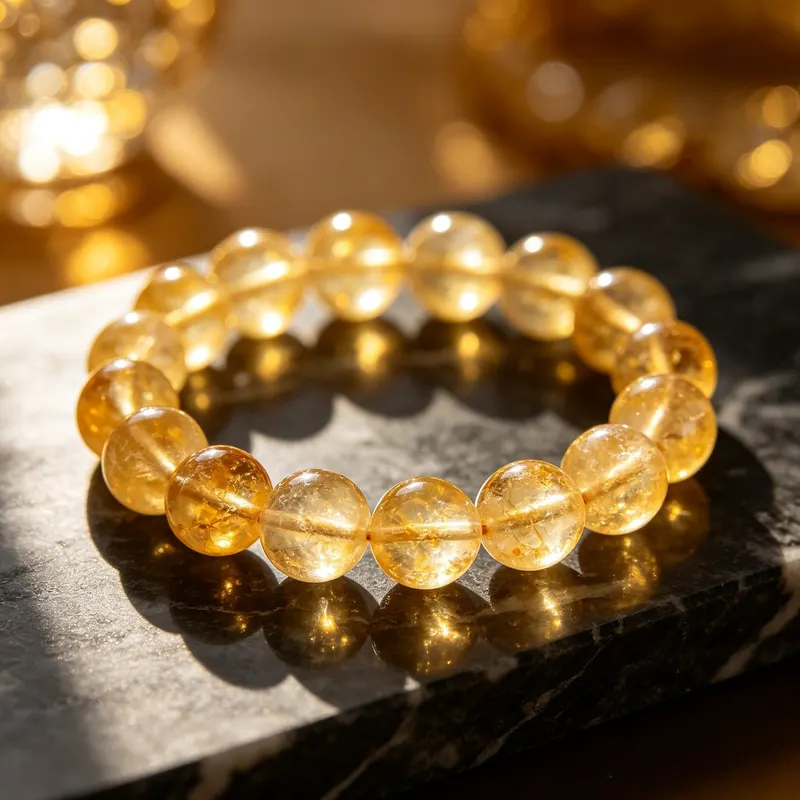
- Ametrine: A natural mix of amethyst and citrine in one crystal.
- Brandberg amethyst: High-clarity Namibian material prized by collectors.
- Vera Cruz amethyst: Pale, slender crystals from Mexico.
Properties Amethyst Is Chosen For
- Tranquility and sleep. The most traditional use — a stone for the nightstand and the overwhelmed mind.
- Clarity and focus. A study and decision-making companion.
- Spiritual connection. Linked to the crown and third eye for meditation and intention.
- Protection. Historically worn to ward off intoxication, excess, and "negative energy."
Chakras and Zodiac
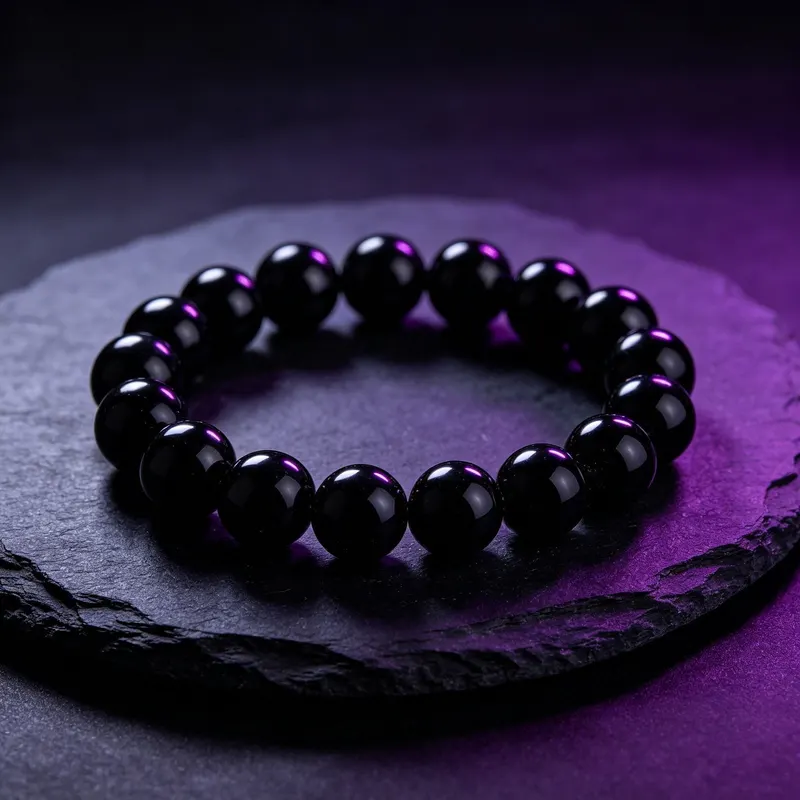
Amethyst sits at the crown and third eye chakras. It is the birthstone for February (Aquarius–Pisces cusp) and is linked with Virgo for grounding an analytical mind and with Pisces for intuition. It pairs with clear quartz to amplify and with black tourmaline for protected space.
How to Use Amethyst
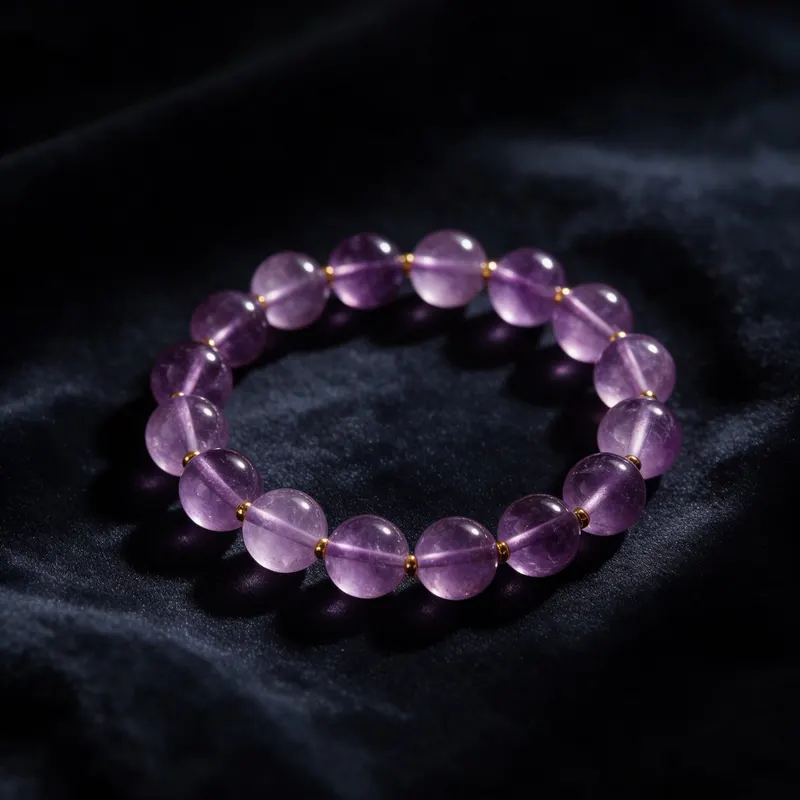
Wear it as a bracelet or pendant, keep a cluster in a meditation corner, or place a tumbled stone by the bed. In a practice, it is typically held during intention-setting or placed at the crown during stillness.
Caring for Amethyst
- Sun: Prolonged direct sunlight fades the color — recharge by moonlight or a Selenite plate instead.
- Water: Tumbled amethyst tolerates a brief rinse; skip long soaks for geodes and raw pieces.
- Cleaning: Soft dry cloth; avoid harsh chemicals and ultrasonic cleaners.
- Storage: Keep out of direct light to preserve depth of color.
Buying Notes: Treated vs Natural
Most commercial amethyst is natural and stable, but some pale material is heat-treated to citrine or irradiated to deepen color. Neither is "fake," but disclosure matters. For what to look for, see our treated vs natural crystals guide.
FAQ
Why does amethyst fade?
Prolonged UV light bleaches the iron-related color. Store away from windows and recharge by moonlight.
Is amethyst expensive?
It is one of the more affordable quartz gemstones in small sizes, with premium prices for deep "Siberian"-tone and fine Zambian material.
Amethyst vs amethyst-colored glass?
Real amethyst is cool to the touch, shows natural zoning, and has weight; glass is warm, too uniform, and lighter. Our guide covers the tells.
Is amethyst good for sleep?
It is among the most traditional stones for restful sleep — a small tumbled piece on the nightstand is the common, gentle approach. See also crystals for sleep.