Placement Changes the Experience
You've decided you want amethyst in your life—maybe because you keep hearing it's the stone for calm, or because you're building a small collection and want a piece you'll actually wear. Now comes the small, surprisingly personal question: necklace or bracelet? It sounds like a style decision, but if you're buying a crystal with an intention behind it, placement matters. A pendant sits against your chest all day; a bracelet knocks gently against your wrist every time you reach for a keyboard or a coffee cup. Those are two very different relationships with the same stone.
This guide compares amethyst necklaces and bracelets honestly—by placement, comfort, care, budget and the kind of daily reminder each one offers. We'll also separate what crystal tradition claims from what we can actually verify about the stone itself, so you can choose with clear eyes rather than hype.
One note before we start: amethyst is a beautiful, durable, genuinely wearable stone, and that's reason enough to own it. Everything beyond that—the lore, the symbolism, the rituals—is a framework for reflection, not a promise. More on that below.
Amethyst Necklace vs Bracelet at a Glance
Here's the honest side-by-side. Neither column wins; they simply suit different people and different days.
| Factor | Amethyst Necklace (Pendant) | Amethyst Bracelet |
|---|---|---|
| Placement | Throat and upper chest; visible in mirrors and photos | Wrist; visible to you constantly as you work and move |
| Traditional association | Calm communication, presence, composure | Grounding, steadying, a portable calming cue |
| Comfort | Barely noticeable once the chain length is right; avoid very long chains if you lean over a desk | Beads can press on a wrist resting on a keyboard; elastic needs a comfortable fit |
| Everyday practicality | Slips under a shirt; fine for most workplaces | Easy to stack; can snag on sleeves and cuffs |
| Care demands | Check the chain and clasp; avoid pulling on the pendant | Keep elastic away from prolonged water and heat; inspect for stretching |
| Typical price range (US) | Roughly $35–$120 for a genuine amethyst pendant on a sterling silver or gold-plated chain | Roughly $20–$60 for a quality beaded bracelet |
| Best for | People who want one considered piece they wear daily | People who want a tactile reminder and like to layer |
Prices vary with bead size, metal choice and where you shop—treat those ranges as a sanity check, not a rule. If a "solid gold" amethyst necklace is priced like costume jewelry, ask questions.
The Amethyst Necklace: Presence Close to the Chest
A pendant rests near the throat and upper chest, and in traditional crystal practice that placement is associated with expression, composure and calm communication. Whether or not you buy into the energetic framing, there's a practical truth here: a necklace is the piece you see least and others see most. It reads as jewelry first and intention second, which makes it the better choice if you want your amethyst to feel like a quiet part of your outfit rather than a ritual object.
Practical considerations for choosing one:
- Chain length: 16 inches sits at the collarbone (elegant, more visible); 18 inches rests just below it (the most versatile everyday length); 20 inches or longer drops toward the sternum and can swing forward when you lean over a desk.
- Metal: Sterling silver is the safer long-term buy; gold-plated chains are lovely but the plating wears at the clasp and pendant bail first, especially with daily wear and perfume.
- Setting: A closed-back bezel protects the stone's edges better than prongs if you're active or prone to catching jewelry on clothing.
- Stone quality: Look for even color and a clean surface. Pale lavender is still genuine amethyst—depth of color affects price more than authenticity.
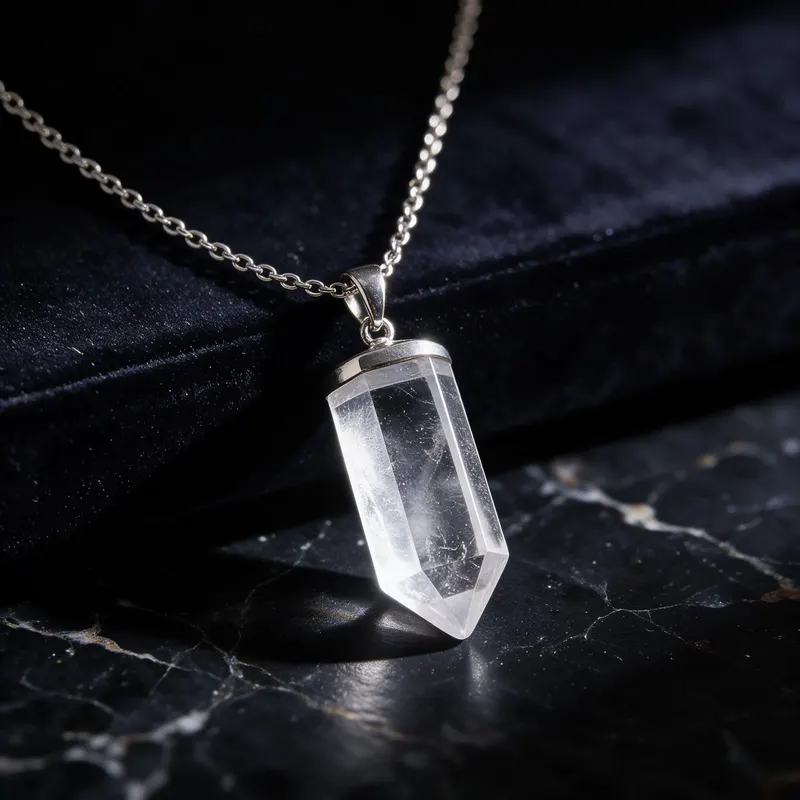
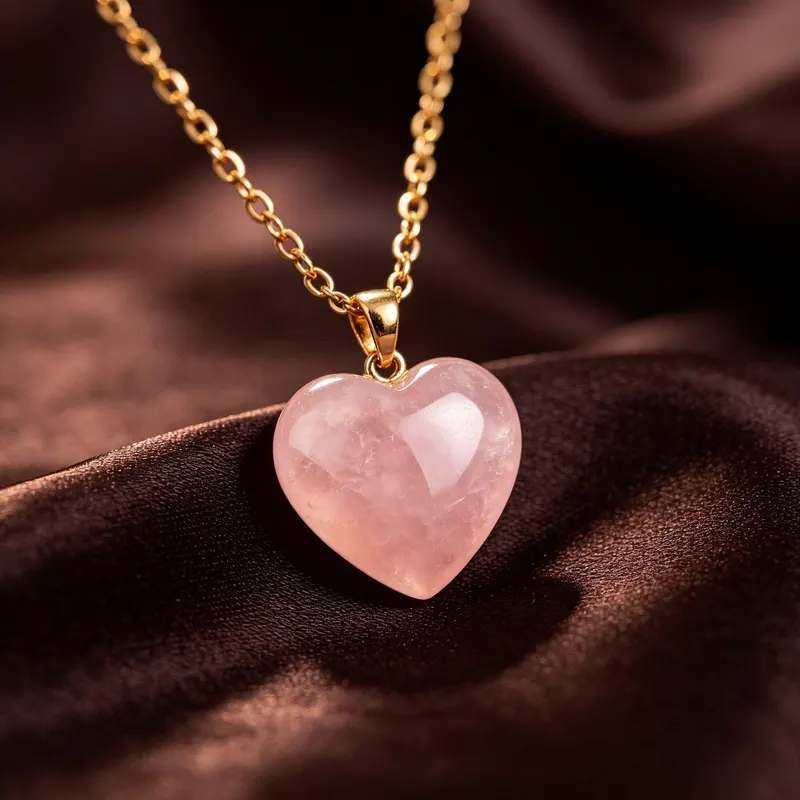
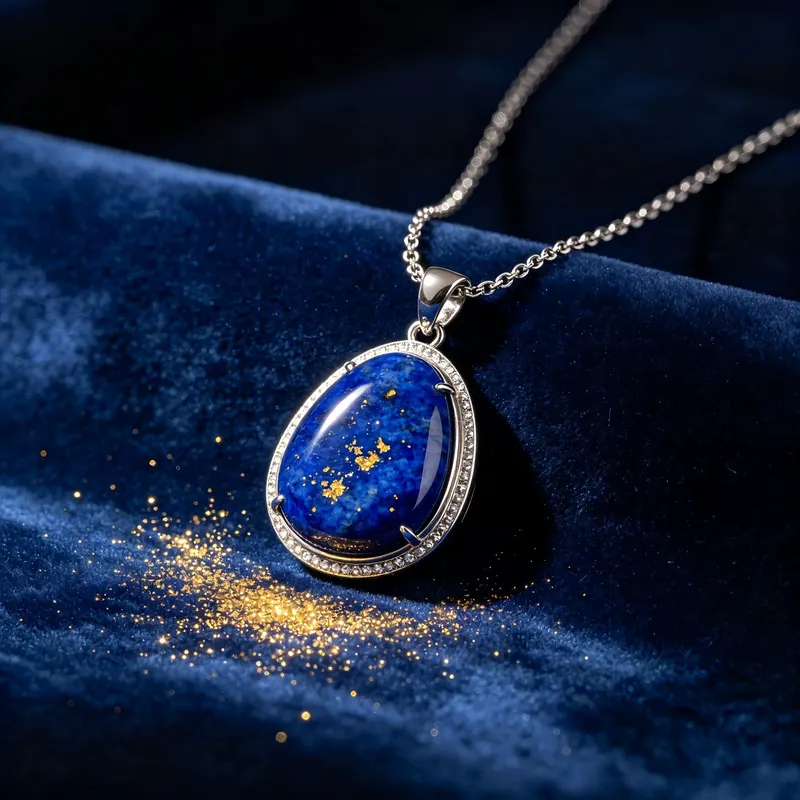
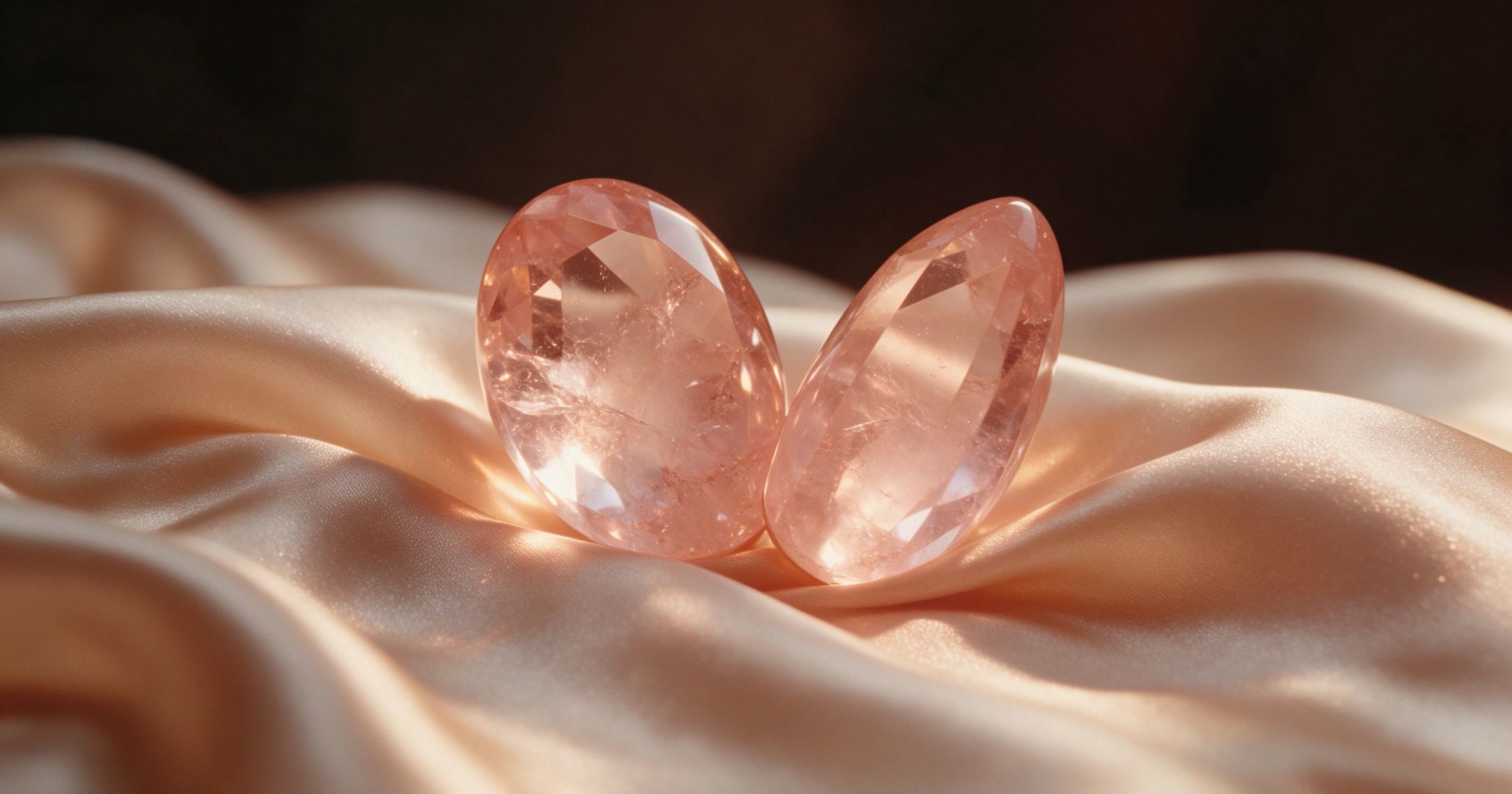
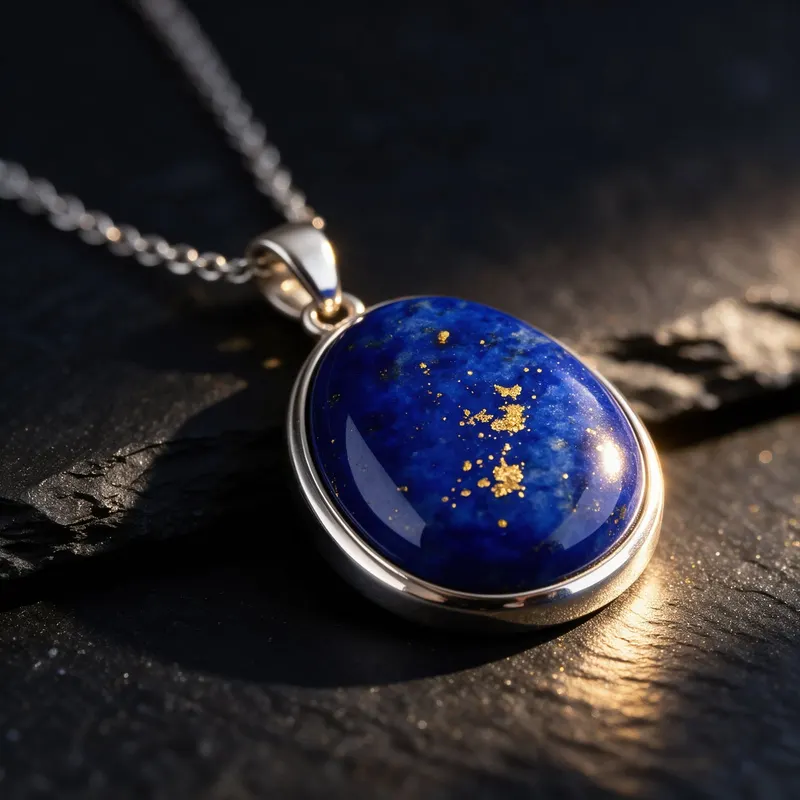
If you're comparing pendant styles, our Clear Quartz Point Pendant Necklace is a useful reference point: clear quartz is traditionally associated with clarity and focus, so it suits people who want a pendant for a "thinking" intention rather than a "calming" one. For a warmer, heart-centered pendant, the Rose Quartz Heart Pendant Necklace fills that role. And if you want a pendant that leans toward wisdom and expression rather than calm, the Lapis Lazuli Wisdom Pendant is worth a look.
The Amethyst Bracelet: A Reminder You Can Touch
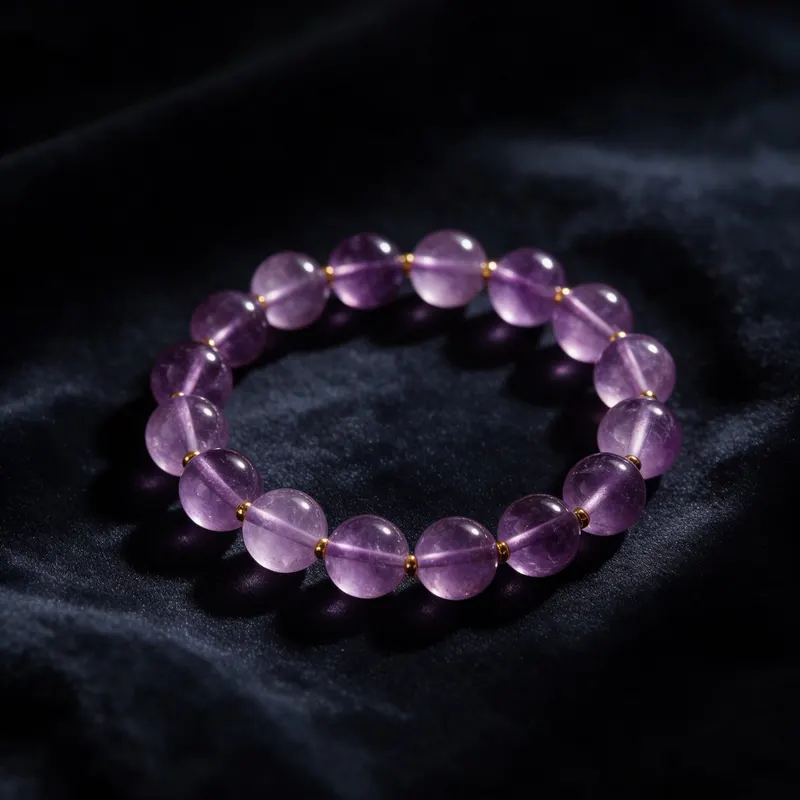
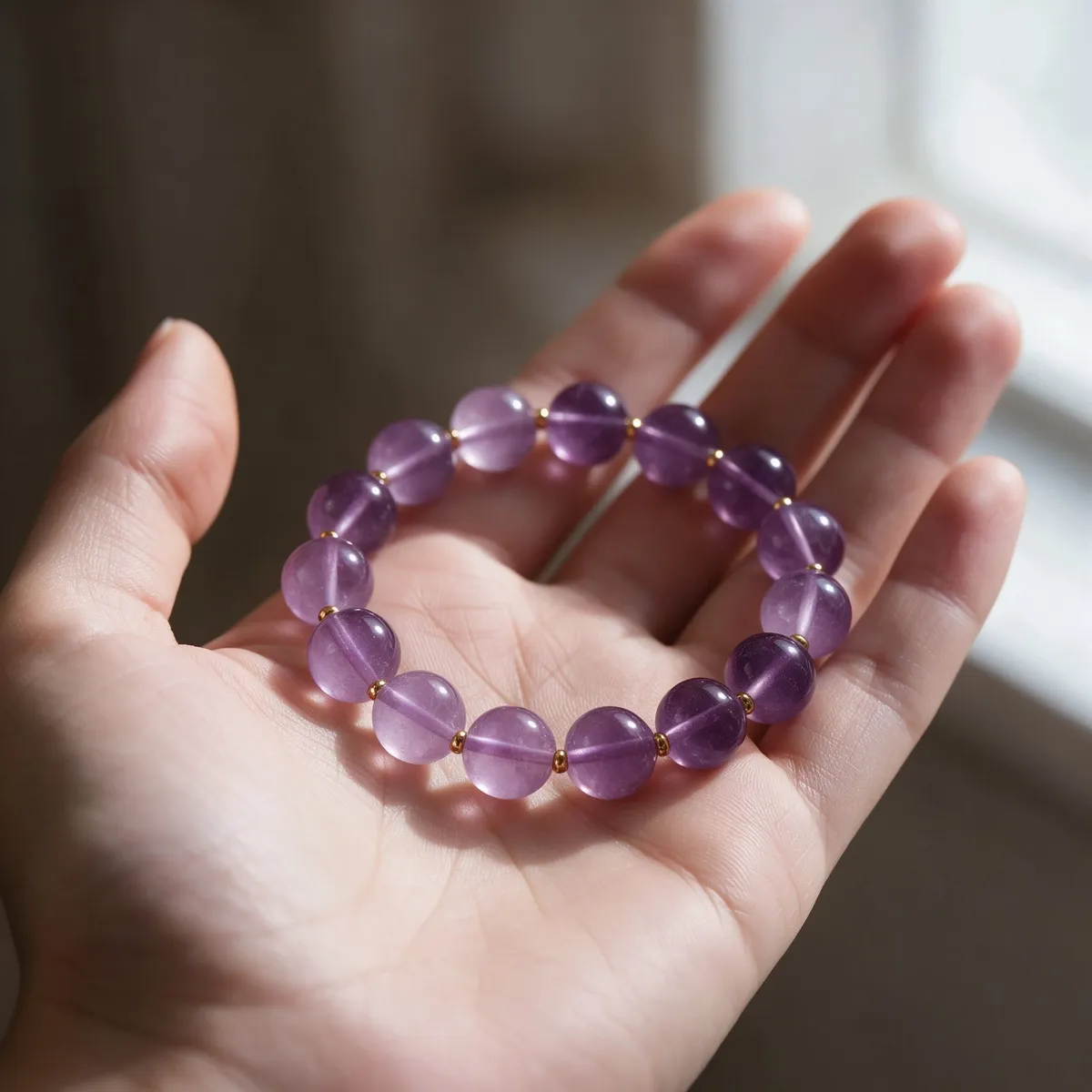
A bracelet lives in your peripheral vision. You notice it when you type, when you gesture in conversation, when you're waiting for a meeting to start. That constant low-level visibility is exactly why many people prefer a beaded bracelet for a calming intention—it functions as a tactile cue. Rolling a bead between your fingers is a simple grounding habit, and it costs nothing.
The trade-offs are real, though. Beads can press into your wrist when it rests on a desk. Elastic cord stretches over time, especially if you roll a bracelet on and off rather than easing it over your hand. And a bracelet is more exposed to water, lotion and knocks than a pendant tucked under a collar.
What to check before buying:
- Bead size: 6mm suits smaller wrists and stacking; 8mm is the most common unisex size; 10mm makes a bolder statement but can feel heavy on a narrow wrist.
- Fit: Measure your wrist with a soft tape and add roughly half an inch for comfort. A bracelet that leaves deep marks is too tight; one that slides past your hand is too loose.
- Cord quality: Good elastic is double-knotted and slightly stiff. Ask whether the bracelet is strung on elastic or knotted on cord—cord is more durable but less forgiving of fit.
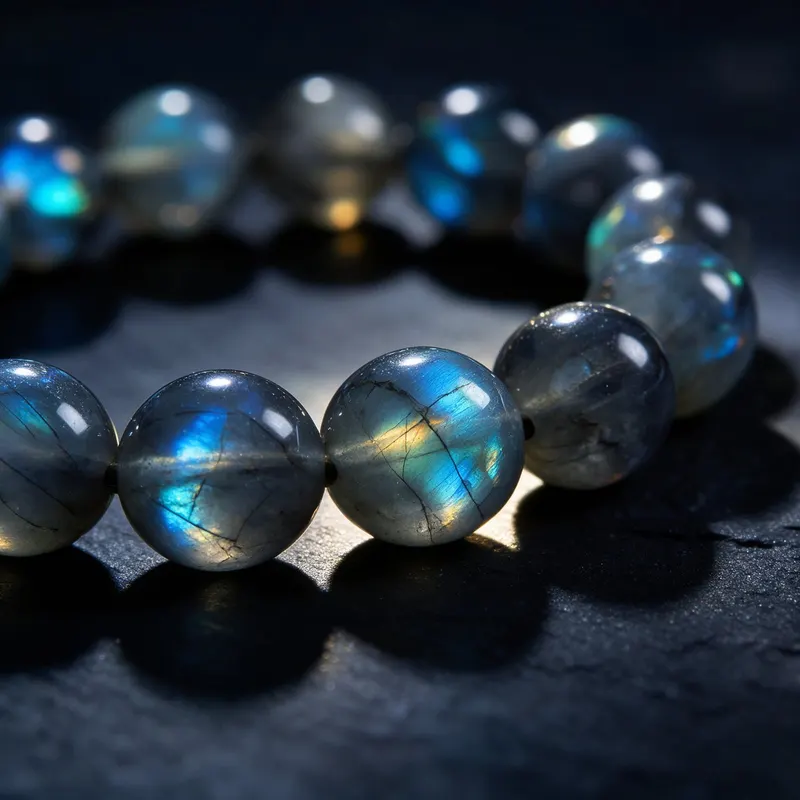
Our Amethyst Healing Bracelet is the natural starting point, and if you like the layered look, our stacking guide covers how to combine stones without the wrist equivalent of clashing prints. A common pairing is amethyst with a grounding stone like the Black Tourmaline Protection Bracelet—amethyst for calm, tourmaline for steadiness.
Comfort, Style and Daily Wear
Think about your actual day, not an idealized one. If you spend hours at a keyboard, a snug beaded bracelet may annoy you by 2 p.m., while a pendant disappears under a shirt and never interferes. If you're on your feet, gesturing, or working with your hands, a bracelet is more visible and easier to glance at—but also more likely to catch on things.
Style-wise, the two pieces send different signals. A pendant is a single focal point and pairs naturally with earrings or a ring. A bracelet invites stacking and reads as more casual and personal. Neither is more "spiritual"—that's entirely in how you use it.
A quick checklist before you commit:
- Does the piece fit the way you'll actually wear it (chain length, wrist measurement)?
- Will the metal or cord survive your routine—showers, gym, dishes?
- Can you wear it with what's already in your jewelry box?
- Does the price match the materials honestly?
- Does it feel like something you'll reach for without thinking?
Tradition vs. evidence: what holds up
Crystal tradition is rich, and it's worth being clear about where lore ends and gemology begins.
What tradition says: Amethyst is traditionally associated with calm, sobriety of mind, restful sleep and spiritual clarity. Many practitioners place it near the throat or heart, or keep a cluster on a bedside table or altar. These are symbolic and reflective frameworks—they can be meaningful, but they aren't measurable claims.
What we can verify: Amethyst is a variety of quartz with a Mohs hardness of 7, which makes it durable enough for everyday jewelry with reasonable care. Its purple color comes from trace iron and natural irradiation; prolonged direct sunlight can gradually fade the color, so store it away from a bright windowsill. It's generally safe to clean with lukewarm water and mild soap, but avoid ultrasonic cleaners and harsh chemicals, and keep elastic bracelets out of prolonged water to protect the cord. As for "charging" in moonlight or cleansing with sound—those are rituals, not chemistry. They may support your practice; they don't change the stone.
Crystals are intended for reflection and personal ritual. They are not medical devices and do not diagnose, treat, cure, or prevent any disease.
FAQ
People Also Ask
Is it better to wear amethyst as a necklace or bracelet?
Choose a necklace if you want an elegant, close-to-chest piece that stays out of the way and reads as everyday jewelry. Choose a bracelet if you want a tactile, visible reminder you can touch and stack. Both are valid—the "right" one is the one you'll actually wear.
Can you wear an amethyst necklace and bracelet together?
Yes. Layering both is common and simply reinforces the same intention. To keep it from looking matchy, vary the scale—a delicate pendant with an 8mm beaded bracelet, for example—or mix in a neutral metal.
How do I care for amethyst jewelry?
Wipe the stone with a soft cloth, clean with lukewarm water and mild soap if needed, and dry fully. Store pendants flat to protect the chain and bracelets away from direct sun. Avoid perfume, chlorine and ultrasonic cleaners, and check elastic and clasps regularly.
How much should I expect to spend?
Expect roughly $20–$60 for a quality beaded amethyst bracelet and $35–$120 for a pendant on a sterling silver or gold-plated chain. Price should track bead size, metal type and color depth—not mystical claims.
Browse the Curated Collection
Explore the full edit here: Necklaces & Pendants Collection →
Shop the Stones
Keep Exploring
Best Necklaces · Amethyst Meaning · Which Wrist Guide
The Short Version
If you want one piece that slips on and disappears into your day, choose the necklace. If you want something you can see, touch and stack, choose the bracelet. If you're genuinely torn, start with the bracelet—it's the lower-cost way to learn whether amethyst earns a permanent place in your routine—then add a pendant once you know you love the stone. Either way, buy for the materials and the fit first. The meaning is yours to build.