Two Beloved Stones, Two Different Jobs
You're standing at a crystal shop display—or scrolling a product page at midnight—and two purple-pink stones keep catching your eye. Amethyst and rose quartz are the two most common "first crystal" purchases, and they're also the two people most often compare when they're trying to decide where to start. Maybe you want something for a racing mind at bedtime. Maybe you want something that reminds you to be kinder to yourself. Both stones are quartz, both are affordable, and both are easy to wear every day—which is exactly why the choice can feel harder than it should.
Here's the useful frame: amethyst and rose quartz aren't rivals. They do different jobs. Amethyst is traditionally associated with calm, focus and spiritual clarity; rose quartz is traditionally tied to the heart, self-compassion and gentle relationships. In practice, most people don't need to pick a "winner"—they need to know which intention they return to most often, and which stone fits their daily routine.
This guide compares the two by intention, chakra association, color, durability, care, and how to wear them together or separately. It also separates what crystal tradition claims from what we can actually verify about the stones themselves.
Amethyst: Calm and Clear
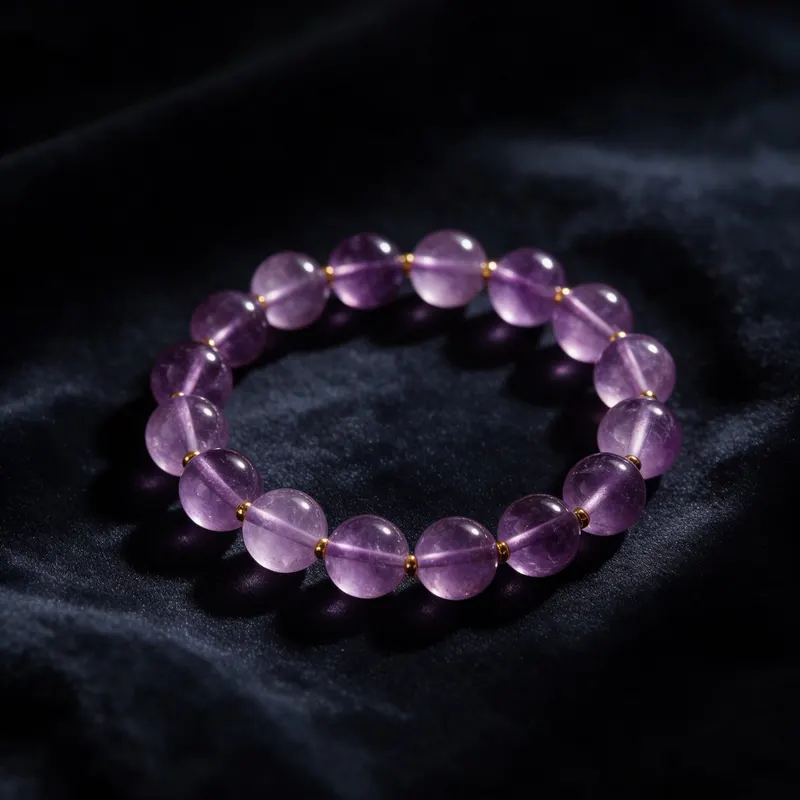
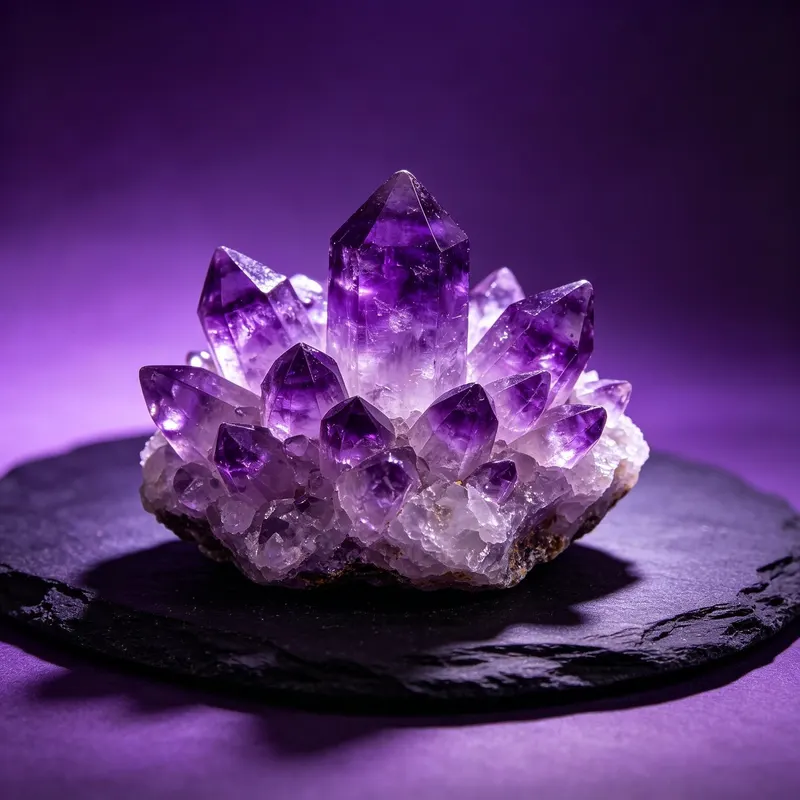
Amethyst is purple quartz, colored by trace iron and natural irradiation in the earth. Its color ranges from pale lavender to deep grape, and it's one of the few gemstones where a rich, saturated tone is both beautiful and widely affordable. In crystal tradition, amethyst is associated with quieting a busy mind, restful evenings, and spiritual clarity, and it's linked to the crown and third-eye centers—the upper chakras in the seven-chakra system.
That makes amethyst the more "inward and upward" of the two: it's the stone people reach for during meditation, journaling, or the wind-down hour before bed. A raw cluster on a nightstand or altar works as a visual cue to slow down; a bracelet keeps that reminder on your wrist through the day. If you want the full background, read our guide to amethyst meaning and properties, or start with the Amethyst Healing Bracelet for Calm & Clarity or a Raw Amethyst Cluster for Meditation & Altar.
Who amethyst tends to suit
- People whose minds race at night and who want a wind-down ritual.
- Meditators and journalers who like a physical anchor for a practice.
- Anyone drawn to purple and to the "quiet focus" end of the crystal spectrum.
- Gift-givers looking for a safe, universally liked stone.
Rose Quartz: Love and Softness
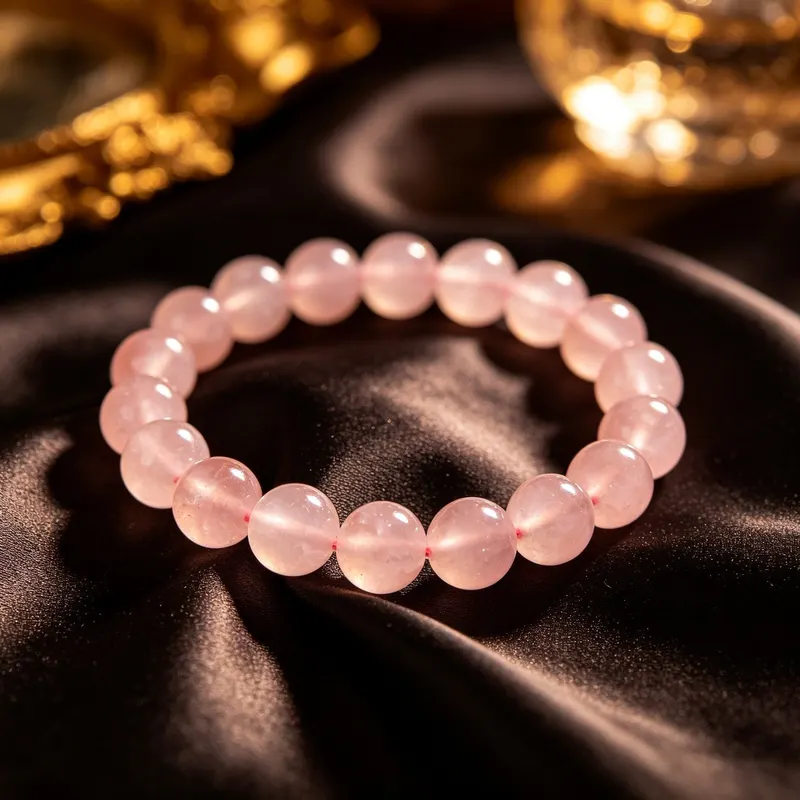
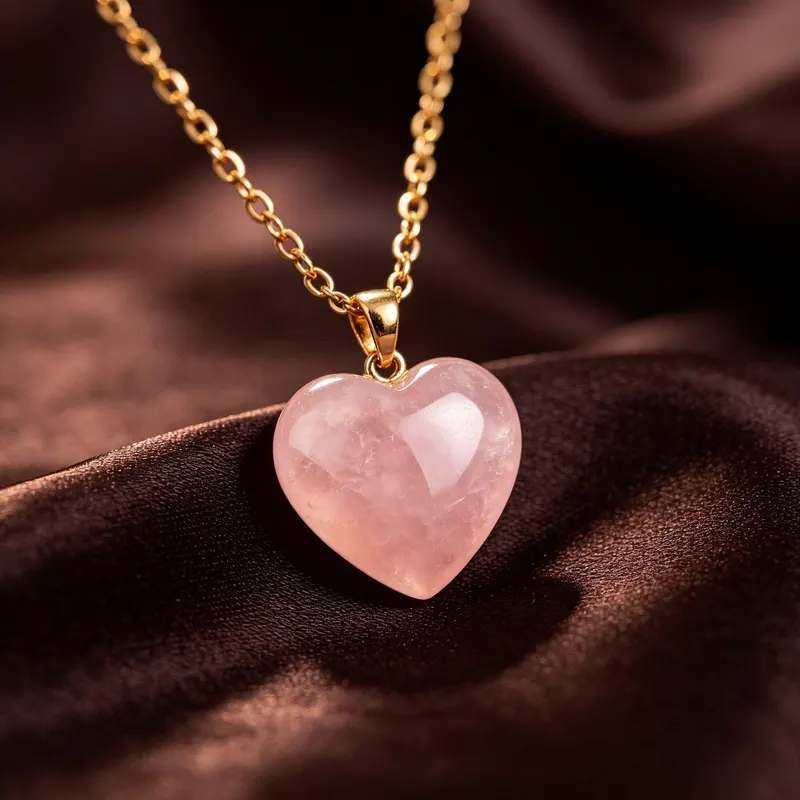
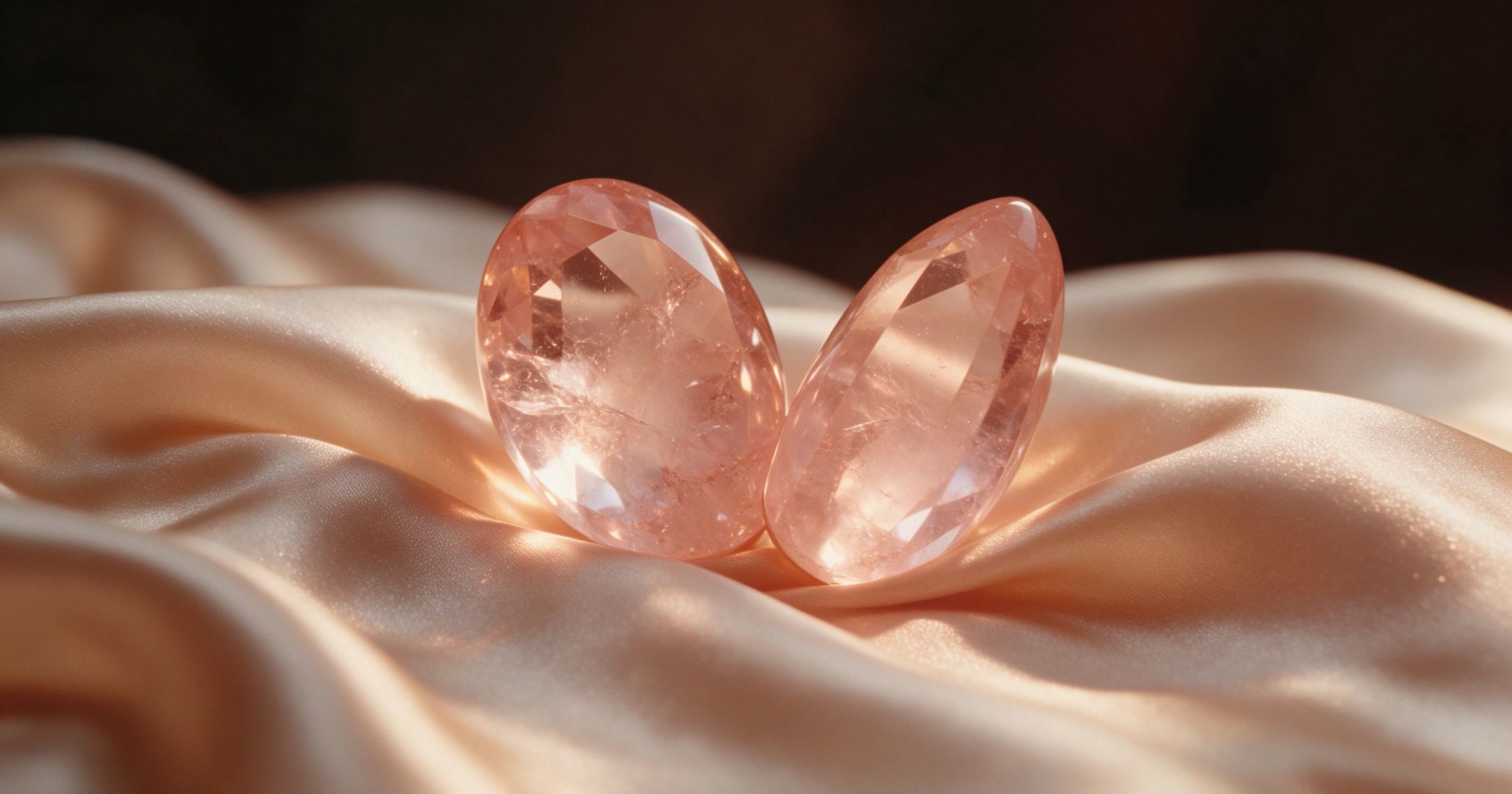
Rose quartz is pink quartz, and its color comes from trace titanium, iron or manganese—the exact cause varies by deposit, and much of the commercial material is gently heated or treated to deepen the pink. In crystal tradition, rose quartz is tied to the heart chakra: self-compassion, forgiveness, emotional openness, and nurturing relationships. It's the stone people keep on a vanity, tuck into a pocket, or wear as a pendant close to the chest.
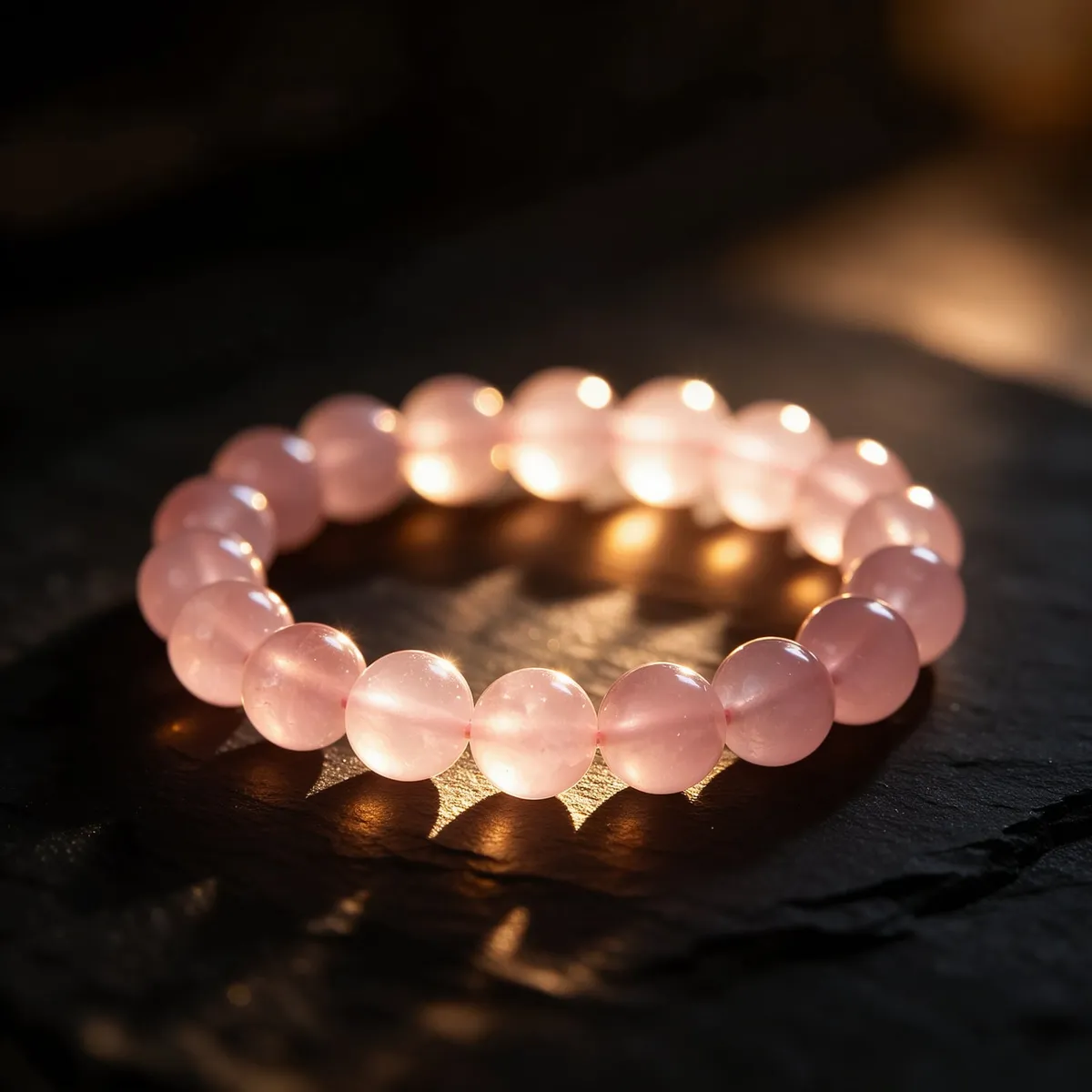
Where amethyst points inward toward stillness, rose quartz points toward connection—including the connection you have with yourself. It's a common choice during breakups, new relationships, caregiving seasons, or any stretch when you need a reminder to speak to yourself the way you'd speak to a friend. For the deeper background, see our rose quartz meaning guide, or browse the Rose Quartz Love Bracelet for Self-Love & Heart and the Rose Quartz Heart Pendant Necklace, Gold-Plated.
Who rose quartz tends to suit
- People in a self-care or forgiveness season who want a daily reminder.
- Anyone who prefers pink, warm tones, and jewelry that reads as delicate.
- Those who like wearing a stone near the heart rather than on the wrist.
- Gift-givers marking a new chapter—a move, a breakup, a birthday.
Amethyst vs Rose Quartz at a Glance
Use this table to match each stone to your intention and routine. "Traditionally associated with" reflects crystal lore, not medical claims.
| Feature | Amethyst | Rose Quartz |
|---|---|---|
| Color | Lavender to deep purple | Pale pink to rose |
| Traditional association | Calm, clarity, restful evenings, spiritual focus | Self-love, forgiveness, heart-centered connection |
| Chakra (tradition) | Crown and third eye | Heart |
| Best time of day | Evening wind-down, meditation | Morning check-in, throughout the day |
| Common forms | Bracelets, clusters, points, pendants | Bracelets, heart pendants, rings, tumbled stones |
| Mohs hardness | 7 | 7 |
| Water sensitivity | Generally fine for brief rinsing; avoid prolonged soaking | Generally fine for brief rinsing; avoid prolonged soaking |
| Sunlight sensitivity | Prolonged direct sun may fade color over time | Prolonged direct sun may fade pink over time |
| Typical bracelet price | Roughly $20–$60 for natural 8mm beads | Roughly $20–$60 for natural 8mm beads |
How to Choose—or Combine
If you're still torn, answer one question honestly: which intention do you return to most often? If your answer is "I want to quiet my mind and sleep better," choose amethyst. If it's "I want to be gentler with myself and my people," choose rose quartz. If both feel true, wear both—they're one of the most classic pairings in crystal practice, often described as a "calm, open heart" stack.
- Choose amethyst for calm, focus at the end of the day, and a sleep-time ritual.
- Choose rose quartz for self-love, forgiveness, and nurturing relationships.
- Wear both on the same wrist for a stacked look, or split them—amethyst on one wrist, rose quartz as a pendant near the heart.
- Start with one if you're new; add the second once you know which reminder you actually reach for.
For pairing rules and other combinations, see our guide to crystal combinations, and browse calming pieces in the calm and sleep collection.
What to Look For When You Buy
Both stones are common and affordable, which means quality varies widely. A few practical checks will help you avoid overpaying or buying something misrepresented.
- Color should look natural, not neon. Very uniform, saturated pink or purple at a low price often signals dyeing or heavy treatment. Natural stones usually show slight banding, zoning, or variation between beads.
- Check the bead size. 8mm is the standard adult bracelet size; 6mm suits smaller wrists or a delicate look; 10mm reads bolder. Measure your wrist with a soft tape and add about 1–1.5cm for comfort.
- Look at the finish. A good bracelet has evenly drilled beads, a sturdy elastic knot hidden in a bead, and no sharp edges.
- Ask about treatment. Heating and irradiation are common and accepted in the trade; dyeing is not. Reputable sellers will tell you.
- Set a realistic budget. Natural amethyst and rose quartz bracelets typically run about $20–$60. Clusters and pendants vary more with size and metal. Very cheap "natural" pieces are usually glass, dyed quartz, or resin.
If you're buying your first stones and want a range to compare, a Healing Crystal Starter Kit, 7 Stones + Guide is a low-risk way to see how you respond to different stones before committing to a larger piece.
The lore, and what we can actually verify
Crystal tradition is rich, but it's important to separate lore from gemology. Here's the honest split.
Traditional lore (belief, not fact)
- Amethyst is traditionally associated with calm, clarity, and restful sleep.
- Rose quartz is traditionally associated with love, self-compassion, and emotional openness.
- Both are believed to support meditation and mindfulness practices by serving as visual reminders.
- Many people find that wearing a stone invites them to pause, breathe, or check in with themselves—a habit effect, not a medical one.
What we can verify (gemology and care)
- Hardness: Both are quartz, with a Mohs hardness of 7. That's durable enough for daily wear but softer than diamond (10) or sapphire (9), so they can scratch with rough handling.
- Water: Brief rinsing is generally fine, but prolonged soaking—especially in salt water—can dull the finish on beads and weaken elastic over time.
- Sunlight: Prolonged direct sun may fade color in both stones over months. Store them away from a sunny windowsill.
- Cleaning: Wipe with a soft, damp cloth and mild soap; dry thoroughly. Avoid harsh chemicals and ultrasonic cleaners on treated or dyed stones.
- Storage: Keep bracelets and pendants in a soft pouch or separate compartment to prevent scratching.
If you want a gentle way to refresh your stones between wears, a Selenite Cleansing Wand for Energy Clearing is a traditional companion piece—place stones near it overnight. Selenite itself is soft (Mohs 2) and water-soluble, so keep it dry.
Crystals are for reflection and are not medical devices. They do not diagnose, treat, cure, or prevent any disease. If you are struggling with your mental or physical health, please reach out to a qualified professional.
Wearing and Caring for Both
If you decide to wear both, a few small habits keep them looking good and feeling meaningful.
- Stack with care. Quartz-on-quartz contact can cause micro-scratches over time. If you stack, choose beads of similar size and check the elastic regularly.
- Take them off for chores. Cleaning products, gardening, and gym sessions are hard on elastic and finishes.
- Re-string when elastic stretches. Elastic typically lasts 12–24 months with daily wear; replace it before it snaps.
- Keep a ritual. A two-minute morning check-in with rose quartz and an evening wind-down with amethyst gives each stone a clear job.
FAQ
People Also Ask
Can you wear amethyst and rose quartz together?
Yes—they're highly compatible, pairing calm clarity with heart-centered softness. Many people stack them on one wrist or place both on a bedside table. Just watch for bead-on-bead scratching if you stack.
Which is better for sleep, amethyst or rose quartz?
Amethyst is the more traditional choice for winding down. Rose quartz is often favored when emotional comfort is what keeps you awake. Neither is a sleep aid in a medical sense—think of them as cues for a calming routine.
Which crystal is best for beginners?
Both are affordable, durable quartz-family stones with a Mohs hardness of 7, so either is a good first purchase. Choose by intention, or start with both if you're undecided.
How do I clean amethyst and rose quartz?
Wipe with a soft, damp cloth and mild soap, then dry thoroughly. Avoid prolonged soaking, salt water, harsh chemicals, and ultrasonic cleaners. Store away from direct sun to preserve color.
Browse the Curated Collection
Explore the full edit here: Calm, Stress & Sleep Collection →
Shop the Stones
Keep Exploring
Amethyst Meaning · Rose Quartz Meaning · Crystal Combinations
Crystals are intended to support personal and spiritual well-being and are not medical devices. They do not diagnose, treat, cure, or prevent any disease. If you are struggling with your mental or physical health, please reach out to a qualified professional.