Why July's Birthstone Draws People In
If your birthday falls in July—or you're shopping for someone whose does—you've probably landed on the same answer everywhere: ruby. It's a striking choice for a summer birthday, and the lore around it is some of the oldest and richest in the gem world. But ruby is also one of the most expensive stones on earth, and fine natural rubies are rarely something you pick up on a whim. That gap between "the traditional birthstone" and "what I can actually wear every day" is where most people get stuck.
This guide does two things. First, it explains what ruby has traditionally meant and why it has held that meaning for centuries. Second, it helps you find warm red and orange stones that carry a similar spirit—energizing, bold, heart-forward—at prices that make sense for everyday jewelry and gifts. You'll get practical guidance on choosing, sizing, caring for, and gifting these stones, plus an honest look at what tradition claims versus what we can actually verify.
Whether you want a ruby someday or a carnelian bracelet this week, the goal is the same: a piece you understand, wear often, and feel good about.
The July Birthstone: Ruby
Ruby is a variety of the mineral corundum—the same mineral family as sapphire—colored red by traces of chromium. Its name comes from the Latin ruber, meaning red, and it has been prized across cultures for thousands of years. In many traditions it was called the "king of gems," associated with the sun, with vitality, and with the wearer's courage and devotion.
Modern birthstone lists place ruby in July, and it is also the traditional gift for a 15th and 40th wedding anniversary. That dual role—birthstone and love token—explains why it shows up so often in engagement and milestone jewelry.
Traditional Meaning of Ruby
Across folklore, ruby is consistently framed as a stone of heat and heart. These are the associations most often repeated:
- Passion and zest for life — ruby is traditionally associated with enthusiasm, drive, and a vivid engagement with the world.
- Courage and life-force energy — warriors and travelers in various traditions wore red stones as talismans; ruby is believed to steady the wearer in difficult moments.
- Devoted love — the deep red color has long been linked to romantic commitment and loyalty.
- Vitality and warmth — red as a color is broadly associated with energy and circulation in color symbolism, and ruby inherits that reading.
It's worth saying plainly: these are cultural and symbolic associations, not clinical claims. Ruby invites you to reflect on courage and passion; it does not create them for you.
Why Ruby Is Hard to Buy (and What It Costs)
Ruby is genuinely rare in fine gem quality, and that rarity drives price. A few realistic reference points help set expectations:
- Fine natural ruby in a wearable size with good color and clarity commonly runs into the thousands of dollars per carat, and exceptional stones far more.
- Commercial-grade natural ruby—heavily included, opaque, or treated—can be found for far less, often in the low hundreds, but the color and durability trade-offs are real.
- Lab-grown ruby offers the same mineral composition and hardness at a fraction of the cost, typically tens to low hundreds of dollars depending on size and setting.
- Ruby simulants such as red glass, spinel, or garnet are often sold as "ruby-like" and cost very little—fine for fashion, but know what you're buying.
If a seller offers a large, flawless "natural ruby" for under a hundred dollars, it is almost certainly not what it claims to be. Ask for disclosure of treatment and origin, and buy from sellers who answer clearly.
Warm Red and Orange Alternatives We Love
If ruby's spirit appeals to you more than its price tag, several stones carry a similar warm, energizing character. Here's how they compare.
| Stone | Color | Mohs Hardness | Traditional Association | Best For |
|---|---|---|---|---|
| Ruby | Deep red | 9 | Passion, courage, devotion | Heirloom and milestone jewelry |
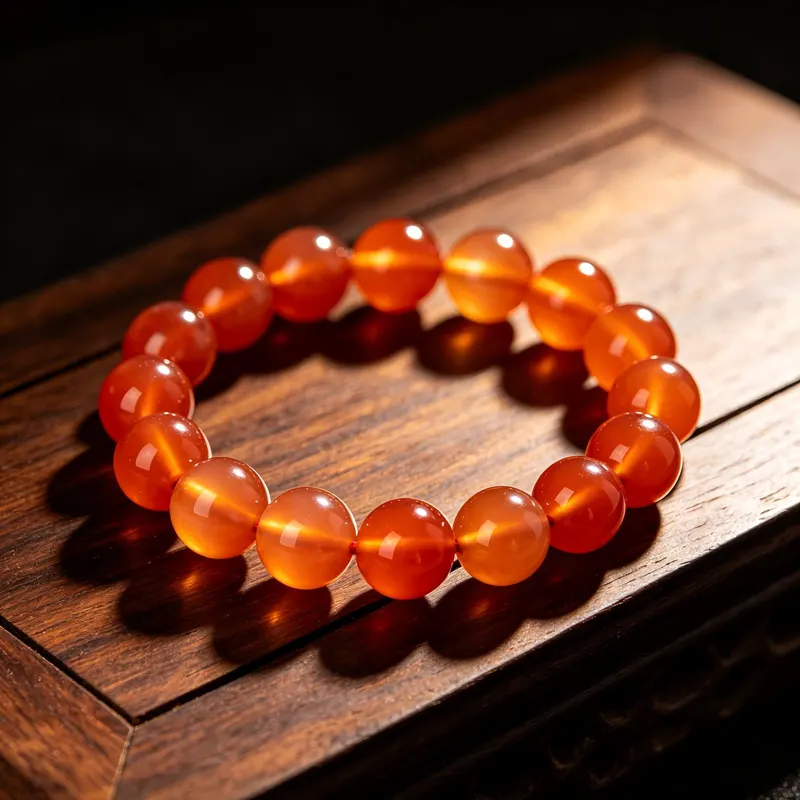
| Carnelian | Orange to red-orange | 6.5–7 | Motivation, creativity, confidence | Everyday bracelets, gifting |
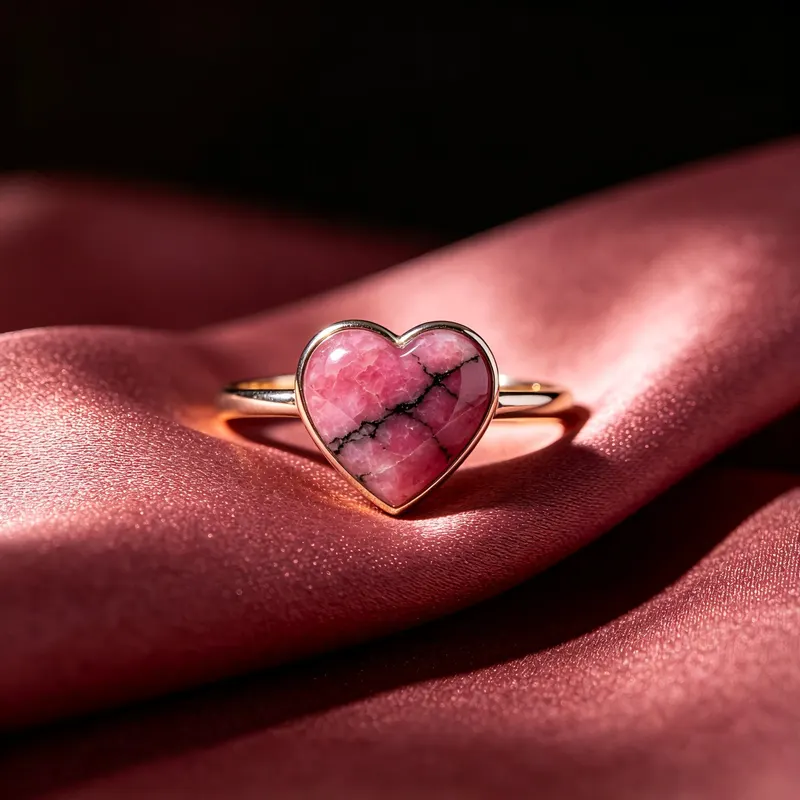
| Rhodonite | Pink to rose-red with black veining | 5.5–6.5 | Love, forgiveness, emotional healing | Rings and heart-led pieces |
| Red garnet | Deep red | 6.5–7.5 | Vitality, protection | Budget-friendly red jewelry |
Two of these stand out for July gifting. Carnelian Creativity Bracelet for Motivation & Fire captures ruby's fiery, get-up-and-go side in a warm orange-red that reads as summer. It's gender-neutral, easy to size, and comfortable for daily wear. For ruby's softer, heart-led dimension, the Rhodonite Heart Ring for Love & Forgiveness brings a rosy red with natural dark veining—no two stones look alike.
If you want to go deeper on the orange stone, our guide to carnelian's meaning and properties covers its history and how to work with it.
How to Choose a Warm Stone Piece
Use this checklist before you buy:
- Decide the role. Everyday bracelet, statement ring, or gift? Daily-wear pieces should favor harder stones and secure settings.
- Check the hardness against your habits. Carnelian (6.5–7) handles daily wear well; rhodonite (5.5–6.5) is softer and better suited to a ring you won't wear during heavy chores or gym sessions.
- Look at the stone, not the photo filter. Natural carnelian varies from pale peach to deep rust; rhodonite should show genuine black veining. Uniform, glassy perfection at a low price is a warning sign.
- Confirm sizing. For bracelets, measure your wrist and add roughly half an inch for a comfortable fit; check whether the listing gives bead diameter (8mm is a common, substantial standard). For rings, confirm the size chart and whether the band runs true.
- Ask about treatment. Heat treatment is common and accepted for many stones; dyeing and coating are not always disclosed. A reputable seller will tell you.
- Set a realistic budget. Beaded carnelian bracelets typically run from about $25 to $60; rhodonite rings often fall in the $30 to $80 range depending on the setting. Anything dramatically cheaper may be glass or dyed.
Folklore, and the facts we can check
It helps to separate the lore from the facts, especially when you're spending money.
Traditional lore (symbolic, not scientific)
- Ruby is believed to inspire courage, passion, and devotion.
- Carnelian is traditionally associated with motivation and creative energy.
- Rhodonite is traditionally associated with love, forgiveness, and emotional balance.
- Wearing a birthstone is said to connect you to the qualities of your birth month.
Verifiable facts (materials and care)
- Hardness: Ruby (corundum) is a 9 on the Mohs scale—second only to diamond. Carnelian is 6.5–7; rhodonite is 5.5–6.5. Softer stones scratch more easily and should be stored separately.
- Water sensitivity: Carnelian and rhodonite are generally fine with brief contact with water, but prolonged soaking and harsh cleaners can dull them. Avoid ultrasonic cleaners on rhodonite, which can be fractured and porous.
- Sunlight: These stones are generally stable in normal light, but as a habit, keep any colored stone out of prolonged direct sun to preserve color.
- Care: Wipe with a soft dry cloth after wear. Remove rings before swimming, cleaning, or exercise. Store each piece in its own pouch.
Crystals are for reflection and are not medical devices. They do not diagnose, treat, cure, or prevent any condition.
Gifting a July Birthday
A birthstone gift works best when it feels personal rather than generic. A few approaches:
- Lead with the meaning. Frame a carnelian bracelet as "the stone of bold, bright energy"—a nod to ruby's fire without the ruby price.
- Match the person, not just the month. An energetic, goal-driven friend suits carnelian; a softer, relationship-focused recipient may love rhodonite.
- Consider the season. Warm reds and oranges feel natural for a summer birthday and pair easily with warm-weather wardrobes.
- Include a card. A short note explaining the stone's traditional meaning turns a small piece of jewelry into a keepsake.
If you'd like to explore further, browse the full Abundance & Success Collection for more warm, energizing pieces.
FAQ
People Also Ask
What is July's birthstone?
Ruby. It is traditionally associated with passion, courage, and vitality, and it is also a common anniversary gift for 15 and 40 years.
What crystal is similar to ruby?
Carnelian shares ruby's warm, energizing character and is far more affordable; rhodonite echoes its heart-led, loving side. Red garnet is another budget-friendly red option.
Is carnelian a good substitute for ruby in jewelry?
For everyday wear and gifting, yes—it's durable enough for regular use and comes in a range of warm red-orange tones. It is a different mineral, though, so treat it as its own stone rather than a ruby stand-in.
How do I care for a carnelian or rhodonite piece?
Wipe with a soft cloth after wearing, keep it away from harsh chemicals and prolonged water, and store it separately to avoid scratches. Remove rings before exercise or cleaning.
Shop the Stones
Keep Exploring
Birthstones by Month · Crystals for Leo · Carnelian Meaning & Properties
Crystals and birthstone lore are offered for reflection, tradition, and wellness—not as medical advice. They are not medical devices and do not diagnose, treat, cure, or prevent any condition.