Why March's Birthstone Still Matters
If you were born in March, you've probably been handed a piece of pale blue jewelry at some point and told it was "your stone." Maybe it was a pair of stud earrings from a grandmother, a small pendant from a friend, or a ring you picked up yourself because the color reminded you of a cold, clear morning. Aquamarine is the March birthstone, and it has a way of feeling less flashy than the rest of the birthstone calendar — quieter, cooler, easier to wear every day.
That quietness is exactly the point. Aquamarine's name comes from the Latin for seawater, and the stone has been traditionally associated with calm communication, steady courage, and the kind of serenity you feel near still water. Whether you're shopping for a March birthday gift, choosing your own first "real" birthstone piece, or simply curious about what the stone means beyond its color, this guide covers the practical side — sizing, metals, care, price — alongside the traditional lore, clearly separated so you know what's history and what's verifiable.
Below you'll find what aquamarine has meant in tradition, how to choose a piece that will actually get worn, how to care for it, and realistic expectations for cost. Crystals are for reflection and are not medical devices.
What Aquamarine Traditionally Symbolizes
Aquamarine is a variety of beryl — the same mineral family as emerald and morganite — colored by trace amounts of iron. Its sea-blue to blue-green range has made it a natural symbol of water in many cultures, and that association shaped most of its traditional meanings.
- Calm, clear communication. Aquamarine is traditionally associated with speaking with ease and honesty, which is why it's often recommended for people who give presentations, teach, or simply want to feel less tongue-tied in hard conversations.
- Courage and eased fear. Older lore links it to safe passage — sailors and travelers once carried it as a talisman. Today that translates into the gentler idea of steady nerves.
- Serenity and emotional steadiness. The "still water" metaphor is the heart of it: aquamarine is believed to invite a calmer emotional baseline rather than dramatic change.
- New beginnings. Because March sits at the edge of winter and spring, the stone is often tied to fresh starts — fitting for a birthday that lands near the equinox.
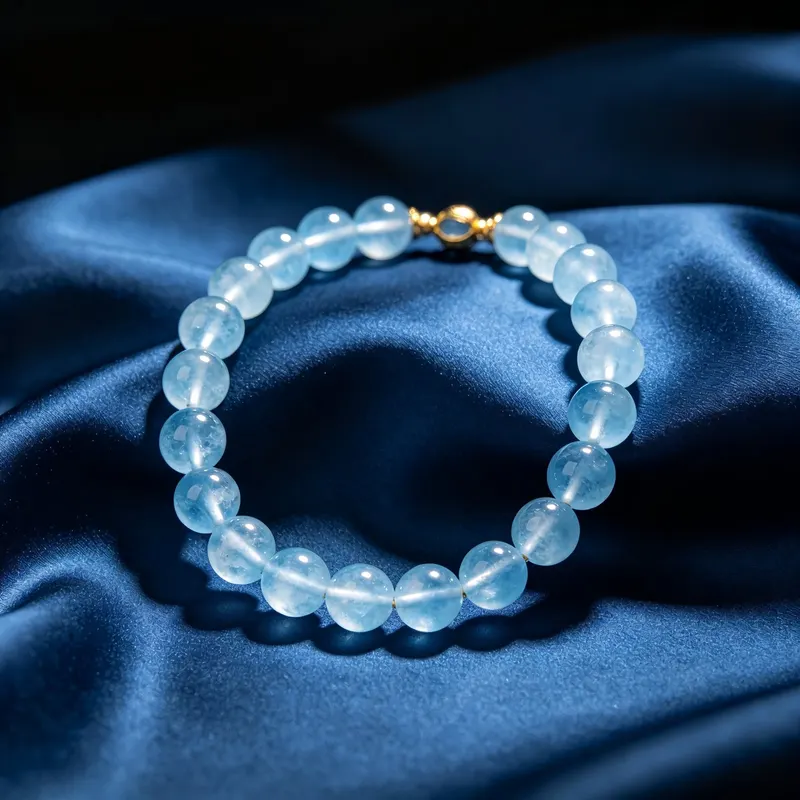
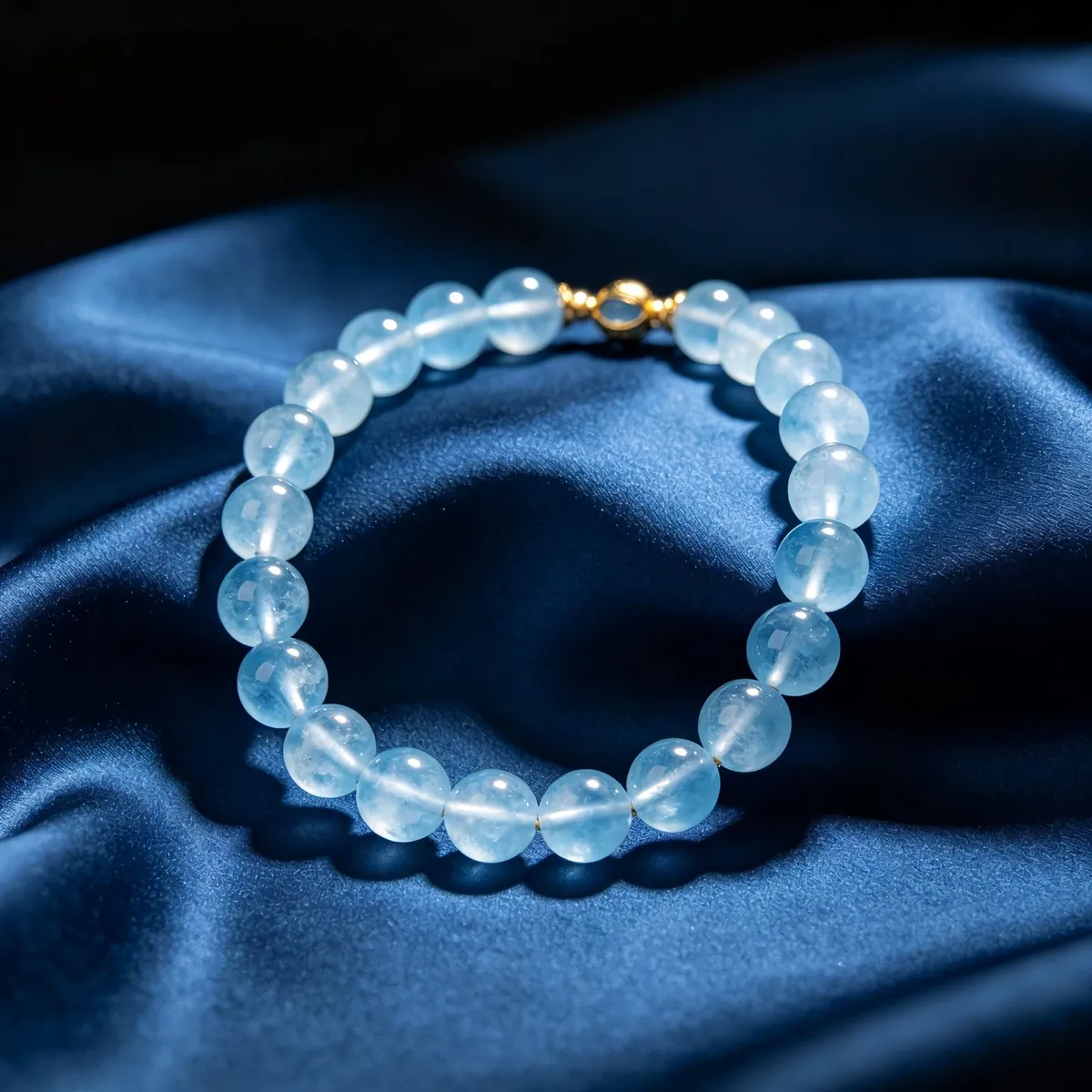
None of this is a promise. Think of these meanings as a frame for reflection: a reminder to pause before you speak, to breathe, to choose calm. If you want a piece to wear with that intention, the Aquamarine Serenity Necklace for Calm Communication is designed around exactly this idea, with the stone sitting near the throat where the tradition places it.
How to Choose an Aquamarine Piece You'll Actually Wear
Birthstone jewelry often goes unworn because it's chosen for the stone and not for the person. Before you buy, work through this checklist:
- Color first. Genuine aquamarine ranges from nearly colorless to a saturated sky blue. Deeper blue usually costs more; very pale stones are common and perfectly lovely but should be priced accordingly. Ask whether the color is natural or heat-treated — heating is standard and accepted in the trade, but you should know.
- Clarity. Aquamarine is typically eye-clean. Visible cracks or cloudy patches in a small stone are a reason to look elsewhere or expect a lower price.
- Cut and setting. Small stones look best in simple settings — a bezel or a few prongs — so the color isn't lost. A pendant or stud earring shows off pale blue better than a wide band.
- Metal. Silver and white gold keep the cool tone; yellow gold warms it and reads more classic. Both work — pick based on what the wearer already owns.
- Everyday durability. Aquamarine is reasonably hard but not indestructible (more below). A pendant or earrings survive daily life better than a ring worn to the gym.
- Chain length and fit. For necklaces, 16–18 inches is the most common range; 16 inches sits at the collarbone, 18 inches rests just below it. If you're gifting, 18 inches with an adjustable extender is the safest choice.
- Provenance and honesty. A reputable seller will tell you the stone's origin if known, whether it's treated, and what the metal is (sterling silver, gold-plated brass, solid gold). Vague listings are a warning sign.
Tradition and evidence, side by side
It's worth being clear about the line between lore and fact, because a trustworthy birthstone guide should never blur them.
| Claim | Status | What to know |
|---|---|---|
| Aquamarine calms communication and eases fear | Traditional lore | Believed to support calm expression; not a treatment for anxiety or any condition |
| Aquamarine brings safe passage to travelers | Historical folklore | A sailor's talisman tradition; symbolic only |
| Aquamarine is a beryl (with emerald, morganite) | Verifiable fact | Confirmed by mineralogy |
| Aquamarine has a Mohs hardness of 7.5–8 | Verifiable fact | Durable for jewelry, but softer than diamond, sapphire, or quartz |
| Aquamarine fades in strong sunlight | Verifiable fact | Prolonged direct sun can dull color over time; store away from windows |
| Aquamarine is safe in ultrasonic cleaners | Conditional | Usually fine if untreated and without fractures; warm soapy water is always safe |
| Aquamarine is the March birthstone | Verifiable fact | Standard modern birthstone list |
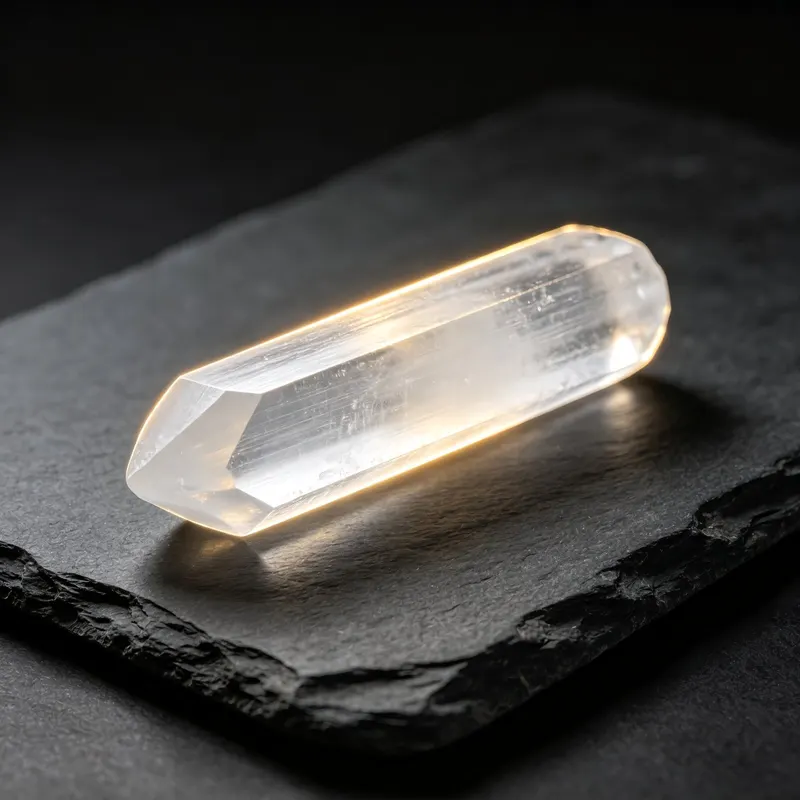
Care basics: clean with lukewarm water and a drop of mild soap, rinse, and pat dry with a soft cloth. Avoid harsh chemicals, chlorine, and steam cleaners on fractured or treated stones. Store separately from harder gems so it doesn't get scratched. For keeping the piece feeling "clear" in the traditional sense, many people pair aquamarine with a Selenite Cleansing Wand for Energy Clearing — a practice rooted in ritual, not chemistry.
Realistic Price Expectations
Aquamarine is more affordable than its beryl cousin emerald, but prices swing widely with color and size. As a rough guide for US shoppers:
- Under $50: small genuine stones in sterling silver or gold-plated settings, or aquamarine paired with other stones. Expect pale color and simple designs.
- $50–$150: a solid everyday pendant or pair of earrings in sterling silver with a clean, well-cut stone. This is the sweet spot for a meaningful gift.
- $150–$400: larger or more saturated stones, solid gold settings, or more intricate designs.
- $400+: fine jewelry territory — deep blue stones, solid gold, precise setting work.
Be cautious of "aquamarine" listings priced far below these ranges; they're often glass, synthetic spinel, or dyed quartz. Ask for the stone's treatment status and metal content in writing.
Gifting a March Birthday
A birthstone gift lands best when it fits the person's daily life, not just their birth month. A few practical approaches:
- For the everyday minimalist: a small pendant on a fine chain. The Aquamarine Serenity Necklace is a natural fit, and the throat placement matches the traditional "communication" association.
- For someone going through a transition — a move, a new job, a big conversation — frame the gift around new beginnings and steady nerves rather than "luck."
- For the crystal-curious: pair the jewelry with a small ritual object, like a selenite wand, and explain the tradition honestly: "It's said to invite calm — it's a reminder, not a fix."
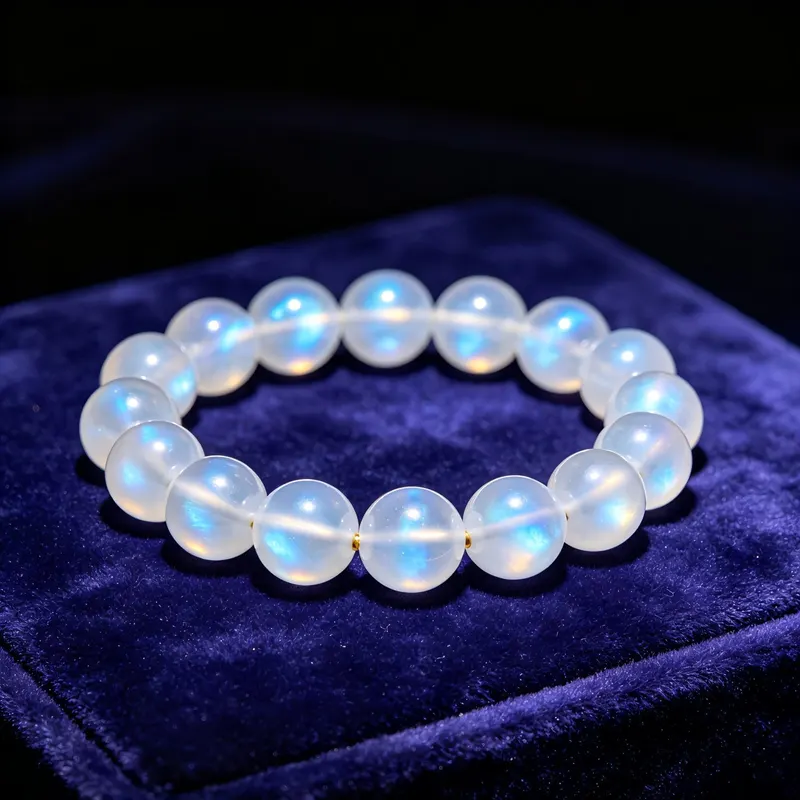
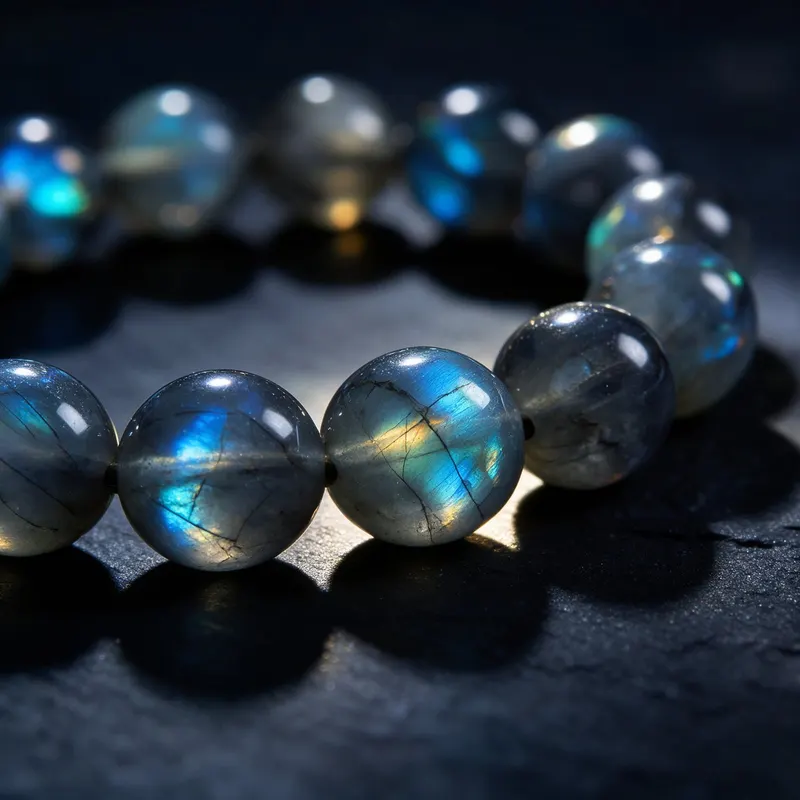
- For the person who already owns a lot of jewelry: consider a stone they don't have. If they love aquamarine's cool palette, Rainbow Moonstone Bracelet for Intuition & New Beginnings shares the watery, intuitive mood and layers well.
- For a Pisces or a water sign: aquamarine is a natural pairing; our Pisces guide explains why.
Include a short note about the stone's meaning — "the stone of calm waters" — and the care instructions. That small bit of context turns a piece of jewelry into something the recipient understands.
FAQ
People Also Ask
What is March's birthstone?
Aquamarine, a pale blue variety of beryl traditionally associated with calm communication, courage, and serenity.
Is aquamarine durable enough for everyday wear?
Yes, with care. At 7.5–8 on the Mohs scale it's suitable for pendants, earrings, and occasional-wear rings, but it can scratch and should be kept away from hard knocks and prolonged direct sunlight.
How can I tell real aquamarine from glass or synthetic?
Real aquamarine is usually eye-clean with subtle color zoning and a cool, slightly greenish-blue tone; glass often shows tiny bubbles, and synthetics can look too uniform. Buy from sellers who state the stone's treatment and metal content, and ask for a return policy.
What's a good first aquamarine gift?
A sterling silver pendant on an adjustable 16–18 inch chain. It's wearable, affordable in the $50–$150 range, and easy to layer with pieces the recipient already owns.
A Final Word
Aquamarine earns its place as the March birthstone not through drama but through steadiness — a cool blue that's easy to live with and a tradition that points toward calm, clear expression. Choose a piece for the person who'll wear it, be honest about what's lore and what's mineralogy, and it becomes more than a birthstone. It becomes a small, daily reminder to breathe before you speak.
Crystals and birthstone lore are offered for reflection, tradition, and wellness — not as medical advice. They are not medical devices and do not diagnose, treat, cure, or prevent any condition.