Why Birthstones Still Matter (and Where They Get Confusing)
If you've ever typed "what's my birthstone" into a search bar, you've probably noticed that the answer depends on who you ask. February is amethyst — unless you're reading an older list that says pearl or bloodstone. June has three official stones. October has two. And if you were born in a month with a precious gem you'll never afford, you may have wondered whether a more accessible stone "counts."
Here's the reassuring part: birthstones were never a single fixed list. They're a layered tradition — part biblical scholarship, part Victorian sentiment, part modern jewelry-industry standardization — and that looseness is exactly what makes them useful. You aren't picking the "correct" stone so much as choosing a stone that gives you a reason to pause, reflect, and pay attention to something you care about.
This guide walks through the history honestly, gives you both the traditional and modern lists, and — because we sell crystals — spends real time on the practical side: what these stones actually are, how hard they are, how to care for them, and how to choose one without overspending or overpromising yourself. Crystals are for reflection and ritual; they are not medical devices, and no stone will fix your finances or your relationships for you.
The History of Birthstones, Without the Mythology Fog
The most-cited origin story points to the breastplate of the Jewish high priest, described in the Book of Exodus as bearing twelve stones arranged in four rows. Which twelve stones those were is genuinely uncertain — ancient gemstone names were translated and retranslated across languages, and scholars still debate the identifications. What's clear is that the twelve-stones-twelve-tribes-twelve-months association grew over centuries rather than arriving fully formed.
Two later developments shaped what you see today. First, in the first century, the historian Josephus drew a link between the breastplate stones and the zodiac, and later Christian writers connected the twelve stones to the twelve months and the twelve apostles. Second, the modern list was standardized in 1912 by the National Association of Jewelers (now Jewelers of America) — a trade organization, not an ancient authority. That list has been revised since: the American Gem Trade Association added tanzanite for December in 2002, and spinel was added as an August option in 2016.
So when someone tells you the "real" birthstone, the honest answer is: there are several real lists, and the modern one is about a century old. That's not a reason to dismiss the tradition — it's a reason to hold it lightly and enjoy it.
Birthstones by Month: Traditional vs. Modern
The table below pairs the modern list with commonly cited traditional alternatives. "Traditional" here means older or folkloric associations that still circulate; it is not a single authoritative source.
| Month | Modern Birthstone | Traditional / Alternative Stones | Commonly Associated With |
|---|---|---|---|
| January | Garnet | Rose quartz (older English lists) | Vitality, protection, steady energy |
| February | Amethyst | Pearl, bloodstone | Calm, clarity, reflection |
| March | Aquamarine | Bloodstone | Serenity, clear communication |
| April | Diamond | Clear quartz, white sapphire | Clarity, strength, commitment |
| May | Emerald | Chrysoprase, agate | Renewal, growth, abundance |
| June | Pearl, moonstone, alexandrite | Moonstone, rhodonite | Intuition, balance, new beginnings |
| July | Ruby | Carnelian, onyx | Passion, courage, motivation |
| August | Peridot, spinel | Carnelian, sardonyx | Growth, positive change |
| September | Sapphire | Lapis lazuli, peridot | Wisdom, truth, insight |
| October | Opal, tourmaline | Tourmaline (black for grounding) | Creativity, emotional balance |
| November | Topaz, citrine | Citrine | Joy, abundance, warmth |
| December | Turquoise, tanzanite, zircon | Turquoise, lapis lazuli | Protection, communication |
Notice how often the alternatives are the affordable stones. That's not an accident — many "traditional" lists preserved stones that ordinary people could actually find and wear, while the modern list leaned toward the jewelry trade's higher-value gems.
How to Choose Your Birthstone (or the Right Alternative)
You have three sensible paths, and none of them is wrong.
- Go literal. Wear the modern stone for your month. It's the easiest answer and the one most people recognize.
- Go traditional. Pick a folkloric alternative that resonates with you — especially useful if the modern stone is a precious gem outside your budget.
- Go by intention. Choose the stone whose traditional associations match what you're working on right now, regardless of month. Many people do this and simply call it their "personal stone."
Practical checkpoints before you buy:
- Know the hardness. Stones under 7 on the Mohs scale scratch and chip easily and belong in pendants or earrings, not daily-wear rings.
- Check water and sun sensitivity. Several popular birthstones — opal, pearl, turquoise, selenite — should not be soaked or left in direct sun.
- Match the setting to your life. A bracelet you wear typing all day takes more abuse than a pendant.
- Ask what "natural" means. Many affordable beads are reconstituted, dyed, or heat-treated. That's fine for reflection purposes, but the seller should say so.
- Set a realistic budget. Bead bracelets typically run $20–$60; sterling pendants $40–$120; raw clusters $25–$80. If a "natural ruby" bracelet costs $15, it isn't ruby.
Month-by-Month Notes and Stones Worth Considering
January through April
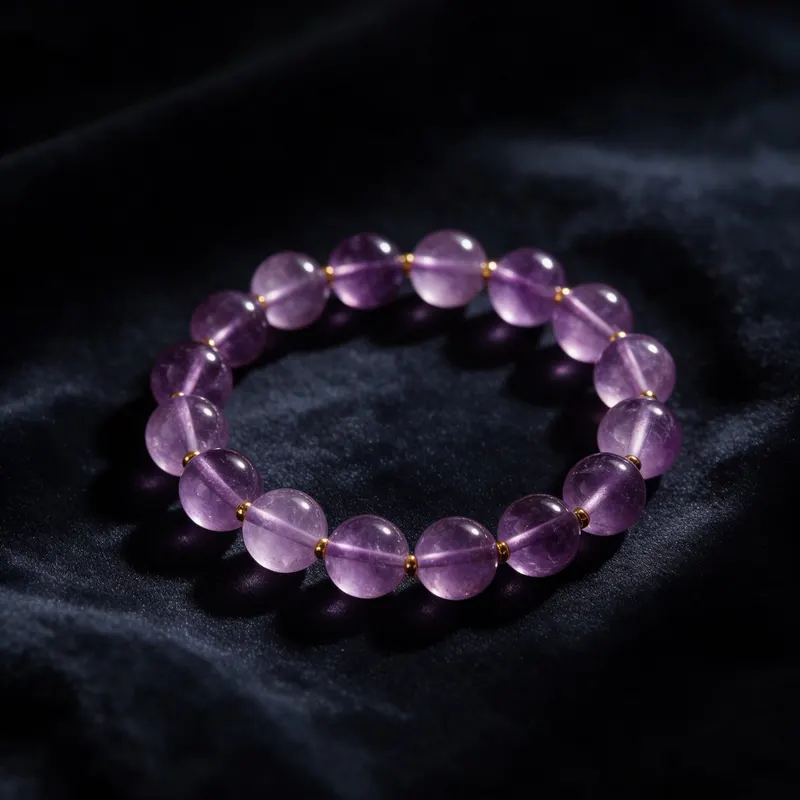
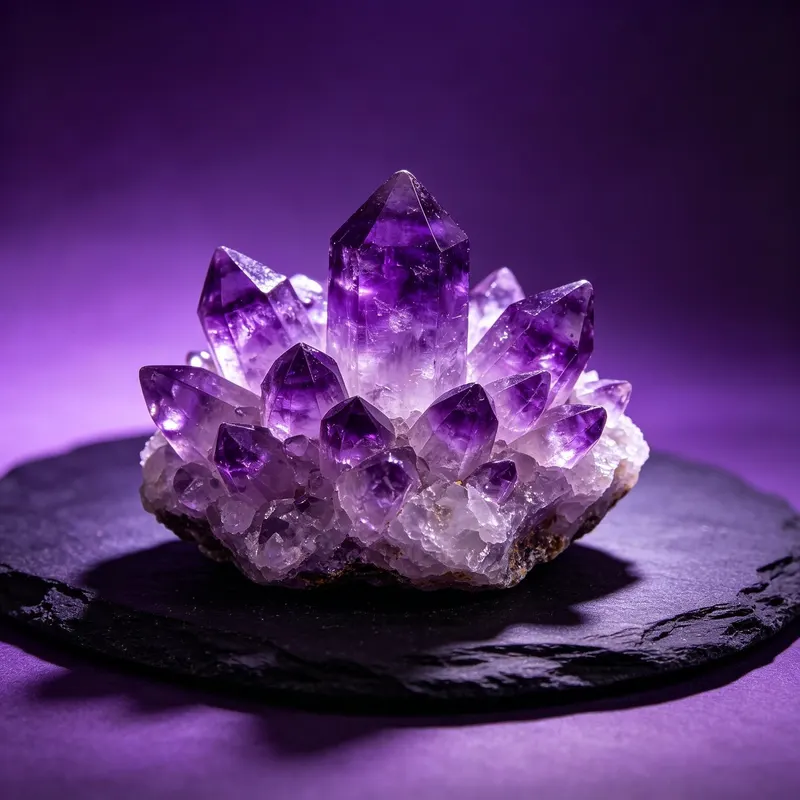
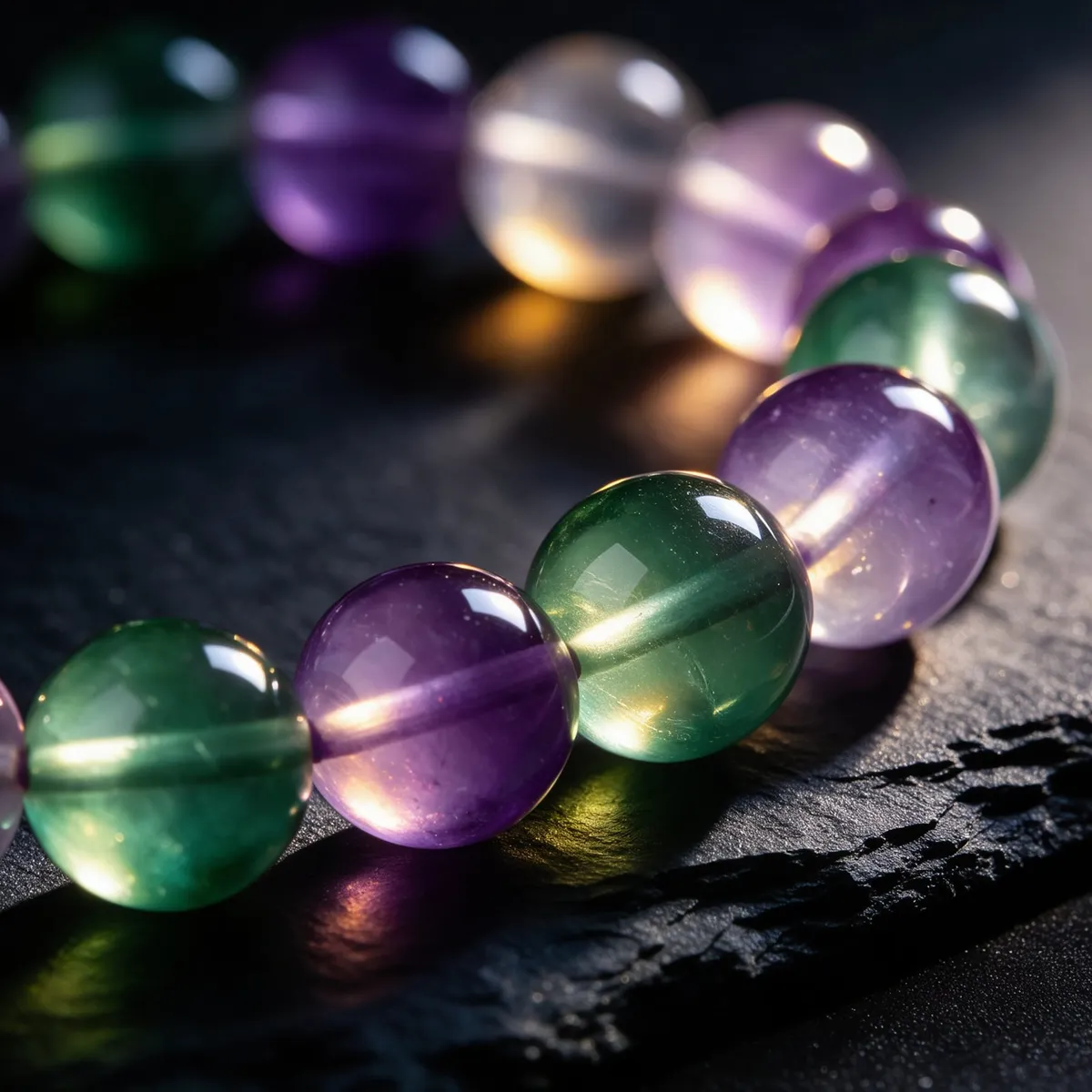
Garnet is a family of minerals, not one stone — the deep red pyrope is the classic. It's reasonably hard (6.5–7.5) and fine for everyday wear. Amethyst (February) is quartz, hardness 7, and one of the most forgiving birthstones you can own; it fades in prolonged direct sunlight, so store it away from a bright windowsill. If you want it close to the skin, an Amethyst Healing Bracelet for Calm & Clarity is a low-commitment way to try the stone, while a Raw Amethyst Cluster for Meditation & Altar suits a bedside or desk ritual better than jewelry.
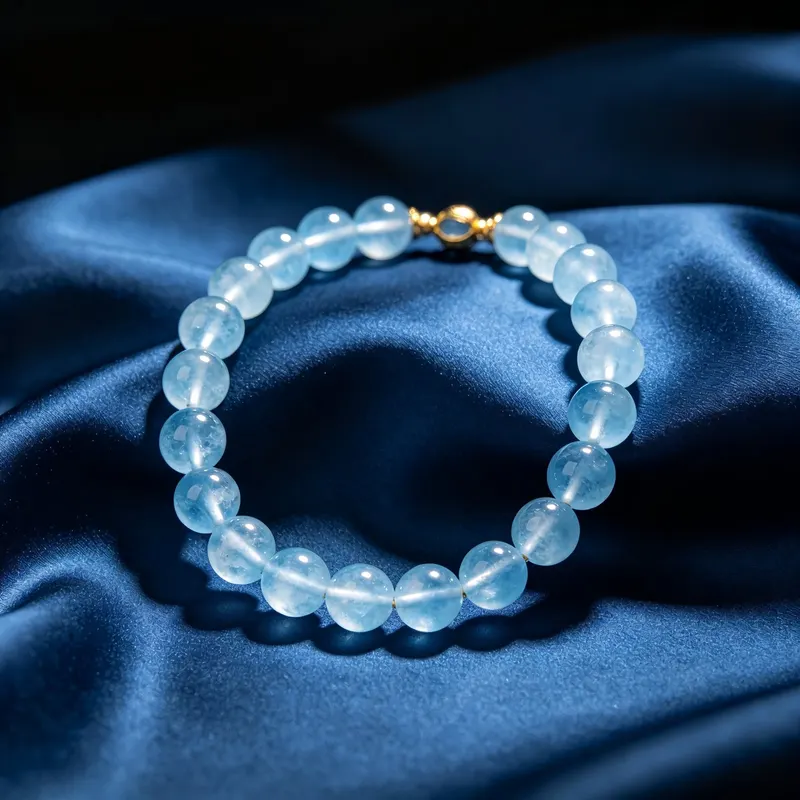
Aquamarine (March) is beryl — the same mineral family as emerald — with a hardness of 7.5–8, making it genuinely durable. It's traditionally associated with calm and clear speech; if that's your focus, the Aquamarine Serenity Necklace for Calm Communication keeps the stone where you'll see it. April's diamond is the hardest natural material at 10, but clear quartz (hardness 7) is the long-standing affordable stand-in and is believed by many to carry a similar clarity symbolism.
May through August
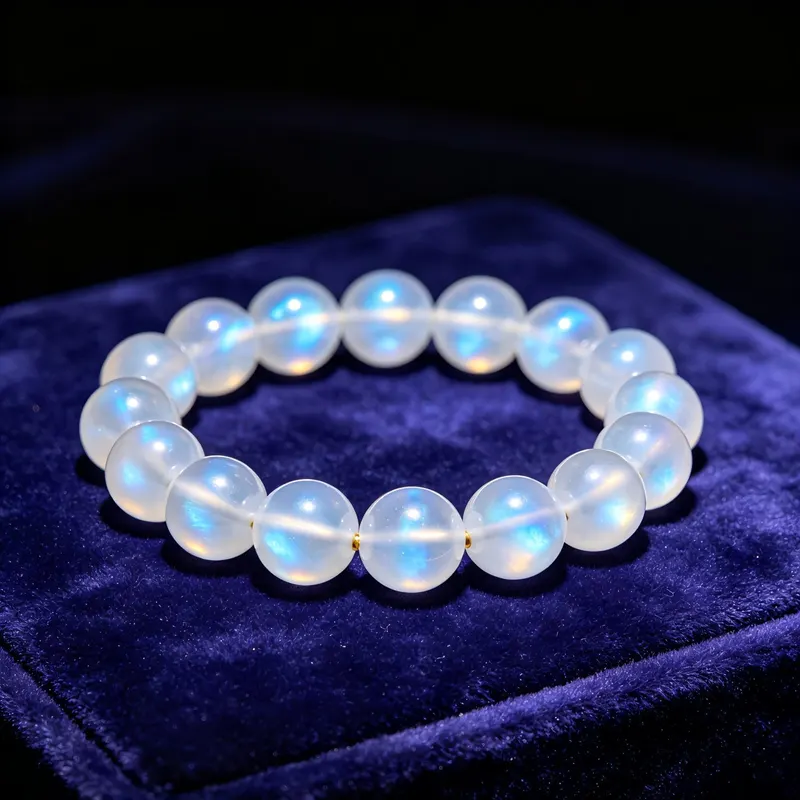
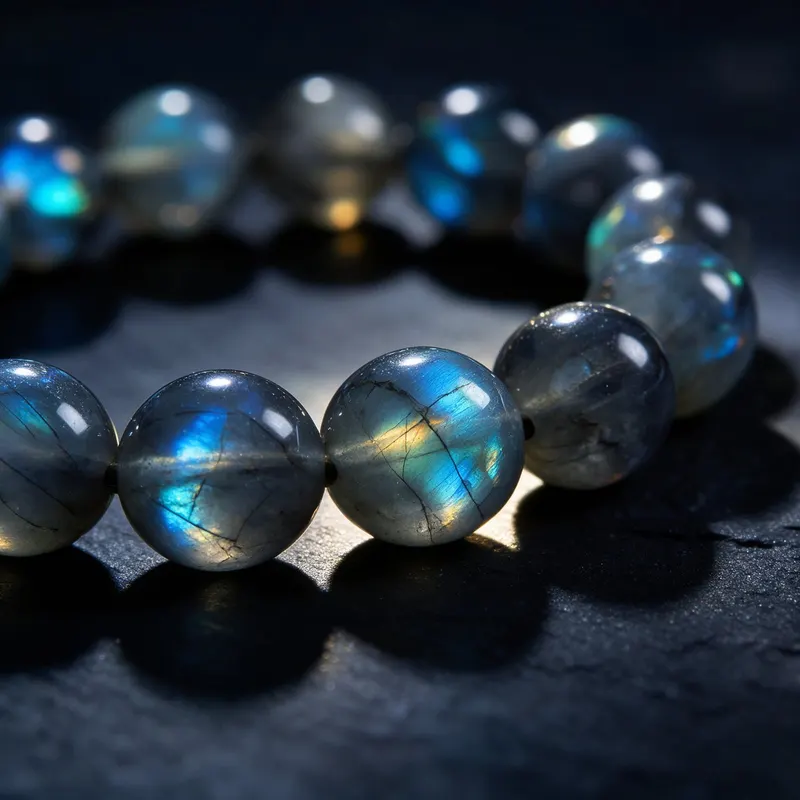
Emerald (May) is beryl with inclusions so characteristic that gemologists call them "jardin," or garden. It's brittle for its 7.5–8 hardness and dislikes ultrasonic cleaners. June is the month with the most options: pearl (soft, 2.5–4.5, and damaged by perfume and hairspray), moonstone (6–6.5, sensitive to knocks), and alexandrite (8.5, rare and expensive). Moonstone's association with intuition and new beginnings makes it a popular choice for life transitions — the Rainbow Moonstone Bracelet for Intuition & New Beginnings is a good example of the stone in an everyday format.
July's ruby is corundum at hardness 9, second only to diamond, which is why fine ruby is priced accordingly. Carnelian, a chalcedony at 6.5–7, is the traditional affordable alternative and is associated with motivation and creative fire. August's peridot (6.5–7) is one of the few gemstones that forms in the mantle and arrives on Earth via meteorites and volcanic rock — a genuinely interesting fact you can share at dinner.
September through December
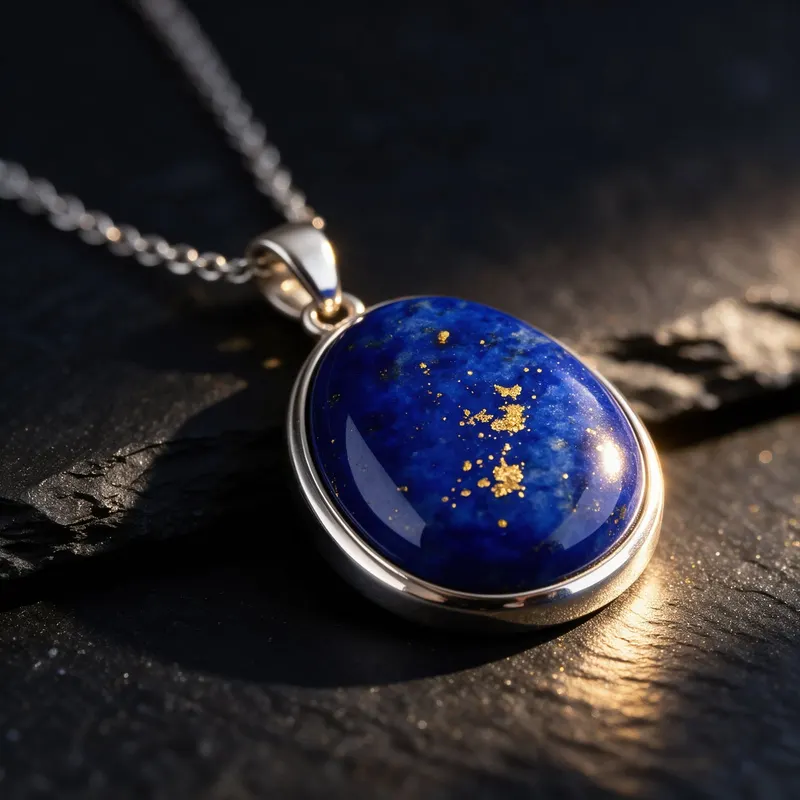
Sapphire (September) is corundum in any color but red, hardness 9, and about as durable as a colored stone gets. Lapis lazuli, the traditional alternative, is much softer (5–6) and porous — it should never be soaked, since it can absorb water and cleaning agents. If wisdom and communication are your themes, the Lapis Lazuli Wisdom Pendant, Gold-Plated Chain keeps a fragile stone out of harm's way in a pendant setting.
October offers opal (5.5–6.5, sensitive to heat and dryness) and tourmaline (7–7.5, durable and available in nearly every color). Black tourmaline is the grounding variant many people choose for protection work. November's citrine is quartz at hardness 7 and traditionally associated with abundance and joy — a Citrine Abundance Bracelet for Prosperity & Joy is a common pick, though it's worth saying plainly that no stone deposits money in your account. December's turquoise is porous (5–6) and often stabilized with resin; tanzanite is 6–7 and should be worn with care; zircon is 6–7.5 and has the highest refractive index of the traditional birthstones.
Tradition vs. evidence: what holds up
It's worth separating two kinds of claims, because they're often blended together in crystal writing.
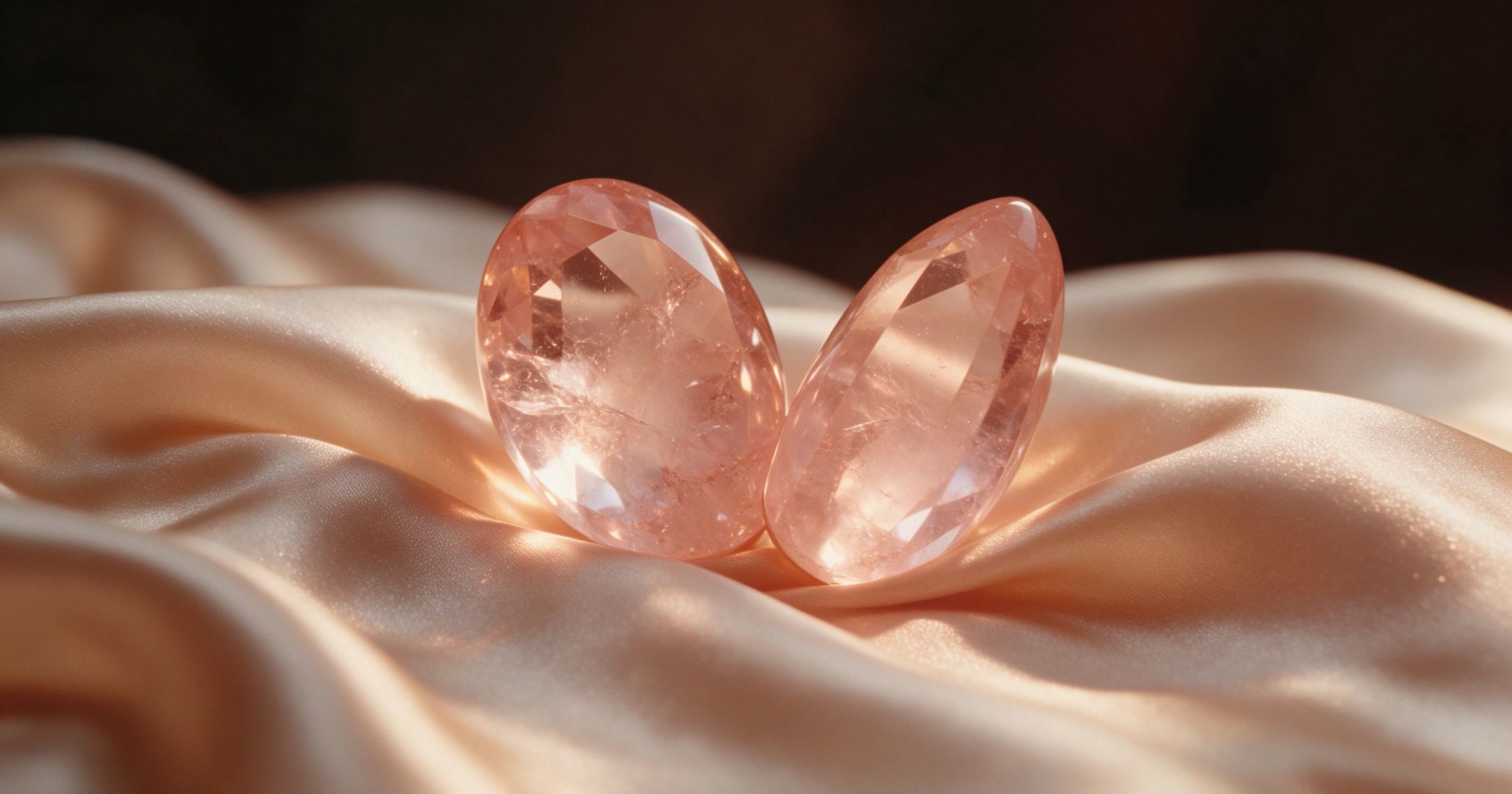
What the tradition says: Birthstones have been linked to protection, calm, courage, abundance, love, and intuition for centuries, and those associations are meaningful to many people as a framework for reflection. Amethyst is traditionally associated with sobriety and calm; citrine with prosperity; rose quartz with the heart; black tourmaline with grounding. These are cultural and symbolic claims, not measurable properties. We present them as invitations, not promises.
What we can verify: mineral identity, hardness, and care requirements. These are testable and matter for how long your stone lasts.
- Mohs hardness: Diamond 10; ruby and sapphire 9; aquamarine and emerald 7.5–8; amethyst, citrine, and clear quartz 7; garnet 6.5–7.5; moonstone 6–6.5; opal 5.5–6.5; lapis lazuli and turquoise 5–6; pearl 2.5–4.5.
- Water sensitivity: avoid soaking opal, pearl, turquoise, lapis lazuli, and selenite. Warm water and a soft cloth are fine for quartz-family stones.
- Sunlight sensitivity: amethyst, rose quartz, and citrine can fade with prolonged direct sun. Store them in a pouch or box.
- Chemical sensitivity: pearls, opals, and turquoise dislike perfume, chlorine, and household cleaners. Put jewelry on last and take it off first.
- Cleaning: lukewarm water, mild soap, soft brush for hard stones; dry cloth only for pearls, opals, and porous stones.
If a seller claims a stone will cure a condition or guarantee an outcome, that's a claim no one can verify — and it's not one we make. Crystals are for reflection and are not medical devices.
Frequently Asked Questions
Can I wear a birthstone that isn't my month?
Yes. There's no rule against it. Many people choose stones by intention rather than birth month, and the tradition itself has never been enforced by anyone. Pick what you'll actually wear.
Why does my birthstone have more than one option?
Because the lists were compiled at different times by different groups. June, October, and December have multiple modern options, and older lists add more. Treat the extra options as flexibility, not confusion.
Are cheaper alternatives like clear quartz or carnelian "real" birthstones?
They're recognized traditional alternatives, not substitutes we invented. Clear quartz stands in for diamond, carnelian for ruby, lapis lazuli for sapphire. They're real minerals with their own histories — just be honest with yourself that you're wearing quartz, not diamond.
How do I care for a soft birthstone like opal, pearl, or turquoise?
Keep it away from water, perfume, and heat; wipe it with a dry soft cloth; store it separately so harder stones don't scratch it. For pendants and rings, take them off before showering, swimming, or cleaning.
A Closing Thought
Your birthstone is less a fact about you than an invitation — a small, tangible reason to slow down once a day and check in with what you're feeling. Whether you choose the modern stone, a traditional alternative, or something that simply catches your eye, the point is the pause, not the pedigree. Start with a stone you'll actually wear, care for it properly, and let the tradition do what traditions do best: give ordinary moments a little more meaning.