Why Black Tourmaline Finds You When You Need It Most
Maybe you have been feeling porous lately — like the noise of a crowded office, a difficult family dynamic, or the constant ping of notifications is seeping straight into your nervous system. You want something to hold, something to remind you to close the door and come back to yourself. That is often when people start looking into black tourmaline.
Black tourmaline is one of the most widely used protective stones in modern crystal practice, and for good reason: it is dense, dark, and immediately tactile. It has a long history in traditional and folk healing as a stone of shielding and grounding, and it is genuinely easy to work with — no elaborate setup required. You can keep a piece on your desk, carry a tumbled stone in a pocket, or wear it as a bracelet so the reminder travels with you.
This guide covers what black tourmaline is traditionally associated with, how to choose a piece, how to care for it (including what its real physical limits are), and how to build a simple, sustainable practice around it. We will keep the lore clearly labeled as lore, and the geology clearly labeled as geology.
Black Tourmaline Meaning and Symbolism
In crystal lore, black tourmaline is the classic "shield" stone. It is believed to deflect or absorb negative energy, which is why it appears so often in protection grids, entryway bowls, and workplace desk setups. Unlike stones associated with expansion or joy, black tourmaline is traditionally associated with boundaries — the quiet, unglamorous work of staying centered when the room around you is not.
It is also strongly linked to grounding. Many practitioners describe it as a stone that pulls scattered energy downward, back toward the body and the earth, which is why it is often recommended for people who feel unmoored by anxiety, overstimulation, or too much time in front of screens. Think of it less as a magic eraser and more as a physical anchor for a mental intention.
Because black tourmaline is a family of minerals (more on that below) rather than a single gem species, pieces vary a lot in appearance. Some are matte and almost charcoal; others are glossy and deeply black; some show faint striations or a slightly schorl-like texture. That variation is normal and part of the charm.
Black Tourmaline Properties at a Glance
Here is a practical summary of the qualities most commonly attributed to black tourmaline, along with how people actually use it day to day.
- Protection: Traditionally believed to deflect negativity; often placed at doorways or worn during draining situations.
- Grounding: Believed to support a sense of stability and presence; useful during transitions, travel, or high-stress periods.
- Boundary-setting: A symbolic reminder to say no, step back, and protect your attention.
- Emotional steadiness: May support calm during conflict or chaos — as a focus for breathing and reflection, not as a substitute for coping skills.
- Screen-time companion: Frequently kept near routers, laptops, and monitors as a symbolic "off switch" for digital overwhelm.
Crystals are for reflection and are not medical devices.
How to Choose a Black Tourmaline Piece
Black tourmaline comes in several forms, and the right one depends on how you plan to use it. Here is a quick comparison to help you decide.
| Form | Best For | What to Look For | Typical Price Range (USD) |
|---|---|---|---|
| Tumbled stone | Pocket carry, grids, altar bowls | Smooth edges, even color, no obvious cracks | $5–$20 |
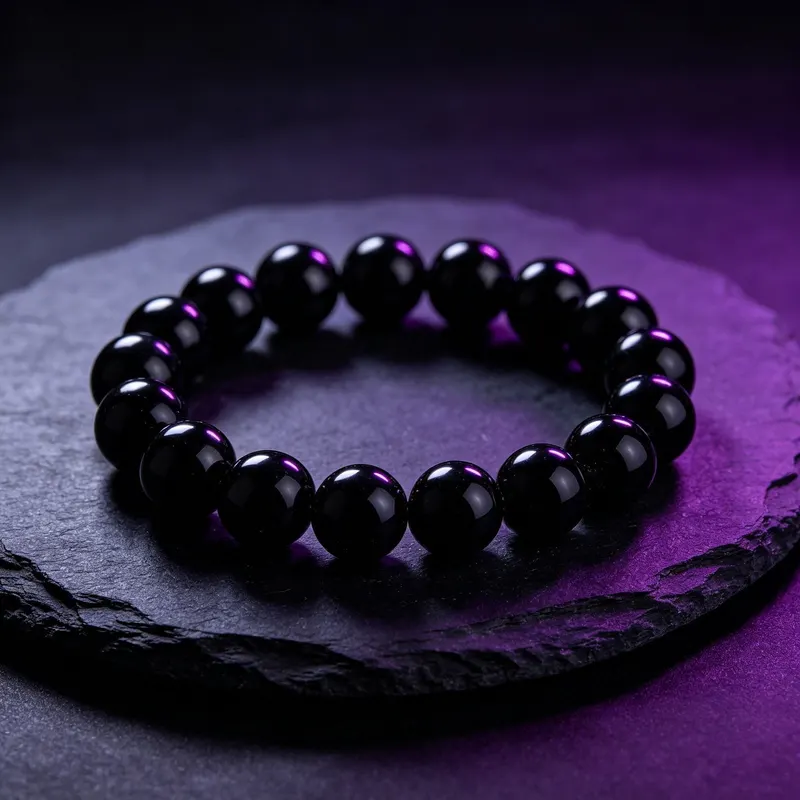
| Bracelet (beaded) | Daily wear, workplace grounding | Consistent bead size, sturdy elastic, comfortable fit | $20–$60 |
| Raw / rough chunk | Desk, entryway, larger displays | Solid weight, stable base, minimal crumbling | $10–$40 |
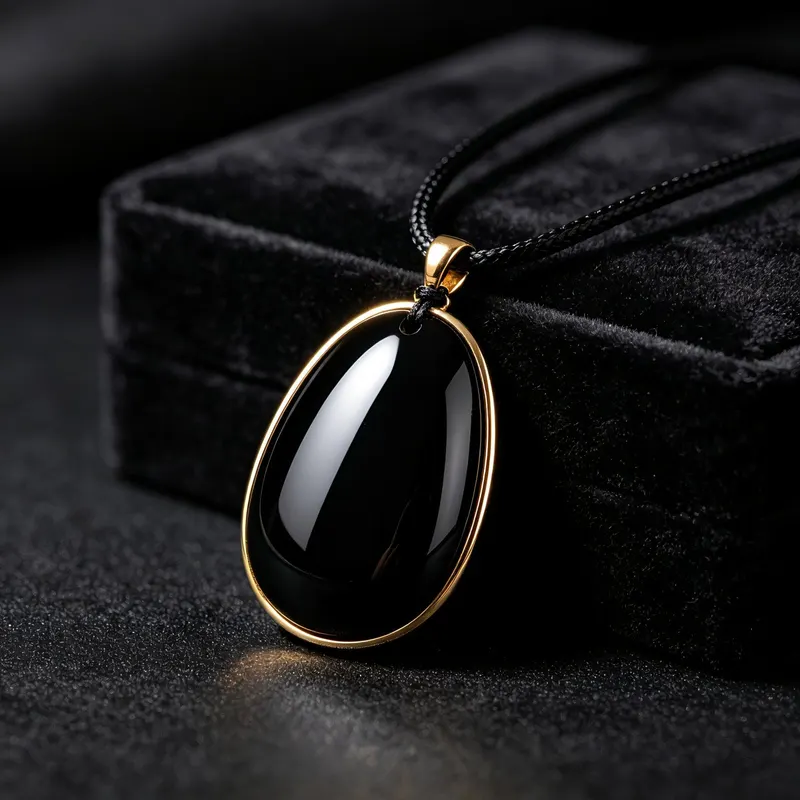
| Pendant | Wearing close to the chest | Secure setting, comfortable chain, genuine stone | $30–$90 |
| Specimen / large piece | Collectors, statement decor | Clear crystal structure, good luster, no repairs | $50–$300+ |
A few buying tips: black tourmaline is opaque, so you are mostly judging weight, finish, and setting quality rather than clarity. Be wary of pieces that feel suspiciously light or have a painted-looking surface. For bracelets, check the elastic and bead holes — a well-strung bracelet should feel snug but not tight. If you are buying online, look for listings that name the stone plainly and show the actual piece you will receive.
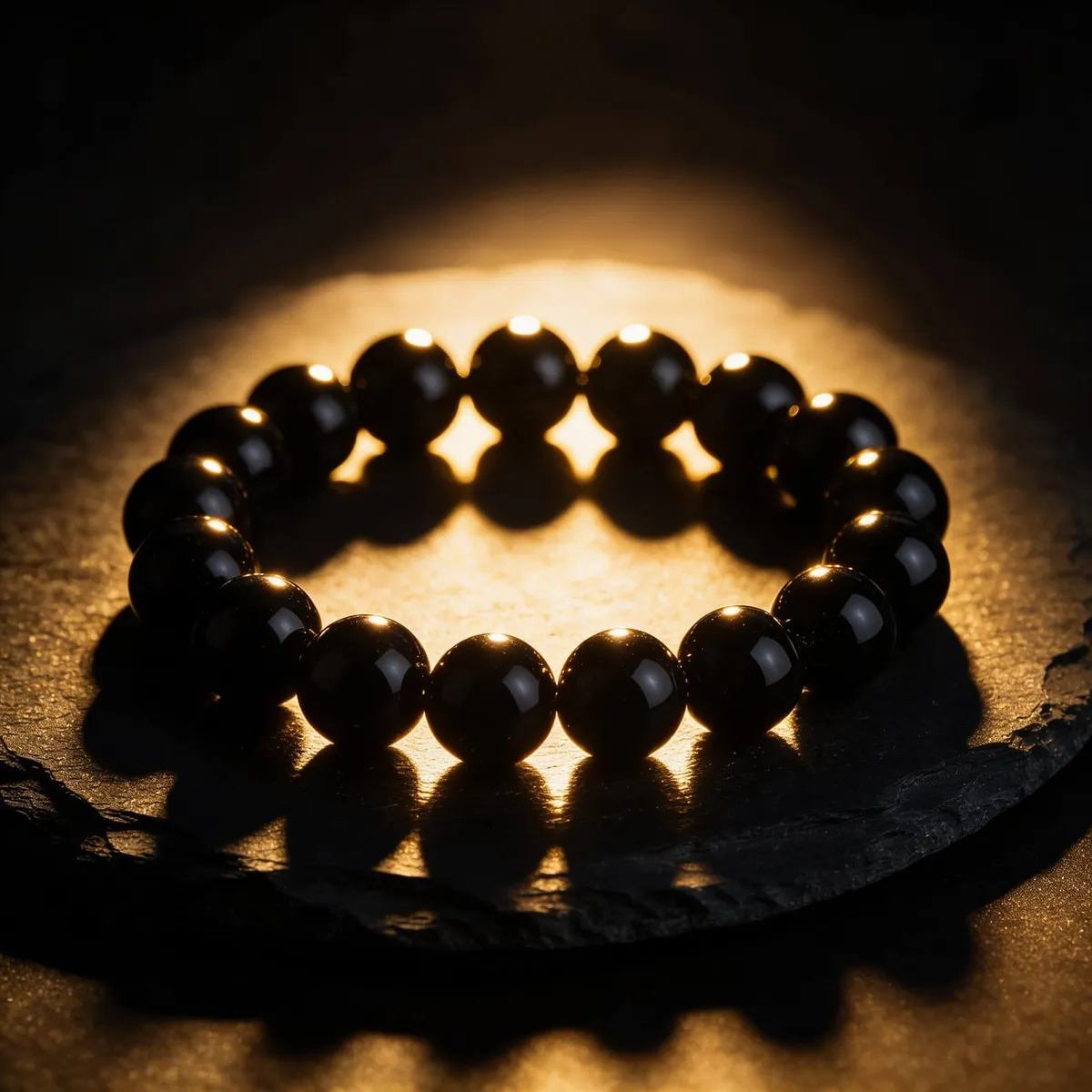
If you want a wearable option that doubles as a daily reminder, the Black Tourmaline Protection Bracelet for Grounding is a straightforward place to start. For a pendant-style alternative, the Black Obsidian Teardrop Protection Pendant Necklace offers a similar protective feel in a different stone.
Where to Place Black Tourmaline
Placement is where black tourmaline becomes genuinely useful as a practice rather than just a pretty object. A few reliable spots:
- Front door or entryway: A symbolic "leave it at the door" cue for the transition between outside and home.
- Desk or workspace: Near your monitor or keyboard, especially if you spend long hours on calls or in shared spaces.
- Bedside table: For people who want a grounding object within reach at night; keep it simple and out of the way of sleep essentials.
- Room corners: A common placement in protection grids; one piece per corner is plenty.
- Bag or pocket: A tumbled stone or bracelet makes the practice portable.
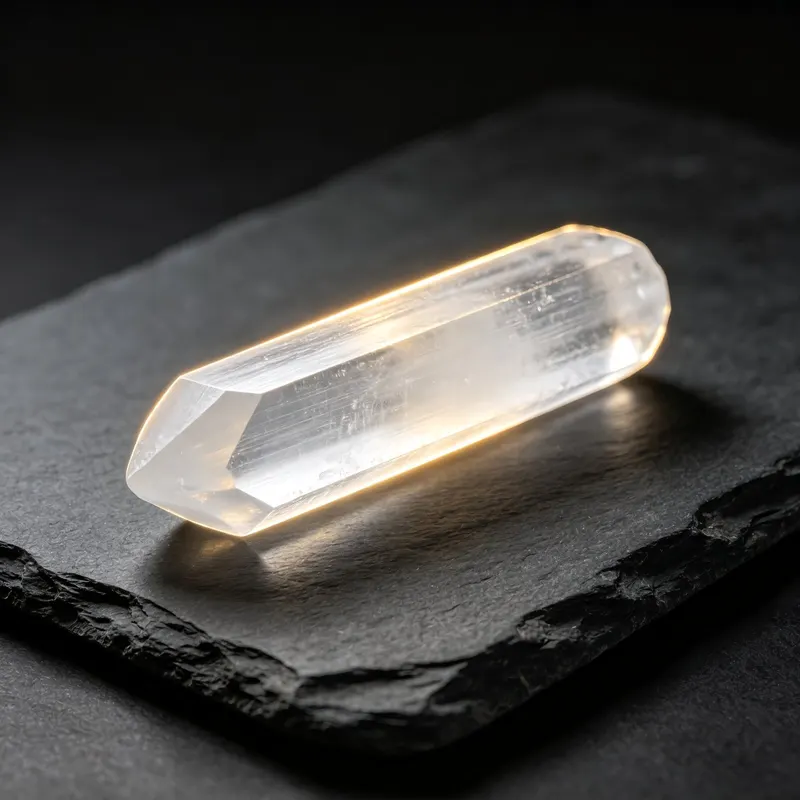
You do not need many pieces. One well-placed stone that you actually notice is more useful than a shelf full of objects you walk past. If you are building a small protection setup, pair black tourmaline with a cleansing tool like the Selenite Cleansing Wand for Energy Clearing to keep the routine simple.
A Simple Grounding Ritual
When you feel scattered, try this five-minute practice. Sit comfortably and hold a piece of black tourmaline in each palm, or one piece in your dominant hand. Breathe slowly — in for a count of four, out for a count of six. As you exhale, imagine roots extending from the soles of your feet into the earth. As you inhale, imagine steady, dark, quiet energy moving up through those roots. Repeat for several rounds, then set the stone down and notice how your body feels.
This is a grounding exercise with a physical anchor. The stone is not doing the breathing for you; it is giving your attention somewhere to rest. That is the honest, useful version of the practice. For more ideas, see our guide to grounding crystals.
What folklore claims — and what is verifiable
It is worth separating the lore from the physical facts, both so you can use the stone well and so you can care for it properly.
Traditional lore
- Black tourmaline is believed to deflect negative energy and absorb what it cannot deflect.
- It is traditionally associated with grounding, protection, and boundary-setting.
- Many practitioners place it near electronics as a symbolic EMF companion.
- It is often described as a stone for empaths and highly sensitive people.
Verifiable facts
- What it is: "Black tourmaline" usually refers to schorl, the iron-rich black variety of the tourmaline mineral group. It is a real, naturally occurring mineral.
- Hardness: Tourmaline is roughly 7 to 7.5 on the Mohs hardness scale, which means it is durable enough for regular handling and jewelry but can still be scratched by harder materials like quartz or diamond.
- Water sensitivity: Black tourmaline is generally stable in water, but prolonged soaking is not recommended, especially for bracelets with elastic or metal components. A quick rinse and pat dry is fine.
- Sunlight: Black tourmaline is not especially sunlight-sensitive, but prolonged direct sun can fade elastic and metal fittings over time.
- Cleaning: Wipe with a soft, slightly damp cloth. Avoid harsh chemicals, ultrasonic cleaners, and sudden temperature changes.
- EMF claims: There is no established scientific evidence that crystals block or alter electromagnetic fields in a way that affects health. Treat "EMF companion" as a symbolic and habitual practice, not a protective device.
In short: the stone is real, durable, and pleasant to handle. The protective meaning is a tradition you can choose to work with. Neither of those facts requires the other to be true.
Cleansing and Caring for Black Tourmaline
Cleansing is a personal ritual, not a requirement. If you enjoy it, weekly is a reasonable rhythm during heavy use, and monthly is fine otherwise. Simple options include:
- Moonlight: Leave the stone on a windowsill overnight.
- Sound: A bell, singing bowl, or chime near the stone.
- Selenite: Rest the stone beside or on a selenite piece.
- Smoke: A brief pass through incense or dried herbs, if you enjoy that practice.
Skip saltwater soaks for bracelets and anything with metal, and avoid leaving elastic-banded pieces in direct sun for long periods. For storage, keep black tourmaline in a soft pouch or separate compartment so it does not scratch softer stones in the same box.
Frequently Asked Questions
Black tourmaline vs obsidian — what is the difference?
Both are dark, protective stones, but they are different materials. Black tourmaline (schorl) is a crystalline mineral traditionally associated with grounding and deflection. Obsidian is volcanic glass traditionally associated with truth, release, and shadow work. Many people keep both: tourmaline for boundaries, obsidian for honest reflection.
How often should I cleanse black tourmaline?
There is no fixed rule. Weekly during heavy use, or whenever the stone feels "stale" to you, is a common rhythm. Moonlight, sound, or selenite are all gentle options.
Can I wear a black tourmaline bracelet every day?
Yes, with care. Tourmaline is durable, but elastic and metal fittings wear out. Remove the bracelet for showering, swimming, and heavy exercise, and inspect the elastic periodically. If it stretches or frays, restring it.
Is black tourmaline safe for children or pets?
Small tumbled stones and beads are choking hazards, so keep them out of reach of young children and pets. Black tourmaline itself is not considered toxic, but it should not be chewed or ingested.
Shop the Stones
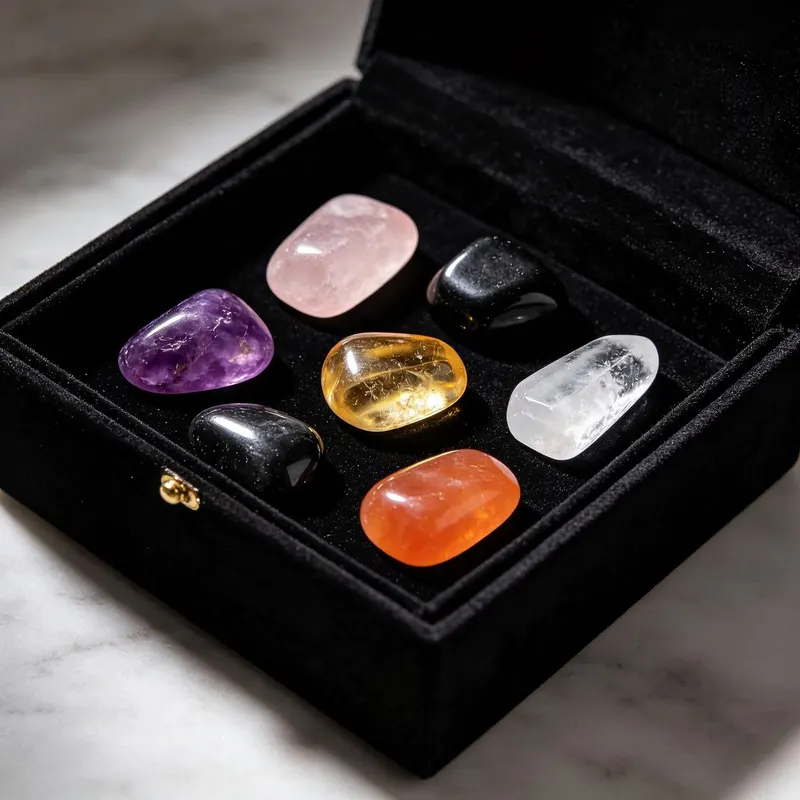
If black tourmaline feels like the right fit, start with one piece you will actually use. The Black Tourmaline Protection Bracelet is a good everyday option, and the Black Obsidian Teardrop Protection Pendant Necklace is a strong companion piece if you prefer a pendant. For a broader starting point, the Healing Crystal Starter Kit includes a range of stones to explore.
Keep Exploring
Crystals for Protection · Crystals for Grounding · Crystals for Empaths
Crystals are intended to support personal and spiritual well-being and are not medical devices. They do not diagnose, treat, cure, or prevent any disease. If you are struggling with your mental or physical health, please reach out to a qualified professional.