Two Dark Protectors With Different Feels
You are standing in a shop or scrolling a crystal site, and two stones keep catching your eye: one is a deep, matte black with a quiet weight to it, the other is glassy and almost liquid, catching the light in a way that feels sharper. Both are sold as "protection" stones. Both are black. So which one do you actually want on your wrist or around your neck?
The short answer is that black tourmaline and black obsidian are not interchangeable, even though they share a color and a reputation. In crystal tradition, tourmaline is described as a slow, steady shield—something you wear all day the way you'd wear a seatbelt. Obsidian is described as a fast, mirror-like reflector—something you reach for during a specific season of boundary-setting, truth-telling, or release. One is a background hum; the other is a spotlight.
This guide compares the two on meaning, feel, practical use, and care, so you can choose with clear expectations—or layer them deliberately. Everything below treats crystal work as a reflective, personal practice, not a medical or guaranteed outcome.
Black Tourmaline: The Steady Shield
Black tourmaline (often sold as schorl) is a boron silicate mineral that forms in long, striated crystals. In the metaphysical tradition, it is one of the most frequently recommended grounding stones—believed to absorb and transmute heavy or "dense" energy rather than simply deflect it. Practitioners often describe it as the stone you keep near you in ordinary, unglamorous circumstances: commutes, open-plan offices, crowded rooms, the hours when you feel scattered.
Because of that reputation, it is traditionally associated with boundaries and with a settled, rooted feeling—the sense of having both feet on the floor. Some people also keep it near electronics, a modern folk practice rather than a tested claim. If you want the fuller background, our tourmaline meaning guide goes deeper.
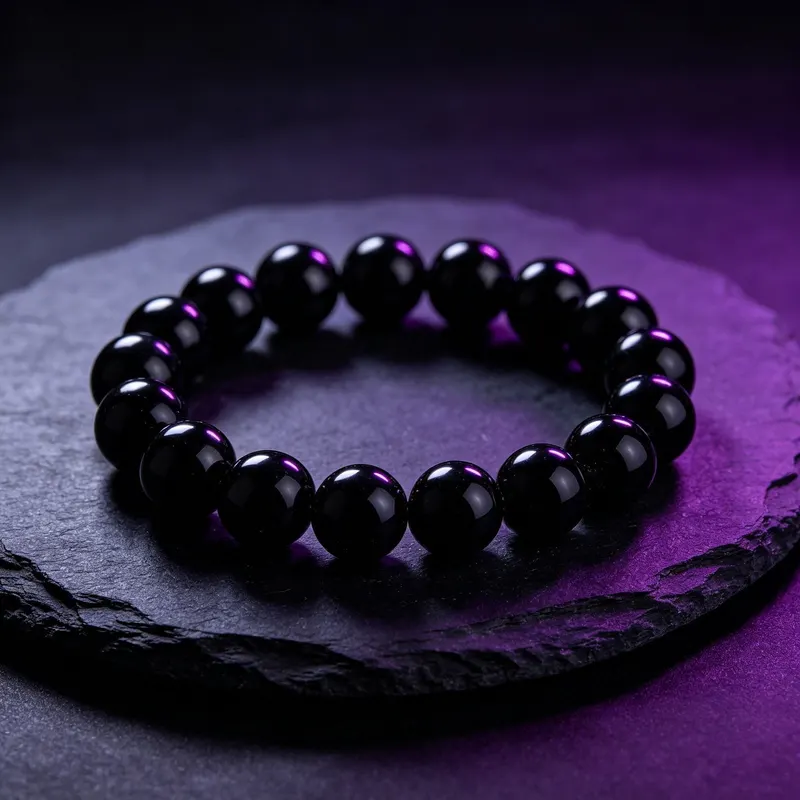
In daily wear, the Black Tourmaline Protection Bracelet for Grounding is the most practical format: it sits against the skin, works with almost any outfit, and is easy to keep on through a long day. People who prefer a stone they can forget about tend to favor tourmaline for exactly that reason—it doesn't ask for attention.
What it feels like to use
Wearers commonly describe tourmaline as calming rather than dramatic. It is a good first protection stone for someone who finds intense energy work overwhelming, and a sensible choice for anyone who wants a single piece they never have to think about switching out.
Black Obsidian: The Mirror
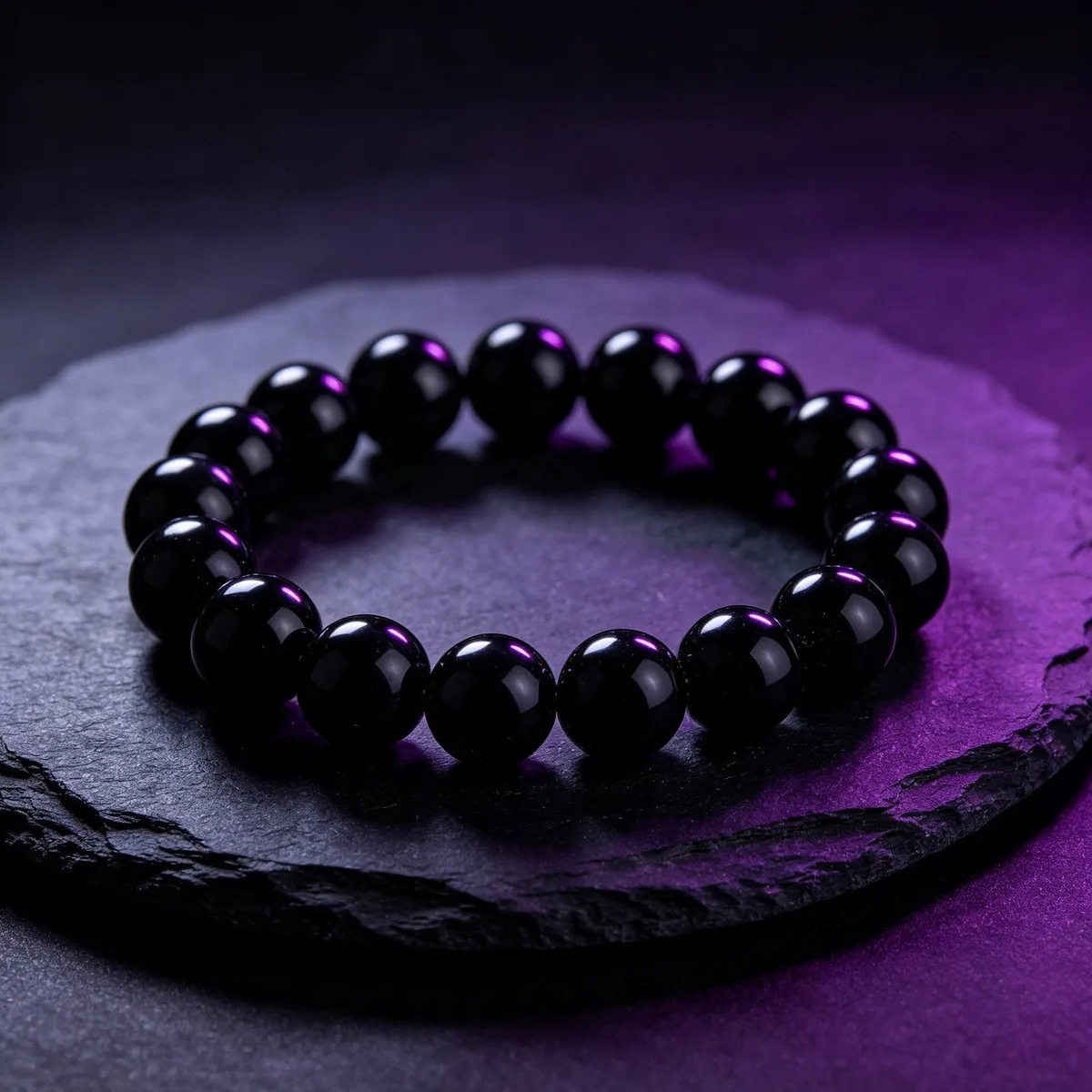
Black obsidian is volcanic glass—lava that cooled so quickly it never formed crystals. That origin story shapes how it is used. In tradition, obsidian is less a shield than a mirror: said to reflect negativity back to its source and, more importantly, to show you what you have been avoiding. It is traditionally associated with truth, shadow work, cord-cutting, and firm boundaries.
That makes it a more active stone. People often describe obsidian as "fast-acting"—useful when you are ending a draining dynamic, recovering from a difficult period, or doing deliberate self-reflection. It is not usually the stone you put on and forget; it is the one you put on when you want to pay attention. Our obsidian meaning guide covers the lore in more detail.
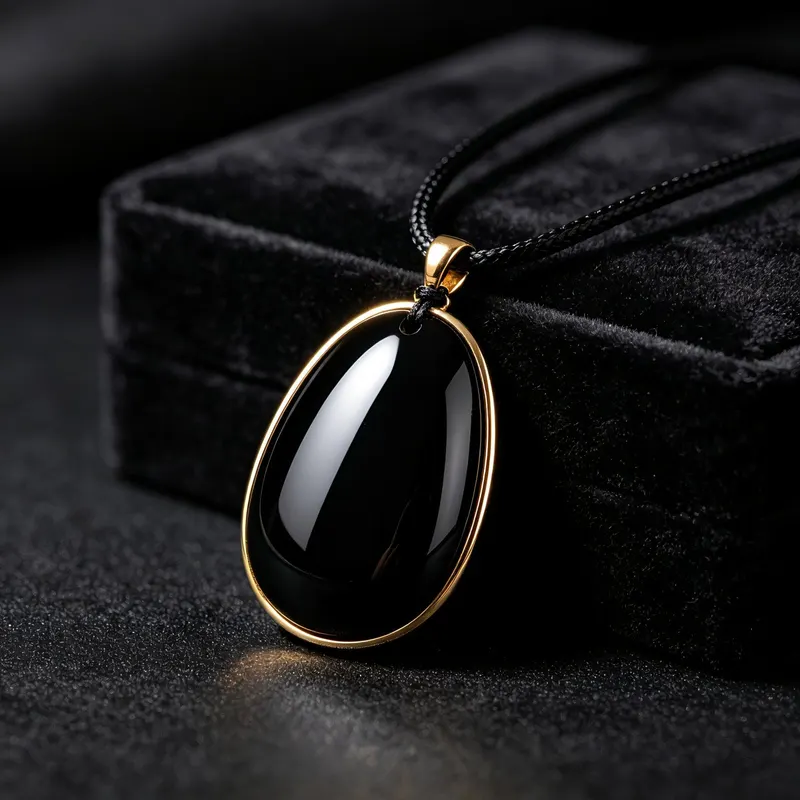
For a discreet, close-to-the-body format, the Black Obsidian Teardrop Protection Pendant Necklace keeps the stone at heart level, which many practitioners prefer for boundary and truth work.
What it feels like to use
Wearers often describe obsidian as clarifying but intense. If you are new to darker stones, start with shorter wear periods—a few hours at a time—and notice how you feel rather than pushing through discomfort.
Side-by-Side Comparison
Here is the practical difference in one view. "Tradition" reflects common metaphysical lore, not verified fact.
| Feature | Black Tourmaline | Black Obsidian |
|---|---|---|
| Traditional role | Grounding shield; absorbs and transmutes heavy energy | Mirror and reflector; reveals what needs releasing |
| Pace | Slow, steady, all-day | Fast, active, situational |
| Best for | Daily grounding, boundaries, busy or EMF-heavy spaces | Cord-cutting, shadow work, transitions, firm boundaries |
| Material | Crystalline mineral (schorl) | Volcanic glass (no crystal structure) |
| Mohs hardness | About 7–7.5 | About 5–5.5 |
| Durability in wear | More scratch-resistant; good for rings and daily bracelets | Softer and more brittle; better as pendants, cabochons, or handled pieces |
| Care needs | Rinse briefly, pat dry; avoid harsh chemicals | Wipe with a soft cloth; avoid knocks, sudden temperature change, and long soaking |
| Typical price (US) | Bracelets roughly $20–$60; finer pieces higher | Pendants roughly $25–$70; carved or large pieces higher |
How to Choose Between Them
Skip the "which is stronger" question—it isn't the useful one. Ask what you actually need right now. Use this checklist:
- Choose tourmaline if you want one piece to wear daily, dislike switching jewelry, or feel easily overwhelmed in busy environments.
- Choose obsidian if you are in an active transition—ending a relationship, leaving a job, setting a hard boundary—or want a stone for reflection and journaling.
- Consider your habits. If you are rough on jewelry, tourmaline's higher hardness makes it the safer daily bet; obsidian is better kept as a pendant or a piece you handle rather than knock against desks.
- Consider skin and fit. Bracelets are usually sold in 7–8 inch inner circumference; measure your wrist with a soft tape and add about half an inch for comfort. Pendants are more forgiving of sizing.
- Start with one. Wearing a single stone for a couple of weeks tells you more than buying both at once.
Can You Wear Them Together?
Yes—layering is common and, in tradition, complementary: a soft shield plus a sharp mirror. A frequent pairing is a tourmaline bracelet for steady background grounding with an obsidian pendant for closer, more active boundary work. If you are sensitive to stronger stones, introduce them one at a time so you can tell which is doing what.
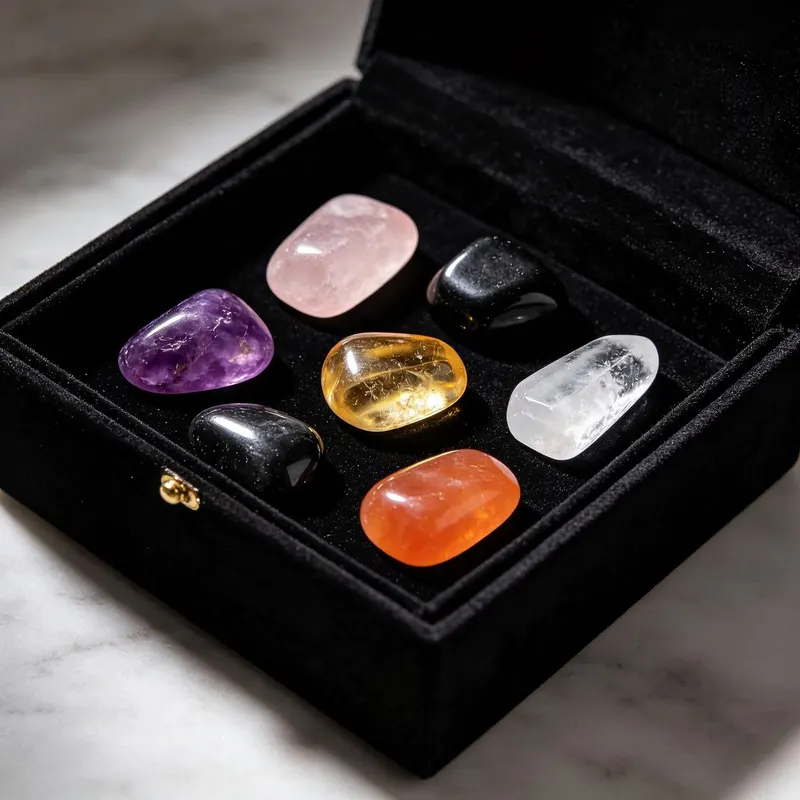
If you want to build a small protection set rather than a single piece, the Healing Crystal Starter Kit, 7 Stones + Guide includes a range of stones and a guide, which is a low-pressure way to experiment before committing to a larger piece.
The lore, and what we can actually verify
Crystal lore is worth understanding, but it should be kept separate from verifiable material facts. Here is the honest split.
Traditional (belief, not tested)
- Tourmaline is said to absorb and transmute heavy energy and to support grounding and boundaries.
- Obsidian is said to reflect negativity and reveal what needs releasing; it is associated with truth and shadow work.
- Both are traditionally "cleansed" regularly—often with sound, moonlight, or a selenite wand—because protection stones are thought to take on a lot.
Verifiable (material facts)
- Hardness: tourmaline is roughly 7–7.5 on the Mohs scale; obsidian is roughly 5–5.5. Obsidian scratches and chips more easily.
- Structure: tourmaline is crystalline; obsidian is glass with no crystal lattice, which is why it fractures with sharp conchoidal edges.
- Water and sunlight: neither is especially sun-sensitive, but obsidian should not be soaked for long periods or exposed to sudden temperature swings, which can cause cracking. Tourmaline tolerates a brief rinse but dislikes harsh cleaners and ultrasonic baths.
- Care: wipe both with a soft dry cloth. Store separately so harder stones don't scratch softer ones.
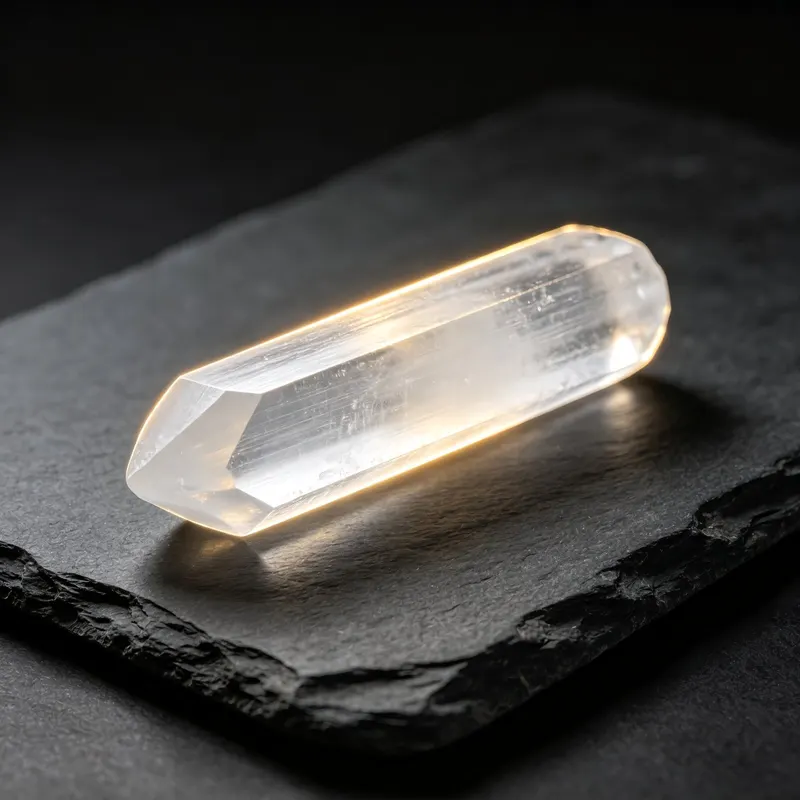
If you use a cleansing practice, the Selenite Cleansing Wand for Energy Clearing is a gentle, dry method that suits both stones without water exposure.
Crystals are for reflection and personal practice; they are not medical devices and do not diagnose, treat, cure, or prevent any disease.
Frequently Asked Questions
Which is stronger for protection, tourmaline or obsidian?
Tradition doesn't rank them so much as assign roles. Tourmaline is favored for steady, everyday grounding; obsidian for intense, short-term boundary and shadow work. Choose by situation, not by "strength."
Can you wear both every day?
Yes. Many people wear a tourmaline bracelet with an obsidian pendant for layered protection. If you are new to darker stones, add them one at a time and notice how you feel.
Do black stones need cleansing often?
Because protection stones are traditionally said to absorb a lot, practitioners often cleanse them weekly or after intense periods. A dry method such as a selenite wand or sound is simplest and safest for both materials.
How much should I expect to pay?
Simple tourmaline bracelets typically run about $20–$60, and obsidian pendants about $25–$70, with carved, large, or higher-grade pieces costing more. Be wary of unusually low prices on "natural" pieces—glass and dyed imitations are common in this category.
Browse the Collection
Ready to choose? Explore the full edit in our Protection & Grounding Collection, or start with the two stones compared here:
- Black Tourmaline Protection Bracelet for Grounding
- Black Obsidian Teardrop Protection Pendant Necklace
For more context, read our guides to tourmaline meaning, obsidian meaning, and protection crystals.