The short answer: Many people do place a small, smooth stone under a pillow, but a nightstand or a bedside pouch is the safer choice—there is no need to press a crystal against your head all night, and a hard stone can be uncomfortable or shift during sleep.
Safety First
- Use only a small, tumbled, smooth stone—never a raw cluster with points, which can press or scratch.
- Keep loose beads and anything small enough to swallow away from the bed, especially in homes with young children.
- If you move a lot in your sleep, put the stone in a fabric pouch or on the nightstand so it cannot end up under your body.
- Remove the stone if it feels uncomfortable; comfort matters more than the practice.
Stones People Choose for Bedtime
- Amethyst is a traditional choice for a calm, winded-down feeling at the end of the day.
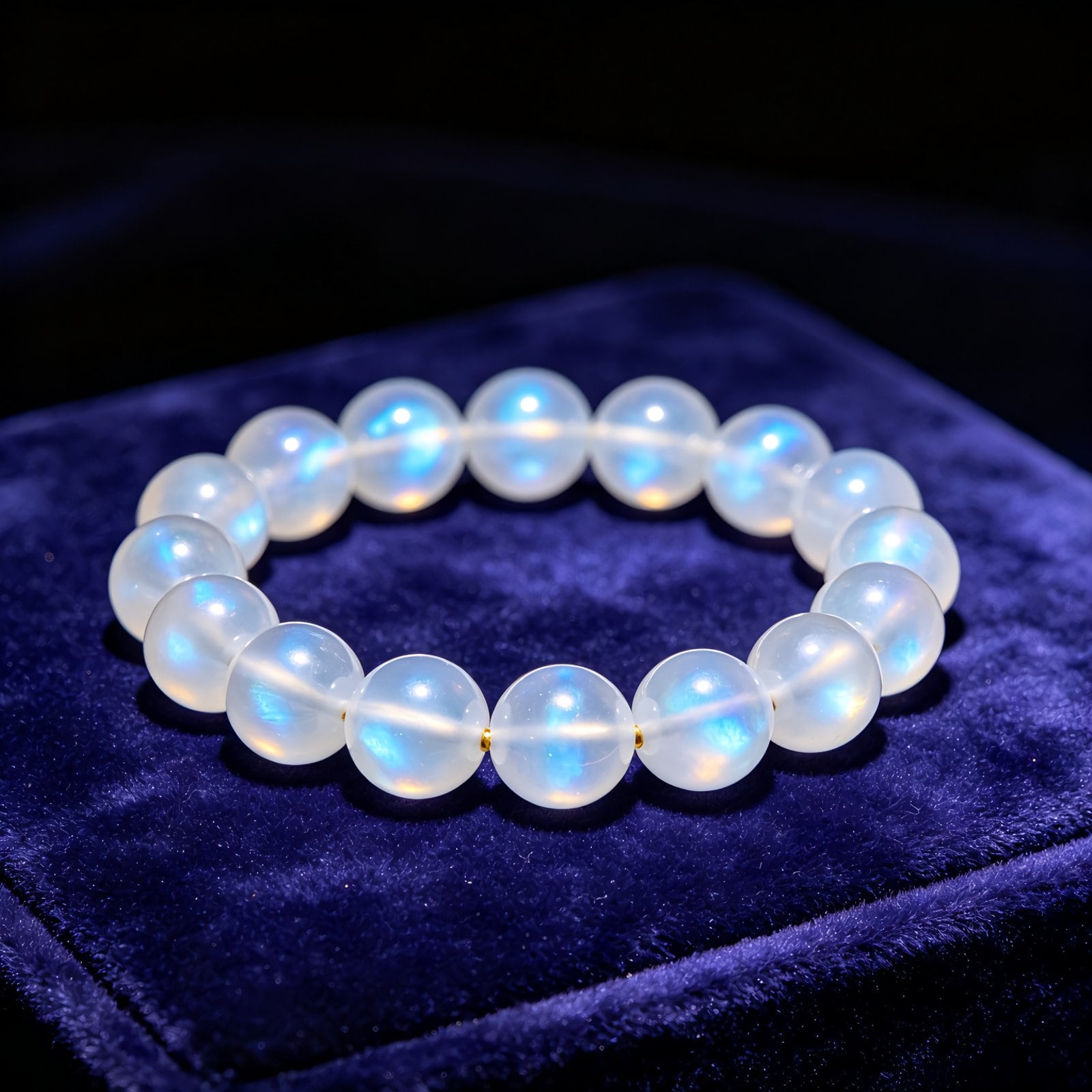
- Moonstone is associated with cycles, intuition and gentle transition.
- Selenite is considered a soft, clearing stone—use a smooth piece and handle gently, as it can flake.
A Safer Placement
Set the stone on a nightstand, a windowsill that catches moonlight, or in a small dish beside the bed. Most practitioners feel this gives the same sense of support without any discomfort. Our guide to where to place crystals in the bedroom walks through room placement.
Frequently Asked Questions
Which crystal is best under a pillow?
Amethyst for calm and moonstone for gentle cycles are common choices; use a smooth tumbled piece rather than a raw point.
Can a crystal under your pillow be dangerous?
A small smooth stone is generally fine for adults, but raw points, loose beads and small stones are best kept away from the bed for comfort and safety.
Do crystals have to touch you to work?
No—many people keep a stone on the nightstand and feel it supports the same intention without physical contact.
Browse the Curated Collection
Shop the Stones
Keep Exploring
Where to Place Crystals in the Bedroom · Bedside & Nightstand Stones · Full Moon Ritual
Crystals and readings are offered for reflection, wellness and spiritual support, not as medical, psychological, veterinary or financial advice, and outcomes are not guaranteed. If you are dealing with a health or sleep condition, please contact a licensed professional.