When the Elastic Snaps: Naming What Happened
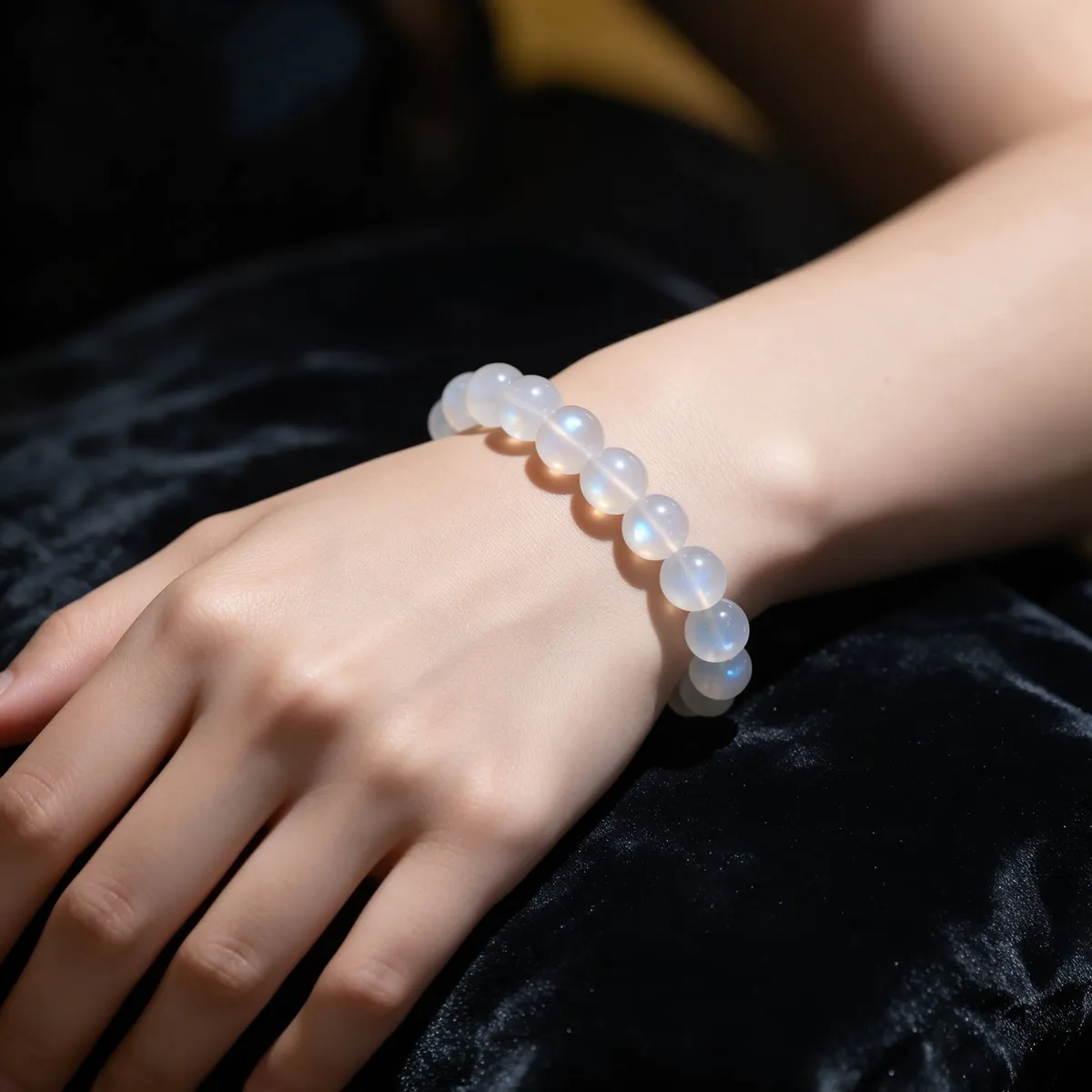
You look down and there it is—a scatter of beads across the floor, a limp strand dangling from your wrist, or a single crack running through a stone you've worn every day for months. Maybe it happened while you were pulling on a sweater, maybe it happened overnight on your nightstand, and maybe you have no idea when or how. Either way, the first reaction is often a small jolt of unease: Did I do something wrong? Is this a sign?
If that sounds familiar, you're in good company. Crystal bracelets are worn close to the skin, through workouts, showers, dishwashing, and the general friction of daily life—so breakage is common, and it's almost always explainable. This guide walks through the practical causes first, then the traditional interpretations that many people find meaningful, and finally what to actually do: whether to restring, repair, retire, or replace the piece.
Our approach is simple: respect the lore, but start with the physics. A bracelet that broke because its elastic was two years old doesn't need a metaphysical explanation to make sense—though it can still be a meaningful moment to pause and reflect.
Start With the Practical Cause
Before reaching for any symbolic reading, rule out the ordinary culprits. In our experience handling and caring for beaded jewelry, the vast majority of breakages fall into a handful of predictable categories.
- Elastic fatigue. Most beaded bracelets are strung on elastic cord, which degrades with every stretch. UV light, sweat, lotions, and repeated on-and-off wear all weaken the fibers over time. A cord that's been in service for 12–18 months of daily wear is often closer to failure than it looks.
- Water exposure. Showering, swimming, and washing dishes are the quiet killers. Water can swell and weaken elastic and, over time, degrade the cord's elasticity so it no longer snaps back.
- Impact and snagging. Catching a bracelet on a door handle, a bag strap, or a pet's claw puts sudden stress on a single point in the strand.
- Fit problems. A bracelet that's too tight stretches constantly; one that's too loose slides and knocks against surfaces. Both accelerate wear.
- Bead flaws. Natural stones can have internal fractures or inclusions. A bead with a pre-existing hairline crack may split under normal wear—this is a material issue, not a message.
If you want to extend the life of your next piece, our guide to bracelet care covers the daily habits that matter most.
A Mindful Way to Interpret It
Once you've acknowledged the practical cause, there's room for a second layer of meaning—if it resonates with you. In crystal traditions, a bracelet breaking is sometimes read as the stone having absorbed something on your behalf, or as a signal that an intention or phase has reached its natural end. Some people describe it as the stone "retiring" after doing its work.
Notice the framing: these are interpretive traditions, not predictions. A broken bracelet is not a bad omen, and it doesn't mean you've been cursed or that your intentions have failed. Think of it instead as a gentle prompt—an invitation to pause, take stock of the season you've been in, and decide whether you're continuing the same chapter or starting a new one.
Many people find it helpful to write a few lines in a journal when a piece breaks: what was happening in your life when you started wearing it, what's changed since, and what you'd like to carry forward. That reflective practice is where the real value sits—not in the break itself.
The lore, and what we can actually verify
It's worth being clear about which claims come from tradition and which can be checked. Here's how we separate the two.
| Claim | Source | What we can verify |
|---|---|---|
| A broken bracelet means the stone absorbed negative energy | Traditional lore | Not verifiable. Offered as a reflective framework, not a fact. |
| A break signals a completed phase or intention | Traditional lore | Not verifiable. Useful as a journaling prompt. |
| Elastic weakens over time and with water exposure | Materials science | Yes—elastic cord degrades with stretching, sweat, UV, and moisture. |
| Some stones are softer and chip or crack more easily | Mineralogy (Mohs hardness) | Yes—hardness varies widely; softer stones need more care. |
| Some stones fade in sunlight or are damaged by water | Mineralogy | Yes—certain stones are light-sensitive or water-sensitive. |
On hardness: the Mohs scale runs from 1 (talc) to 10 (diamond). Quartz-family stones like amethyst, rose quartz, and clear quartz sit around 7, which is reasonably durable for jewelry. Softer stones—selenite around 2, fluorite around 4—scratch and chip more easily and are better kept away from keys, gym bags, and rough handling. Stones like lapis lazuli and malachite are also water-sensitive and shouldn't be soaked. None of this is mystical; it's just how the material behaves, and it explains a lot of "mysterious" breakage.
Crystals are for reflection and are not medical devices. They do not diagnose, treat, cure, or prevent any disease.
What to Do Next: A Step-by-Step Checklist
When a piece breaks, work through this in order. It takes about ten minutes and saves you from losing beads or making a rushed decision.
- Gather every bead. Check under furniture and inside bags—missing beads are the most common regret.
- Inspect each stone. Set aside any bead with a sharp crack, a chip that could cut the new cord, or a rough edge. Discard those; keep the intact ones.
- Decide: repair or retire. If most beads are sound, restringing is inexpensive and satisfying. If the piece is heavily worn or several beads are damaged, retirement may be the kinder choice.
- Restring with fresh elastic. Use jewelry-grade elastic (around 0.8mm for most 8mm beads), double the strand, and tie a surgeon's knot. A drop of jewelry glue on the knot adds security. Many local jewelers will restring a bracelet for a modest fee if you'd rather not DIY.
- Cleanse the stones if you wish. A gentle method—sound, moonlight, or a selenite wand—suits most stones. Avoid water for porous or water-sensitive materials.
- Re-state your intention, or choose anew. If your goal has shifted, this is a natural moment to pick a different stone.
Sizing, Care, and What to Look For in a Replacement
If you're replacing the piece, a few practical details will save you from a repeat break.
Sizing. Measure your wrist snugly with a soft tape, then add roughly half an inch for a comfortable fit on an elastic bracelet. Too tight means constant stretch; too loose means knocking and snagging. For 8mm beads, most adults land between 7 and 8 inches.
Cord quality. Look for double-strung elastic and a knot that's been secured and hidden inside a bead. Ask how the piece is strung if it isn't stated—good makers will tell you.
Care basics. Remove bracelets before showering, swimming, and heavy cleaning. Keep softer stones away from abrasive surfaces. Store pieces separately so harder stones don't scratch softer ones.
Realistic pricing. Simple beaded elastic bracelets in genuine but common stones typically run from about $20 to $60. Pieces with larger beads, rarer materials, or precious-metal accents cost more. Be wary of very low prices paired with claims of rare stones—and treat "certified" claims skeptically unless the seller names the lab.
Choosing a Replacement
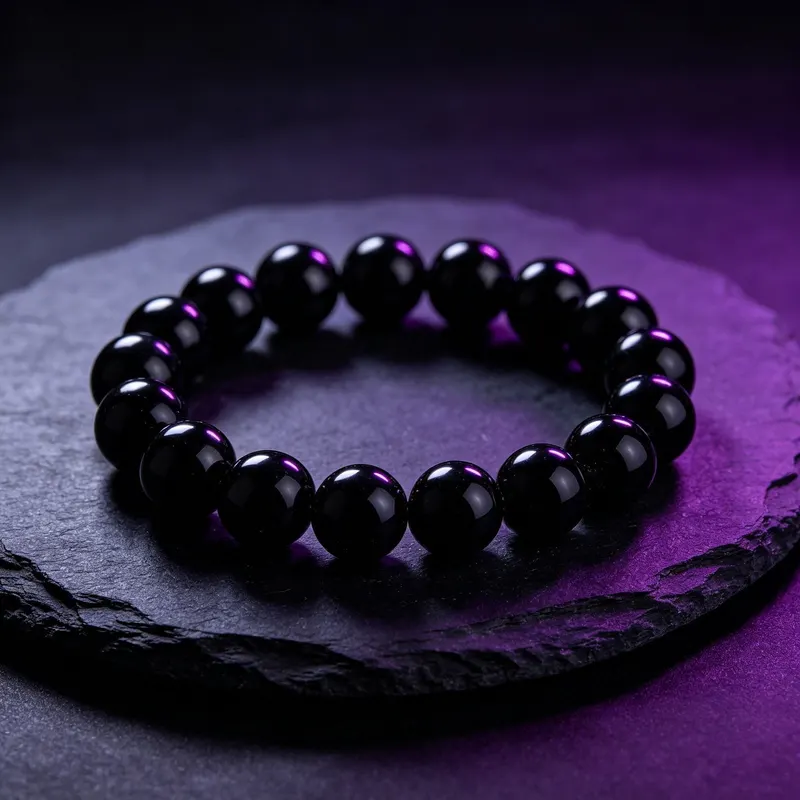
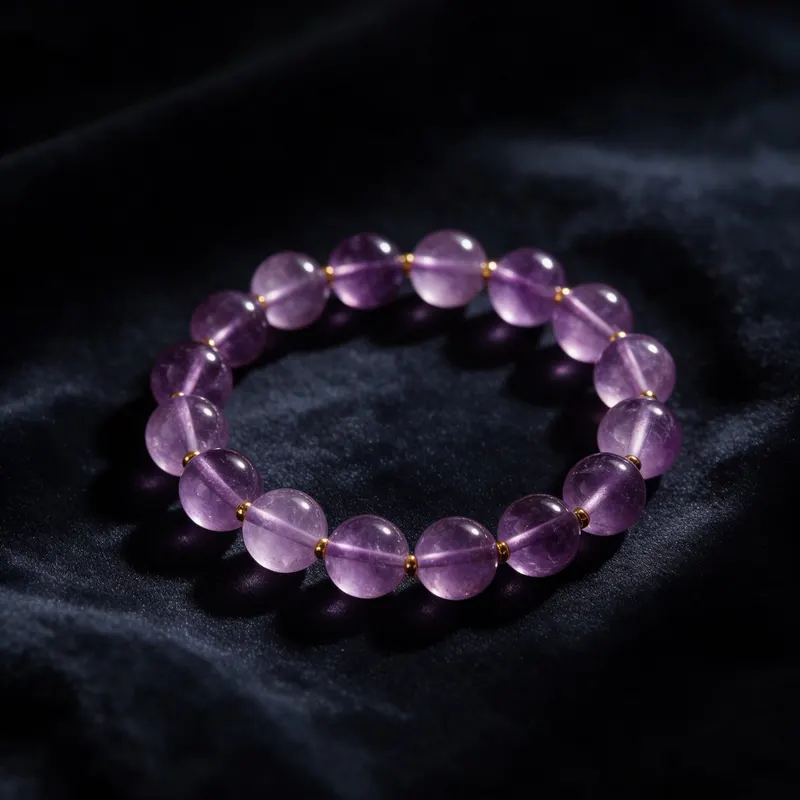
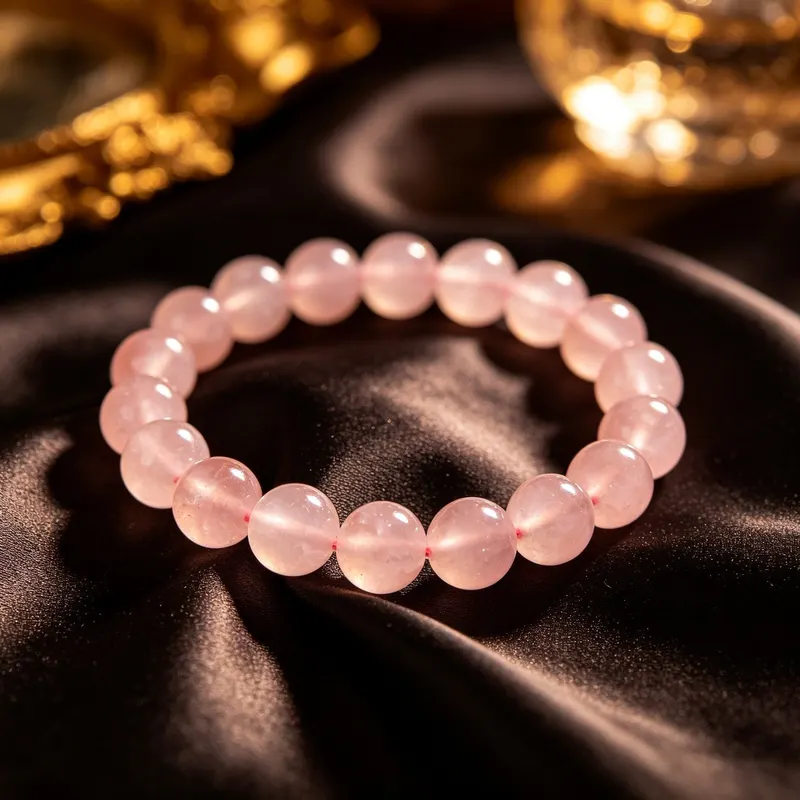
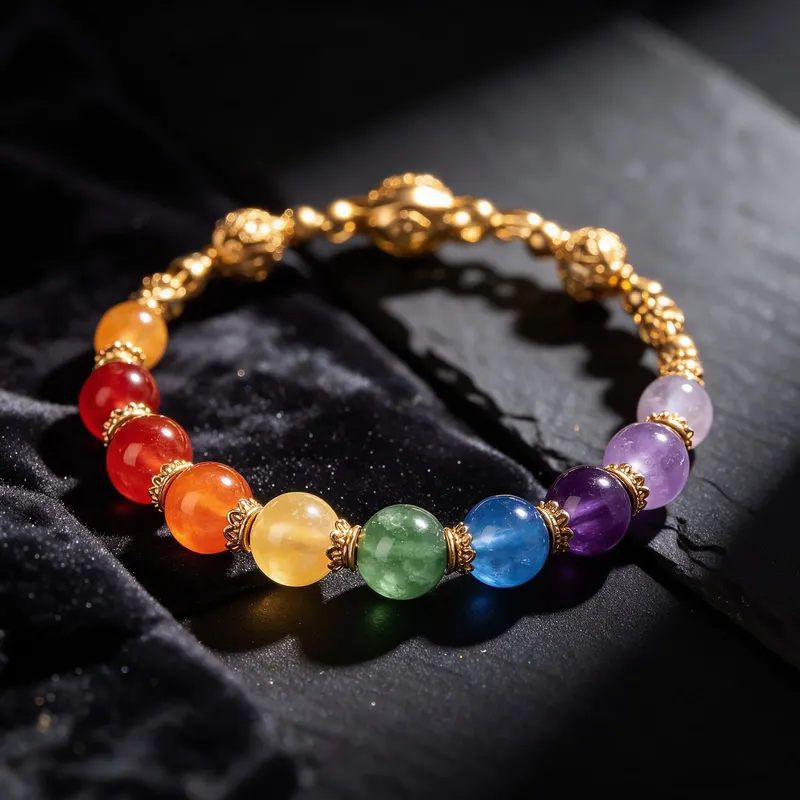
If the piece carried you through a hard season, a fresh grounding bracelet like the Black Tourmaline Protection Bracelet can begin the next chapter—black tourmaline is traditionally associated with grounding and boundary-setting. For calm and clarity, the Amethyst Healing Bracelet is a long-standing favorite. If the break came at the end of a relationship chapter, the Rose Quartz Love Bracelet invites a gentler focus on self-love. And if you're not sure what you need next, the 7 Chakra Balancing Bracelet offers a broad, balanced starting point.
For a more deliberate reset, some people pair a new bracelet with a cleansing ritual using the Selenite Cleansing Wand—selenite is soft (around 2 on the Mohs scale), so keep it dry and store it carefully. Explore the full bracelets collection, and for daily habits read our guide to wearing crystals every day.
FAQ
People Also Ask
Is it bad luck if a crystal bracelet breaks?
No. Traditions often read a break as the stone absorbing energy or a phase ending—not as bad luck. Treat it as a prompt to reflect, and check the practical cause first.
Why did the elastic snap for no reason?
Elastic degrades gradually from stretching, sweat, water, UV light, and impact, even when it looks fine. A cord in daily service for a year or more is often near failure.
Can broken crystal beads still be used?
Intact beads can be restrung on fresh elastic. Discard any with sharp cracks or rough edges, and cleanse the rest first if that matters to you.
Should I repair or replace a broken bracelet?
If most beads are sound, restringing is inexpensive and worth doing. If several beads are damaged or the piece feels complete, retiring it and choosing a new stone is a reasonable next step.
A Closing Note
A broken bracelet is, most of the time, a small materials problem with a straightforward fix. But it can also be a useful pause—a moment to notice what season you've been in and what you'd like to carry forward. Repair it, retire it, or replace it; any of those is a fine answer. Just start with the elastic, and let the meaning come second.
Crystals are intended to support personal and spiritual well-being and are not medical devices. They do not diagnose, treat, cure, or prevent any disease. If you are struggling with your mental or physical health, please reach out to a qualified professional.