Color Is the Fastest Way to Choose
You are standing in front of a tray of stones—or scrolling a shop page late at night—and every listing promises something different. Calm. Confidence. Love. Focus. The descriptions blur together, and the last thing you want is to spend forty dollars on a bracelet you chose because the product photo was pretty. Color gives you a way in. It is the first thing your eye registers and, in most crystal traditions, the most direct link between a stone and an intention.
This guide walks through the major color families—purple, pink, green, yellow, black, clear, blue, and red-orange—and explains what each is traditionally associated with, which stones actually carry that color, and how to choose well. It also separates the lore from the practical facts: hardness, water and sunlight sensitivity, and how to care for what you buy. Because a stone you love but ruin in the shower is not a good purchase.
Treat color as a starting point, not a verdict. The tradition is a map, not a mandate—and the stone you keep reaching for usually has something to tell you.
How Color Maps to Intention
In crystal practice, color is read through the chakra system, a framework from Indian tradition that associates seven energy centers along the body with specific colors, from red at the base to violet at the crown. The mapping is loose and varies by lineage, but the broad strokes are consistent enough to be useful: reds and oranges for energy and drive, greens and pinks for the heart, blues for expression, indigo and violet for intuition.
What this means practically is that you can choose by mood rather than by stone name. If you want to feel more grounded, start with black and dark brown. If you want to feel more open, start with pink and green. If you want mental clarity, start with clear and pale blue. Then narrow within that color family by the specific stone, the form (bracelet, pendant, raw cluster), and your budget.
One caution: color in gemstones is often enhanced. Heat treatment is standard and widely accepted for citrine, aquamarine, and many amethysts; dyeing is common in lapis lazuli and turquoise; irradiation is used on some quartz and topaz. None of this is inherently dishonest, but a reputable seller should tell you. If a listing does not disclose treatment and the price seems too good for the color, ask before you buy.
The Palette and Its Meanings
Here is the working palette, with the stones that most reliably carry each color and what the tradition links them to.
Purple and Indigo: Calm, Intuition, Spirituality
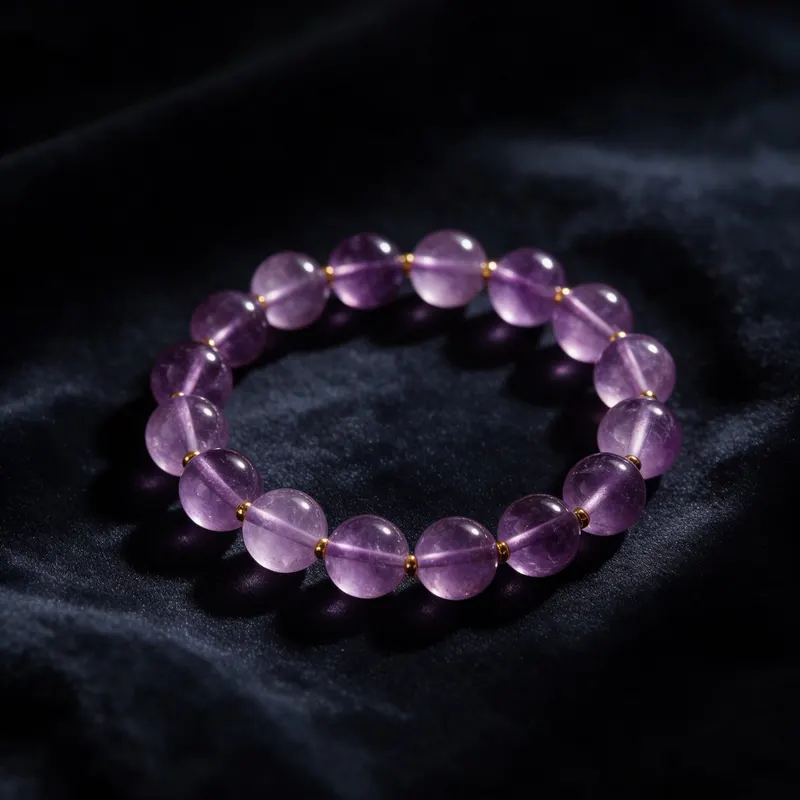
Purple is the color most associated with quieting mental noise and turning attention inward. Amethyst is the anchor stone here—widely available, affordable, and traditionally used for calm and clarity in meditation. Lapis lazuli leans indigo-blue and carries a different flavor: wisdom and truthful speech rather than stillness. If you want a piece for winding down in the evening or for a meditation practice, purple is the natural starting point. The Amethyst Healing Bracelet is a low-commitment way to try the color; if you prefer a stone for an altar or bedside table, a raw cluster works well.
Pink and Soft Green: Love, Compassion, the Heart
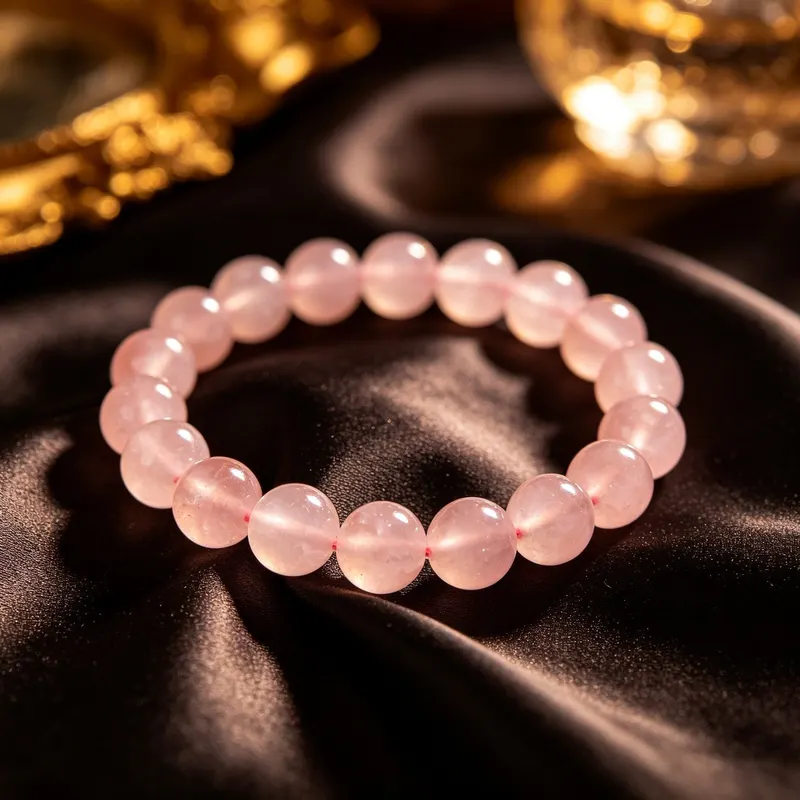
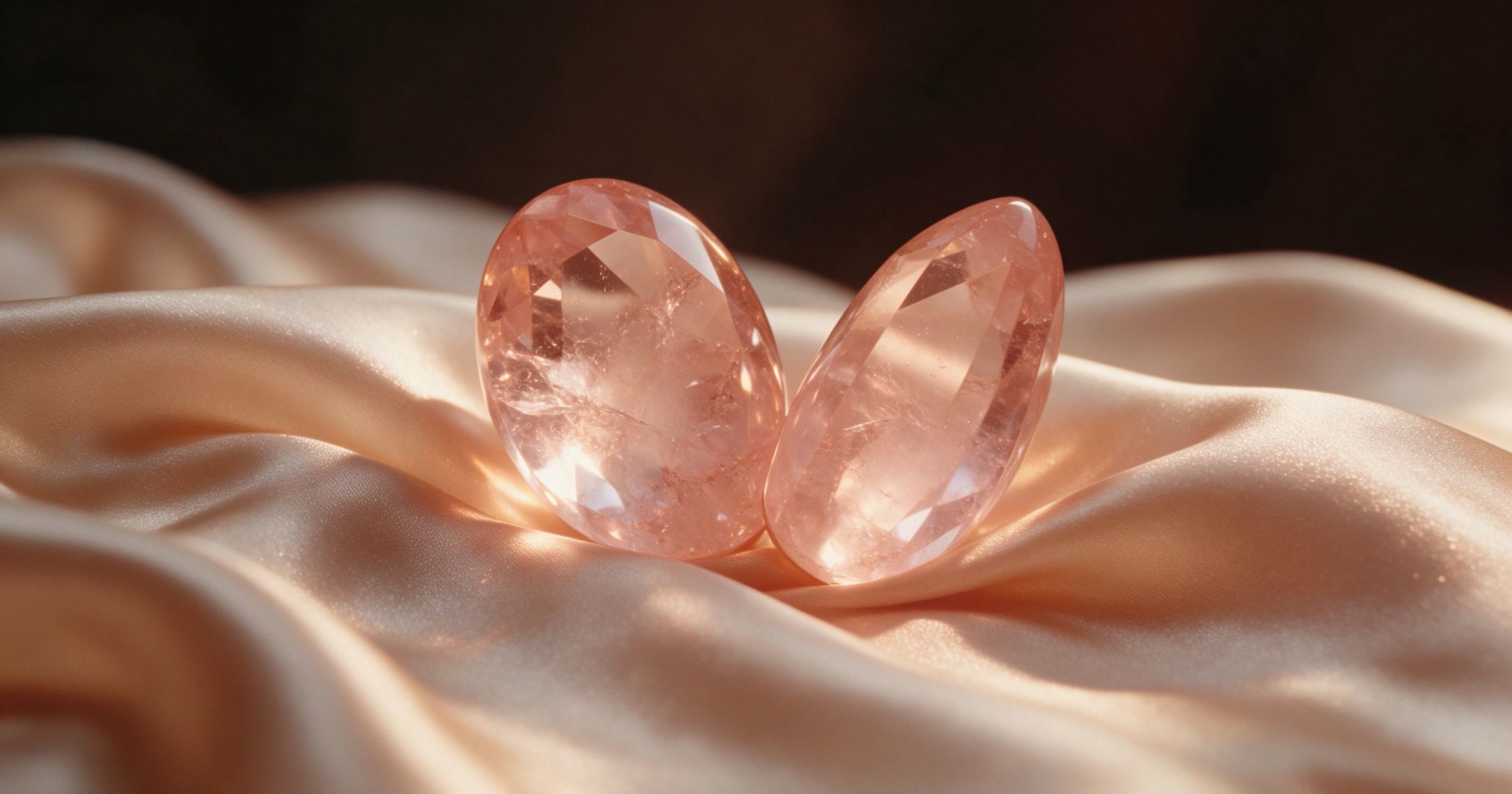
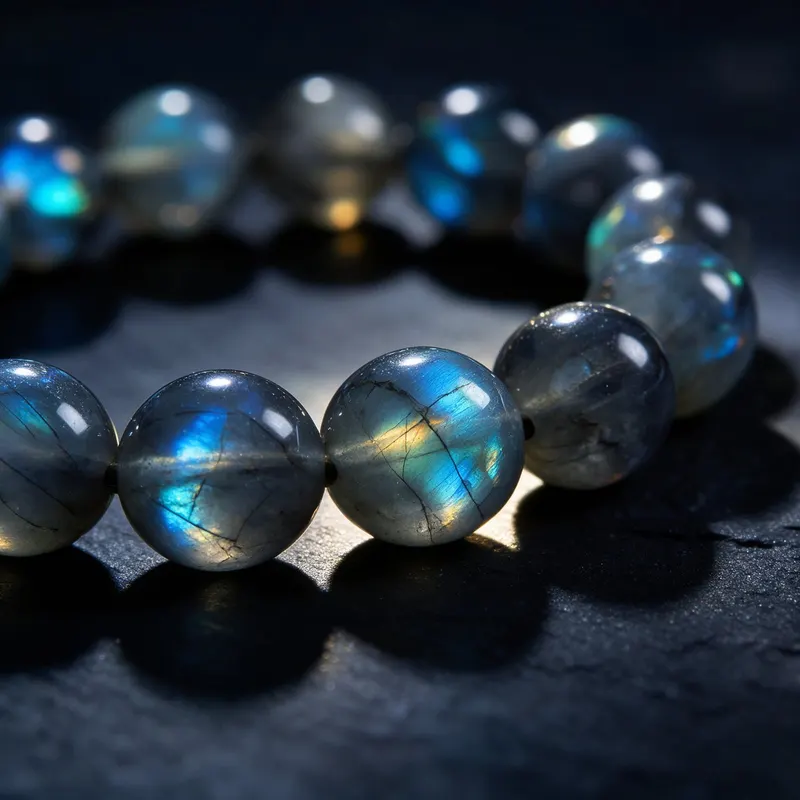
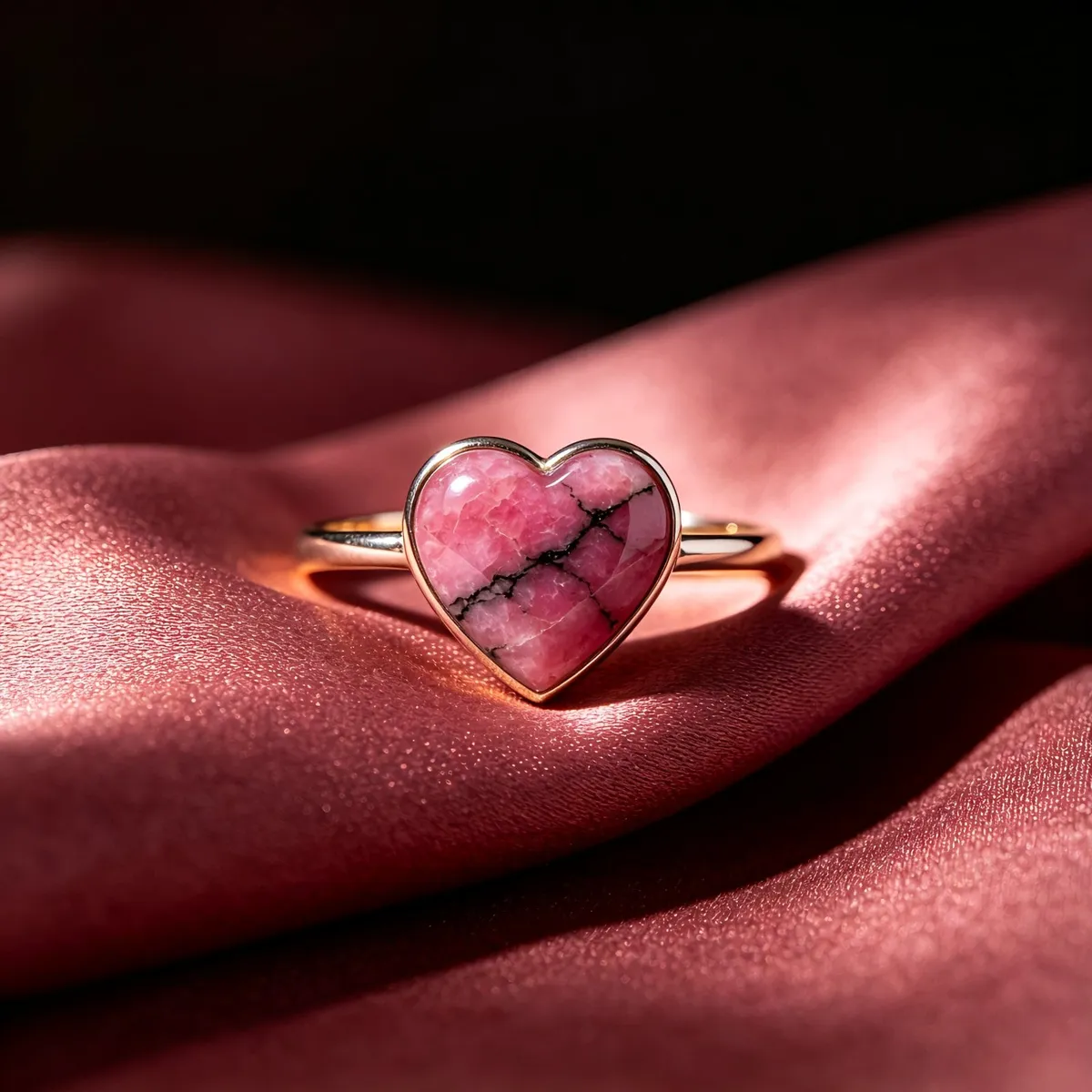
Pink is the color of self-compassion and relationships—not just romantic ones. Rose quartz is the best-known pink stone and is traditionally associated with gentle, unconditional love; rhodonite is a deeper, more grounded pink with black veining, often linked to forgiveness and emotional healing. Soft green overlaps here: green is the heart color in the chakra system, and stones like fluorite and moonstone can read as pale green or blue-white depending on the light. If you are drawn to pink, the Rose Quartz Love Bracelet is the classic choice, while a rhodonite ring suits someone who wants something less expected.
Yellow and Gold: Optimism, Abundance, Confidence
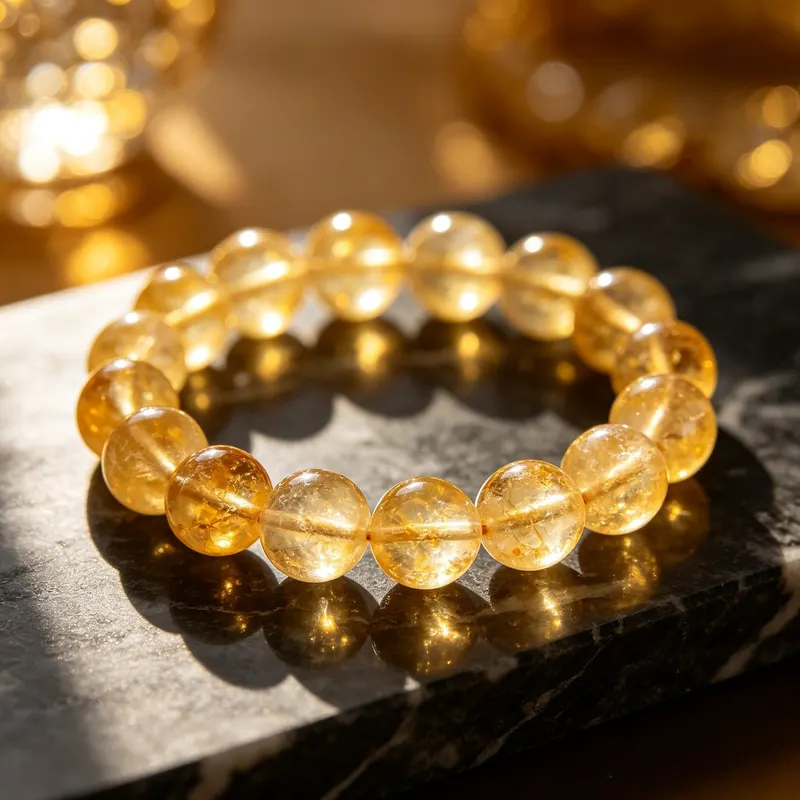
Yellow is the color of momentum—the tradition links it to optimism, personal power, and the kind of confidence that gets things done. Citrine is the standard yellow stone, though most commercial citrine is heat-treated amethyst, which is why the color ranges from pale lemon to deep amber. Natural, unheated citrine exists but is rarer and pricier. If you want a yellow piece for a desk or work bag, the Citrine Abundance Bracelet is a practical pick. Be aware that citrine fades in prolonged direct sunlight, so keep it out of a sunny windowsill.
Black and Dark: Grounding and Protection
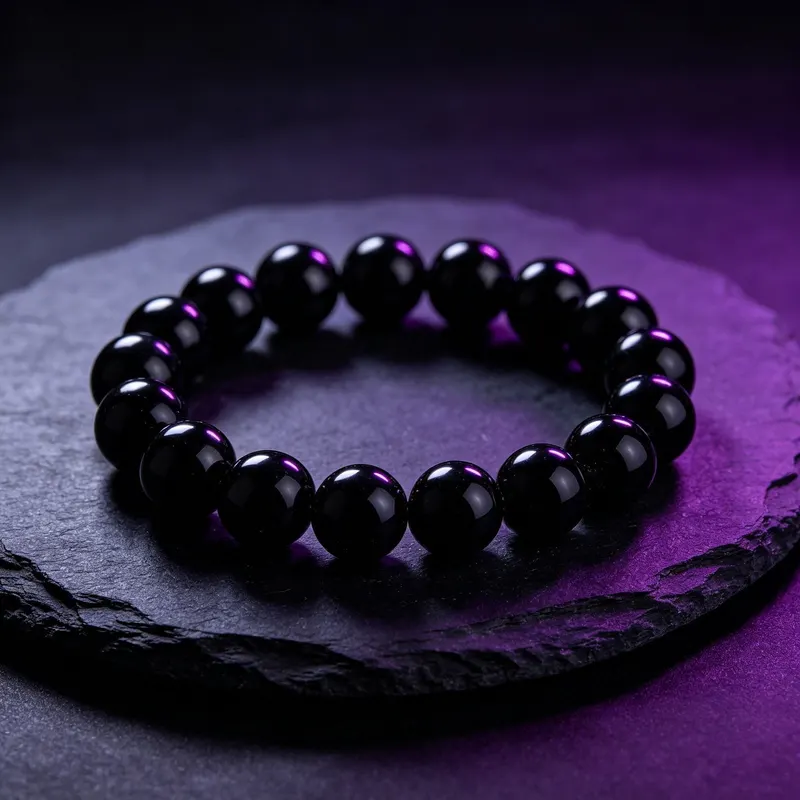
Black stones are the most misunderstood category. They are not "negative"—they are traditionally used for grounding, boundary-setting, and steadying anxious energy. Black tourmaline and obsidian are the two workhorses. Tourmaline is harder and more durable; obsidian is volcanic glass, softer, and can chip if knocked against a hard surface. If you want a daily-wear piece, tourmaline is the safer bet. The Black Tourmaline Protection Bracelet is a good everyday option, and obsidian pendants suit people who prefer something to wear close to the body.
Clear and White: Clarity and Amplification
Clear quartz is the most versatile stone in the tradition—believed to amplify the intention of whatever it sits beside, which is why it appears in so many crystal sets. Selenite is white and fibrous, softer than quartz, and traditionally used for clearing other stones rather than for wearing. If you want one stone that works with everything, clear quartz is the sensible default. The Clear Quartz Point Pendant Necklace is a clean, wearable version; a selenite wand is better kept on a shelf as a care tool.
Blue: Calm Communication and Truth
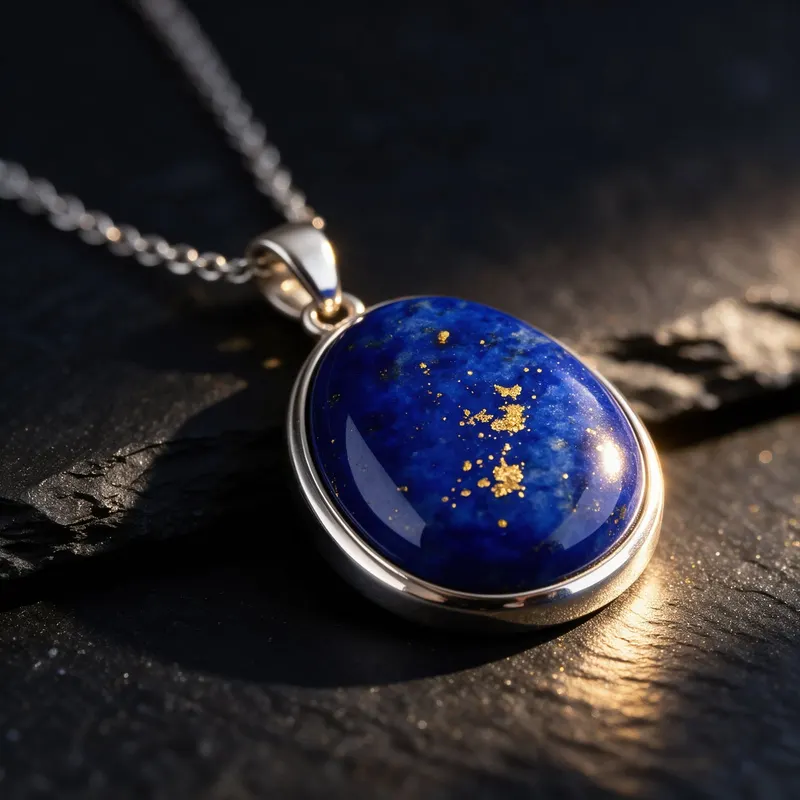
Blue is linked to the throat chakra—expression, honest speech, and the ability to say difficult things calmly. Aquamarine is the gentlest blue, pale and often heat-treated to deepen the color; lapis lazuli is a deep, opaque blue with pyrite flecks and is traditionally associated with wisdom and clear communication. Both are softer than quartz and need care. The Lapis Lazuli Wisdom Pendant suits someone who wants a statement piece; aquamarine is better for everyday wear.
Red and Orange: Energy, Creativity, Vitality
Red and orange sit at the base of the chakra system and are linked to physical energy, motivation, and creative drive. Carnelian is the most accessible orange-red stone—translucent, warm, and traditionally associated with confidence and creative momentum. It is a good choice if you are starting a project, changing jobs, or simply feel flat. Carnelian is relatively hard and takes daily wear well, though it can fade with prolonged sun exposure.
Multicolor: Overall Balance
Seven-chakra pieces combine stones in every color, which makes them a practical choice if you cannot decide or want a single piece that covers the whole system. The trade-off is that individual stone quality varies; a good set uses natural stones with clear color separation rather than dyed beads. A 7 Chakra Balancing Bracelet is a reasonable first purchase, and a starter kit with a guide is useful if you want to learn the stones one by one.
Color-by-Color Comparison
| Color | Traditional association | Example stones | Mohs hardness | Care notes |
|---|---|---|---|---|
| Purple / indigo | Calm, intuition, spirituality | Amethyst, lapis lazuli | 7 (amethyst); 5–6 (lapis) | Amethyst fades in strong sun; lapis is porous—keep dry |
| Pink | Love, compassion, self-care | Rose quartz, rhodonite | 7 (quartz); 5.5–6.5 (rhodonite) | Rose quartz is durable; rhodonite can chip |
| Green | Heart, balance, growth | Fluorite, moonstone | 4 (fluorite); 6–6.5 (moonstone) | Fluorite is soft—avoid knocks and harsh cleaners |
| Yellow / gold | Optimism, abundance, confidence | Citrine | 7 | Fades in direct sun; avoid prolonged heat |
| Black | Grounding, protection, boundaries | Black tourmaline, obsidian | 7–7.5 (tourmaline); 5–5.5 (obsidian) | Obsidian is glass—chips easily; tourmaline is durable |
| Clear / white | Clarity, amplification | Clear quartz, selenite | 7 (quartz); 2 (selenite) | Selenite dissolves in water—never soak it |
| Blue | Communication, truth, calm | Aquamarine, lapis lazuli | 7.5–8 (aquamarine); 5–6 (lapis) | Both are sensitive to heat and chemicals |
| Red / orange | Energy, creativity, vitality | Carnelian | 6.5–7 | Fades in sun; avoid ultrasonic cleaners |
What the old stories say — and what checks out
It is worth being clear about what is lore and what is measurable. The associations above—purple for calm, pink for love, black for grounding—come from centuries of practice and are meaningful to people who use them. They are not scientific claims, and no crystal has been shown to treat or prevent illness. What we can verify is physical: hardness, porosity, and sensitivity to light and water. Those facts determine whether a stone will survive daily wear.
- Hardness matters. Mohs scale runs 1 (talc) to 10 (diamond). Anything below 6 scratches easily and is better for pendants than rings or bracelets. Selenite (2) and fluorite (4) are fragile; quartz-family stones (7) are durable.
- Water sensitivity. Selenite, lapis lazuli, and malachite should not be soaked. Rose quartz and clear quartz tolerate water but not harsh cleaners.
- Sunlight sensitivity. Amethyst, citrine, and carnelian can fade with prolonged direct sun. Store them away from windowsills.
- Treatments are normal. Heat treatment, dyeing, and irradiation are common. Ask sellers to disclose them; a good shop will.
- Cleaning basics. Wipe with a soft dry or slightly damp cloth. Avoid ultrasonic cleaners on soft or treated stones. Store pieces separately to prevent scratching.
Crystals are for reflection and are not medical devices. They do not diagnose, treat, cure, or prevent any disease.
How to Choose in Practice
Start with the color you keep noticing. Then apply a few practical filters before you commit.
- Pick the form for your life. Bracelets are easy to wear but exposed to knocks; pendants sit closer to the body and are less likely to chip; raw clusters are for shelves and altars, not pockets.
- Check sizing. Most beaded bracelets are 7–8 inches (18–20 cm); measure your wrist and add half an inch for comfort. Rings should be sized properly—rhodonite and other soft stones are not easy to resize.
- Set a realistic budget. Beaded bracelets typically run $20–$60; pendants $40–$120; raw clusters $25–$80. Genuine, untreated stones cost more. If a "natural" citrine or lapis piece is unusually cheap, assume treatment or imitation.
- Look for honest listings. Clear photos, stone name, treatment disclosure, and care instructions are signs of a serious seller. Vague descriptions and stock photos are not.
- Trust attraction, but verify quality. Choose the stone you are drawn to—then check hardness and care before you buy.
If you are still narrowing down, the Choose Your First Crystal guide walks through it step by step, and the Chakra Balancing Guide explains the system behind the colors in more depth.
FAQ
People Also Ask
What do different crystal colors mean?
Colors loosely correspond to intention and chakra: purple to intuition, pink to love, yellow to abundance, black to grounding, clear to clarity, blue to communication, and red-orange to energy. The mapping is traditional rather than scientific.
Does the color have to match my problem?
No—it is a guide, not a rule. Personal attraction to a stone matters just as much, and many people choose by feel rather than by system.
What is the best all-around color?
Clear quartz is considered versatile because it is traditionally used to amplify other stones, while a seven-chakra piece covers every color at once. Both are reasonable first purchases.
Can I wear my crystal in the shower or pool?
It depends on the stone. Quartz-family stones tolerate water; selenite, lapis lazuli, and dyed stones do not. Chlorine and salt water can damage most stones over time, so remove jewelry before swimming.
Keep Exploring
Color is one layer of a larger system. If you want to go deeper, explore the full edit in our Bestsellers Collection, or read Crystal Shapes to understand how form changes a stone's use. Start with the color you love, then let the practical details guide the rest.
Crystals are intended to support personal and spiritual well-being and are not medical devices. They do not diagnose, treat, cure, or prevent any disease. If you are struggling with your mental or physical health, please reach out to a qualified professional.