Why Crystal Shape Matters
You've probably noticed that the same stone can feel completely different depending on how it's cut. A tumbled amethyst in your pocket, a polished sphere on your desk, and a raw cluster on your altar are all amethyst — yet each invites a different kind of attention. That's the practical starting point for thinking about crystal shapes and their meanings: shape changes how a stone sits in your space, how you handle it, and what it invites you to focus on.
In crystal healing traditions, shape is often described as the way a stone "directs" or "radiates" energy — points focus it, spheres diffuse it, clusters fill a room. We'll walk through those traditional associations below, but we'll also be candid about what's verifiable: hardness, durability, how a piece behaves in sunlight or water, and how to care for it so it lasts. Both kinds of information help you choose well.
Whether you're building a first altar, choosing a gift, or simply curious why your friend swears by her sphere and never touches pointed stones, this guide is organized to help you match shape to purpose — and to spend your money wisely.
The Main Crystal Shapes and What They're Traditionally Associated With
Below is a working map of the most common shapes you'll encounter in shops and online. Treat the "traditional association" column as lore and symbolism — a vocabulary for reflection — rather than a promise of any outcome.
| Shape | Traditional Association | Best For | Practical Notes |
|---|---|---|---|
| Single point | Focused, directional energy; "sending" or "drawing" | Grids, layouts, intention-setting | Tips chip easily; store upright and padded |
| Double-terminated point | Channeling energy in two directions; balance | Meditation held between the palms | Rarer and pricier; check both tips for damage |
| Sphere | Energy radiating evenly; harmony | Desk or meditation-room centerpiece | Rolls — always use a stand; larger spheres cost more |
| Pyramid | Amplifying and focusing upward toward the apex | Manifestation work, charging other stones | Often assembled from stone; seams are normal |
| Cluster | Radiating into a space; group energy | Room clearing, altars, display | Dusty and fragile; keep out of reach of pets |
| Tumbled stone | Portable, gentle, everyday grounding | Pocket, pillow, purse, grids | Cheapest entry point; easy to lose |
| Heart | Traditionally tied to love, compassion, self-care | Gifts, bedside tables, journaling | Polished hearts can scratch; wrap separately |
| Raw / natural | Unpolished, "earthiest" expression of the stone | Altars, shelves, texture contrast | May shed grit; handle with care around fabrics |
| Wand | Directing energy; traditional healing-tool shape | Energy-clearing routines, ritual | Some wands are soft stones — see care section |
Points and Wands
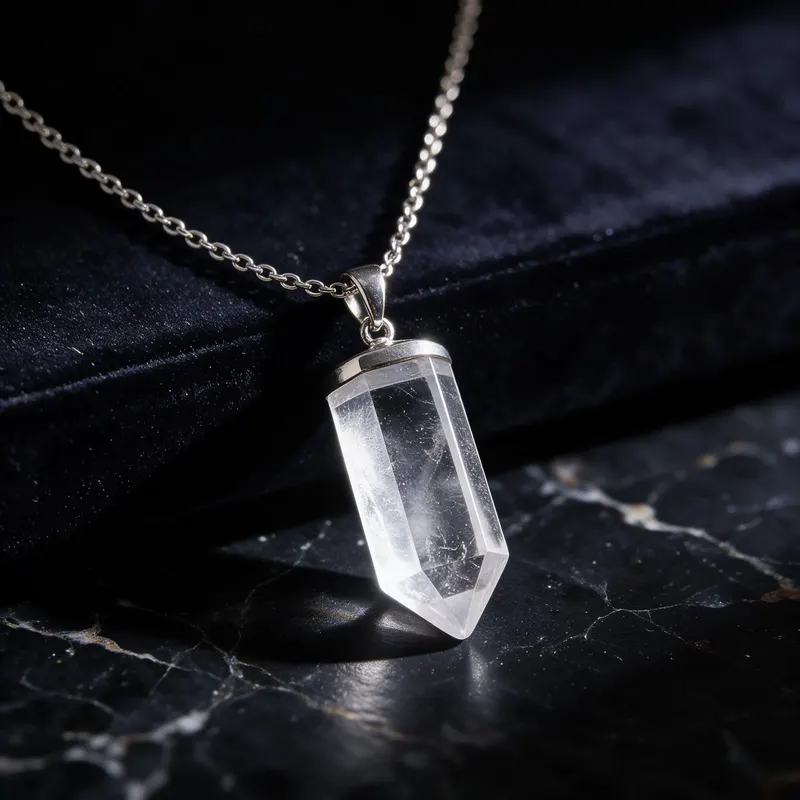
Points are the shape most people picture when they hear "crystal." In tradition, a single point directs energy in a focused beam — outward when you point it away from you, inward when you point it toward yourself. Double-terminated points, with a tip at each end, are described as channeling energy in two directions, which is why they're popular for holding during meditation. Wands work on the same principle but are shaped for the hand. If you want a single, versatile piece to start with, a point is a sensible choice — our Clear Quartz Point Pendant Necklace, Sterling Silver keeps that pointed form close to the body, and clear quartz is traditionally associated with clarity and focus.
Spheres
Spheres are said to radiate energy equally in all directions, creating a harmonious field rather than a beam. That makes them natural centerpieces — a desk, a bedside table, the middle of a meditation space. Practically, spheres are the shape most likely to roll off a surface, so always pair one with a stand (wooden rings and tripods are common and inexpensive). Larger spheres are cut from larger rough, so price climbs steeply with diameter; a 2-inch sphere is a comfortable, affordable starting size.
Pyramids
Pyramids are traditionally described as focusing and amplifying energy upward toward the apex, which is why they appear in manifestation and "charging station" setups. Many pyramids on the market are assembled from stone rather than carved from a single piece, so visible seams or a slightly different base material are normal — not a defect. If you're buying in person, set it on a flat surface and check that it doesn't wobble.
Clusters
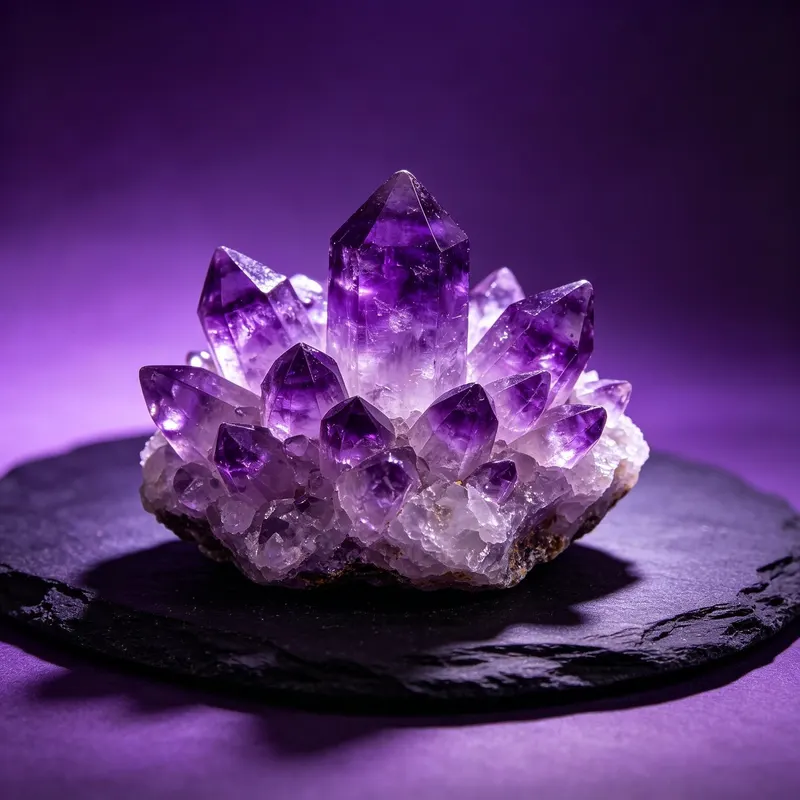
Clusters — multiple points growing from a common base — are traditionally used to radiate energy into a room and are a staple of space-clearing routines and group meditation. They're also the most visually dramatic shape, which makes them popular display pieces. The trade-off is fragility: individual points snap, and clusters collect dust in every crevice. A soft brush helps. A raw cluster like the Raw Amethyst Cluster for Meditation & Altar is a classic choice, with amethyst traditionally associated with calm and quiet reflection.
Tumbled Stones
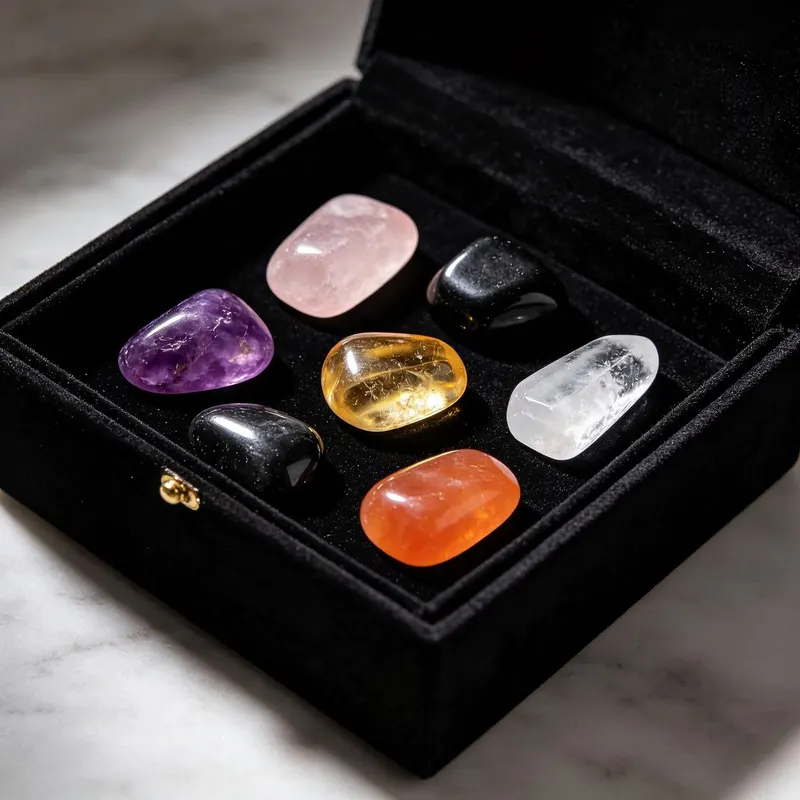
Tumbled stones are the workhorses of a collection: smooth, portable, and usually the least expensive way to own a given material. They're ideal for a pocket, a pillow, a purse, or a grid. Because they're small, they're also easy to lose — a small dish by the door helps. If you're new to crystals entirely, a set is often better value than buying singles; the Healing Crystal Starter Kit, 7 Stones + Guide covers the common shapes-and-stones basics in one purchase.
Hearts
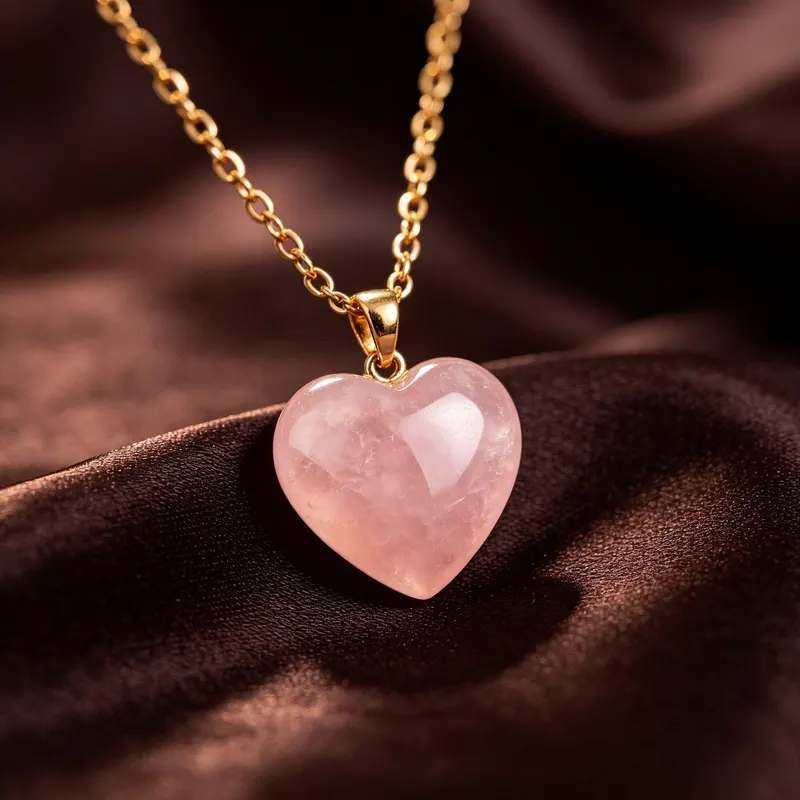
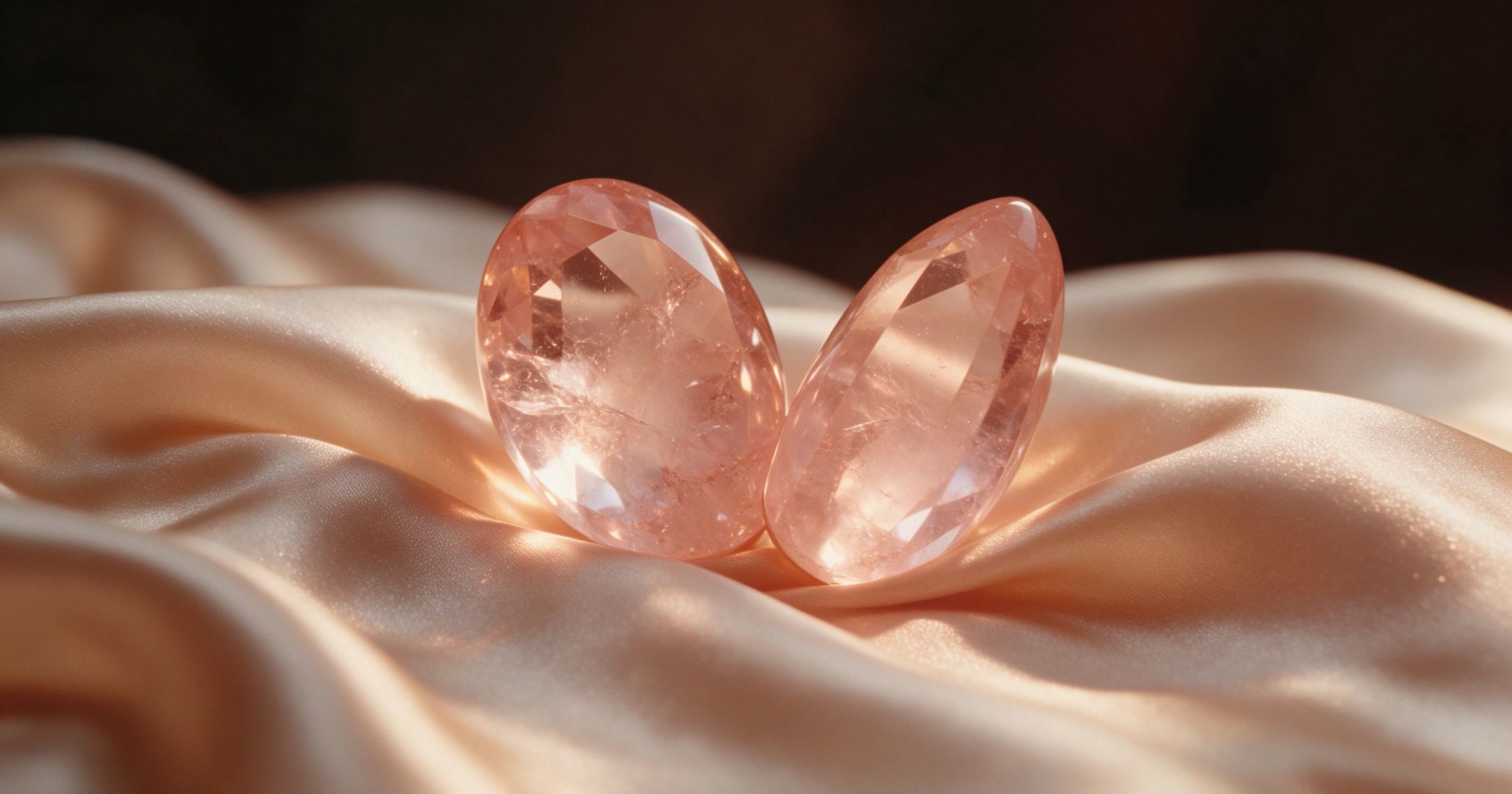
Heart-shaped stones are traditionally tied to love, compassion, and emotional self-care — which is why they're the default gift shape. Rose quartz and rhodonite are the most common materials. Keep in mind that a polished heart is a decorative object: it can scratch, and it shouldn't share a pocket with keys. A heart pendant, by contrast, is designed for daily wear — the Rose Quartz Heart Pendant Necklace, Gold-Plated is a good example of the shape translated into jewelry.
Raw Stones
Raw, unpolished stones are described in tradition as carrying the purest, most primal expression of the material. Aesthetically, they offer texture and contrast next to polished pieces. Be aware that raw stones can shed fine grit, so keep them off white fabrics and out of reach of small children. Raw pieces also vary enormously from one to the next — you're buying the specific stone in the photo, not a standardized product.
How to Choose a Crystal Shape: A Practical Checklist
- Start with use, not looks. Will it be worn, carried, displayed, or held during meditation? That answer narrows the shape immediately.
- Match the shape to the space. Spheres and clusters suit a room; points and tumbled stones suit a pocket or a small layout.
- Check the finish. Look for chips on points, wobble on pyramids, and cloudy or scratched faces on spheres.
- Consider the material's hardness. Soft stones (selenite, fluorite) scratch easily and belong on a shelf, not in a pocket with keys.
- Ask about assembly. Pyramids and some wands are bonded from pieces; that's normal, but it affects price and care.
- Buy the piece you can see. For raw and one-of-a-kind stones, a photo of the actual item matters more than a stock image.
- Set a budget before you browse. Shape and size drive price more than most buyers expect.
Traditional beliefs vs. verifiable facts
It's worth separating two kinds of claims. Traditional associations — points focus energy, spheres harmonize, hearts invite love — are symbolic and reflective. They can be meaningful and useful as prompts for intention, but they aren't measurable, and no crystal shape has been shown to treat or prevent any condition. What we can verify is physical: hardness, sensitivity to water and sunlight, and how each shape behaves in daily handling. That's where the practical guidance lives.
Hardness (Mohs scale) and durability
The Mohs scale runs from 1 (talc) to 10 (diamond). Quartz family stones — clear quartz, amethyst, citrine, rose quartz — sit around 7, which is durable enough for daily wear but will still scratch softer materials and can chip at a fine point. Softer stones need more care: fluorite is around 4, selenite around 2, and both scratch easily. A selenite wand, for example, should live on a shelf rather than in a bag — the Selenite Cleansing Wand for Energy Clearing is traditionally used for clearing other stones, and its softness is exactly why it's best kept as a display and ritual piece.
Water and sunlight sensitivity
Many care routines involve water or sunlight, so know your stone. Selenite and halite can dissolve or degrade in water. Porous or dyed materials can fade or bleed. Amethyst, rose quartz, and other colored quartzes may fade with prolonged direct sun. A safe default: clean most polished stones with a soft dry or barely damp cloth, keep them out of long direct sun, and skip water entirely for soft or porous materials.
Care by shape
- Points: store upright, tip protected; never toss loose in a drawer.
- Spheres: always on a stand; dust with a microfiber cloth.
- Pyramids: check for wobble; keep away from table edges.
- Clusters: dust with a soft brush; handle by the base, not the points.
- Tumbled stones and hearts: wipe clean; store separately from harder jewelry.
- Raw stones: keep off fabrics; a dedicated dish prevents grit transfer.
Crystals are for reflection and are not medical devices. They are not a substitute for professional medical or mental-health care.
Matching Shape and Stone to Everyday Situations
Shape and material work best together. If you want a piece for a work desk, a sphere of a grounding stone or a small point of a focus-associated stone makes sense — tiger's eye and fluorite are traditionally linked with focus and confidence, and both are available in wearable forms if you'd rather keep the stone on you than on the desk. For a bedside table, a heart or a tumbled stone is gentle and unobtrusive. For a meditation corner, a cluster or a point gives you something to rest your attention on.
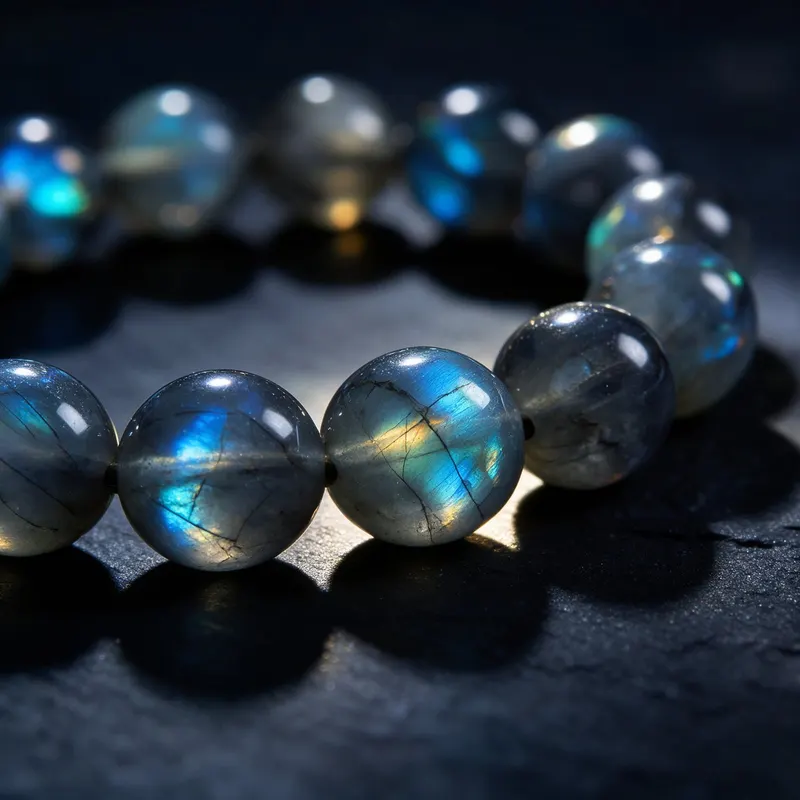
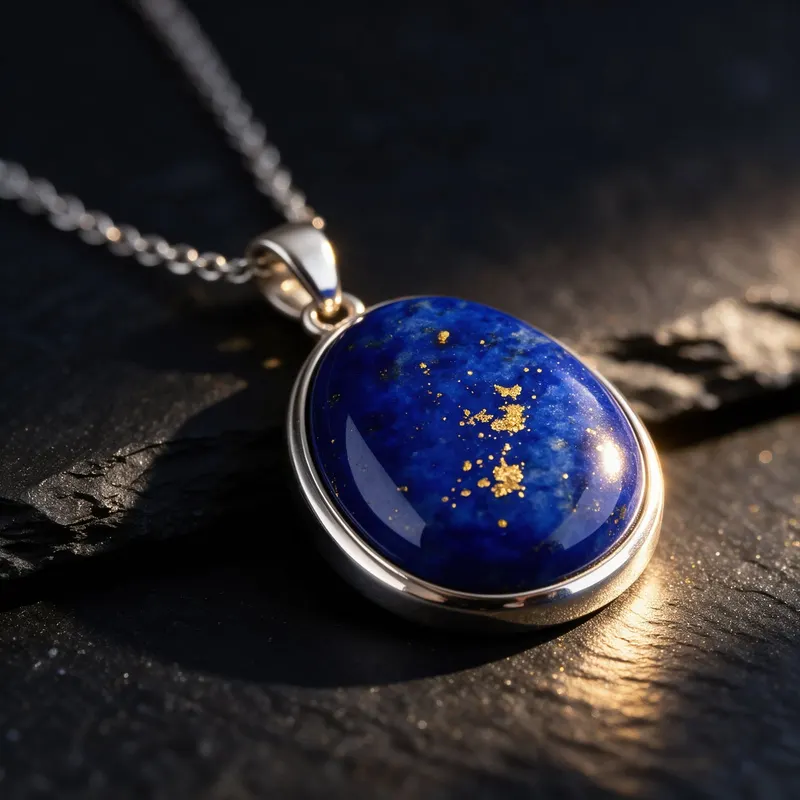
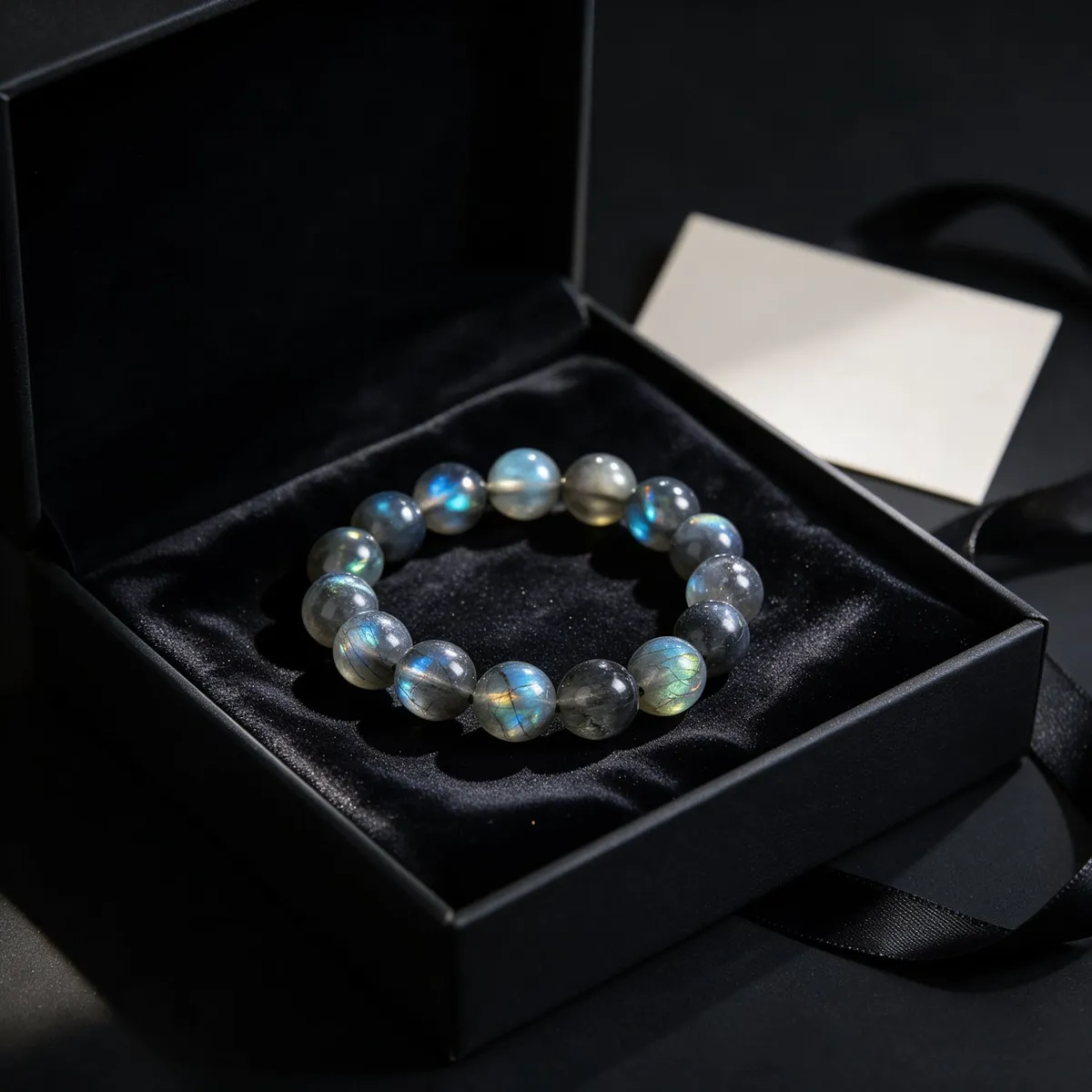
Wearable shapes deserve a note on sizing: bracelets are usually sold in 6.5–8 inch circumferences, and beaded styles can often be adjusted by removing a bead. Pendants depend on chain length — 16–18 inches sits near the collarbone, 20–24 inches hangs lower. If you're choosing a first piece, a bracelet is the most forgiving: it's easy to size, easy to layer, and easy to take off. The Amethyst Healing Bracelet for Calm & Clarity and the Black Tourmaline Protection Bracelet for Grounding are both traditionally associated with steadiness and calm, and both work well as everyday wear.
Realistic Price Expectations
Crystal pricing is driven by material, size, clarity, and craftsmanship — not by shape alone, though shape affects how much rough is wasted in cutting. As a rough guide for US buyers: tumbled stones typically run from a few dollars to about $15; beaded bracelets commonly fall in the $20–$60 range; small points and hearts sit around $15–$50; display spheres and clusters range from about $30 for small pieces to several hundred dollars for large, high-clarity specimens; and pyramids vary widely depending on whether they're solid or assembled. Be cautious of any listing that promises specific life outcomes — that's a marketing red flag, not a property of the stone.
FAQ
People Also Ask
Does the shape of a crystal actually change anything?
Physically, shape changes how a stone is handled, displayed, and cared for. Traditionally, shape is said to change how energy is directed — points focus it, spheres radiate it evenly. The traditional view is symbolic and reflective; the physical differences are real and worth considering when you buy.
Which shape is best for a beginner?
A tumbled stone or a beaded bracelet. Both are affordable, portable, and durable enough for daily use, and they let you get to know a stone before investing in a display piece like a sphere or cluster.
How do I clean and care for shaped crystals?
Dust with a soft cloth or brush, keep pieces out of prolonged direct sun, and avoid water for soft or porous stones like selenite and fluorite. Store points and hearts separately so harder stones don't scratch them, and always use a stand for spheres.
Can I wear a crystal every day?
Yes, with caveats. Quartz-family stones around Mohs 7 are reasonably durable for daily wear; softer stones are better kept for occasional use or display. Remove bracelets and pendants before swimming, showering, or heavy exercise to protect both the stone and any metal fittings.
A Final Word
Crystal shapes are a vocabulary — a way of choosing a piece that fits how you actually live. Let tradition guide the symbolism, let hardness and care guide the practical choice, and buy the piece you can see and afford. Used that way, a point, a sphere, or a simple tumbled stone becomes a small, steady invitation to pause and reflect.