When the Work Won't Come
You sit down to write, paint, compose, or sketch, and nothing arrives. Or worse—something arrives, and you immediately judge it as bad. The blank page starts to feel like a verdict. Days turn into weeks, and the longer you wait, the heavier the project becomes. You may have tried forcing it, tried rest, tried a new notebook. What you haven't tried is changing the conditions under which you begin.
Crystal work, at its most practical, is a way of changing conditions. It is not a switch that turns on inspiration. It is a physical anchor for a decision you are making about how you want to approach the work today: with curiosity instead of pressure, with play instead of proof. For writers, artists, and makers who are tired of waiting for the mood to strike, a small stone on the desk can serve as a reminder that the mood is something you practice, not something you wait for.
This guide covers which stones are traditionally associated with creative energy, how to choose one that suits your particular block, how to care for it, and a short restart ritual you can use today. It is written for people who want to make things again—not for people looking for a shortcut past the actual work.
Blocks Are Usually Resistance, Not Empty
Creative dry spells rarely come from a lack of talent or ideas. More often they come from perfectionism, external pressure, comparison, or the simple exhaustion of a life that leaves no margin for play. The inner critic gets louder the more the work matters to you. The goal, then, is not to summon brilliance. It is to lower the stakes and begin badly, on purpose.
Stones are useful here because they are tangible and quiet. They don't argue with you. Holding a stone, setting it beside your keyboard, or wearing it on your wrist gives your intention a physical location. Over time, that object becomes a cue: when I pick this up, I am someone who starts before I feel ready. That is a habit, and habits are built through repetition, not revelation.
Stones Traditionally Associated With Creative Energy
Different blocks call for different energies. Before you choose, name what is actually stopping you. Is it fear of judgment? Scattered focus? Flat motivation? The stone you pick should match the problem, not just the aesthetic.
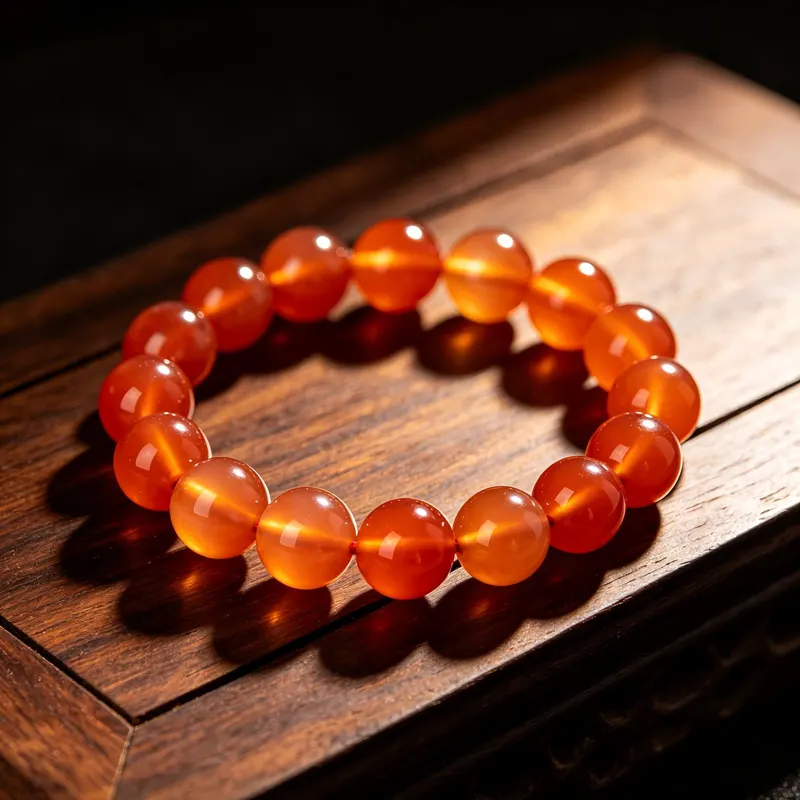
- Carnelian is the classic creative-fire stone, traditionally associated with motivation, courage, and the sacral chakra—the energy center linked in crystal lore to creativity and desire. It suits the block that feels like fear or flatness. The Carnelian Creativity Bracelet is a natural choice for a daily wear piece you can see while you work.
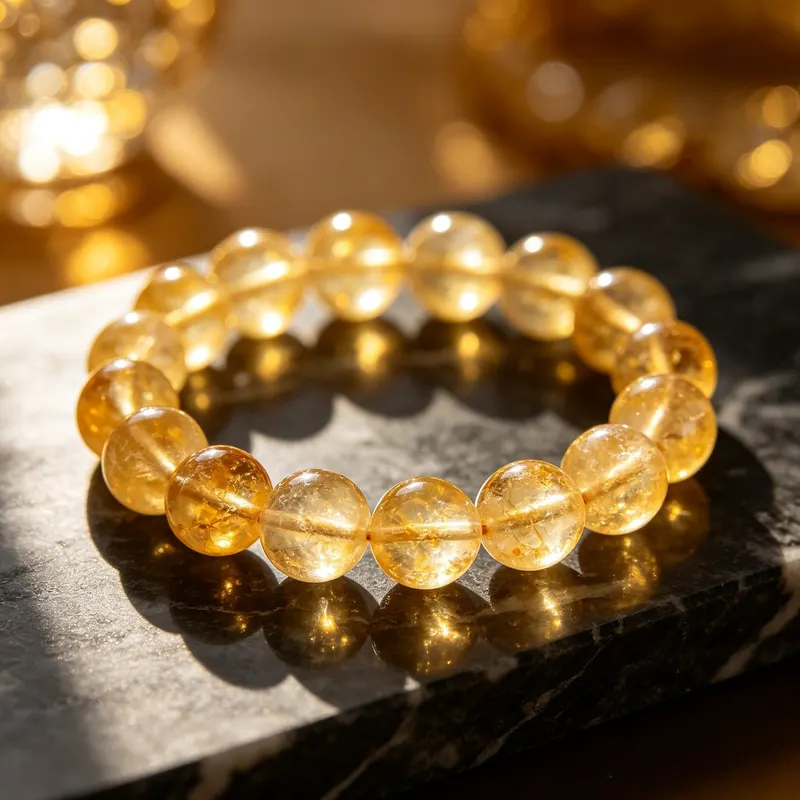
- Citrine is believed to carry a light, optimistic quality. It suits the block that feels like heaviness or self-seriousness—the project that has become a burden. The Citrine Abundance Bracelet is often chosen by makers who want to invite playfulness and a sense of plenty rather than scarcity into their practice.
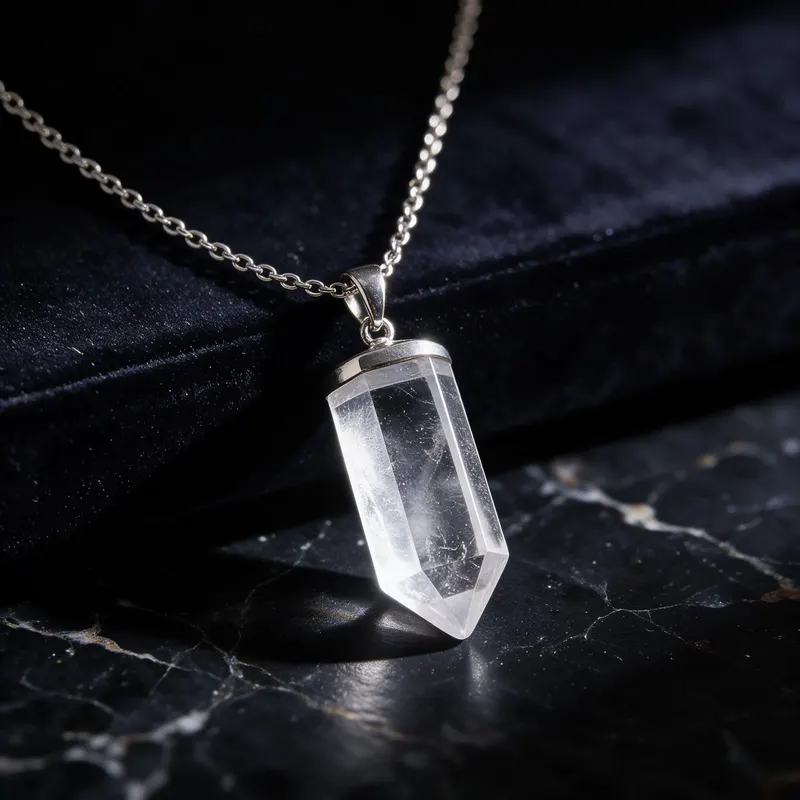
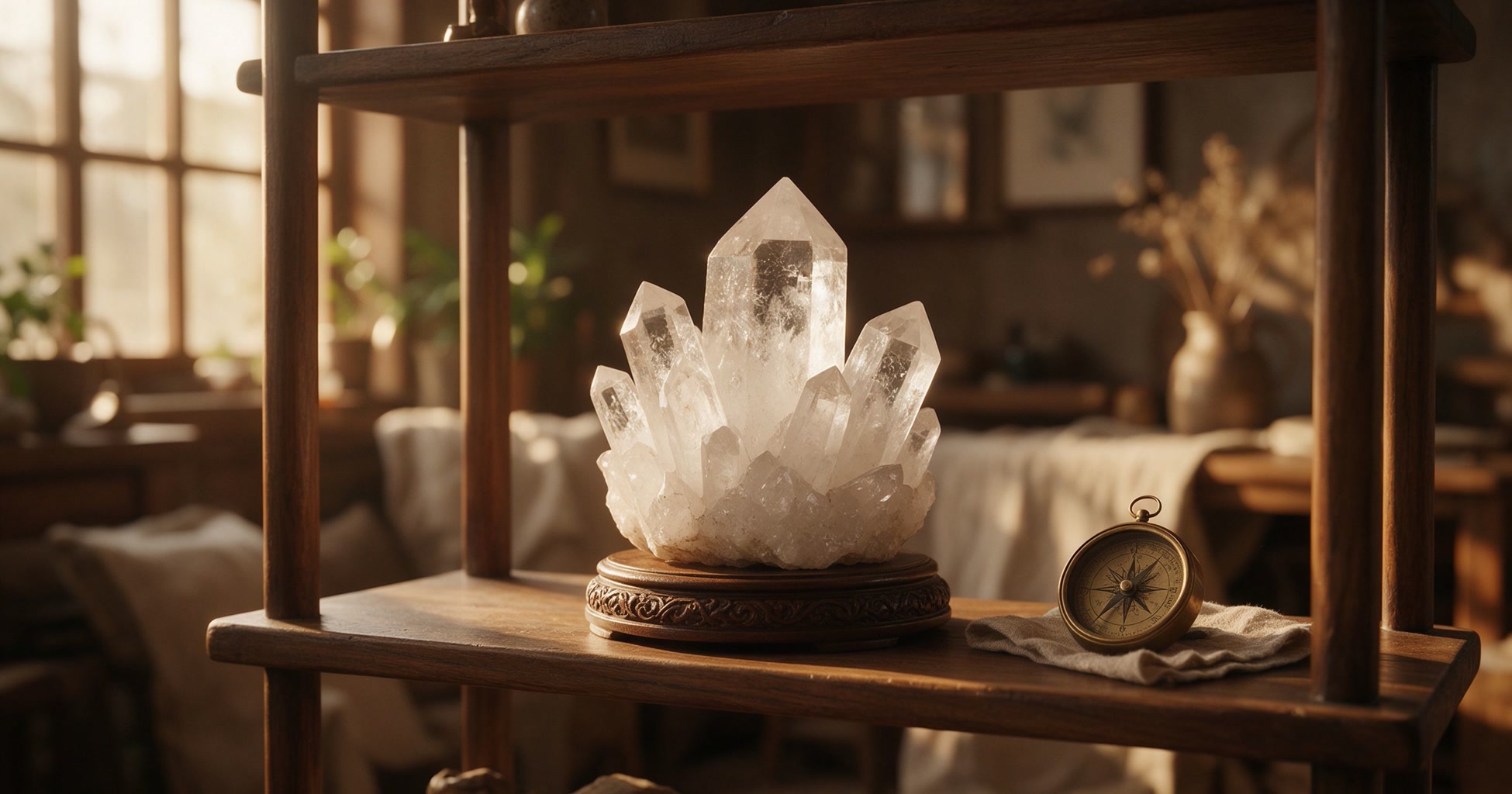
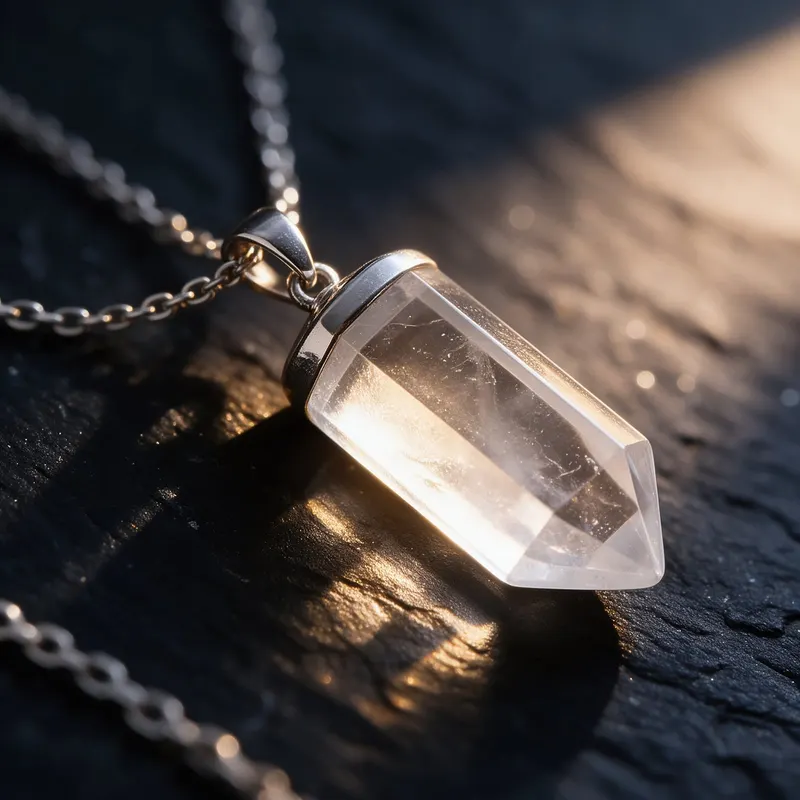
- Clear quartz is traditionally used for clarity and focus, and it is the most practical stone for the block that feels like too many ideas at once. The Clear Quartz Point Pendant Necklace keeps that intention close to the body.
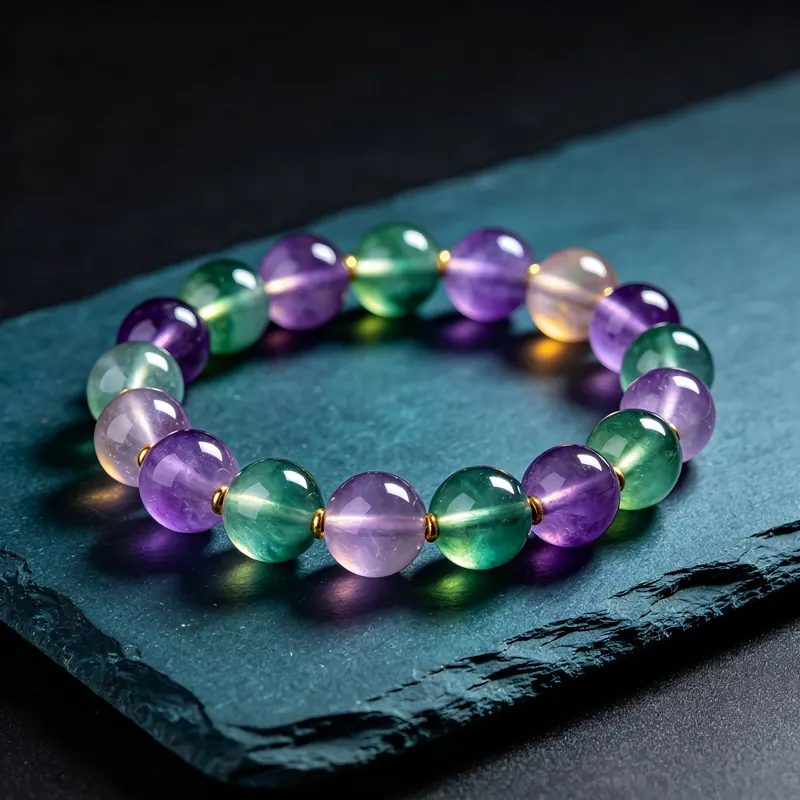
- Fluorite is associated in crystal tradition with concentration and mental order—useful for editing, planning, and the unglamorous middle of a project. The Rainbow Fluorite Focus Bracelet is a good fit for detail work.
- Lapis lazuli has a long historical association with wisdom and expression, and it is often chosen by writers and speakers. The Lapis Lazuli Wisdom Pendant suits the block that is really about finding the right words.
You do not need all of these. One stone, used consistently, will do more for your practice than five stones you never look at.
How to Choose: A Quick Checklist
Use this checklist before you buy anything. It will save you money and help you commit to a stone you'll actually use.
- Name the block. Fear and flatness point toward carnelian. Overwhelm points toward clear quartz or fluorite. Self-seriousness points toward citrine. Word-finding points toward lapis lazuli.
- Decide how you'll use it. Worn pieces (bracelets, pendants) suit daily cueing. Loose stones and clusters suit desk or altar use. A wand suits clearing and ritual.
- Check sizing for wearables. Bracelets are typically sold in 7–8 inch inner circumference; measure your wrist with a soft tape and add about half an inch for comfort. Pendants are usually 18–20 inch chains—measure where you want the stone to sit before ordering.
- Look at the stone, not just the photo. Natural stones vary in color and pattern. Expect some variation from listing images; that is normal, not a defect.
- Set a realistic budget. Beaded bracelets in natural stone commonly run roughly $25–$60; sterling silver pendants with a genuine quartz point often fall around $45–$90; raw amethyst clusters vary widely with size, from about $20 for a small piece to well over $100 for a large display specimen. Gold-plated settings cost less than solid gold and will wear faster.
- Ask what the metal is. Sterling silver and gold-plated brass are common; if you have metal sensitivities, confirm the findings before buying.
A Restart Ritual You Can Do Today
Ritual works because it removes decisions. You are not deciding whether to make something; you are following a sequence. Keep it short and repeatable.
- Clear the space. Spend sixty seconds tidying your work surface. If you use a cleansing wand, a few passes over the desk and stone is enough—the Selenite Cleansing Wand is a simple option for this step.
- Set a ten-minute timer and promise yourself that the output will be bad. Say it out loud if it helps.
- Hold your stone and set one phrase for the session: "curiosity, not perfection," or "one idea only," or "make it ugly." Choose one and keep it.
- Begin with the easiest, silliest version. The worst paragraph. The roughest sketch. The three-chord version. Ease is the point.
- Stop when the timer ends. Do not push through. Stopping on time protects tomorrow's session.
- Return the next day. Momentum is built by showing up, not by breakthroughs.
If ten minutes feels like too much, make it five. The size of the session matters far less than the fact that it happens.
Building a Practice That Lasts
The ritual above is a starting point, not a cure. What sustains creative work is a set of small, boring habits: a fixed time, a low bar, and a way to recover when you miss a day. Your stone belongs to that structure. Keep it in the same place—on the desk, in a dish by the window, on your wrist—so that seeing it becomes the cue.
It also helps to separate the phases of a project. Generating and editing require different mindsets, and mixing them is a common source of blocks. Use your fire stones (carnelian, citrine) for generating and your focus stones (clear quartz, fluorite) for shaping and finishing. If you like working with a fuller set, the 7 Chakra Stone Set with Wooden Display Box gives you a range of stones to assign to different phases, and the Healing Crystal Starter Kit is a sensible entry point if you are new to all of this and want to experiment before committing to a single piece.
Tradition vs. evidence: what holds up
Crystal traditions are old, varied, and largely unstudied in controlled settings. We think it is worth being clear about which claims are lore and which are simply facts about the material.
| Claim | Status | What to know in practice |
|---|---|---|
| Carnelian "boosts" creative fire | Traditional lore | No verifiable mechanism; treat it as a cue for intention, not a cause of inspiration. |
| Clear quartz "amplifies" focus | Traditional lore | Useful as a ritual anchor; the focus comes from your session structure. |
| Quartz is hard and durable | Verifiable fact | Quartz ranks 7 on the Mohs hardness scale—hard enough for daily wear, but it can chip and will scratch softer stones. |
| Citrine can fade in sunlight | Verifiable fact | Many citrine pieces are heat-treated amethyst and can fade with prolonged direct sun. Store away from a bright windowsill. |
| Selenite can be damaged by water | Verifiable fact | Selenite is soft (about 2 on Mohs) and water-soluble. Never soak it; dust with a dry cloth. |
| Lapis lazuli is water-sensitive | Verifiable fact | Lapis is relatively soft (about 5–6) and can be affected by prolonged moisture and harsh cleaners. Wipe, don't soak. |
| Stones "need" frequent cleansing | Traditional practice | Cleansing is a ritual convention, not a maintenance requirement. Care for the physical stone and the ritual will follow. |
On care more broadly: keep bracelets away from perfume, chlorine, and harsh cleaners; remove them before showering or heavy exercise; store pendants separately so chains don't tangle and stones don't scratch each other. For a deeper look at one of these stones, our guide to carnelian's meaning and properties covers its history and traditional associations.
FAQ
People Also Ask
Which crystal is best for creative blocks?
There is no single best stone, because blocks have different causes. Carnelian is the most commonly cited stone for creative fire and motivation; citrine is chosen for lightness and play; clear quartz and fluorite are chosen for focus. Pick the one that matches what is actually stopping you.
How do artists and writers actually get past a block?
In practice, by lowering the stakes, working in short timed sessions, and prioritizing starting over producing something good. Ritual and routine tend to outperform waiting for inspiration. A stone can support that routine as a physical cue, but the routine is doing the work.
How do I care for a crystal bracelet or pendant?
Wipe it with a soft dry cloth, avoid prolonged water and chemicals, and store it separately. Check Mohs hardness before cleaning—quartz is durable, but selenite and lapis are not. Remove bracelets before showering, swimming, or cleaning.
Do I need to cleanse my stone, and how often?
Cleansing is a traditional practice, not a requirement, and there is no fixed schedule. Many people cleanse a new stone once and then whenever it feels meaningful—before a big project, for example. Use dry methods like sound or a selenite wand for water-sensitive stones.
Start Before You Feel Ready
The most reliable creative habit is a small, repeatable beginning. Choose one stone that matches your block, put it where you will see it, and give yourself ten minutes today. If you'd like to explore further, browse the Intuition & Spiritual Growth Collection, or read our notes on sacral chakra affirmations and crystals for procrastination and motivation.
Crystals are offered for reflection and ritual. They are not medical devices and are not a substitute for professional care. If you are struggling with persistent low mood, anxiety, grief, or trauma, please reach out to a qualified professional.