When You Feel Scattered, Unmoored, or "Up in Your Head"
You know the feeling: a dozen tabs open in your brain, your body going through the motions while your attention is three meetings ahead or replaying something from last week. Maybe it's the week after a long trip, a season of deadlines, or a stretch when everything feels slightly out of focus. Nothing dramatic is wrong — you just don't feel here.
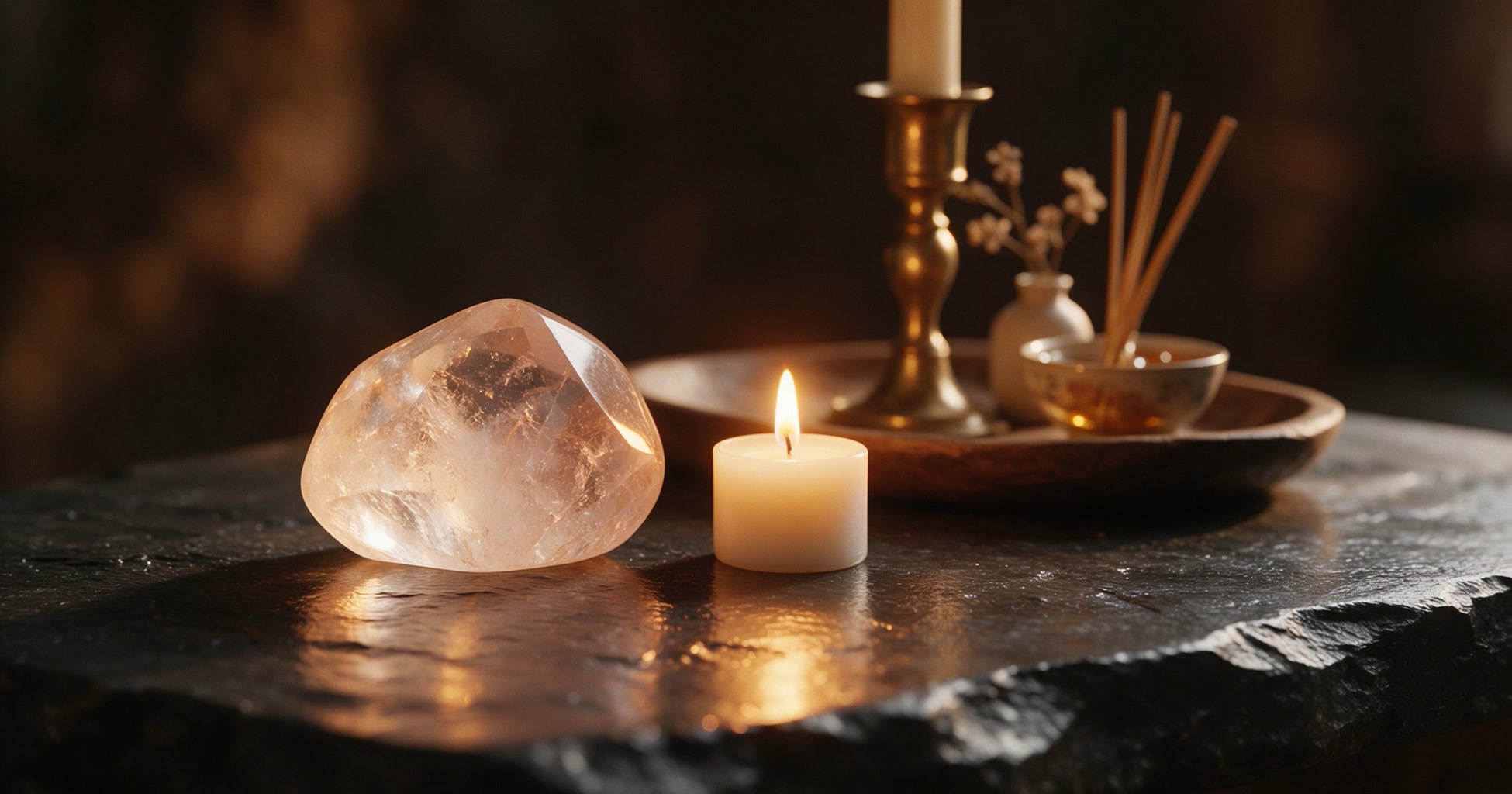
That quality of being anchored in your body and the present moment is what most people mean by "grounding." It's a felt sense of steadiness, and it's something you can practice. Grounding crystals are simply a tactile, visual anchor for that practice — something to hold, see, and return to when your attention drifts. The stones don't do the work for you; they give your hands and eyes somewhere to land while you do it.
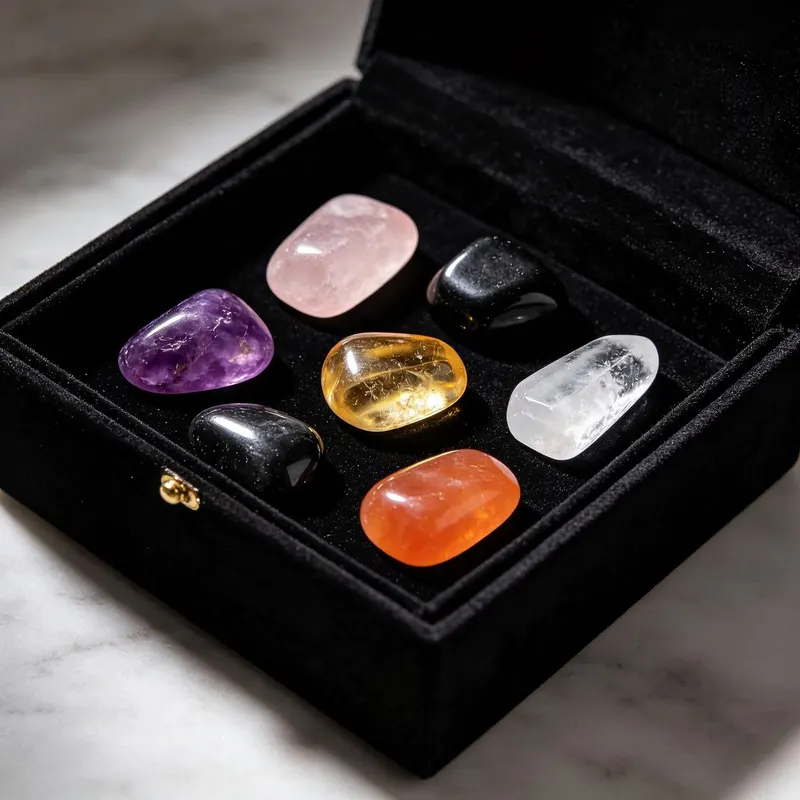
This guide covers the stones most associated with grounding, how to choose one that fits your life, how to care for it honestly, and a simple root-to-earth ritual you can do in a minute almost anywhere. If you're new to all of this, start with the Healing Crystal Starter Kit, 7 Stones + Guide and skip the guesswork.
What Does "Grounding" Mean, and Why the Root Chakra?
In crystal and chakra traditions, grounding is linked to the Root (Base) chakra, understood as the energy center at the base of the spine. The Root is associated with stability, safety, belonging, and the physical body — the "earth" of your system. Grounding stones are traditionally dark, dense, or heavy-feeling: black, brown, deep red, and smoky tones that mirror soil, stone, and iron.
You don't need to hold any particular belief to use this idea well. Think of "grounding" as a useful metaphor for regulation: slow breathing, physical contact, and a single point of focus. The stone is a cue. The tradition gives that cue a name and a story; the practice gives it a function.
Best Grounding Stones (and What Each Is Traditionally Associated With)
These are the stones most often named as grounding allies, with the qualities tradition assigns them. Treat the descriptions as lore and invitation, not promises.
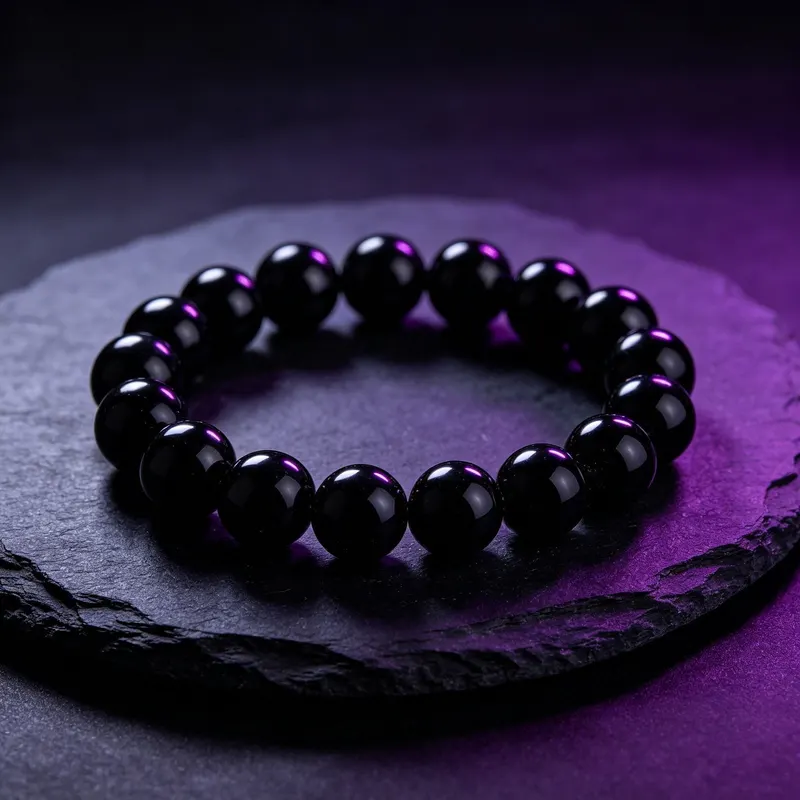
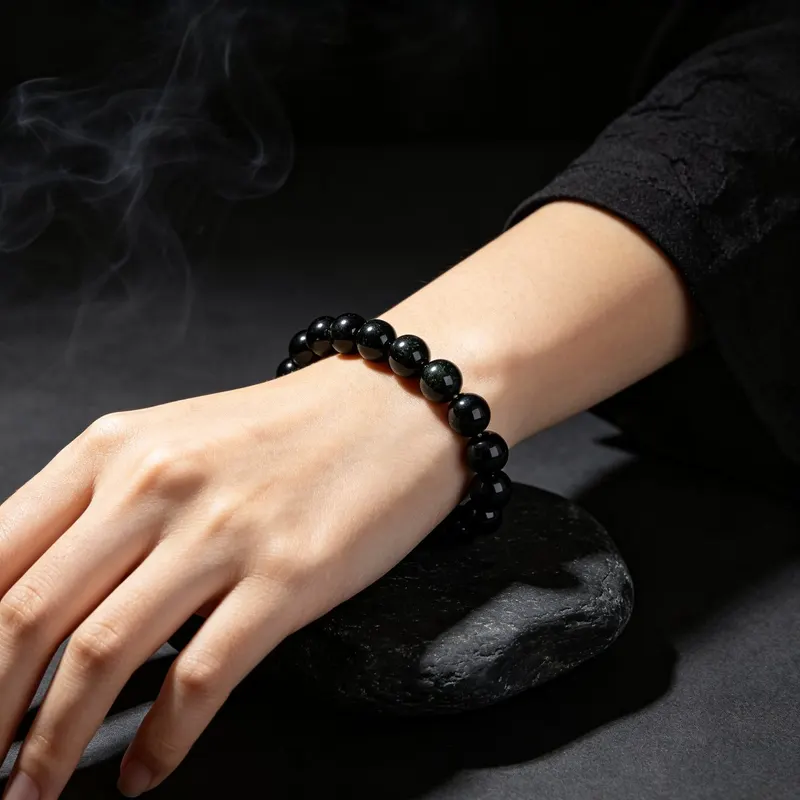
- Black Tourmaline — traditionally associated with protection and boundary-setting; believed to feel deeply stabilizing. A common first choice for people who feel easily drained. See the Black Tourmaline Protection Bracelet for Grounding.
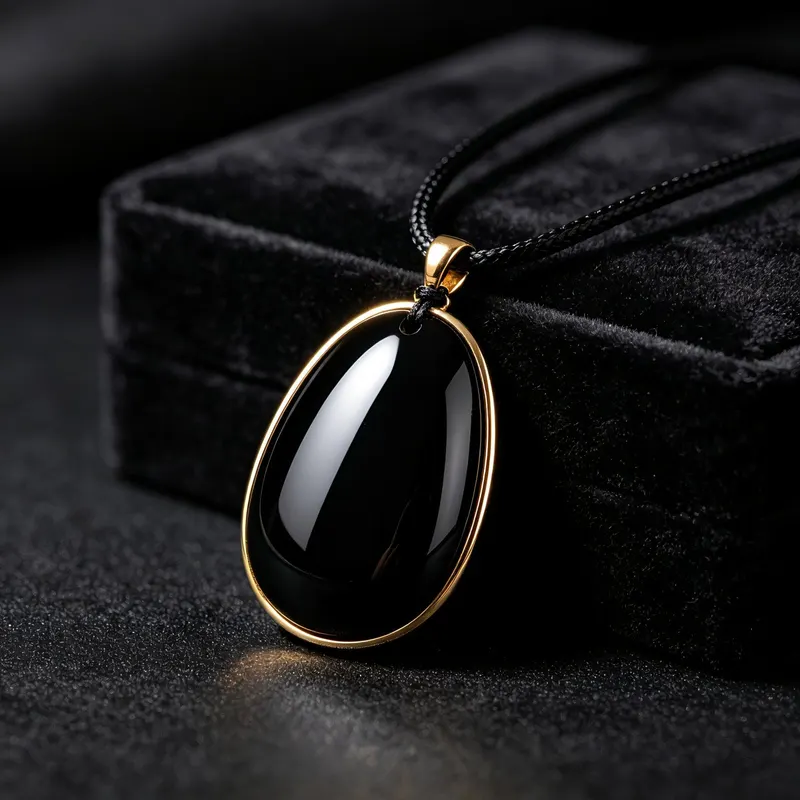
- Black Obsidian — a volcanic glass traditionally linked with truth-telling and clearing scattered energy. Its glossy, mirror-like surface invites honest reflection. Try the Black Obsidian Teardrop Protection Pendant Necklace if you prefer something worn close to the chest.
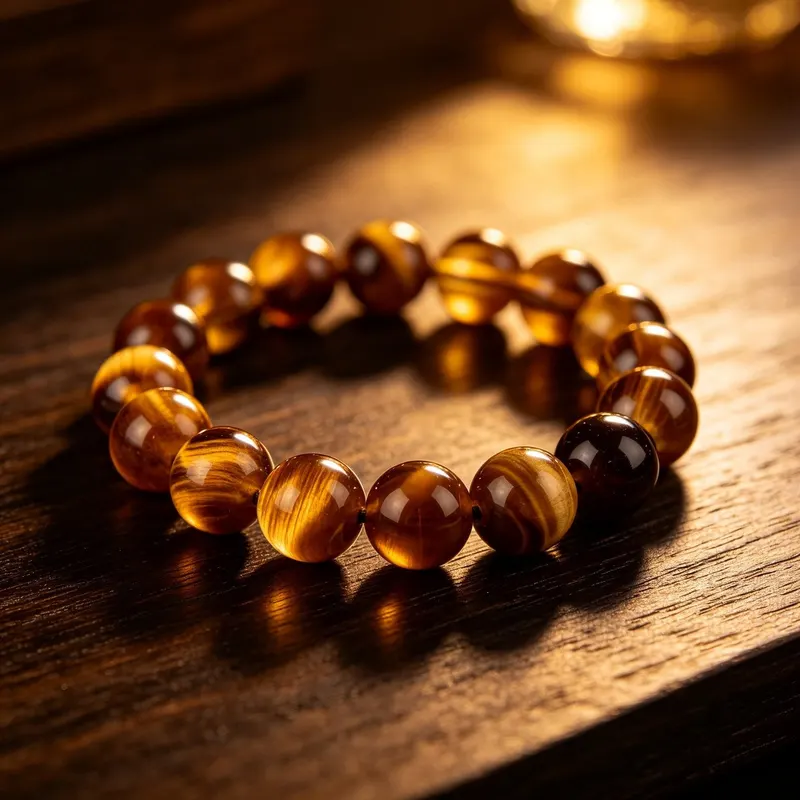
- Tiger's Eye — a chatoyant golden-brown stone associated with steady confidence and forward momentum; grounding without feeling heavy. The Tiger's Eye Confidence Bracelet for Focus & Courage is a practical everyday pick.
- Hematite — metallic, iron-rich, and notably weighty; a traditional Root-chakra ally. Its density makes it feel physically anchoring in the hand.
- Smoky Quartz — a translucent brown quartz traditionally used to "neutralize" or settle scattered energy; gentle and easy to wear.
- Labradorite — not dark in the same way, but often described as protective and steadying during change. The Labradorite Bracelet for Intuition & Transformation suits transitional seasons.
- Selenite — a soft, pale stone used in tradition for clearing space rather than personal grounding; better as a room or altar tool than a pocket stone (more on that below).
How to Choose: A Practical Comparison
Use this table to match a stone to how you actually live. "Best format" reflects durability and wearability, not spiritual ranking.
| Stone | Traditional association | Feel in hand | Best format | Everyday durability |
|---|---|---|---|---|
| Black Tourmaline | Protection, boundaries | Dense, matte | Bracelet or tumbled pocket stone | Good; avoid harsh knocks |
| Black Obsidian | Truth, clearing | Smooth, glassy | Pendant | Moderate; chips at edges |
| Tiger's Eye | Confidence, momentum | Smooth, silky sheen | Bracelet | Very good |
| Hematite | Root stability | Heavy, metallic | Bracelet or pocket stone | Good; can scratch softer surfaces |
| Smoky Quartz | Settling, calm | Cool, smooth | Pocket stone or pendant | Very good |
| Labradorite | Intuition, protection in change | Smooth, flashy | Bracelet | Moderate; can cleave if struck |
| Selenite | Space clearing | Soft, fibrous | Wand for a room or altar | Low; water-soluble and soft |
A quick checklist before you buy
- Format first. Will you actually wear it? A bracelet you love beats a pendant you leave in a drawer.
- Weight matters. Hematite and obsidian feel substantial; smoky quartz and tiger's eye feel lighter. Pick the sensation you want as your cue.
- Check the finish. Look for even polish, no cracks at drill holes, and a clasp that sits flat against the wrist.
- Size the bracelet. Measure your wrist snugly with a soft tape, then add roughly 0.5 inch (1.3 cm) for comfort. Most beaded bracelets list a circumference; a stretch bracelet should slide on without stretching hard.
- Know the price range. Beaded bracelets in natural stone typically run about $20–$60; simple pendants on sterling silver or gold-plated chains about $30–$80; small raw clusters and wands about $15–$50. Large, flawless specimens cost more. Be wary of "certified" claims — most consumer crystal jewelry has no meaningful independent certification.
A 60-Second Grounding Ritual You Can Do Anywhere
This is the core practice. You can do it standing at a desk, waiting for a train, or before a difficult conversation.
- Stand or sit with both feet flat. Shoulder-width apart if standing. Let your weight settle evenly.
- Hold your stone in one hand (or rest a hand on a pendant). Notice its temperature and weight.
- Breathe slowly — in for a count of four, out for a count of six. Three or four rounds is enough.
- Visualize roots growing from the soles of your feet down into the earth, carrying tension down and drawing steadiness up.
- Name one thing you can see, hear, and feel. This is the part that does the real work: it returns attention to the present.
Repeat it at the same time each day — before your first meeting, say — and the stone becomes a reliable cue. That's the whole mechanism, and it's a good one.
When to Ground — and How to Build It Into Your Day
Grounding is most useful at transitions: before stressful meetings, after travel, during busy seasons, or whenever you feel "up in your head." A few low-effort ways to use it:
- Pocket stone: keep a tumbled stone in a pocket and touch it when you notice your attention scattering. It's the most discreet method.
- Wrist cue: a bracelet you see whenever you check the time.
- Desk anchor: a small cluster or wand near your workspace, used at the start and end of focused work.
- Evening reset: hold your stone for a minute before bed to mark the end of the day.
Pair grounding with protective practices when you're around a lot of people or noise — our protection guide covers that in more depth.
Tradition vs. evidence: what holds up
It's worth separating the lore from the facts, because the facts affect how you care for your stone and how much you should pay.
Traditional lore (belief, not fact): Black tourmaline is said to repel or absorb "negative energy"; obsidian is said to reveal hidden truths; tiger's eye is said to build courage; hematite is said to steady the Root chakra. These are cultural and spiritual frameworks. They are meaningful to many people and are not scientific claims.
Verifiable facts (mineralogy and care):
- Hardness (Mohs scale): quartz varieties like smoky quartz and amethyst sit around 7; tiger's eye around 6.5–7; obsidian around 5–5.5; hematite around 5–6.5 depending on form; selenite is very soft at about 2. Softer stones scratch and chip more easily, which is why selenite is a poor pocket choice.
- Water sensitivity: selenite dissolves in water and should never be soaked. Hematite can rust or stain if kept wet. Obsidian is fine with a quick wipe but not prolonged soaking. Most quartz is water-tolerant but doesn't need it.
- Sunlight: amethyst, rose quartz, and other colored stones can fade with prolonged direct sun. Store them out of harsh light.
- Cleaning: a soft dry or slightly damp cloth is enough for almost everything. Avoid ultrasonic cleaners and harsh chemicals on any treated, plated, or soft stone.
- Storage: keep softer stones separate from harder ones so they don't scratch each other. Store pendants flat so chains don't kink.
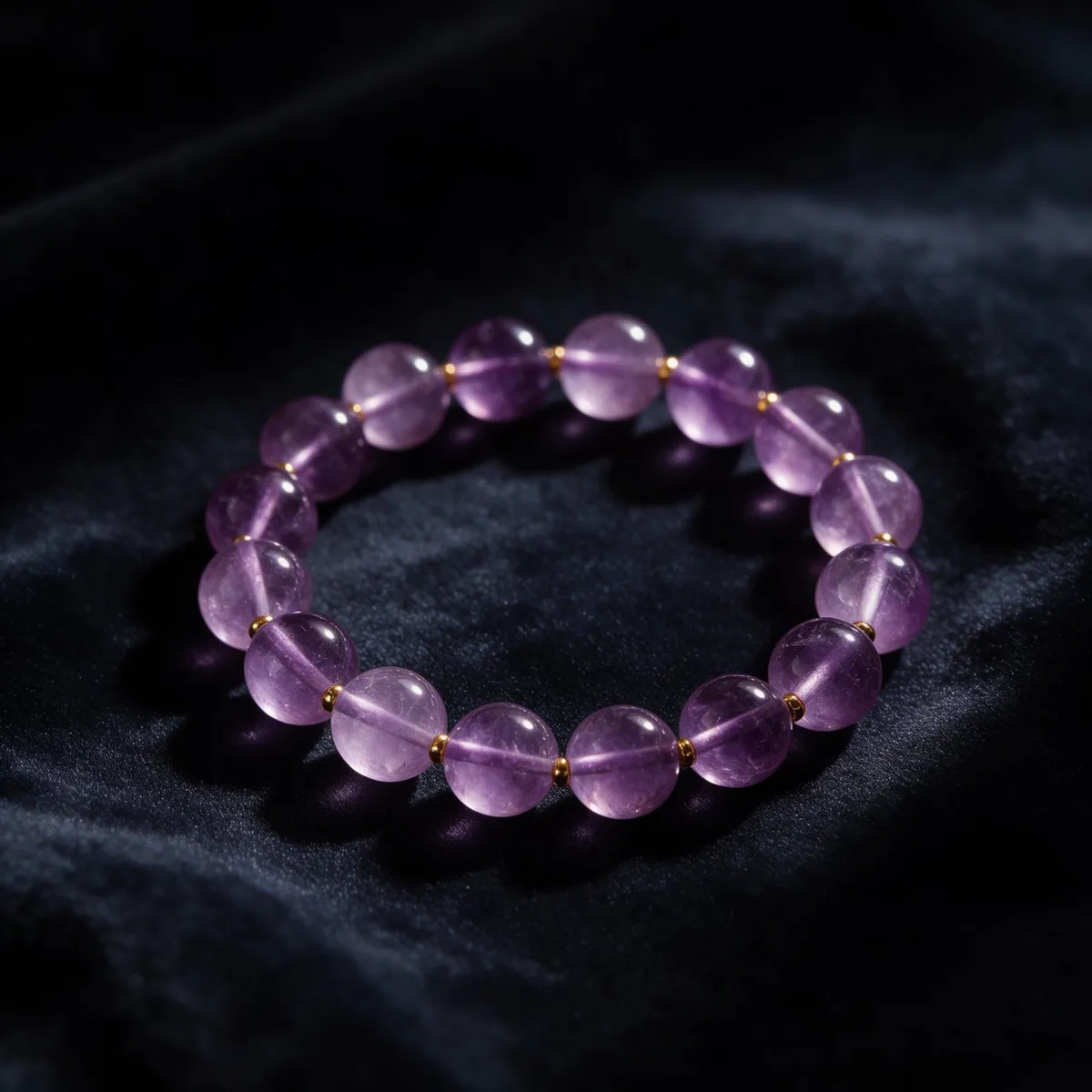
If you want a room-clearing tool, the Selenite Cleansing Wand for Energy Clearing is lovely for an altar or shelf — just keep it dry and away from knocks. For a meditation focal point, a raw piece like the Raw Amethyst Cluster for Meditation & Altar works well and is easy to care for.
FAQ
People Also Ask
Which chakra is for grounding?
In chakra tradition, the Root (Base) chakra at the base of the spine is associated with grounding, stability, and safety. Grounding stones are typically chosen to match its earthy colors.
Can I keep a grounding stone in my pocket?
Yes — it's one of the most discreet and practical ways to use one. Choose a durable, tumbled stone (tiger's eye, smoky quartz, or black tourmaline) and avoid soft stones like selenite that chip or dissolve.
How do I cleanse or recharge a grounding stone?
There's no single right method; tradition offers several. A simple approach is to wipe the stone with a soft cloth, set it on a windowsill out of direct sun, or rest it on a selenite plate. Avoid water for selenite and hematite, and avoid prolonged sunlight for colored stones.
Do grounding crystals actually work?
They work as a focus and ritual cue. Holding a stone and breathing slowly can help you feel more present, and many people find the practice meaningful. They are not medical devices and don't treat any condition. If you're struggling with your mental or physical health, please reach out to a qualified professional.
Shop the Stones
- Black Tourmaline Protection Bracelet for Grounding
- Black Obsidian Teardrop Protection Pendant Necklace
- Tiger's Eye Confidence Bracelet for Focus & Courage
- Healing Crystal Starter Kit, 7 Stones + Guide
Keep Exploring
Crystals for Protection · Crystals for Empaths · Black Tourmaline Meaning
Crystals are intended for reflection and personal ritual and are not medical devices. They do not diagnose, treat, cure, or prevent any disease. If you are struggling with your mental or physical health, please reach out to a qualified professional.