Why a Corner Beats a Cushion Alone
You have a cushion, maybe a meditation app, and good intentions. What you do not have is a place that tells your body, "We do this here." If your practice keeps sliding off the calendar, the missing piece is often environmental rather than motivational. A dedicated corner — even two square feet of floor by a window — gives your nervous system a repeatable cue. Sit there often enough and the spot itself starts to do some of the settling for you.
Crystals fit into that corner as objects of attention. They give the eyes somewhere soft to land, they mark the space as intentional, and holding one can anchor a wandering mind the way a rosary or a breathing count does. Many people find that a stone in the hand is easier to return to than a thought.
This guide walks through choosing a spot, selecting a small set of stones, placing them, and caring for them — with realistic notes on what crystals can and cannot do, so your corner stays a support rather than a superstition.
Choose the Spot Before You Choose the Stones
The location does more work than any crystal you put in it. Look for a corner that meets most of these conditions:
- Low traffic. Not the hallway between the kitchen and the bathroom. A bedroom corner, a slice of a home office, or the end of a quiet living room works well.
- Soft, indirect light. Morning light is lovely; hours of direct afternoon sun can fade some stones and overheat candles. A sheer curtain solves most of it.
- A wall or floor you can sit against. Support for the back makes longer sits realistic.
- Room for a small surface. A low stool, a tray on the floor, or a shelf at seated eye level. You want your stones within arm's reach without leaning.
- Somewhere you can leave things out. If you have to pack the corner away every day, you will stop using it.
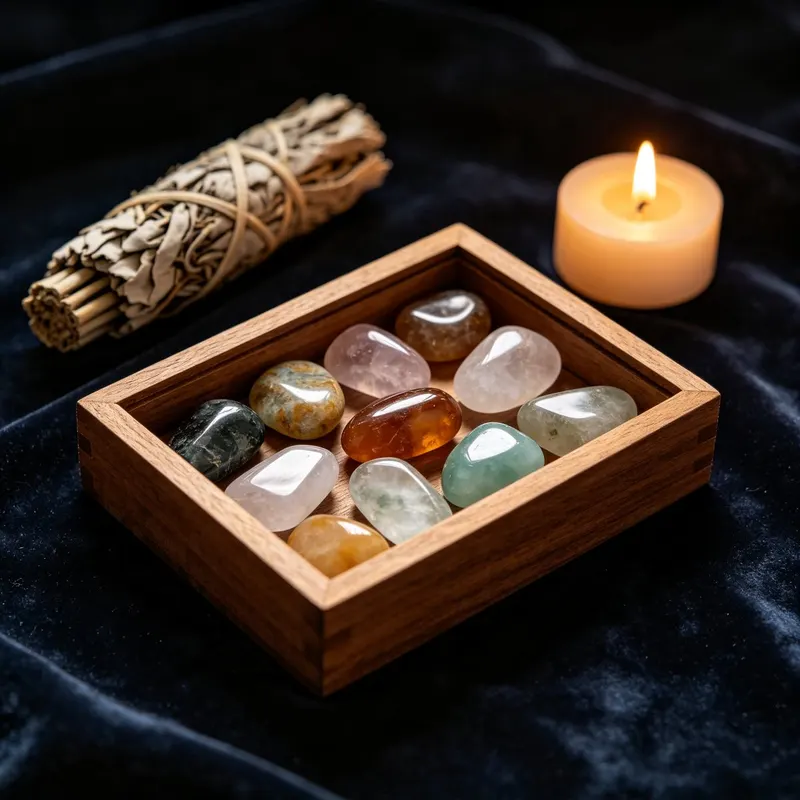
You do not need a whole room or a renovation. A folded blanket, a cushion, a small wooden tray, and one candle is a complete setup. Keep it tidy — clutter is the fastest way to make a sacred space feel like a storage problem.
Which Stones Belong in a Meditation Corner
A corner works best with three to five stones, each with a clear job. More than that and the arrangement becomes decoration you stop noticing. Here is a practical short list, with the traditional associations attached and clearly labeled as tradition.
| Stone | Traditional association | Practical role in the corner | Suggested form |
|---|---|---|---|
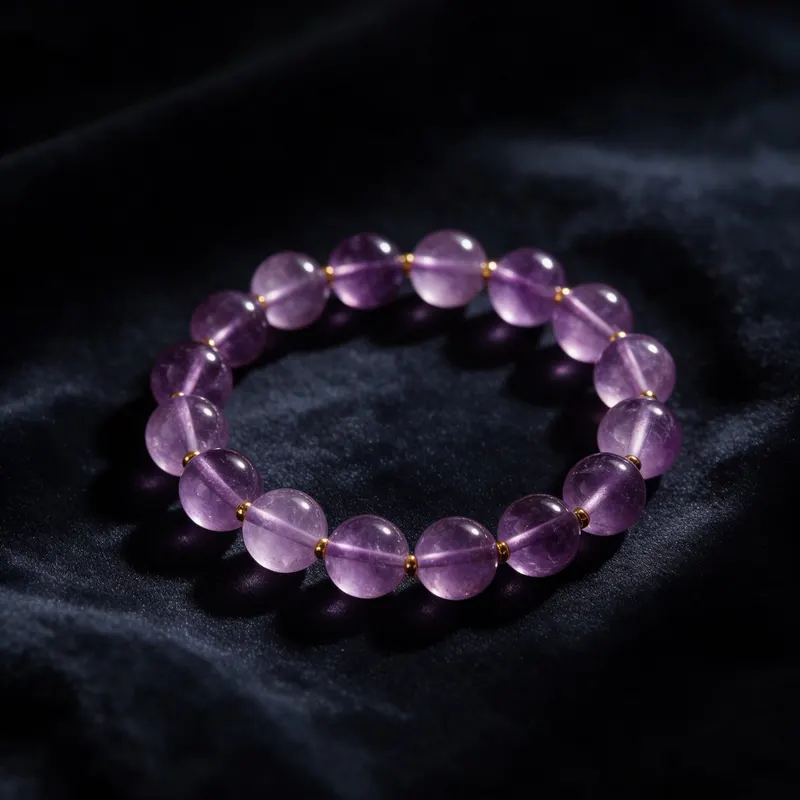
| Amethyst | Calm, clarity, quieting mental chatter | Held during sit; sets the tone | Bracelet, tumbled stone, or small cluster |
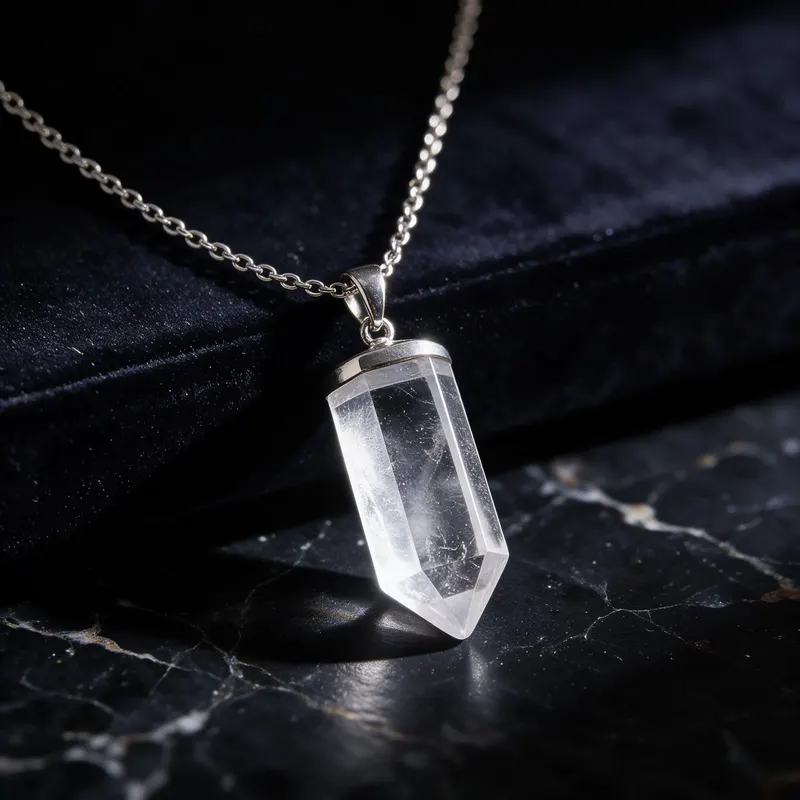
| Clear quartz | Focus, amplification, clarity | Gazing anchor placed in front of you | Point pendant or single point |
| Selenite | Clearing, light, energetic reset | Space clearing before and after sits | Wand kept on the tray |
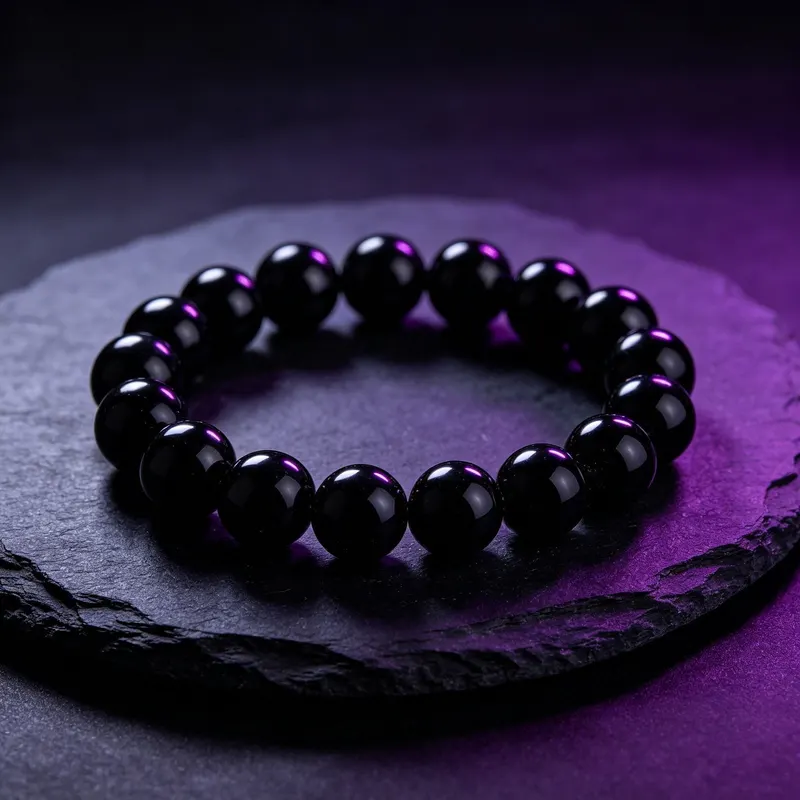
| Black tourmaline | Grounding, protection | Placed at the edge of the space or under the cushion | Bracelet or tumbled stone |
| Labradorite or moonstone | Intuition, inner listening | Optional; good for evening or journaling sits | Bracelet or palm stone |
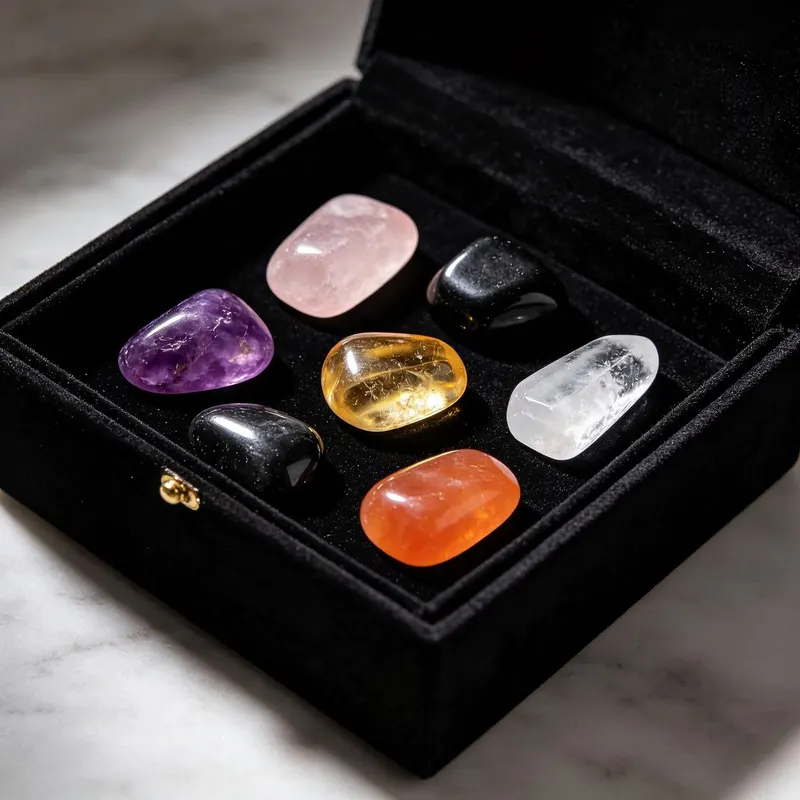
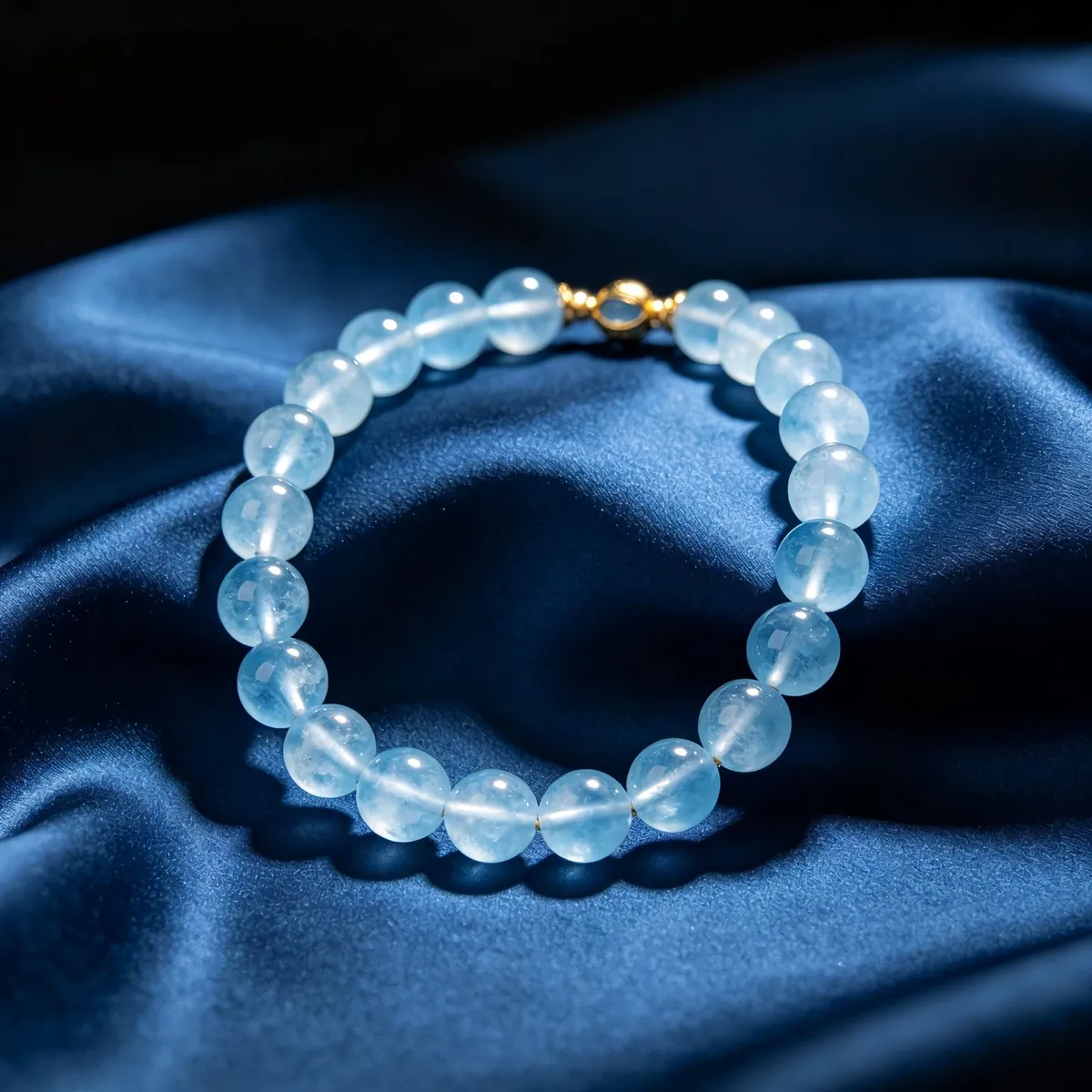
If you are building from scratch, the Healing Crystal Starter Kit, 7 Stones + Guide covers the basics in one purchase and lets you discover which stones you actually reach for before investing further. If you already know amethyst is your stone, the Amethyst Healing Bracelet for Calm & Clarity is easy to wear into the corner and slip off onto the tray when you finish.
Placement: A Simple Layout That Works
Once you have your spot and your stones, arrange them with intention rather than symmetry. A layout that many people find natural:
- In front of you, at eye level or slightly below: a clear quartz point or your Clear Quartz Point Pendant Necklace, Sterling Silver laid flat on the tray. This is your gazing anchor — soft eyes, not a stare.
- In your hand or on your wrist: amethyst, held loosely. If your hands fidget, a bracelet gives your fingers something to do without breaking focus.
- At the edge of the space: a grounding stone. Black tourmaline near the doorway side of the corner, or the Black Tourmaline Protection Bracelet for Grounding worn during the sit, is a common choice for people who feel ungrounded or anxious when they close their eyes.
- On the tray, used at the start and end: a selenite wand. Pass it slowly around the space, or simply hold it for a breath before you begin.
- Optional: one candle, placed so it is never within reach of fabric or paper, and never left burning unattended.
Keep the arrangement the same from session to session. Consistency is the whole point — the corner becomes a cue because it looks the same every time.
Building the Habit: A Ten-Minute Session
A corner only trains your brain if you use it. A short, repeatable session beats an ambitious one you skip:
- Arrive and clear. Sit down, take three slow breaths, and pass the selenite wand once around the space or hold it briefly. This is a transition ritual, not a requirement.
- Settle. Set a timer for five to ten minutes. Rest your hands in your lap with the amethyst in one palm.
- Anchor. Let your eyes rest softly on the clear quartz in front of you, or close them and return to the weight of the stone in your hand whenever attention drifts.
- Close. When the timer sounds, sit for one more breath, then place the stone back on the tray in the same spot.
Same time, same corner, most days. If you miss a day, nothing is broken. The corner will be there tomorrow.
The traditional view, and what is verifiable
Crystal practice blends centuries of folk tradition with modern wellness habits, and it is worth keeping the two honest. Here is what is lore and what is simply materials science.
- Traditional lore: Amethyst is traditionally associated with calm and clear thinking; clear quartz with focus and amplification; black tourmaline with grounding and protection; selenite with clearing. These are cultural associations passed down through practice, not measured effects. Crystals invite reflection and ritual; they are not treatments.
- Verifiable: hardness. On the Mohs scale, clear quartz and amethyst sit at 7, meaning they resist scratching but will dull or chip against harder materials. Selenite is very soft — around 2 — and scratches with a fingernail, so keep it away from other stones in a bag. Black tourmaline is roughly 7 to 7.5. Store soft stones separately and wrap pendants.
- Verifiable: water and sunlight sensitivity. Selenite is water-soluble and will pit or dissolve if soaked — dust it with a dry cloth only. Amethyst and rose quartz can fade with prolonged direct sunlight, so keep them out of a south-facing window for hours at a time. Clear quartz is generally stable in water; softer or dyed stones are not, so when in doubt, clean with a dry or barely damp cloth.
- Verifiable: heat and chemicals. Sudden temperature changes can crack stones. Keep crystals away from hot water, dishwashers, ultrasonic cleaners, and household chemicals, and remove rings and bracelets before cleaning or gardening.
- Care basics: dust weekly, wipe with a soft dry cloth, and store each piece separately. For "energetic" cleansing, tradition favors moonlight, sound, or a selenite plate — all of which are also simply gentle on the stone.
Crystals are for reflection and ritual; they are not medical devices and are not a substitute for professional care.
Choosing and Caring for Your Stones
A few practical notes before you buy:
- Sizing: Bracelets are usually sold in a single stretch-fit size that suits wrists of roughly 6 to 7.5 inches; if you are at either extreme, check the listing's measurements. Pendants typically hang on 16 to 20 inch chains — 18 inches sits near the collarbone, which is comfortable for seated practice.
- What to look for: natural variation in color and inclusions is normal and a sign of genuine stone. Uniform, suspiciously bright color at a very low price can indicate dyeing or glass. Ask what the stone is and where it comes from; a good seller answers plainly.
- Realistic prices: tumbled stones generally run a few dollars each; simple beaded bracelets typically fall in the $15–$40 range; sterling silver pendants with a genuine quartz point commonly land in the $30–$80 range; small raw amethyst clusters vary widely with size and quality. Treat unusually cheap "rare" stones with caution.
- Care: keep selenite dry and separate, store pendants flat or hanging, and re-dust the corner weekly when you tidy the space.
If you want a single focal stone rather than a set, a raw Raw Amethyst Cluster for Meditation & Altar makes a quiet centerpiece for the tray, and the Selenite Cleansing Wand for Energy Clearing completes the pair.
FAQ
People Also Ask
Which crystal is best for meditation?
Amethyst, traditionally associated with calm awareness, and clear quartz, used as a focus anchor, are the most common pairing. Start with those two and add a grounding stone if you tend to feel unsteady when you sit.
Where should I put crystals while meditating?
Hold one loosely in your hand or wear it on your wrist, and place a clear quartz point in front of you as a soft gazing anchor. Keep a grounding stone at the edge of the space and a selenite wand on the tray for clearing before and after.
How do I clean and care for meditation stones?
Dust weekly with a soft dry cloth. Keep selenite completely dry, store soft stones separately from harder ones, and keep amethyst and rose quartz out of long direct sun. Avoid hot water, chemicals, and ultrasonic cleaners.
Do I need a lot of crystals to build a corner?
No. Three stones — one to hold, one to gaze at, one to clear the space — are enough. Fewer stones you actually use will serve you better than a crowded shelf you stop noticing.
A Corner You Will Actually Return To
Start small: one quiet spot, a cushion, and three stones with clear jobs. Keep the layout the same, sit for ten minutes, and let the corner become the cue. The stones are there to give your attention somewhere to rest — nothing more, and that is plenty.
Crystals are offered for reflection and ritual and are not medical devices. They are not a substitute for medical or psychological care.