Why Reach for a Crystal Before You Sit Down to Meditate
You've probably tried meditation already. Maybe you've downloaded an app, sat cross-legged on a cushion, and spent the first ten minutes thinking about your inbox instead of your breath. That's normal, and it's exactly the point where a lot of people quietly give up. A crystal won't empty your mind for you, but it can give your attention somewhere specific and gentle to land, which is often all a restless practice needs to get started.
In our experience working with these stones, the most useful role a crystal plays is as a physical anchor. It has weight, temperature, and texture. It sits in your palm and asks you to notice something real and present rather than the story running in your head. That's a simple, honest reason to use one, and it doesn't require you to believe anything in particular.
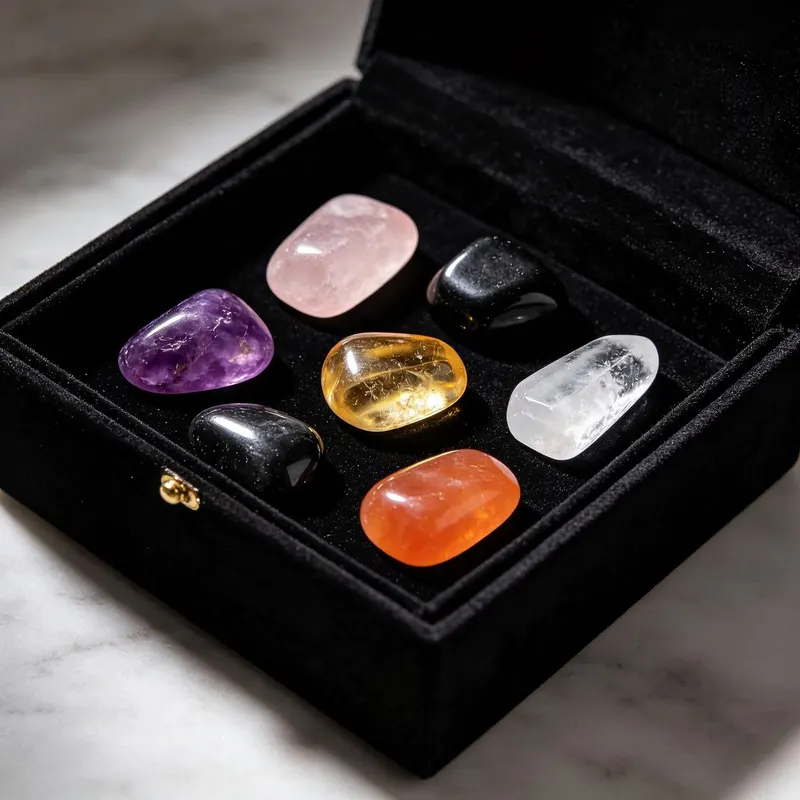
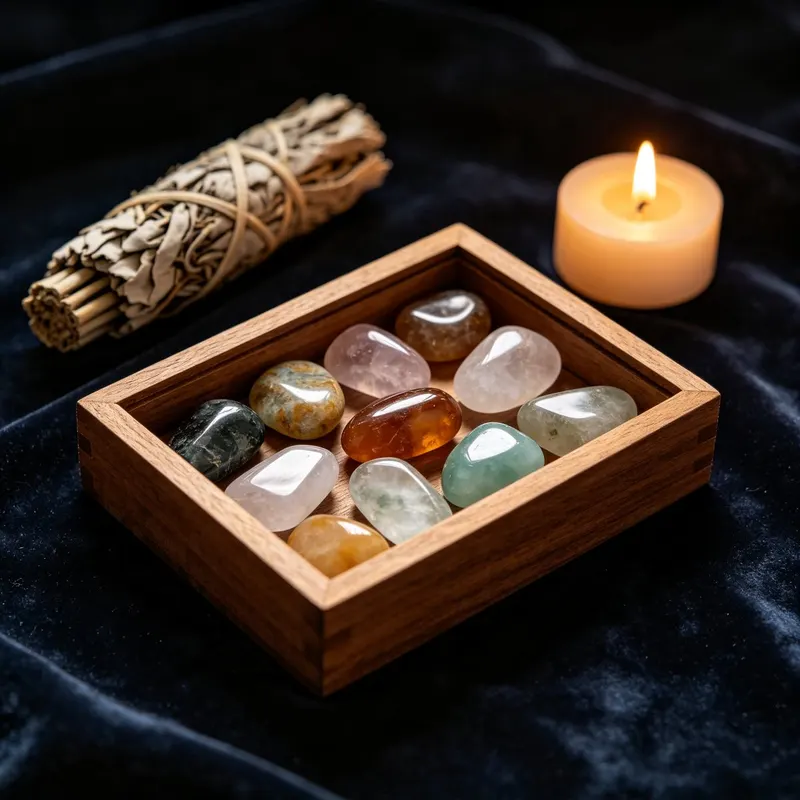
This guide covers how to choose a stone for your practice, how to hold and care for it, a step-by-step ritual you can actually follow, and a clear line between what crystal traditions claim and what we can verify. If you're brand new to all of this, start with a Healing Crystal Starter Kit, 7 Stones + Guide so you have a few options to test before committing to a single piece.
How to Choose a Meditation Crystal
You don't need a collection. One stone you actually use beats ten sitting in a drawer. Choose based on the quality of attention you're trying to cultivate, then let personal preference decide the rest.
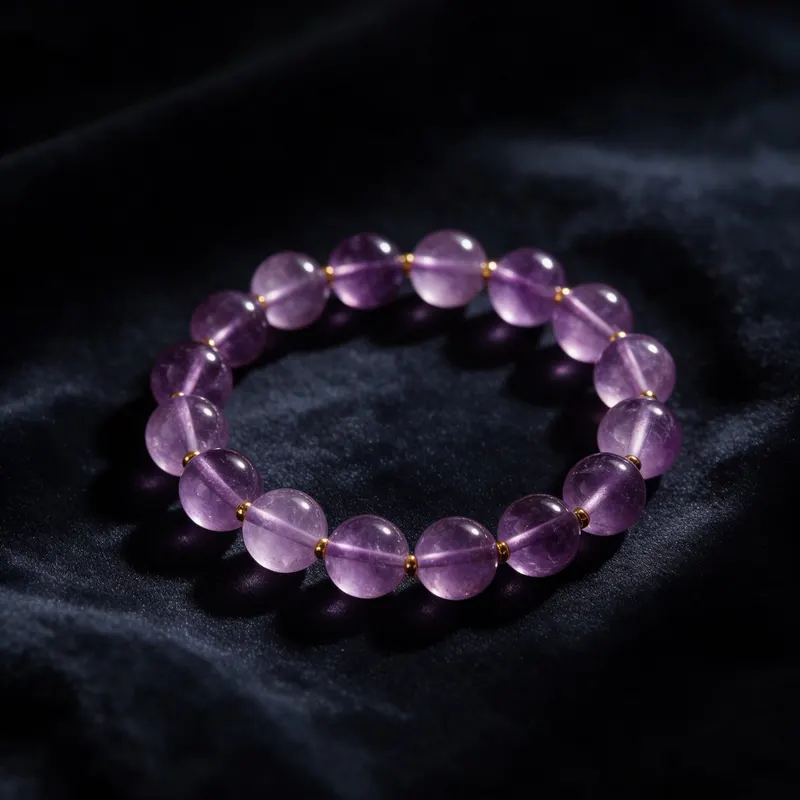
- For a busy, overstimulated mind: Amethyst is traditionally associated with calm and quiet focus. A Amethyst Healing Bracelet for Calm & Clarity keeps the stone on your wrist so it's there when you sit down.
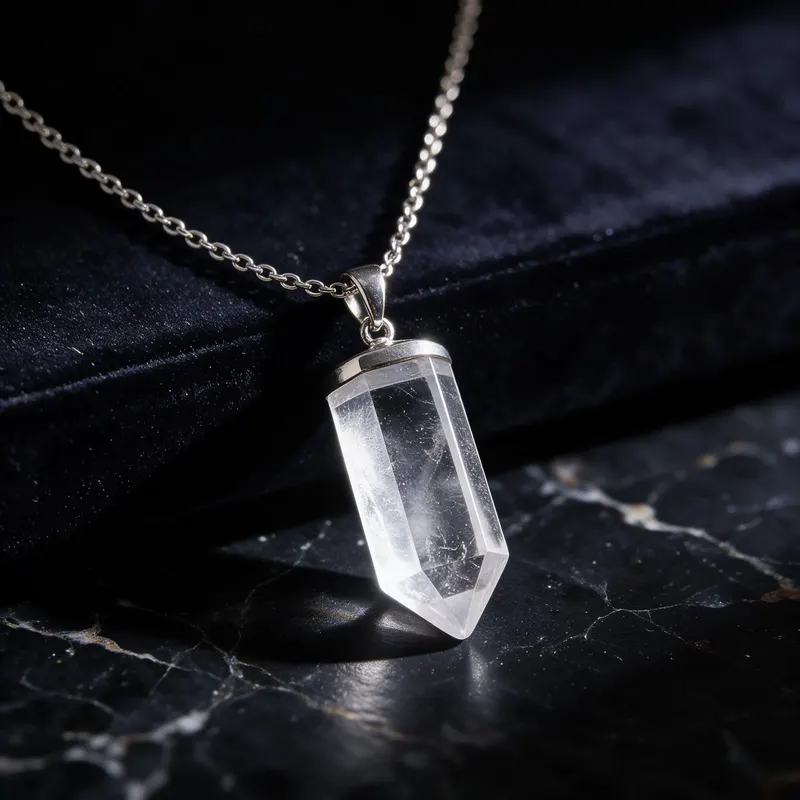
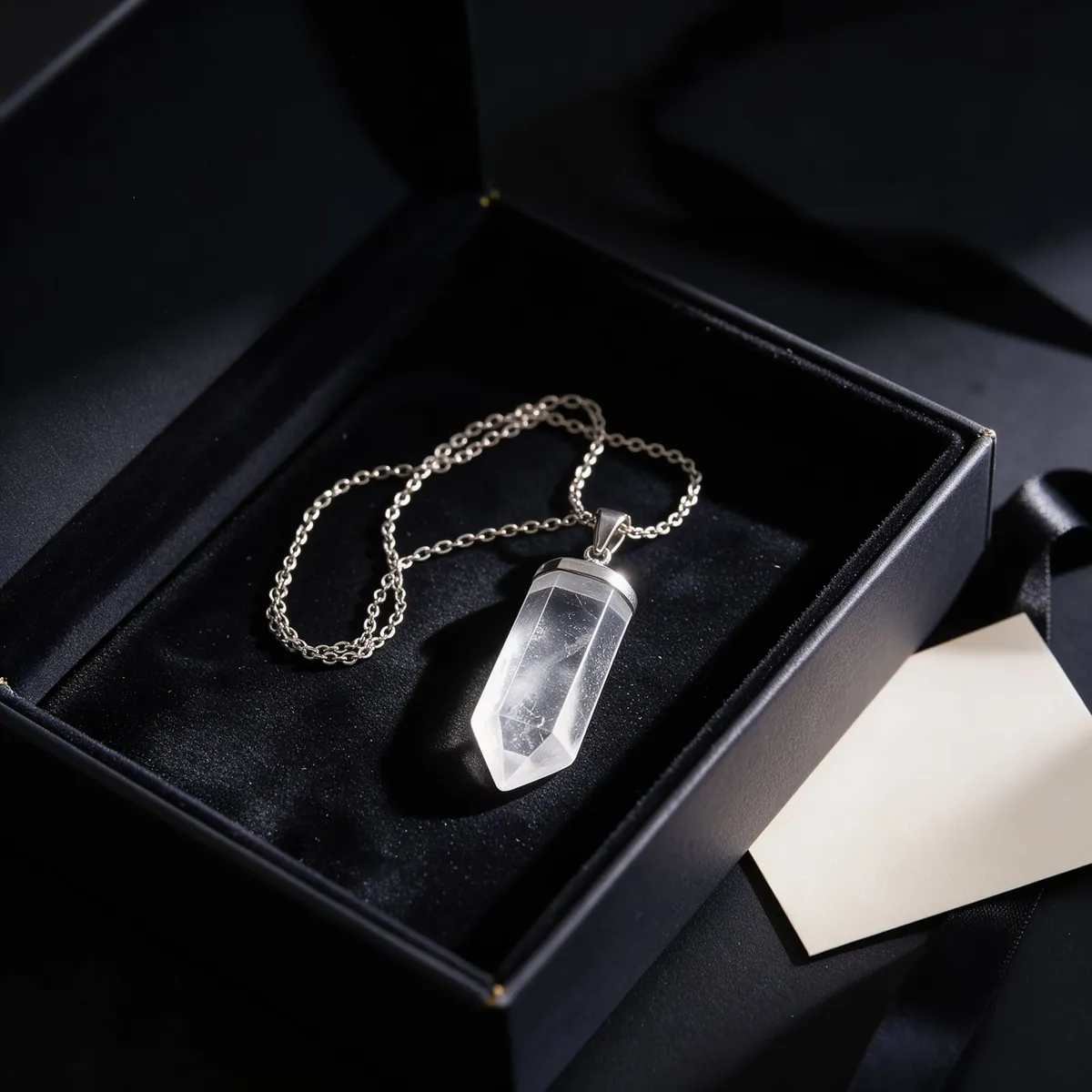
- For clarity and setting intention: Clear quartz is the classic "blank slate" stone, believed to amplify whatever focus you bring to it. A Clear Quartz Point Pendant Necklace, Sterling Silver works well if you prefer to wear your anchor.
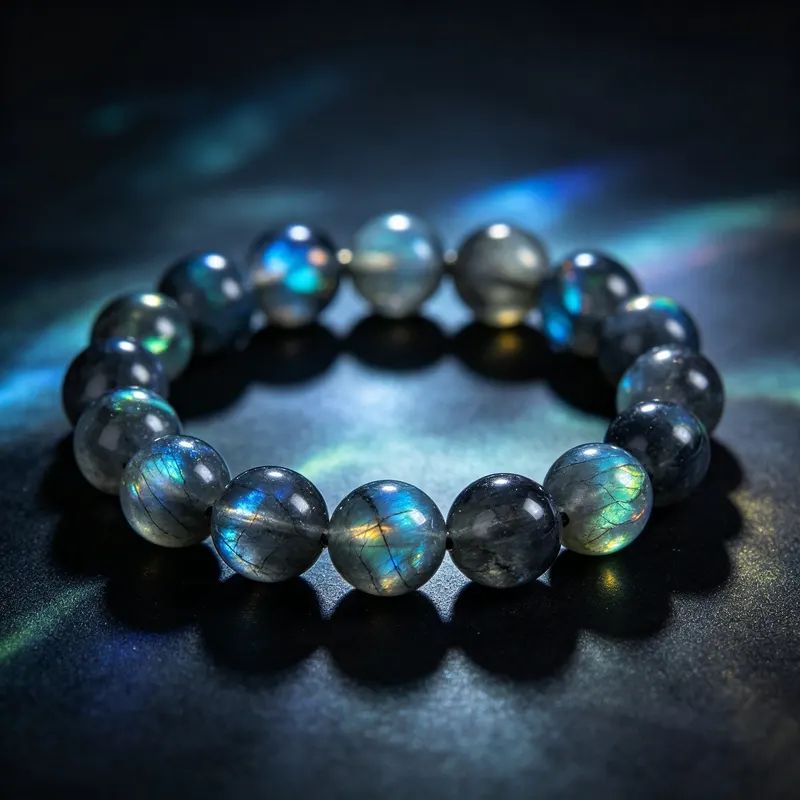
- For intuitive, imaginative practice: Labradorite is traditionally linked with intuition and inner seeing. The Labradorite Bracelet for Intuition & Transformation is a good fit for visualization-heavy sessions.
- For grounding after a session: Black tourmaline is associated with feeling settled and protected. The Black Tourmaline Protection Bracelet for Grounding is a practical choice if you tend to feel floaty or unmoored afterward.
- For clearing space between sessions: Selenite is traditionally used to "cleanse" other stones and a room's atmosphere. A Selenite Cleansing Wand for Energy Clearing is a common first purchase.
Beyond the stone itself, hold a few pieces before you buy if you can. Notice weight and how it sits in your hand. A stone that feels good to hold is a stone you'll actually pick up tomorrow.
Best Crystals for Meditation: A Quick Comparison
Here's a practical reference for the stones most often used in meditation. The "traditional association" column reflects lore, not medical fact. The care column reflects real physical properties.
| Stone | Traditionally associated with | Best held or worn? | Care notes |
|---|---|---|---|
| Clear quartz | Clarity, intention, amplification | Held in palm or worn as pendant | Hard (Mohs 7); safe with water; keep out of prolonged direct sun to avoid fading of treated pieces |
| Amethyst | Calm, spiritual awareness | Held or worn | Mohs 7; water-safe; prolonged sunlight can fade color |
| Rose quartz | Self-compassion, heart-centered focus | Held or worn | Mohs 7; water-safe; avoid harsh cleaners |
| Labradorite | Intuition, transformation | Worn | Mohs 6–6.5; avoid knocks and harsh chemicals; not ideal for long water exposure |
| Black tourmaline | Grounding, protection | Held or worn | Mohs 7–7.5; water-safe; sturdy for daily wear |
| Selenite | Clearing, "high" energy | Held as a wand | Soft (Mohs 2); water-soluble — never soak or rinse; keep dry |
| Moonstone | Intuition, new beginnings | Worn | Mohs 6; avoid water and chemicals; handle gently |
If you want a set that covers several of these at once for group or chakra-based practice, a 7 Chakra Stone Set with Wooden Display Box gives you a tidy way to keep them organized.
A Step-by-Step Crystal Meditation You Can Follow
This is a simple, repeatable ritual. Ten minutes is plenty to start; don't force twenty because a guide said so.
- Set up your space. Find somewhere you won't be interrupted. Silence your phone. A cushion or chair is fine — comfort matters more than posture.
- Choose one stone. Pick a single crystal for the session. Holding one is easier than juggling several.
- Hold it in your non-dominant hand. Rest it loosely in your palm or between thumb and fingers. Don't grip.
- Settle in and breathe. Close your eyes if that's comfortable. Take three slow breaths, letting each exhale be a little longer than the inhale.
- Notice the physical stone. Feel its weight, its temperature against your skin, the texture. When your mind wanders, return to these sensations. This is the actual practice.
- Set a simple intention. One phrase is enough: "I'd like to feel calmer," or "I'd like to pay attention." Keep it modest and honest.
- Sit for 10–20 minutes. Use a timer so you're not checking the clock. If you lose focus, that's not failure — noticing and returning is the whole exercise.
- Close and ground. Open your eyes, feel your feet on the floor, take one more breath. Thank the stone if that feels meaningful to you, then set it down.
If you prefer to hold something larger and more tactile, a Raw Amethyst Cluster for Meditation & Altar works well placed in front of you as a visual focus rather than held.
Build a Small, Practical Practice
Consistency beats intensity. A short daily session you actually do is worth more than a long one you skip. A few habits that help:
- Keep your stone where you'll see it. A bedside dish or a small tray near your cushion removes the friction of hunting for it.
- Anchor it to an existing routine. Five minutes after your morning coffee, or right before bed, is easier to sustain than a vague plan.
- Use one stone per intention. If you're working on calm, keep the amethyst out. Rotating stones every day can become its own distraction.
- Keep a short note. One line after each session — how you felt, what you noticed — turns the practice into something you can reflect on.
- Don't buy more until you've used what you have. A single well-chosen piece is a complete practice.
What is handed down — and what we can verify
Crystal meditation carries a lot of lore. Some of it is beautiful and worth keeping as personal ritual. Some of it is simply not true, and knowing the difference protects both your wallet and your expectations.
What tradition says: Different stones are associated with different qualities — amethyst with calm, rose quartz with self-compassion, clear quartz with clarity, black tourmaline with grounding. Many practitioners believe crystals can be "cleansed" of accumulated energy using selenite, moonlight, or sound. These are meaningful frameworks for reflection, and there's no harm in using them as prompts for attention.
What we can verify: Crystals are minerals with measurable physical properties. Hardness, water sensitivity, and light sensitivity are real and affect how you should care for a piece. What we cannot verify is any claim that a stone treats a condition, changes your circumstances, or guarantees an outcome. Crystals are for reflection and are not medical devices.
Practical care facts worth knowing:
- Hardness varies widely. Quartz and amethyst (Mohs 7) tolerate daily wear. Selenite (Mohs 2) scratches easily and should be handled gently.
- Selenite dissolves in water. Never rinse or soak it. Wipe with a dry cloth.
- Sunlight can fade color. Amethyst and rose quartz can lose saturation with prolonged direct sun. Store them away from a bright windowsill.
- Some stones dislike water and chemicals. Moonstone and labradorite are better kept dry and away from perfumes and cleaning products.
- Cleansing is symbolic. Wiping a stone with a soft cloth or setting it in moonlight is a ritual, not a chemical process. Do it because it helps you reset, not because the stone "needs" it.
FAQ
People Also Ask
Do I need to "cleanse" my crystal before every meditation?
No. There's no physical requirement, and no evidence that a stone accumulates anything that needs removing. Many people wipe a stone with a soft cloth or set it in moonlight as a way of marking the start of a session. Treat it as a ritual that helps you transition into practice, not a maintenance task.
Which hand should I hold the crystal in?
Many traditions suggest the non-dominant (receiving) hand. There's no verifiable reason it matters, so use whichever hand feels comfortable. If you're holding a stone for twenty minutes, comfort is the deciding factor.
How do I choose between a bracelet and a loose stone?
A bracelet keeps the stone with you through the day and is easy to wear during seated practice. A loose stone or cluster gives you something more tactile to hold or place in front of you. If you're unsure, start with a loose piece and add a bracelet once you know you'll use it.
What's a realistic budget for a first meditation crystal?
You can start well under $50 with a single tumbled stone or a simple bracelet. Bracelets and pendants typically run from roughly $30 to $80 depending on the stone and setting; raw clusters and display sets cost more. Be cautious of unusually cheap pieces with vivid, uniform color — natural stones vary, and perfectly even color at a low price is worth questioning. Ask what the stone is and where it's from, and expect honest sellers to answer plainly.
A Gentle Place to Begin
You don't need a perfect setup or a belief system to try this. Pick one stone, sit down for ten minutes, and pay attention to something real in your hand. If it helps you return to your breath a little more easily, that's a good reason to keep going. Start small, care for your stone properly, and let the practice be as simple as it actually is.
Crystals are for reflection and are not medical devices. Nothing here is medical advice; if you're managing a health condition, talk to a qualified professional.