When the Mind Won't Switch Off
It's 11:40 p.m. and you're replaying a sentence from a meeting six hours ago, testing it for flaws. Or you've rewritten the same email four times because "fine" feels like a failure. If that sounds familiar, you're likely someone with high standards and a mind that treats every unfinished detail as an open tab—and the tabs never close.
Overthinking and perfectionism are close cousins. One loops on what might go wrong; the other insists that anything short of flawless isn't worth shipping. Together they can turn small decisions into all-day events and make rest feel earned rather than given. Crystals won't rewire that pattern overnight, and it's worth saying plainly: they are not a treatment for anxiety or any clinical condition. What they can do is give your hands and attention a physical anchor—a tangible cue that interrupts the loop and invites you back to the present moment.
This guide covers which stones are traditionally associated with calm and mental clarity, how to actually use them in a wind-down and decision routine, what to look for when buying, and where tradition ends and verifiable facts begin. Think of it as a small, practical toolkit for the perfectionist who would like to think a little less and finish a little more.
Why a Stone Helps an Overactive Mind
Rumination is abstract—it happens entirely in your head, which is exactly why it's hard to grab hold of. A crystal gives that abstract loop something concrete to land on. When you feel the cool weight of a stone in your palm, you're engaging touch, temperature, and sight all at once. That sensory shift is the point: it's a pattern interrupt, a small physical ritual that says "we're pausing here."
Many people find that a specific stone becomes a conditioned cue over time. If you consistently hold the same piece while doing a breathing exercise or writing down a worry, the stone starts to signal "wind-down mode" the way a favorite mug signals morning. That's habit and association at work—entirely verifiable—and it's the most reliable reason to keep one on your desk or nightstand.
Tradition adds a layer of meaning on top. Amethyst has long been believed to quiet mental chatter; fluorite is traditionally associated with order and focus; clear quartz is often called a "master healer" and used as an amplifier for intention. You don't have to accept the lore to benefit from the ritual—but if the symbolism resonates, it can make the practice feel more personal and easier to keep up.
The Calming Stones: A Quick Comparison
These four are the most commonly reached for when the goal is a quieter, more ordered mind. Here's how they differ in practice.
| Stone | Traditionally associated with | Best moment to use | Practical note |
|---|---|---|---|
| Amethyst | Calm, mental quiet, restful evenings | Night wind-down, after a stimulating day | Fades in prolonged direct sun; keep by the bed, not the windowsill |
| Fluorite | Focus, mental order, clearing clutter | Work sessions, planning, sorting priorities | Softer stone (Mohs 4)—store separately to avoid scratches |
| Clear quartz | Clarity, intention-setting, amplification | Decision points, morning intention | Hard and durable (Mohs 7); easy everyday wear |
| Labradorite | Intuition, perspective shifts, protection | When you're stuck in one rigid viewpoint | Flash of color varies by piece—choose in person if you can |
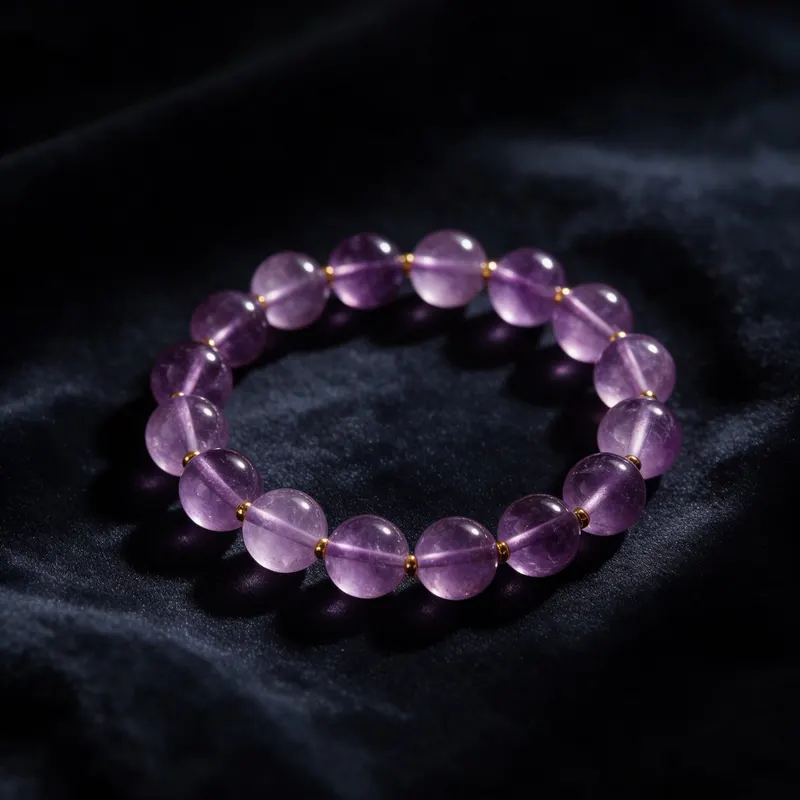
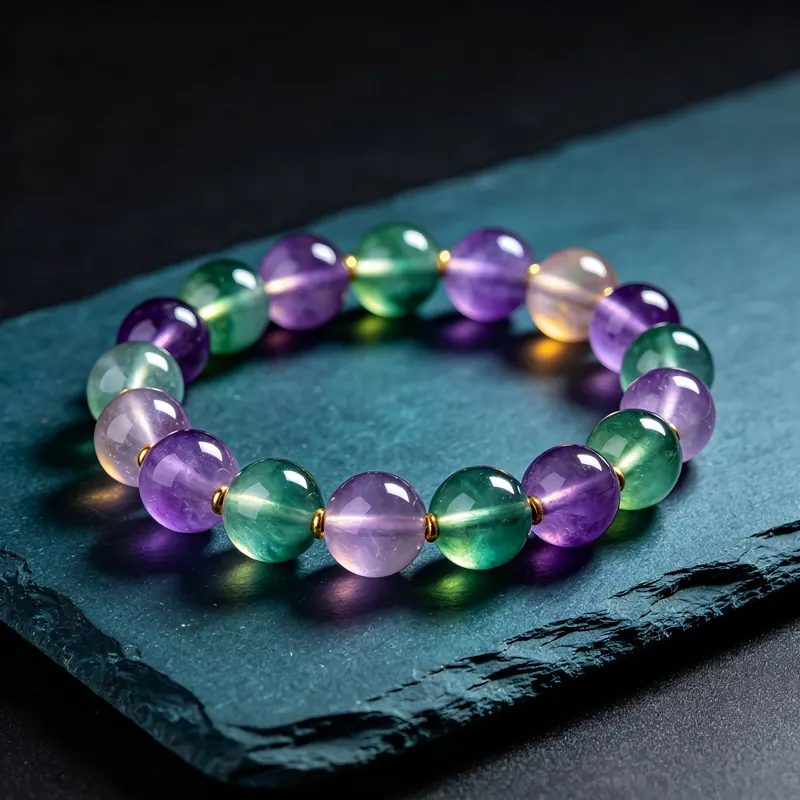
If you want a single piece to start with, the Amethyst Healing Bracelet for Calm & Clarity is the most natural fit for evening overthinking, while the Rainbow Fluorite Focus Bracelet for Concentration suits daytime mental clutter. Wearing one by day and one by night is a simple way to pair "focus" with "unwind."
Building a Wind-Down Routine
The goal here isn't to force your mind blank—that rarely works and usually backfires. The goal is to give the loop a scheduled exit. Try this 10-minute sequence, ideally at the same time each night so it becomes automatic.
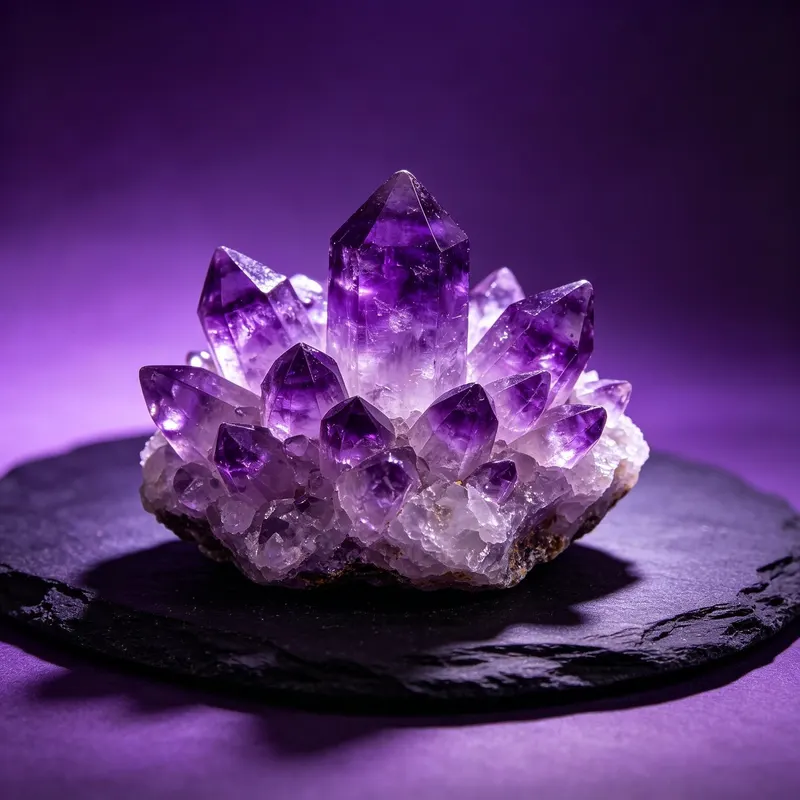
- Set the scene (1 minute): Dim the lights and place your stone—an amethyst bracelet or a Raw Amethyst Cluster for Meditation & Altar—somewhere you can see and touch it.
- Brain-dump (3 minutes): Write every open worry and unfinished task on paper. No editing, no solving. This externalizes the loop so your mind doesn't have to hold it.
- Hold and breathe (3 minutes): Hold the stone and take slow breaths, in for four counts and out for six. If a thought arrives, silently note "later" and return to the weight of the stone in your hand.
- Close the loop (2 minutes): Circle the one item you'll address tomorrow and write a single first step beside it. Everything else is officially parked.
- Set it down (1 minute): Place the stone on the nightstand. The gesture signals the session is over—you're not abandoning your worries, just rescheduling them.
For deeper evening practices, see our guide to crystals for deep relaxation.
A Decision Routine for Perfectionists
Perfectionism shows up most painfully at decision points: the menu you can't order from, the two equally good options you've compared for a week. A crystal won't tell you what to choose, but it can mark the moment you commit to choosing. Use clear quartz for this—its association with clarity makes it a natural anchor.
- Name the decision in one sentence. If you can't, the real problem is scope, not choice.
- Set a timer. Ten minutes for small decisions, a day for larger ones. When it ends, decide with the information you have.
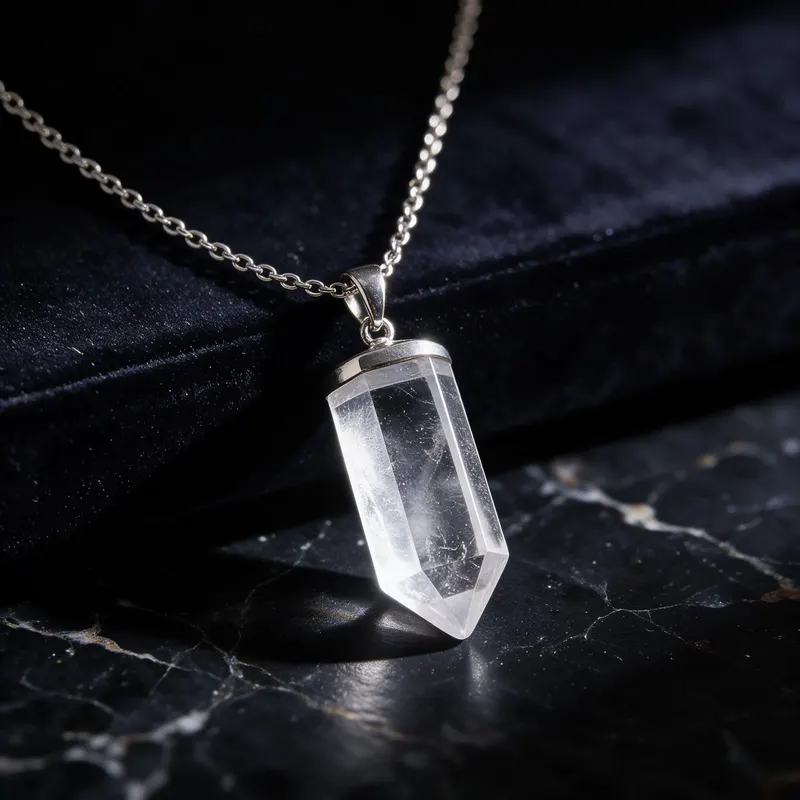
- Hold your stone while you decide. The Clear Quartz Point Pendant Necklace, Sterling Silver works well because you can touch it discreetly in a meeting or at a restaurant.
- Ask "what would good enough look like?" Write the answer down. "Good enough" is a skill you practice, not a standard you lower.
- Commit out loud or in writing. "I'm choosing this." The stone is the physical bookmark for that commitment.
If decisions are your main struggle, our guide to decision-making crystals goes deeper. And if your overthinking tends to spiral into worry about other people's opinions, the Labradorite Bracelet for Intuition & Transformation is traditionally associated with shifting perspective—useful when you're stuck seeing a situation from only one angle.
How to Choose, Size, and Care for Your Stones
A few practical notes so your purchase actually gets used.
Choosing
- Pick by feel first. Hold a few pieces if you can. The one you keep reaching for is the one you'll actually use.
- Match the moment, not the trend. Evening overthinker? Start with amethyst. Daytime scatter? Fluorite. Decision paralysis? Clear quartz.
- Check the finish. Look for even color, no chips along edges, and a securely set clasp or bail on jewelry.
Sizing
- Bracelets: Measure your wrist snugly with a soft tape, then add about half an inch (1.3 cm) for comfort. Most beaded bracelets sit around 7–7.5 inches; if you're between sizes, size up.
- Necklaces: A 16–18 inch chain sits at the collarbone—good for everyday wear and easy to touch. 20 inches and longer drape lower and suit layering.
- Rings: Get sized at a jeweler if possible; stone rings can't always be resized easily.
Care
- Wipe stones with a soft, dry cloth. Avoid harsh cleaners and ultrasonic machines on softer stones.
- Store fluorite and other soft stones separately from harder ones like quartz to prevent scratches.
- Keep amethyst out of prolonged direct sunlight, which can fade its color.
- Remove jewelry before swimming, showering, or applying lotion.
New to all of this? The Healing Crystal Starter Kit, 7 Stones + Guide bundles a small selection with guidance, which is a lower-commitment way to find what you gravitate toward before investing in a single piece.
What tradition teaches — and what is provable
It's worth being clear about which claims are lore and which are measurable, because a trustworthy practice depends on knowing the difference.
- Tradition says: amethyst quiets mental chatter, fluorite organizes scattered thoughts, and clear quartz amplifies intention. We can verify: these are long-standing cultural associations, not clinical findings. No crystal has been shown to treat anxiety, overthinking, or any medical condition.
- Tradition says: stones need regular "cleansing." We can verify: there's no scientific basis for energy clearing, but the ritual of setting a stone down, wiping it, and returning it to a dedicated spot is a useful mindfulness habit. Selenite is often used for this—see the Selenite Cleansing Wand for Energy Clearing—but note selenite is soft (Mohs 2) and water-soluble, so keep it dry.
- We can verify: hardness matters for daily wear. Quartz (Mohs 7) is durable; fluorite (Mohs 4) and selenite (Mohs 2) scratch easily and shouldn't be worn during rough activity.
- We can verify: sunlight and water affect some stones. Amethyst can fade in strong sun; selenite dissolves in water; porous or dyed stones may be damaged by soaking. Clean with a dry or barely damp cloth unless you've confirmed the stone is water-safe.
- We can verify: the benefit most people report comes from the ritual itself—pausing, breathing, and externalizing thoughts—which is a well-established way to interrupt rumination.
Crystals are for reflection and ritual; they are not medical devices and do not diagnose, treat, cure, or prevent any disease.
FAQ
People Also Ask
Which crystal is best for overthinking?
Amethyst is the most common choice for quieting nighttime mental chatter, while fluorite is traditionally associated with organizing scattered thoughts during the day. Many people use them as a pair—fluorite for focus, amethyst for wind-down.
How do perfectionists actually use crystals?
As a physical cue. Hold the stone to interrupt a rumination loop, write the worry on paper to externalize it, then choose one small "good enough" action. The stone anchors the pause; the writing and the action do the work.
Do I need to "charge" or "cleanse" my crystals?
It's a traditional practice, not a requirement, and there's no verifiable mechanism behind it. If the ritual helps you slow down, keep it—just avoid water and harsh sunlight on stones that are sensitive to them.
How much should I expect to spend?
Beaded bracelets and small tumbled stones typically run from about $15 to $40. Pendants in sterling silver or gold-plated settings generally fall in the $30 to $80 range, and larger display pieces like clusters can go higher. Price reflects material, setting, and stone quality—not spiritual potency—so choose based on what you'll actually wear and use.
Browse the Curated Collection
Explore the full edit here: Calm, Stress Relief & Sleep Collection →
Shop the Stones
- Amethyst Healing Bracelet
- Rainbow Fluorite Focus Bracelet
- Clear Quartz Point Pendant Necklace
- Raw Amethyst Cluster
- Labradorite Bracelet
Keep Exploring
Fluorite vs Amethyst · Relaxation · Decision Making
Crystals are intended to support personal and spiritual well-being and are not medical devices. They do not diagnose, treat, cure, or prevent any disease. Crystal lore is offered for reflection, not as medical or psychological advice.