When Your Mind Won't Stop Cycling Mid-Workday
It usually starts small. You're mid-task when a message lands, and before you've finished reading it your mind has already drafted the reply, jumped to the meeting at two, rehearsed the thing you meant to say last Thursday, and begun worrying about a deadline that isn't due until next week. The original task is still open on your screen. You haven't typed a word in four minutes.
Racing thoughts at work tend to spike at predictable seams in the day: between tasks, right after a difficult email, in the last hour before a deadline, or during the strange quiet after a meeting ends. What makes them hard to interrupt is that they're invisible. There's no spilled coffee to wipe up, no alarm to silence—just a mind that has quietly left the room while your body stays seated at the desk.
This is where a small, repeatable ritual can help. Not because a stone does the thinking for you, but because a tangible object you can touch gives your attention somewhere specific to land. Paired with slow breathing and one honest next action, a desk stone becomes a physical cue—something your hands can reach for before your thoughts spiral all the way down. The practices below are built for a real workday: short, quiet, and doable without leaving your chair.
Why a Physical Cue Works Better Than Willpower
Telling yourself to "just focus" rarely works, because the instruction is abstract and the racing thoughts are loud. A physical cue flips the order: instead of thinking your way into calm, you feel your way into it. Your fingers find a cool, smooth bead or the weight of a pendant, your shoulders drop a fraction, and your breathing slows—and that small physical shift is often enough to create a gap between the thought and your reaction to it.
The stone itself isn't magic in this context. It's a placeholder for intention. Every time you touch it, you're rehearsing the same short sequence: notice the spiral, breathe out longer than you breathe in, and choose one next action. Repeated across a week, that sequence becomes easier to access—the way a familiar song can pull you back to a specific memory. Crystals are traditionally associated with particular qualities, and many people find that association useful as a reminder of the state they're trying to return to. That's the honest version of how this works.
Stones to Keep at the Desk
You don't need a collection. Two or three stones with clearly different jobs is plenty, and it helps if each one feels distinct in your hand so your body can tell them apart.
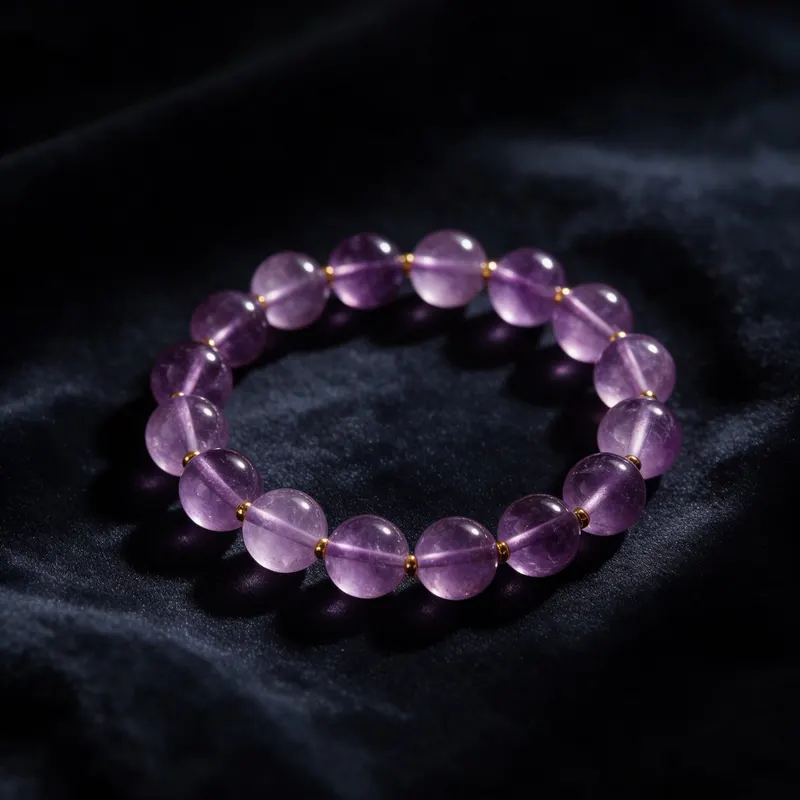
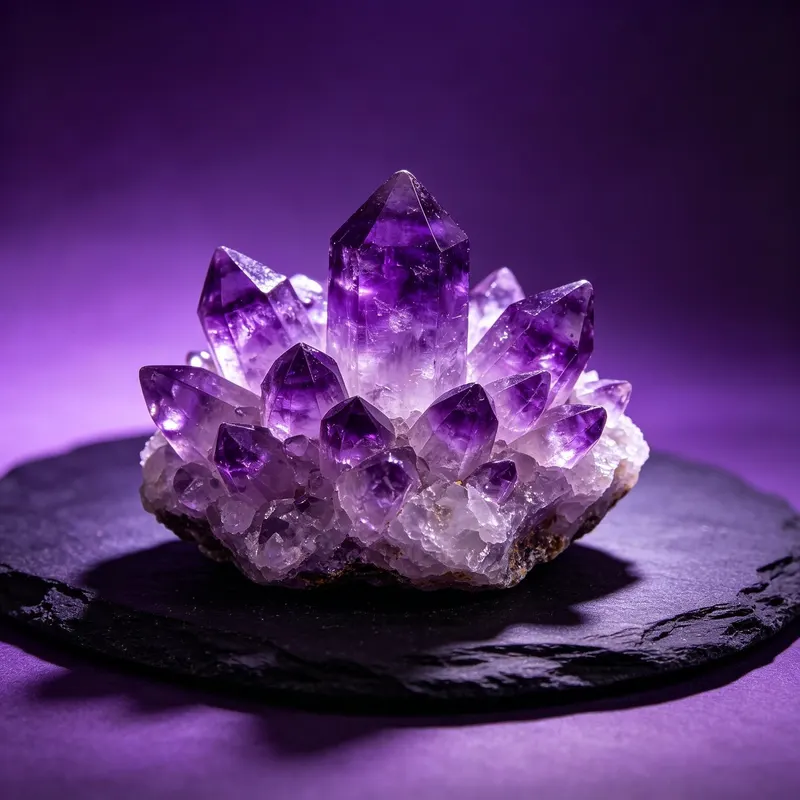
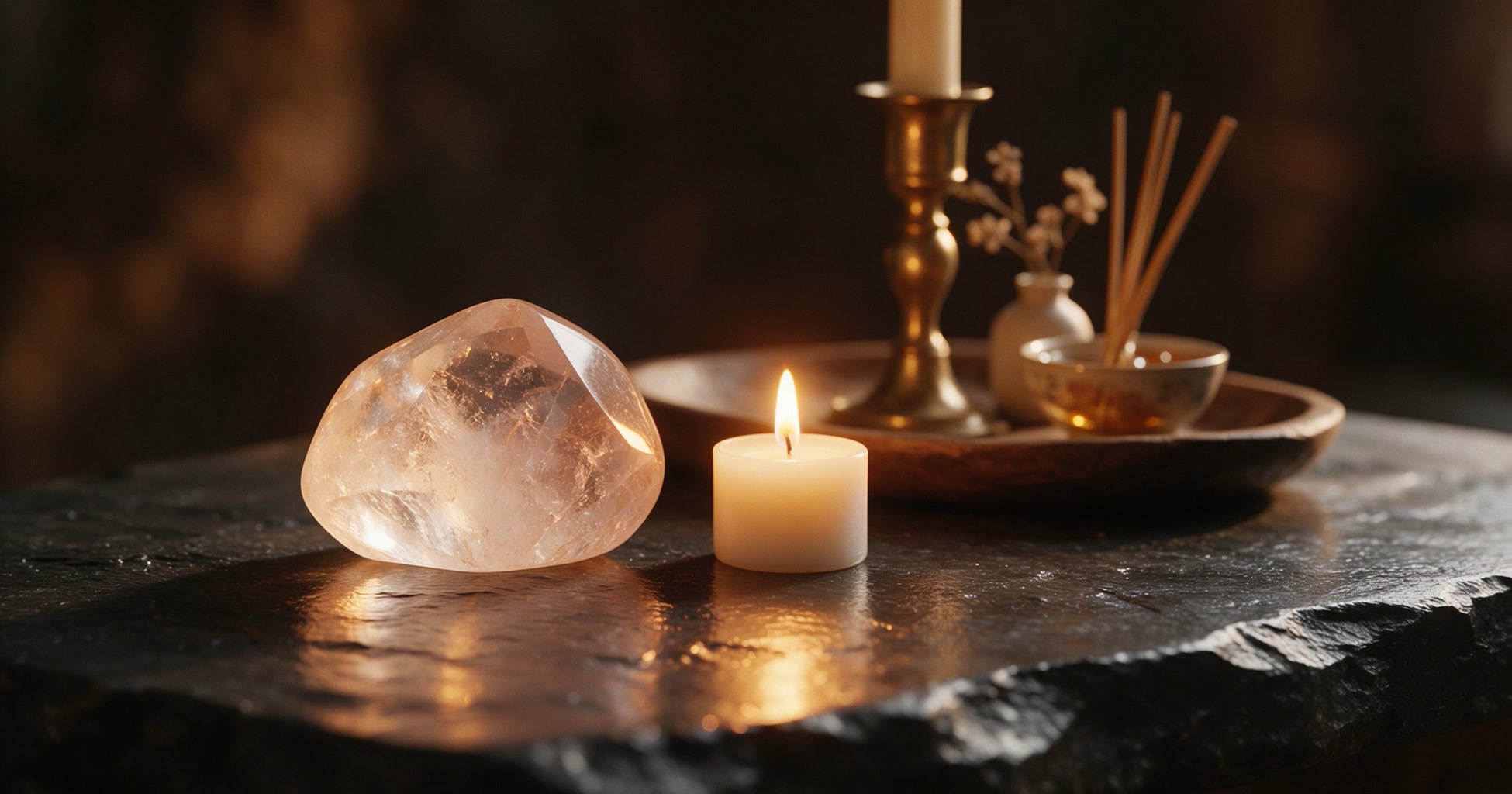
- Amethyst — traditionally associated with calm and mental quiet, and the most common first pick for a spiraling mind. The Amethyst Healing Bracelet for Calm & Clarity is easy to wear and touch discreetly during calls; if you prefer something that stays on the desk, the Raw Amethyst Cluster for Meditation & Altar gives you a larger piece to rest a hand on between tasks.
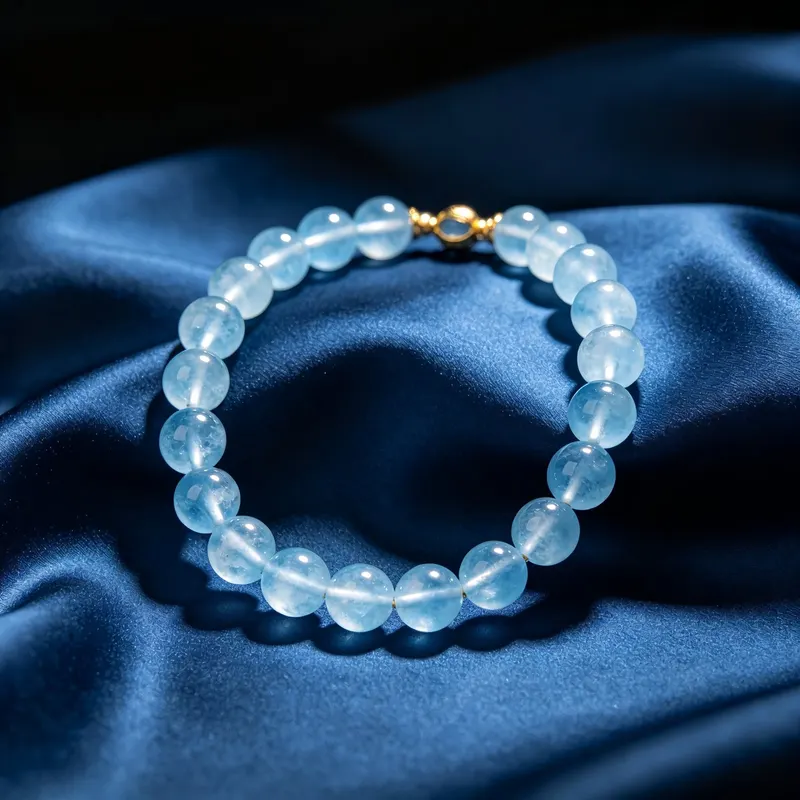
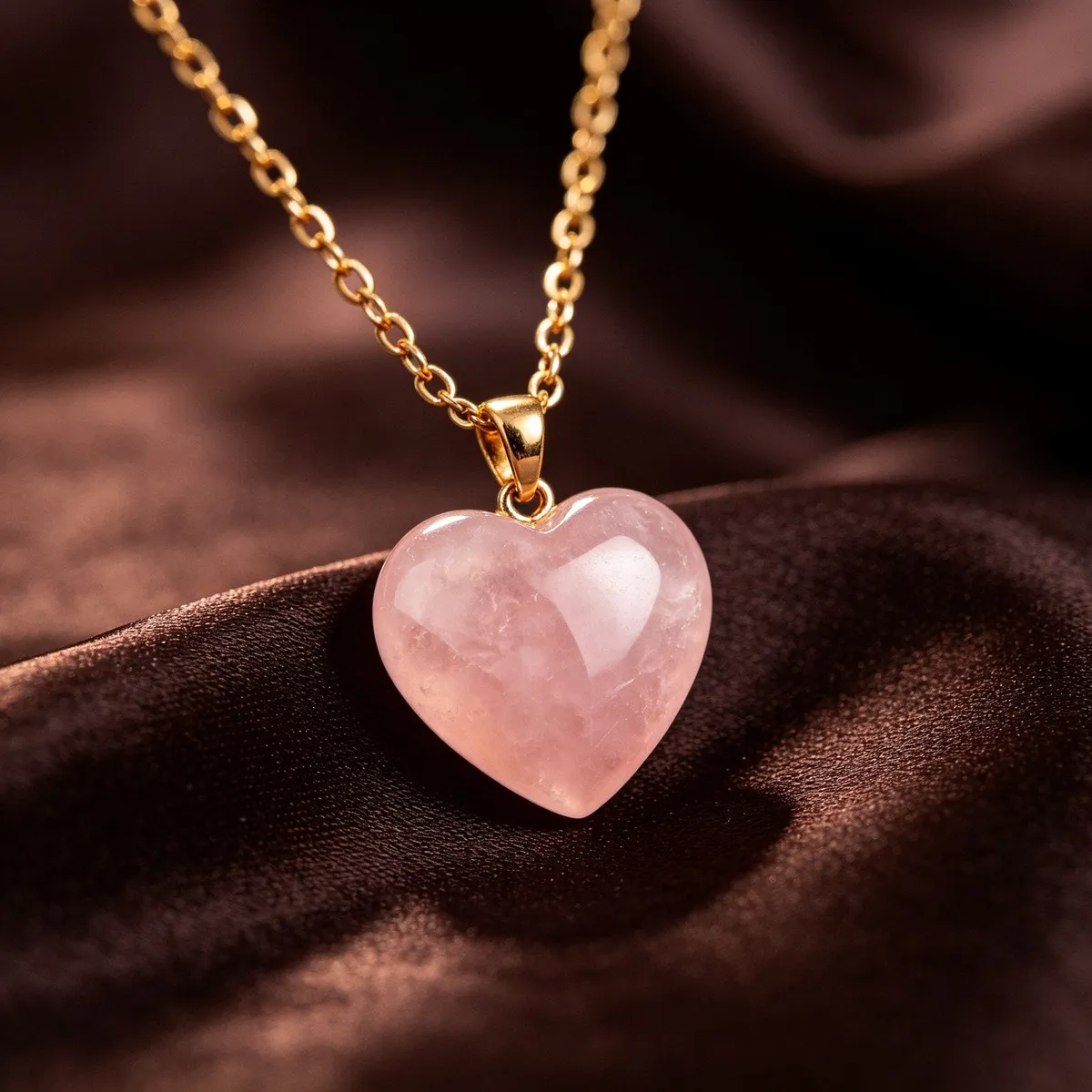
- Aquamarine — believed to support steady, clear communication, which makes it a natural fit for tense emails and difficult conversations. The Aquamarine Serenity Necklace for Calm Communication sits close to the throat and is unobtrusive under a shirt collar.
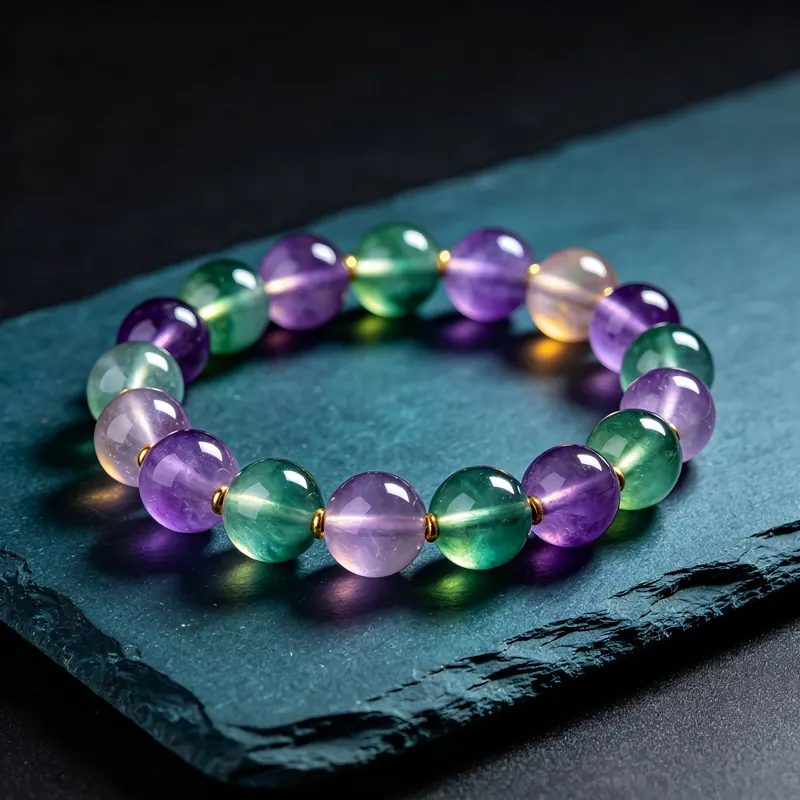
- Fluorite — traditionally associated with focus and mental organization, useful when the problem isn't anxiety so much as too many competing threads. The Rainbow Fluorite Focus Bracelet for Concentration works well as a "pick one task" cue.
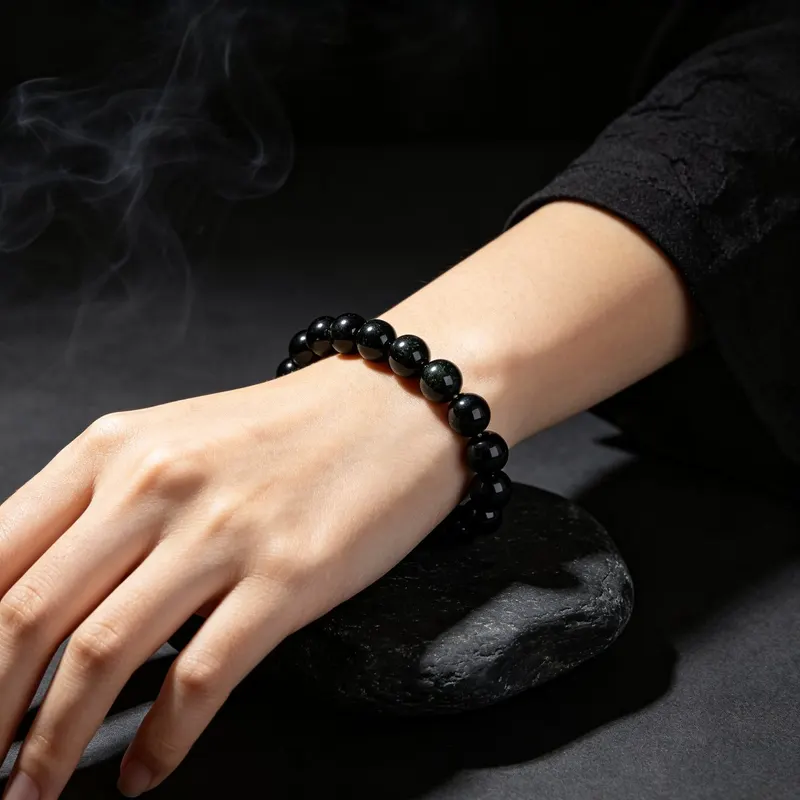
- Black Tourmaline or Obsidian — for days when the racing thoughts have a protective, defensive edge (replaying a criticism, bracing for a hard conversation). The Black Tourmaline Protection Bracelet for Grounding is a grounding, weighty option.
A useful rule: choose one stone for slowing down and one for starting again. Amethyst plus fluorite is the classic pair. Aquamarine plus amethyst suits people whose spirals are mostly social or conversational.
A 90-Second Desk Reset
This is the core ritual. It fits between meetings, after a hard message, or any time you notice you've been staring at the same sentence.
- Settle. Rest both feet flat on the floor. Let your shoulders drop without forcing them. Unclench your jaw.
- Touch the stone. Hold it, roll it between your fingers, or press a thumb against a bead. Let it be a small anchor for your attention.
- Breathe out longer than you breathe in. Try inhaling for a count of four and exhaling for a count of six, for six breaths. Don't strain—if six is too long, use three and five.
- Name one physical next action. Not "finish the report"—something your hands can actually do: open the document, type the first line, reply to one email. Physical actions are easier to start than abstract goals.
- Return. Each time your thoughts scatter, touch the stone once and come back to that single action. The stone isn't reminding you to be calm; it's reminding you to come back.
Ninety seconds is deliberate. A ritual short enough to actually do on a bad day beats a twenty-minute practice you skip.
Building the Ritual Into a Real Workday
The stone is one layer. It works far better alongside ordinary workload habits that reduce the conditions for spiraling in the first place.
- Work in blocks. Twenty-five minutes on, five off is a common and workable rhythm. Put the stone at the edge of your keyboard as a boundary marker for the block.
- Silence what doesn't need you. Turn off non-essential notifications during focus blocks. Every ping is an invitation to start a new thought thread.
- Take a screen break each hour. Stand, look at something far away for twenty seconds, drink water. Racing thoughts often loosen simply because the body changed position.
- Use a "parking lot." Keep a notebook beside the stone. When a stray thought arrives mid-task, write one line and return. You're not suppressing it; you're giving it a place to wait.
- Bookend the day. A thirty-second touch-and-breathe at the start and end of work helps mark the boundary between "on" and "off," which many people find reduces evening rumination.
Quick comparison: which stone for which moment
| Moment | Stone to reach for | What it's a cue for |
|---|---|---|
| Mind cycling between tasks | Amethyst | Slowing the spiral before choosing one task |
| Dreading or drafting a hard message | Aquamarine | Steady, clear communication |
| Too many threads, can't prioritize | Fluorite | Organizing thoughts into one next step |
| Replaying criticism or bracing for conflict | Black Tourmaline or Obsidian | Grounding and a sense of boundary |
| End of day, can't switch off | Amethyst or Selenite | Closing the workday and clearing the desk |
How to Choose and Care for a Desk Stone
Sizing and wearability. Bracelets are typically sold in 7–8 inch (18–20 cm) inner circumference for average wrists; if you're between sizes, size up so the beads don't press against your wrist during typing. A pendant is the least intrusive option for desk work—it won't catch on a keyboard. If you'd rather keep the stone on the desk, a cluster or point of roughly 2–4 inches is large enough to rest a hand on without dominating your space.
What to look for. Natural variation is normal and a good sign: amethyst ranges from pale lilac to deep violet, fluorite bands in greens and purples, aquamarine from near-clear to soft blue. Look for even drilling, secure knots between beads, and a clasp that isn't flimsy. Be cautious of any listing that promises specific outcomes—no stone can guarantee a promotion, a calm mind, or a resolved conflict.
Realistic price expectations. Beaded bracelets in these stones generally run from around $20 to $60 depending on bead size and grade; pendants with sterling silver or gold-plated settings typically sit in the $40–$120 range; raw clusters and larger display pieces vary widely with size and quality. Very cheap listings often mean dyed, heat-treated, or mislabeled material—fine if you're buying for color, but worth knowing.
Care basics. Wipe stones with a soft dry or slightly damp cloth. Keep amethyst and fluorite out of prolonged direct sunlight, which can fade color over time. Avoid soaking bracelets with elastic cord, and remove them before showering, swimming, or heavy cleaning. Store pieces separately so harder stones don't scratch softer ones. For a gentle reset between workdays, many people pass a Selenite Cleansing Wand for Energy Clearing near their desk stones—a traditional practice rather than a measurable one.
What folklore claims — and what is verifiable
It's worth being clear about where tradition ends and verifiable fact begins, because a trustworthy ritual depends on honest expectations.
What the tradition says. In crystal and I Ching traditions, amethyst is associated with calm and clarity, aquamarine with tranquil communication, and fluorite with focus and mental order. These are cultural and symbolic associations, passed down rather than tested. They can be meaningful as intentions—many people find that a stone "assigned" a purpose is easier to use as a cue—but they are not claims about what the stone does to your body or mind.
What we can verify. These are real minerals with measurable properties. On the Mohs hardness scale, quartz (including amethyst) is a 7, aquamarine is 7.5–8, and fluorite is notably soft at 4—so fluorite scratches and chips more easily and deserves gentler handling. Amethyst and fluorite can fade with prolonged UV exposure. Selenite is very soft (about 2) and water-soluble, so keep it dry. Elastic bracelets stretch and eventually snap; restringing is normal maintenance. None of this is mystical—it's just how the materials behave, and knowing it helps your stones last.
What the ritual can and can't do. Slow breathing and a physical attention cue are ordinary, well-established ways to interrupt a spiral and settle yourself. What a stone cannot do is treat anxiety, stop intrusive thoughts, or replace professional support. If racing thoughts are frequent, distressing, or affecting your sleep and work, that's a signal to talk to a qualified professional—not a reason to buy another crystal.
Crystals are for reflection and are not medical devices. They are not intended to diagnose, treat, cure, or prevent any condition.
FAQ
People Also Ask
What crystal is best for racing thoughts at work?
Amethyst is the most common choice for slowing a mental spiral, with fluorite as a companion for reorganizing focus and aquamarine for steadying pressure. Pick one for slowing down and one for starting again, and keep both within reach.
Do crystals actually stop intrusive thoughts?
No. A stone doesn't stop thoughts from arriving. What it can do is give you a consistent physical cue—paired with longer exhales—to notice the spiral and return your attention to one next action. The breathing and the habit do most of the work.
Can I wear a crystal bracelet all day at work?
Usually yes, but consider your tasks. Beaded bracelets can press against a wrist during long typing sessions, and soft stones like fluorite chip easily if they knock against a desk edge. A pendant or a stone kept on the desk may suit a full workday better.
How do I clean and recharge a desk stone?
Wipe it with a soft cloth and keep it out of prolonged direct sun. Avoid water for elastic bracelets and for selenite, which is water-soluble. Traditional "cleansing" practices—such as resting a stone near selenite or setting an intention—are symbolic; there's no measurable charge to recharge, so treat these as part of the ritual rather than a requirement.
A Small Practice, Repeated
The point of a desk ritual isn't to eliminate racing thoughts—they're part of having a busy mind. The point is to shorten the time between noticing the spiral and coming back. A stone you can touch, six slow breaths, and one physical next action is a practice small enough to repeat on the days you need it most. Start with a single stone this week, keep it where your hands already rest, and let the ritual do what rituals do: give your attention a place to return to.
If you'd like to build out a small desk set, explore the Calm, Stress Relief & Sleep collection, or begin with the Healing Crystal Starter Kit, 7 Stones + Guide if you're still deciding which stones suit you.