Why 3 A.M. Feels So Loud
You wake in the dark, and before you've even opened your eyes, your mind is already running: tomorrow's meeting, a conversation from last week, the bill you haven't paid. The clock says 3:04. You lie still, telling yourself to fall back asleep, and the effort itself seems to keep you awake. By 4:30 you're doing the math on how many hours are left.
If that loop sounds familiar, you're in very good company. Brief awakenings in the middle of the night are a normal part of human sleep architecture — most people surface between sleep cycles and drift back without remembering it. What turns a two-minute surfacing into a two-hour vigil is usually arousal: the nervous system shifting into alert mode, plus the frustration of watching the minutes pass. The goal of this guide isn't to force sleep. It's to build a calm, repeatable "return to sleep" cue, so your body has a familiar path back down.
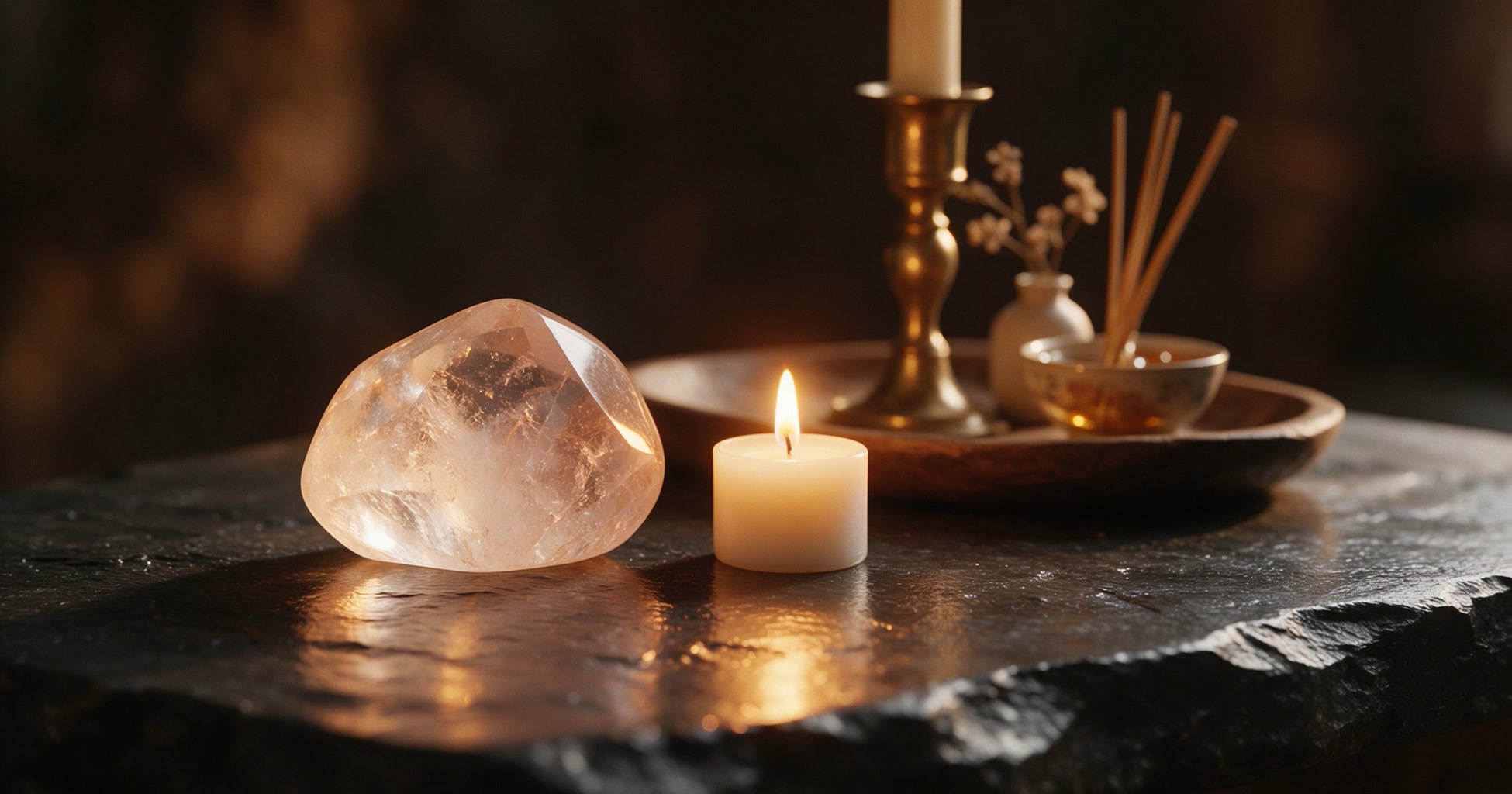
Crystals can play a small, meaningful role in that ritual — not as sedatives, but as tactile anchors that slow you down and give restless hands and thoughts somewhere gentle to land. Below is a practical plan: what to do in the moment, how to set up a wind-down that lowers the odds of waking at all, how to choose and care for the stones, and where tradition ends and verifiable fact begins.
The 3 A.M. Wake-Up Is Often a Stress Arousal Pattern
Sleep specialists commonly describe nighttime waking as a blend of normal sleep-cycle surfacing and a stress response that reactivates the mind. The more you fight the wake-up, the more alert you tend to become — which is why "just relax and go back to sleep" is such famously bad advice. What tends to help is lowering stimulation (dim light, no phone, no clock math) and giving your attention a simple, low-effort task, like slow breathing or the weight of a stone in your palm.
This is where a bedside crystal earns its place: it's a physical cue that says this is the rest routine, not the worry routine. Used consistently, the object itself becomes associated with settling, the way a particular pillow or a favorite blanket does.
Building a Bedside Kit That Actually Works at 3 A.M.
The test of any night kit is whether you can use it half-asleep, in the dark, without turning on a light or reaching for your phone. Keep it small, keep it within arm's reach, and keep it boring in the best way.
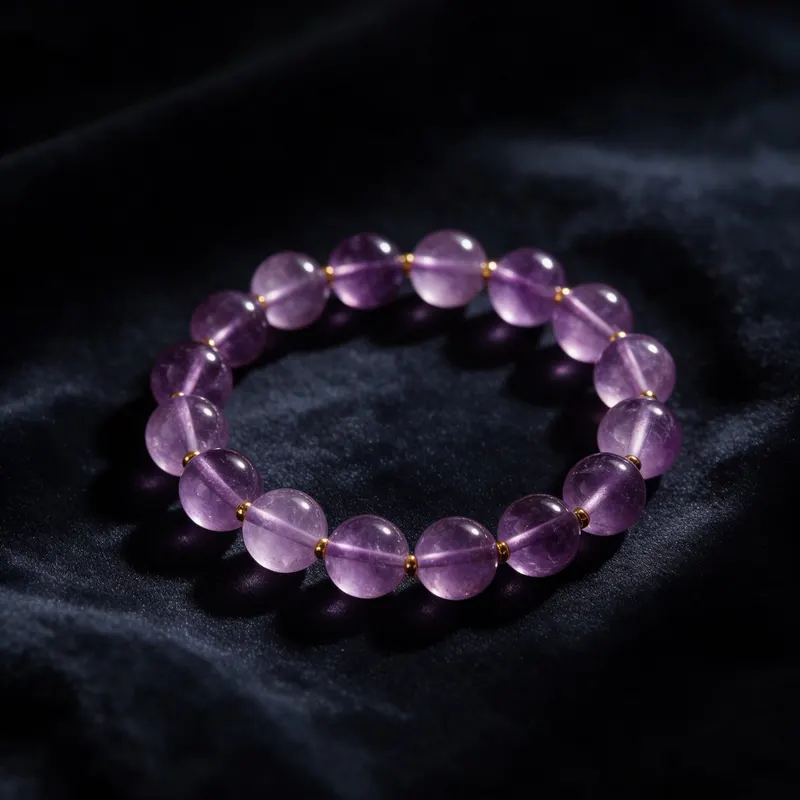
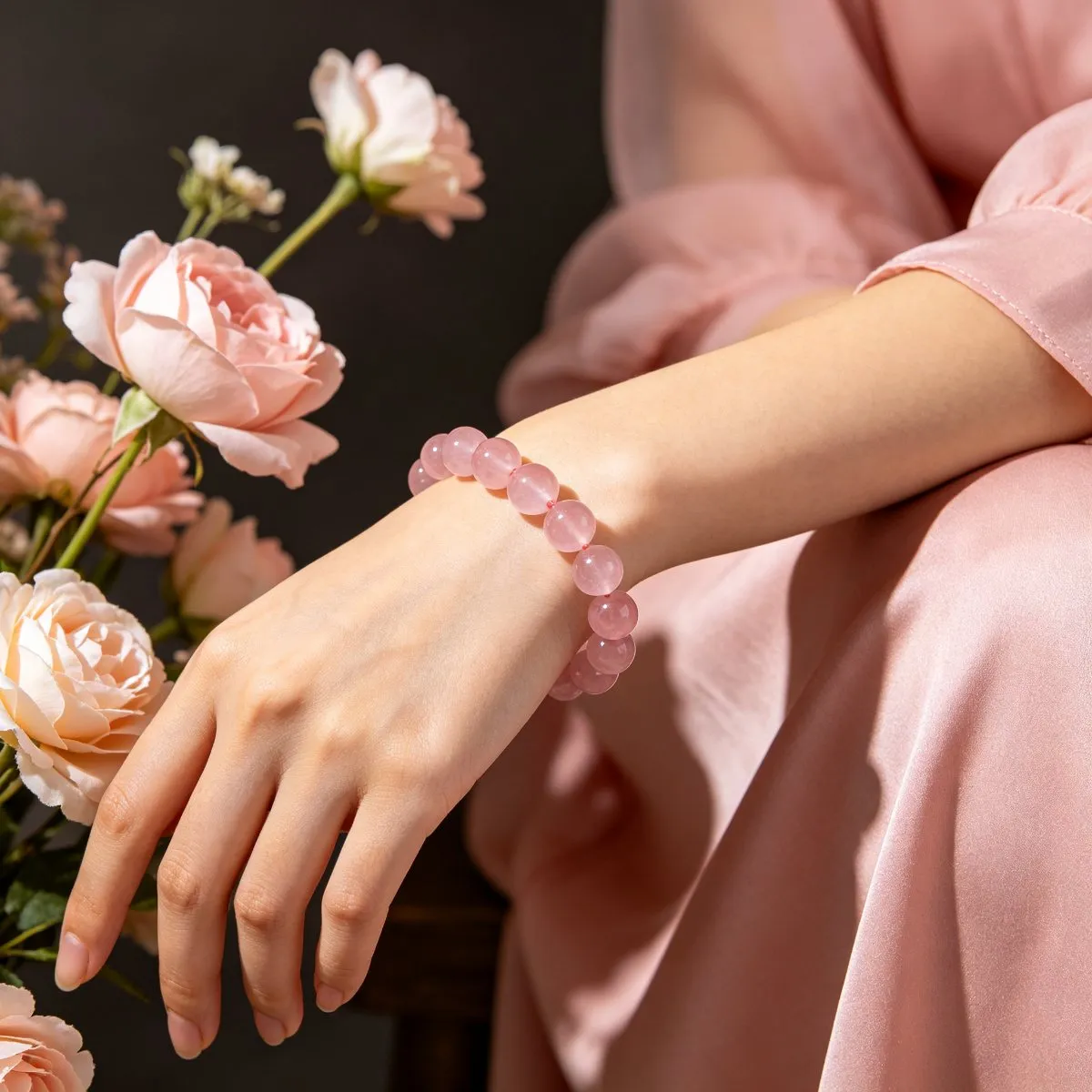
- One stone for your hand. Something smooth and cool that fits comfortably in a closed palm. A beaded bracelet works well because you can slide it on without looking. The Amethyst Healing Bracelet for Calm & Clarity is the classic choice here — amethyst is traditionally associated with quieting an overactive mind, and the beads give your fingers something to count.
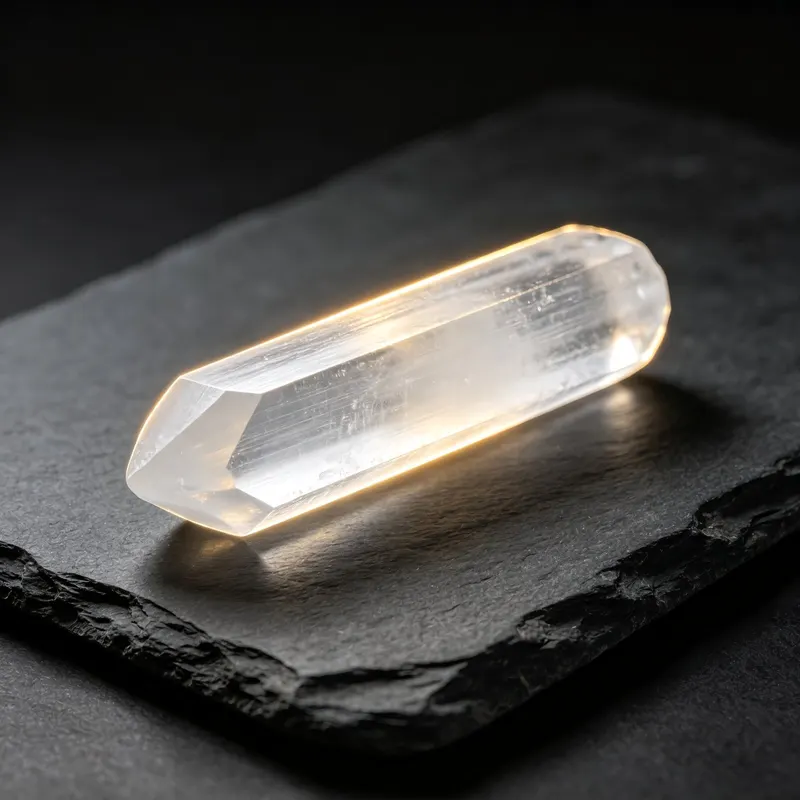
- One stone for the nightstand. A Selenite Cleansing Wand kept flat and dry beside the lamp is a common choice for a "clear the room" ritual — a slow pass of the hand over it before bed, and a glance at it if you wake. Selenite is soft and water-soluble, so keep it away from spills and out of the bathroom.
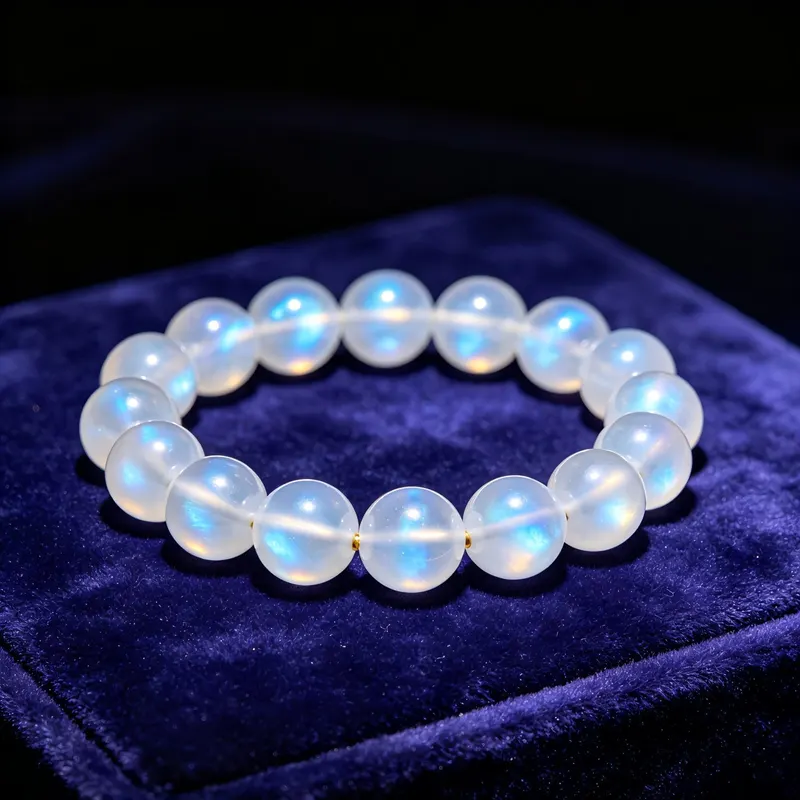
- One stone for cycles and rest. The Rainbow Moonstone Bracelet for Intuition & New Beginnings is traditionally associated with lunar rhythms and gentle transitions — a fitting companion for the strange, liminal hour of 3 a.m.
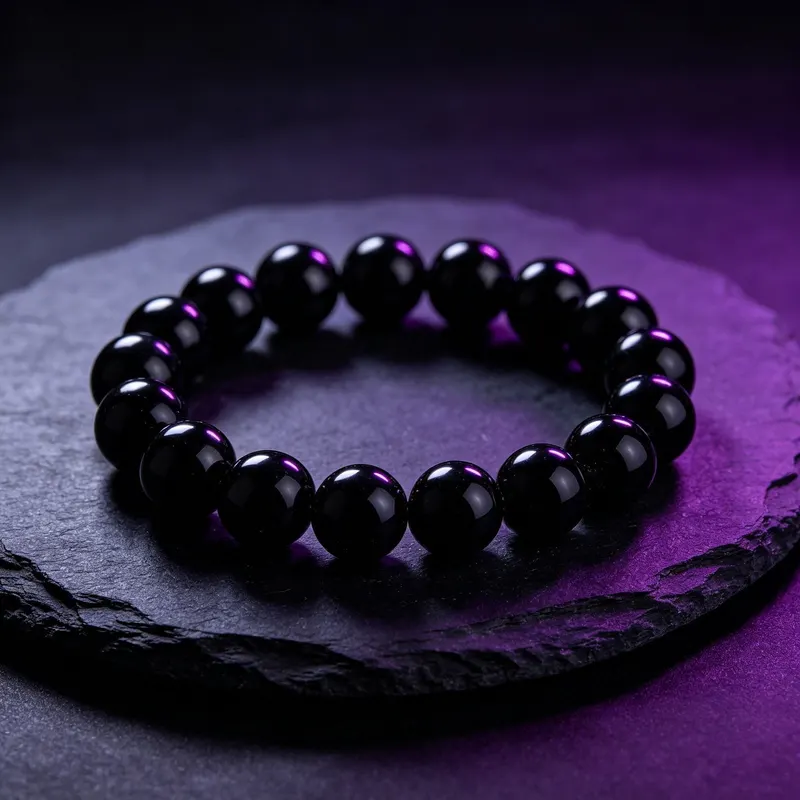
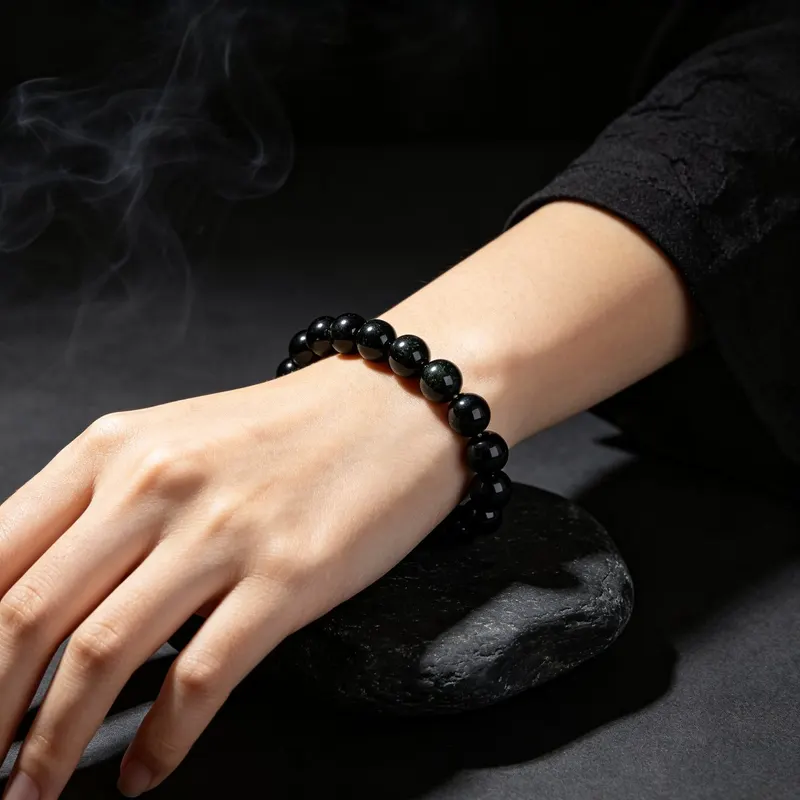
- Optional: a grounding stone. If your 3 a.m. waking comes with a racing heart or a sense of dread, some people prefer a darker, heavier stone in hand. The Black Tourmaline Protection Bracelet for Grounding is traditionally associated with steadiness and boundary-setting.
A note on placement: keep stones on a dry nightstand, not under the pillow (they can scratch, and small beads are a choking hazard for pets and young children), and not on a windowsill where sunlight and condensation do their slow damage.
In the Moment: A Ten-Minute Return-to-Sleep Sequence
When you wake, resist the urge to solve anything. The sequence below is deliberately simple so you can run it without thinking.
- Don't check the clock. Turn the phone face-down or leave it in another room. Clock-watching is one of the most reliable ways to stay awake, because every glance restarts the frustration loop.
- Keep the room dim. If you need light, use the lowest setting or a red-toned nightlight. Bright light tells your brain it's morning.
- Take the stone in hand and lengthen the exhale. Breathe in for about four counts and out for about six, ten times. The long exhale is the part that matters — it's the closest thing to a physiological "down" switch most of us can access on demand.
- If you're still awake after roughly 20 minutes, get up. Move to a dim, boring spot — a chair with a book you've read before, not your email — and stay there until you feel drowsy, then return to bed. This keeps your bed associated with sleep rather than with lying awake and stewing.
- Don't chase the lost hours. Resist calculating how much sleep you'll get. One broken night is uncomfortable but not dangerous; the anxiety about it is usually worse than the wake-up itself.
A Pre-Bed Wind-Down That Lowers the Odds
Most of the work happens before 10 p.m. A consistent wind-down won't guarantee an uninterrupted night, but it makes the 3 a.m. surfacing less likely to tip into full arousal.
- Same wake time, every day. This is the single most useful sleep habit, and it holds even after a rough night. A consistent wake time anchors your body clock more reliably than a consistent bedtime.
- Caffeine cutoff around noon. Caffeine has a long half-life; an afternoon coffee can still be circulating at 3 a.m.
- Limit alcohol in the evening. It can make falling asleep easier and staying asleep harder — a common pattern worth testing for yourself.
- Dim the last hour. Lower the lights, put screens away or use night mode, and do something low-stakes with your hands.
- Build a two-minute stone ritual. Set your bracelet or wand on the nightstand, take ten slow breaths with it in hand, and set an intention for rest — something like "I'll return to sleep when my body is ready." The ritual is the point; the stone is the reminder.
Choosing Your Stones: A Practical Comparison
If you're buying your first sleep-support stones, here's how the common options differ in practice. "Traditionally associated with" describes lore and ritual use, not clinical effect.
| Stone | Traditionally associated with | Best form for nighttime | Care notes |
|---|---|---|---|
| Amethyst | Calm, quieting an overactive mind, rest | Bracelet or small tumbled stone in hand | Mohs 7; fine with water, but avoid prolonged direct sun (color can fade) |
| Selenite | Clearing, a fresh start, calm space | Wand on a dry nightstand | Mohs 2; water-soluble and soft — dry dusting only, no soaking |
| Rainbow Moonstone | Cycles, intuition, gentle transitions | Bracelet or pendant | Mohs 6–6.5; avoid harsh cleaners and prolonged sun |
| Black Tourmaline | Grounding, protection, steadiness | Bracelet or palm stone | Mohs 7–7.5; durable, but avoid sudden temperature changes |
| Clear Quartz | Clarity, amplification of intention | Small point on the nightstand | Mohs 7; sensitive to prolonged sun; easy to clean with mild soap |
What to look for when buying: natural color variation (uniformly neon stones are often dyed), smooth, well-finished beads that won't catch on skin, and a bracelet that fits without sliding off your hand in the dark. For a bracelet, measure your wrist and add roughly half an inch for comfort; most beaded bracelets sit between 6.5 and 7.5 inches. Realistic pricing: simple beaded amethyst or moonstone bracelets typically run from about $20 to $60 depending on bead size and grade; a selenite wand is usually $15 to $35; a small raw amethyst cluster for the nightstand or altar is often $25 to $60. Be skeptical of anything priced like a luxury good without a clear reason, and of claims that a stone is "certified" for healing — no such certification exists.
What folklore claims — and what is verifiable
Crystal lore is old, layered, and worth enjoying with clear eyes. Here's the honest split.
Traditional lore (not verifiable): Amethyst has long been associated with sobriety, calm, and restful sleep; moonstone with lunar cycles and intuition; selenite with clearing stagnant energy; black tourmaline with protection and grounding. These are cultural and spiritual associations, passed down rather than tested. They can be meaningful as ritual and reflection — and that's the frame we use them in.
What we can verify: mineral identity and hardness (Mohs scale), sensitivity to water and sunlight, and safe care. Amethyst and clear quartz are quartz-family minerals at Mohs 7 — durable but not scratch-proof, and amethyst's color can fade with prolonged direct sun. Selenite is gypsum, only Mohs 2, and dissolves in water, so it should never be soaked or left near a humidifier or open window. Moonstone is a feldspar at roughly Mohs 6–6.5 and can be damaged by harsh cleaners. Black tourmaline is comparatively tough at Mohs 7–7.5. Clean most stones with a soft dry or slightly damp cloth; use mild soap and water only on water-safe stones, and dry immediately.
What no stone can do: treat insomnia, cure anxiety, or replace medical care. If you want a single bedside piece that doubles as a breathing anchor, the Clear Quartz Point Pendant Necklace, Sterling Silver is easy to hold and durable enough for nightly use. If you're building a full ritual set, the Healing Crystal Starter Kit, 7 Stones + Guide gives you several options to test which one actually helps you settle.
Crystals are for reflection and ritual; they are not medical devices and are not intended to diagnose, treat, cure, or prevent any condition.
FAQ
People Also Ask
Which crystal is best for waking in the night?
Amethyst held during slow breathing is the most common choice, with moonstone for a sense of gentle cycles and selenite kept dry on the nightstand for a room-clearing ritual. The "best" stone is the one you'll actually reach for consistently — that repetition is what makes it a useful cue.
How do I fall back asleep at 3 a.m.?
Avoid clock-watching and screens, lengthen your exhale for about ten breaths, and if you're still awake after roughly 20 minutes, get up for a dim, boring activity until you feel drowsy. Keeping a consistent wake time matters more over the long run than any single night's fix.
Can I sleep with a crystal under my pillow?
It's better not to. Stones can scratch, small beads pose a choking risk to pets and children, and some (like selenite) are fragile. Keep them on a dry nightstand within arm's reach instead.
When should I see a professional about nighttime waking?
If waking at night happens most nights for several weeks, leaves you significantly fatigued during the day, or comes with loud snoring, gasping, restless legs, or persistent low mood or anxiety, it's worth talking to a doctor or a qualified mental health professional. Sleep stones can sit alongside that care, but they never replace it.
A Gentle Closing
The 3 a.m. wake-up is rarely solved by one perfect object. It's softened by small, repeated cues: a consistent wake time, a dim room, a long exhale, and a stone in your hand that reminds you this is the rest routine, not the worry routine. Start with one piece — amethyst is the natural first pick — keep it where your half-asleep self can find it, and let the ritual do its quiet work.
Crystals are offered for wellness and reflection, not as medical or psychological treatment. If anxiety, low mood, or sleep problems significantly affect daily life, please reach out to a qualified professional.