You have three tabs open, a half-finished to-do list, and a decision you keep circling back to without landing. You may have heard fluorite called "the genius stone" and wondered whether a banded green-and-purple crystal can actually do anything about the mental clutter — or whether it is just a pretty rock with good marketing.
The honest answer sits in the middle. Fluorite is a genuinely remarkable mineral: it comes in more colors than almost any other gem material, it has a real industrial history, and it is soft enough that caring for it properly matters. In crystal traditions, it is the organizer's stone — the one people reach for when they want to sort a scattered mind into one clear next step.
This guide covers what fluorite means in tradition, how to choose a color and form, what to look for when buying, realistic prices, and how to keep a soft stone looking good. We will also separate the lore from what we can actually verify about the material itself.
Why Fluorite Is Called "The Genius Stone"
The nickname is a tradition, not a claim. In crystal circles, fluorite earned it because its meaning centers on mental order — the idea that it helps you take the swirl of tasks, worries, and options and turn it into a sequence you can actually work through. People who use it tend to describe it less as a brain boost and more as a focusing ritual: a physical cue that says "one thing at a time."
That framing is worth keeping. Fluorite is traditionally associated with concentration, decision-making, and clear thinking. It is not a study aid in any measurable sense, and it will not do the work for you. What it can do is anchor a habit — pick up the stone, close the extra tabs, write the next step down.
Traditional Fluorite Meaning and Properties
Fluorite has been carved and collected for centuries. Chinese artisans favored it for bowls and figurines, and European miners called it "fluorspar" — a name tied to its use as a flux that helped ore melt in smelting. In modern crystal work, its meaning stays close to that root idea of making things flow, applied to the mind rather than a furnace.
- Focus and concentration. Traditionally associated with sustained attention — a common desk companion for people juggling many threads.
- Mental clarity. Believed to support cutting through indecision and the "should I / shouldn't I" loop.
- Calm order. Often placed where the eye lands during a hard task, to soften the feeling of being overwhelmed.
- Decision-making. Used in journaling and planning rituals as a prompt to name the next single step.
- Amplification partner. Rainbow fluorite is often paired with clear quartz to "hold and sharpen" an intention — a traditional pairing, not a physical effect.
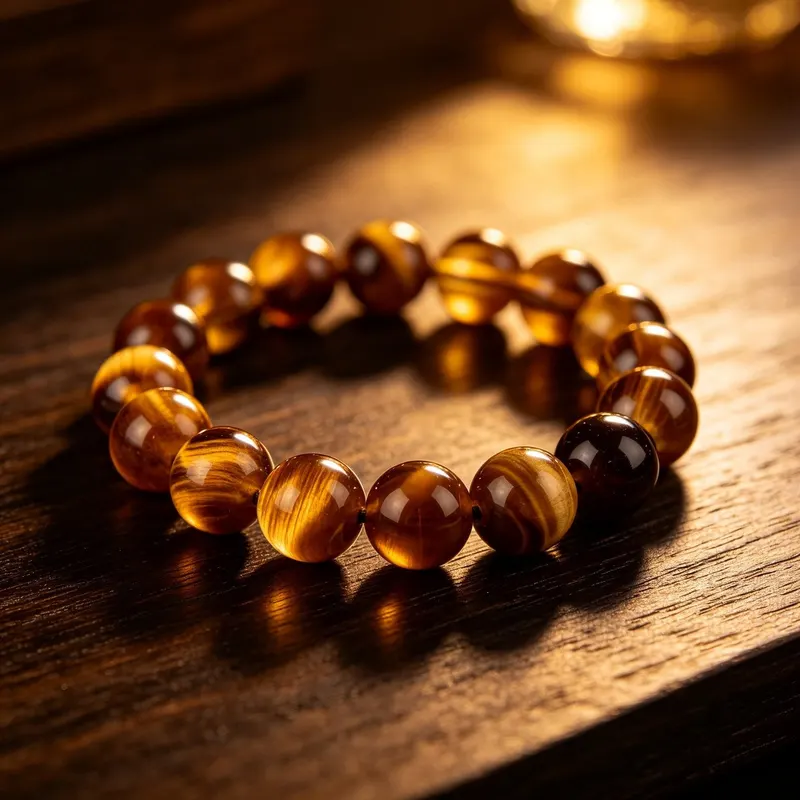
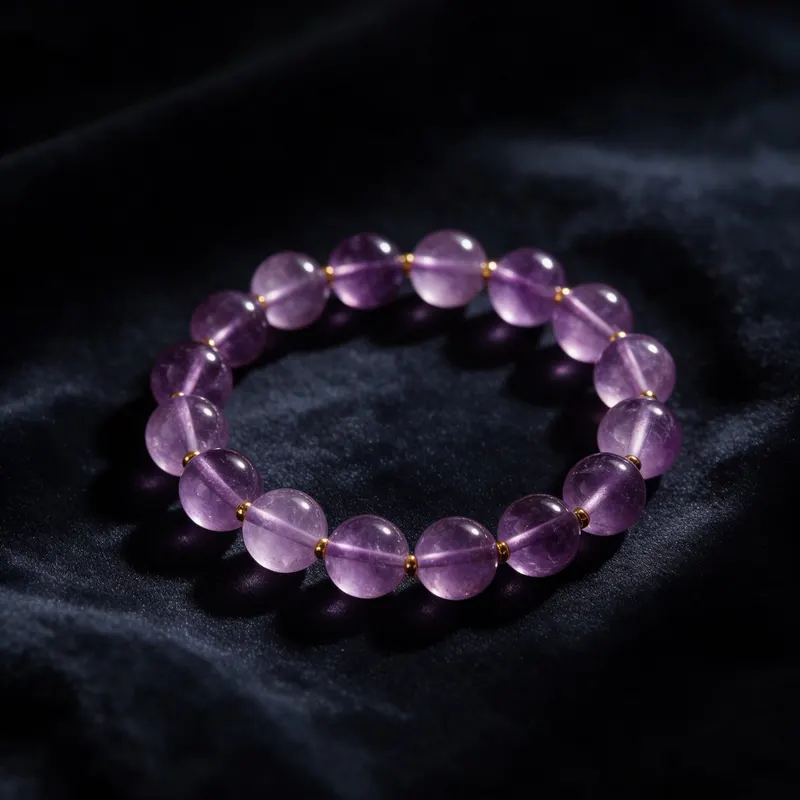
If your goal is focus with a little more drive behind it, some people pair fluorite with a stone tied to confidence, such as a Tiger's Eye Confidence Bracelet for Focus & Courage. If the goal is winding down after focused work, an Amethyst Healing Bracelet for Calm & Clarity is the more common evening companion.
Fluorite Colors and What Each Is Chosen For
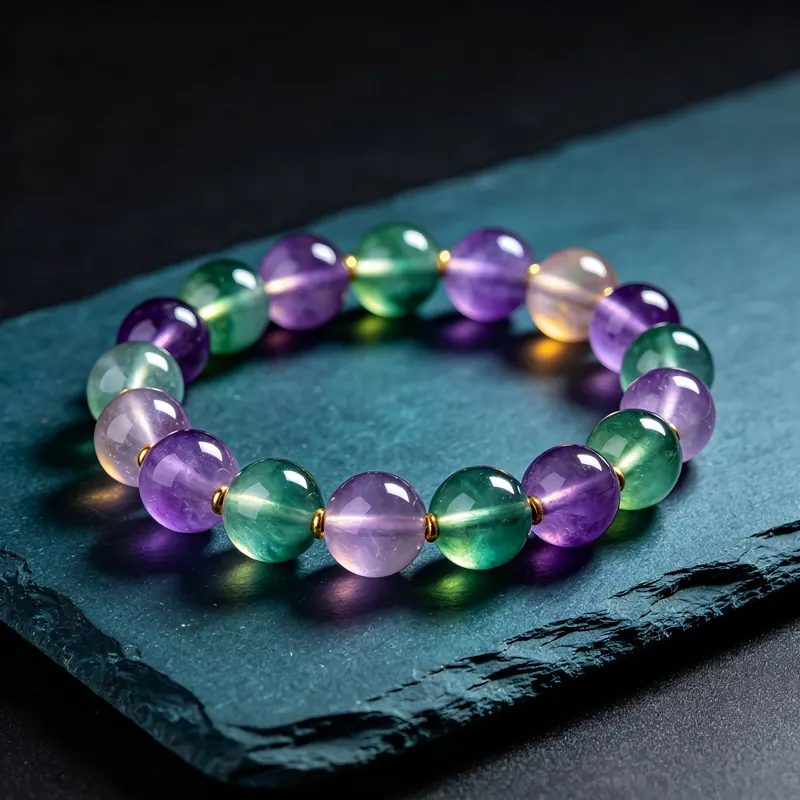
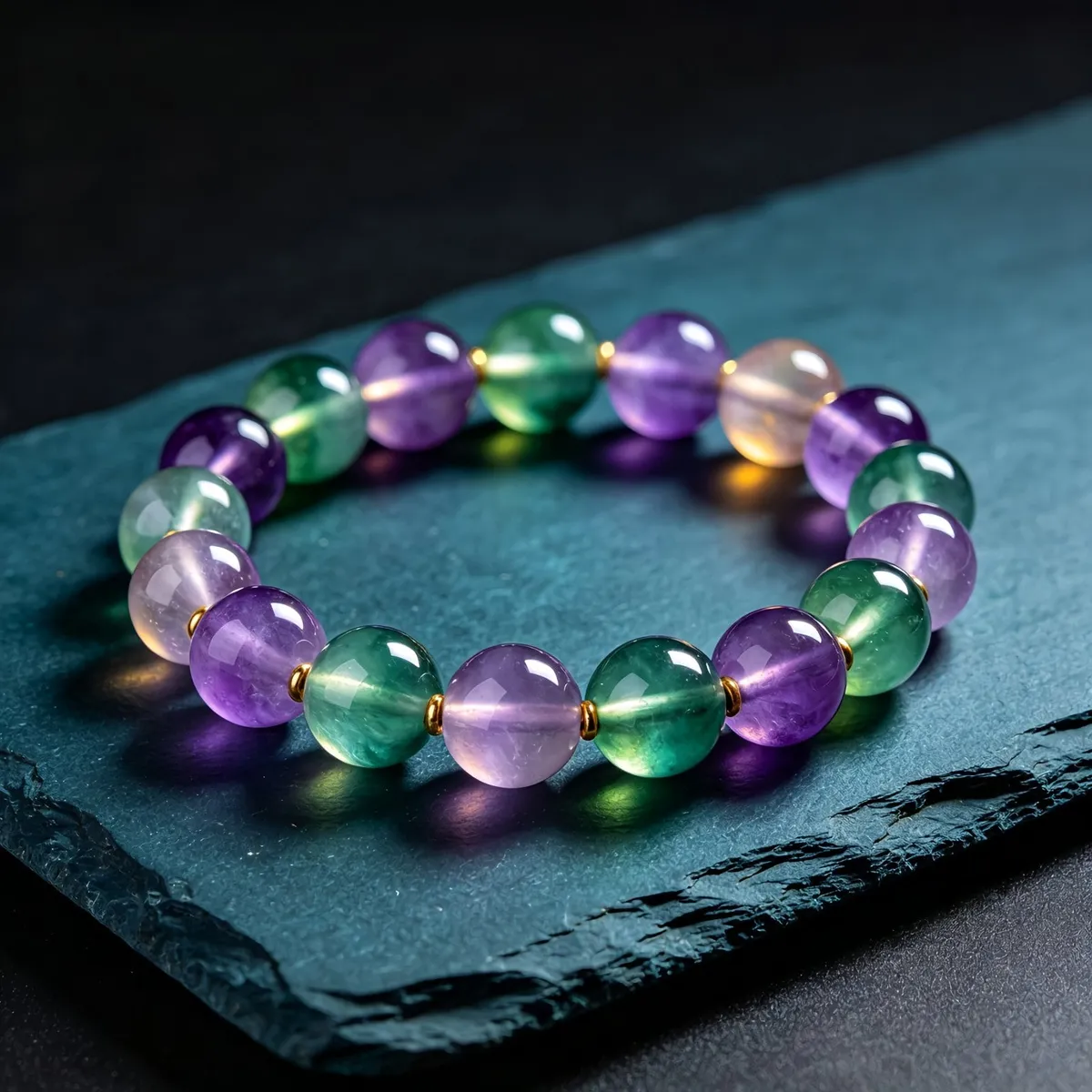
Fluorite's banding is its signature. Colors range from deep violet to mint green, sky blue, yellow, and clear, and they frequently appear in zones within a single stone. In practice, people choose by the intent they are working on rather than by a fixed rule.
| Color | Traditionally associated with | Common use |
|---|---|---|
| Purple | Insight, calm, third eye and crown chakra | Study sessions, reflection, winding down |
| Green | Balance, heart chakra, steady progress | Desk stone for long projects |
| Blue | Clear communication, throat chakra | Meetings, presentations, hard conversations |
| Yellow | Confidence, momentum | Starting tasks, creative work |
| Clear | General clarity, amplification | Pairing with other stones |
| Rainbow (banded) | All of the above, in one piece | An all-purpose first fluorite |
If you are buying your first piece and cannot decide, rainbow banded fluorite is the practical choice — you get the full color range and the visual interest that makes it pleasant to keep on a desk.
Fluorite and the Chakras
Because fluorite appears in so many colors, it is mapped across all the chakras: purple to the crown and third eye, green to the heart, blue to the throat. In practice, people pick the color that matches the area they want to work on — purple for insight, green for balance, blue for honest expression.
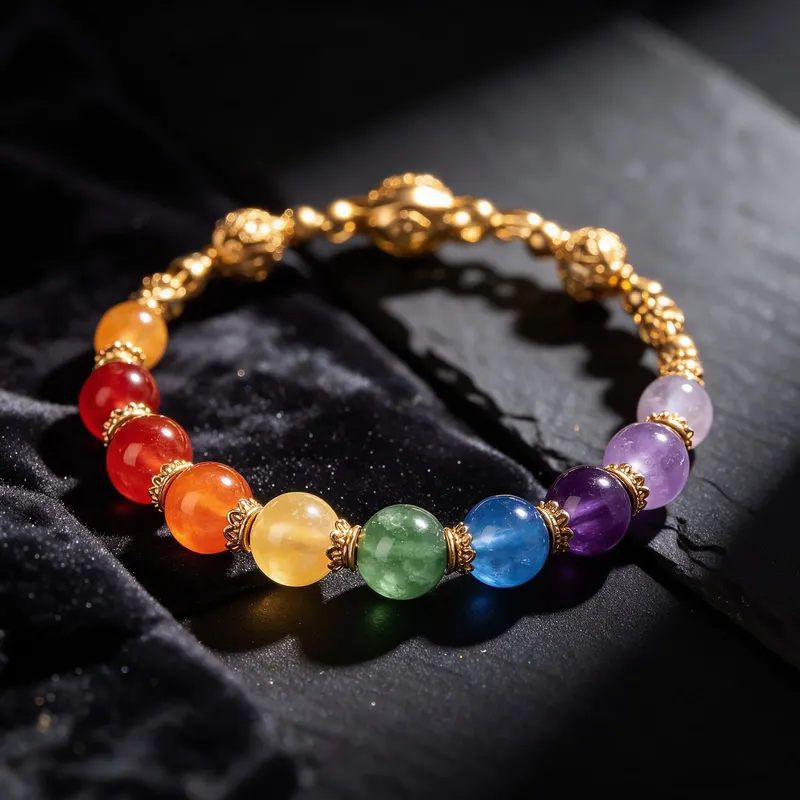
If you like working with the full chakra system rather than a single stone, a 7 Chakra Balancing Bracelet, Natural Mixed Stones covers the set in one piece, and fluorite can sit alongside it as the "focus" stone in your rotation.
Fluorite and the Zodiac
Fluorite is traditionally associated with Pisces (for mental grounding) and Capricorn (for structured focus). It is also a favorite for students and makers, which is less about astrology and more about the kind of work it gets used for. It pairs well with clear quartz for amplifying intent and with amethyst for calm study.
How to Choose Fluorite: A Practical Checklist
Fluorite is widely available and reasonably priced, which also means quality varies a lot. Use this list when shopping in person or online.
- Look for natural banding. Real fluorite shows uneven, organic color zones and often a visible transition between colors. Perfectly uniform, flat color is a red flag for dyed or synthetic material.
- Check for cracks and chips. Fluorite has perfect cleavage in four directions, meaning it splits cleanly along flat planes. Inspect edges and drilled holes on bracelets especially.
- Ask about treatment. Some fluorite is heat-treated or stabilized. A reputable seller will say so plainly.
- Match the form to the use. Bracelet for wearing during work, palm stone or cluster for the desk, pendant for keeping it close without handling it all day.
- Size the bracelet properly. Measure your wrist and add roughly half an inch for a comfortable fit. Bead bracelets in the 8mm range are the most common and sit well for desk work.
- Set a realistic budget. Bead bracelets typically run in the $20–$60 range; small palm stones and tumbles $10–$30; larger banded display pieces and carved objects can run well over $100. Exceptional specimens with strong color zoning cost more.
For a wearable option built around this intent, the Rainbow Fluorite Focus Bracelet for Concentration is the most direct match. If you prefer something you can hold rather than wear, a palm stone or small cluster works just as well — the form matters less than the habit you attach to it.
How to Use Fluorite for Focus and Decision-Making
The most useful way to work with fluorite is to give it a job. A few approaches people find practical:
- The one-step ritual. Before starting work, hold the stone and write down the single next action. Set the stone beside the note. When you drift, look at it and return to the step.
- The decision pause. When you are stuck in a loop, hold the stone and write the two options in plain language. The stone is a prompt to stop rehearsing and commit.
- The desk anchor. Keep a piece where your eye lands during hard tasks — near the monitor or beside your notebook, not buried in a drawer.
- The evening reset. Some people move fluorite off the desk at the end of the workday as a signal that focus time is over, and switch to a calmer stone.
None of this requires belief. It requires repetition. The stone is a physical cue, and cues are how habits stick.
What tradition teaches — and what is provable
Crystal lore and mineralogy are two different conversations. Here is where they separate for fluorite.
What the tradition says
Tradition holds that fluorite supports focus, clears mental fog, and helps organize scattered thoughts. It is associated with the third eye and crown chakras in purple, the heart in green, and the throat in blue. These are traditional associations — believed to and traditionally associated with are the right words, and they describe meaning, not mechanism.
What we can verify
- Hardness. Fluorite sits at about 4 on the Mohs scale — soft. It scratches more easily than quartz (7) or most everyday jewelry stones, so it is best kept as a gentle companion rather than an everyday-hard-wear piece.
- Cleavage. It has perfect cleavage in four directions, so a sharp knock can split it along a flat plane. Handle pendants and carved pieces carefully.
- Water sensitivity. Keep fluorite dry. Water and repeated soaking can dull the surface and, over time, affect the finish. Wipe with a soft dry cloth instead of washing.
- Sunlight. Long exposure to direct sun can fade color. Store it away from a bright windowsill and recharge by moonlight or on a selenite plate if that is part of your practice.
- Cleaning. Soft dry cloth only. No ultrasonic or steam cleaners, and no harsh chemicals.
- Heat. Keep it away from heat sources, which can stress the stone.
For recharging and storage, a Selenite Cleansing Wand for Energy Clearing doubles as a dry resting place — selenite is softer still, so store the two so they do not rub against each other.
Crystals are for reflection and ritual. They are not medical devices and are not a substitute for medical or mental health care.
Fluorite vs. Other Focus Stones
Fluorite is not the only stone people reach for when they want clarity. A quick comparison helps you choose.
| Stone | Traditional focus | Hardness (Mohs) | Best for |
|---|---|---|---|
| Fluorite | Organization, decision-making | ~4 | Desk work, planning, study |
| Clear quartz | Clarity, amplification | 7 | Everyday wear, pairing |
| Amethyst | Calm, insight | 7 | Evening wind-down, reflection |
| Tiger's eye | Confidence, courage | ~7 | Starting tasks, high-stakes moments |
| Labradorite | Intuition, transformation | ~6–6.5 | Change, creative blocks |
If you want a harder-wearing everyday piece for clarity, a Clear Quartz Point Pendant Necklace, Sterling Silver handles daily wear better than fluorite. If you are building a small rotation, a Healing Crystal Starter Kit, 7 Stones + Guide is a sensible way to try several before committing to a favorite.
Caring for Fluorite
- Water: Avoid. Fluorite is soft and can scratch or dull in water. Wipe with a dry cloth.
- Sun: Long sunlight can fade the color. Recharge by moonlight or on a selenite plate.
- Cleaning: Soft dry cloth only. No ultrasonic or steam cleaners.
- Storage: Keep it in its own pouch or compartment so harder stones do not scratch it.
- Recharging: Selenite plate or moonlight; keep it away from heat.
FAQ
People Also Ask
Is rainbow fluorite real?
Yes — the banding is natural. Real fluorite shows uneven, organic color zones; perfectly uniform color is a red flag for dyed or synthetic material.
Can fluorite go in water?
No. It is a soft stone that scratches and dulls in water. Keep it dry and wipe with a cloth.
Which color should I choose?
Match the intent: purple for insight and calm, green for balance, blue for clear communication, clear for general focus. Rainbow banded fluorite covers all of them in one piece.
Is fluorite good for studying?
It is one of the most common stones used for study and focus, usually kept on the desk or worn while working. For a confidence boost alongside focus, see crystals for confidence.
The Short Version
Fluorite earns its "genius stone" nickname as a tradition, not a promise. It is a soft, colorful, genuinely beautiful mineral that people use as a physical cue for focus, organization, and decision-making. Choose by color and form, buy from a seller who is honest about treatment, keep it dry and out of direct sun, and give it a job — a single next step written down beside it. That is where the meaning actually lives.