Calm vs Organized Focus
You sit down to work, and your mind behaves like a browser with thirty tabs open. Or the opposite: you're wound so tightly after a long day that you can't settle, even though you're exhausted. If you're choosing between fluorite and amethyst, the honest answer is that they point in two different directions—and knowing which one you actually need is most of the decision.
Fluorite is traditionally associated with organized concentration: it's the stone people reach for when the task is complex, the deadline is real, and the thoughts need sorting rather than silencing. Amethyst is traditionally associated with serene calm: the stone for winding down, meditating, and letting an overactive mind soften. One helps you gather your attention; the other helps you release it.
This guide compares the two on what they're used for, how they feel to wear, what they cost, and how to care for them—then covers when combining them makes sense. As with all crystal work, treat these as reflective tools and personal rituals, not switches that flip your mental state.
Fluorite: The Stone of Ordered Attention
Fluorite has a long folk reputation as the "genius stone"—traditionally associated with clearing mental clutter, supporting decision-making, and bringing structure to scattered thoughts. In practice, people tend to use it as a cue for deep work: a physical reminder to close the extra tabs, pick one task, and stay with it.
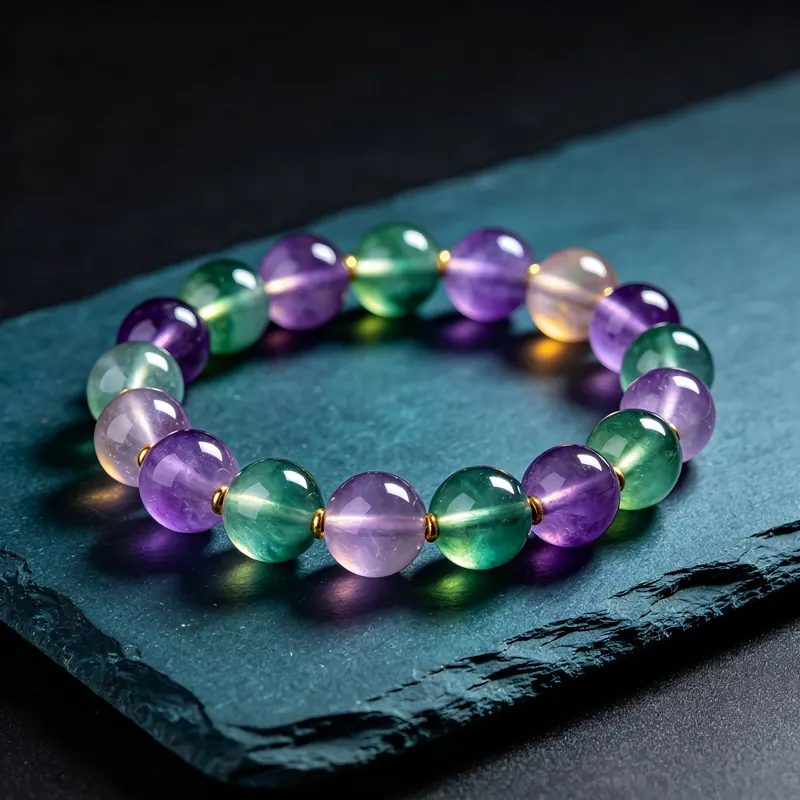
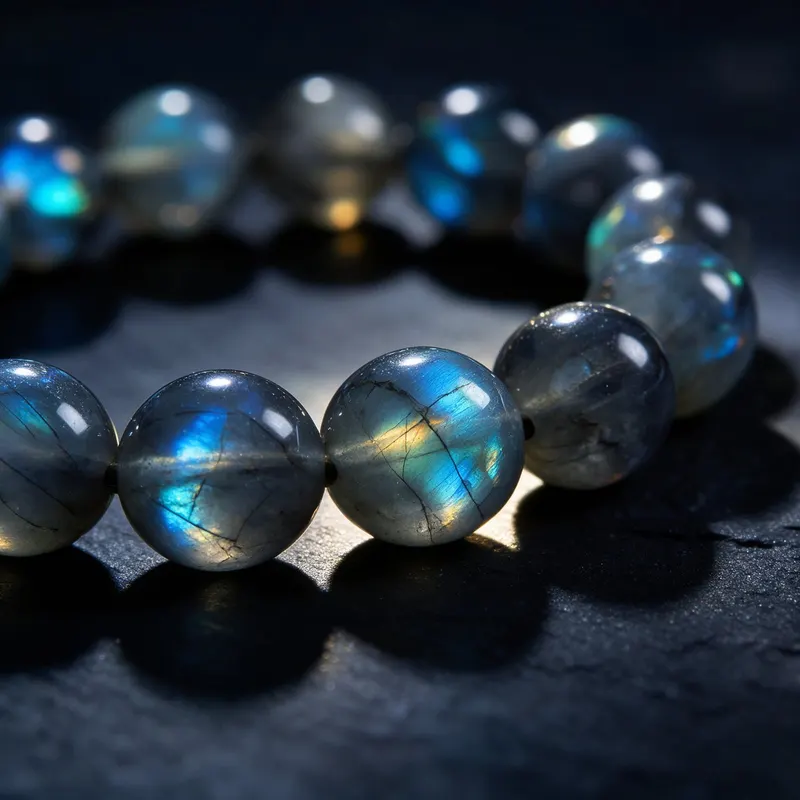
It's also one of the most visually varied stones in the cabinet. Fluorite comes in green, purple, blue, yellow, and banded "rainbow" combinations, often with distinct zoning or stripes. If you want a piece for a desk or study session, a beaded bracelet like the Rainbow Fluorite Focus Bracelet for Concentration keeps the stone in view without occupying your hands. Green and blue-green fluorite are the shades most often chosen for work and study settings in modern crystal practice, though this is convention rather than anything measurable.
What to look for in fluorite
- Color banding: Distinct zones of green, purple, and blue are a hallmark of natural rainbow fluorite; perfectly uniform color across a whole strand is less typical and worth a second look.
- Clarity vs character: Fluorite is often transparent with internal fractures and "rainbow" flashes. Some inclusions are normal and part of the stone's character.
- Bead sizing: 8mm beads suit most wrists; 6mm reads more delicate and layers well; 10mm makes a bolder statement.
- Finish: Polished beads should feel smooth with no gritty edges or chipped rims around the drill holes.
Amethyst: The Stone of Serene Calm
Amethyst is traditionally associated with quieting an overactive mind, supporting meditation, and inviting rest. It's the stone people keep on a nightstand rather than a work desk—a cue to stop solving problems and start settling. In crystal practice it's often described as a stone of "sober clarity," meaning calm attention rather than drowsiness.
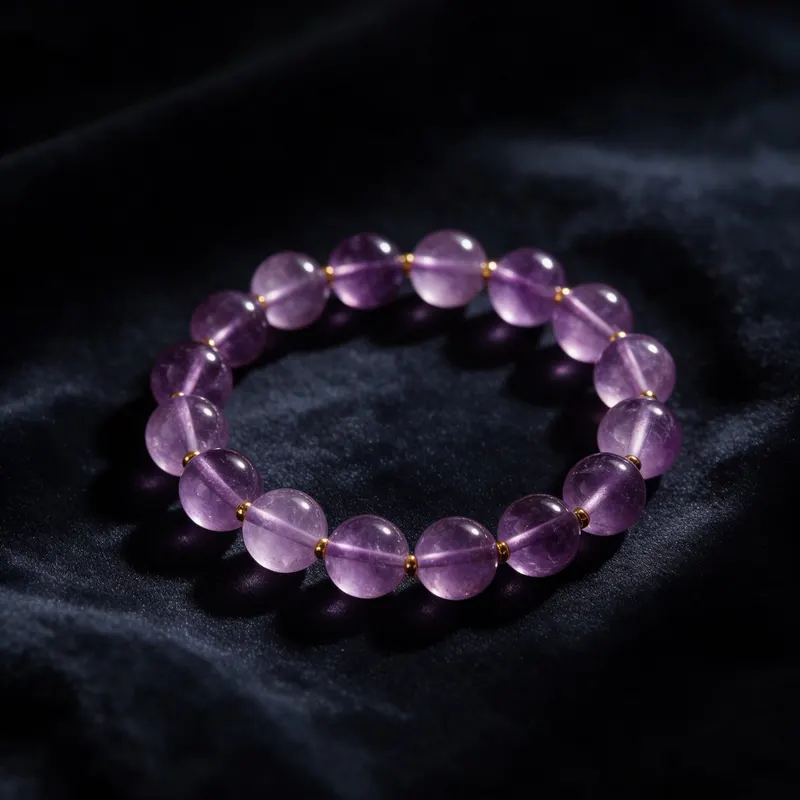
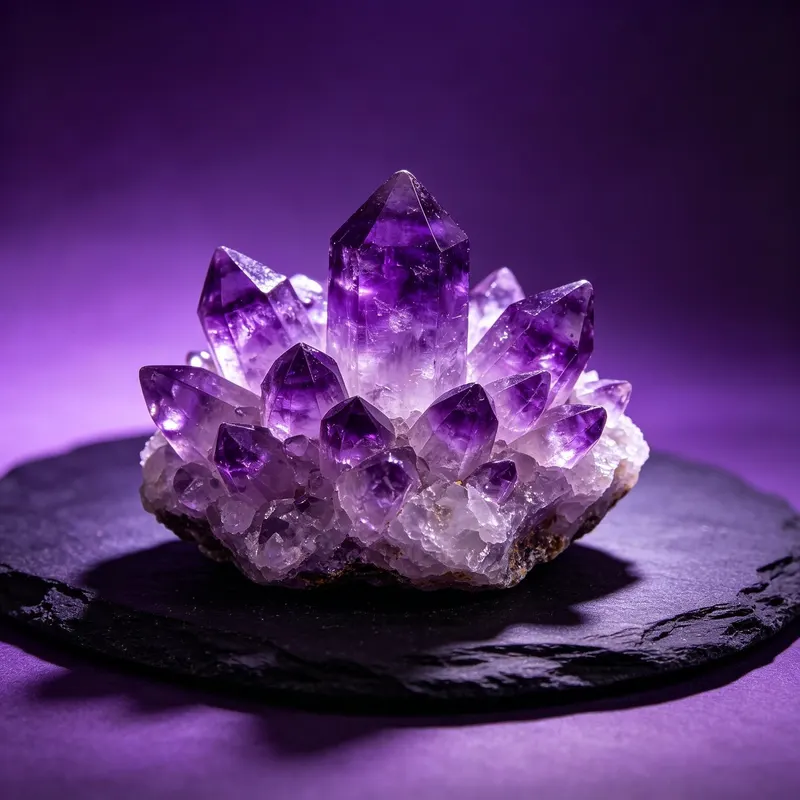
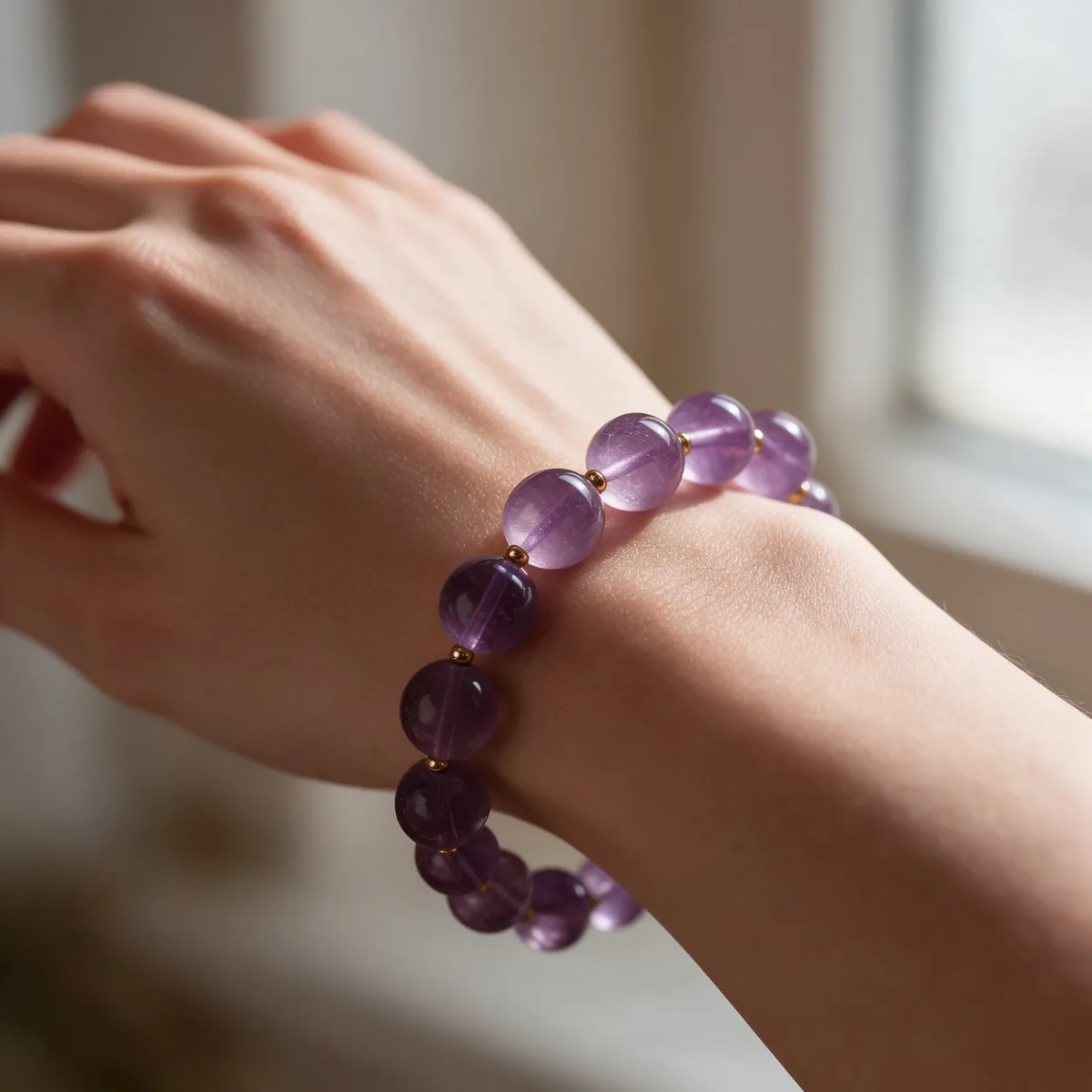
For everyday wear, the Amethyst Healing Bracelet for Calm & Clarity is a straightforward choice: purple, unobtrusive, and easy to wear through an evening routine. If your practice leans toward meditation or an altar, a Raw Amethyst Cluster for Meditation & Altar gives you a larger piece to anchor a quiet corner of a room—no wrist required.
What to look for in amethyst
- Color: Deep violet to lavender is typical; natural amethyst often shows uneven saturation rather than a flat, uniform purple.
- Transparency: Gem-grade amethyst is rare and expensive; most bracelets and clusters are semi-translucent to opaque, which is normal and not a flaw.
- Cluster shape: For raw pieces, look for intact points, stable footing, and a base that won't scratch furniture.
- Beads: Check that the strand is strung on elastic that springs back—stretched-out elastic is the most common wear issue.
Fluorite vs Amethyst at a Glance
| Feature | Fluorite | Amethyst |
|---|---|---|
| Traditional association | Concentration, order, decision-making | Calm, meditation, rest |
| Best moment to use | Deep work, study, complex tasks | Evening wind-down, meditation, pre-exam nerves |
| Typical colors | Green, purple, blue, yellow, banded | Violet to lavender |
| Mohs hardness | 4 (soft; easily scratched) | 7 (durable for daily wear) |
| Sunlight sensitivity | Some colors may fade with prolonged direct sun | Generally stable; long sun exposure can dull color over time |
| Water sensitivity | Avoid soaking; not for salt water or ultrasonic cleaners | Generally tolerant of brief water; avoid harsh chemicals |
| Care level | Higher—store separately, handle gently | Lower—wipes clean, wears well |
| Typical bracelet price | Roughly $25–$60 for natural beaded strands | Roughly $20–$55; deep, even color costs more |
Price ranges reflect common retail expectations for natural beaded bracelets; large clusters, gem-grade material, and precious-metal settings cost considerably more.
What the old stories say — and what checks out
Crystal lore and gemology answer different questions. Tradition describes what a stone has meant to people; gemology describes what it is and how it behaves. Both are useful—just don't mix them up.
What tradition says: Fluorite is believed to organize scattered thoughts and support clear decisions. Amethyst is believed to soothe an overactive mind and support meditation and rest. These are longstanding folk associations, not claims about brain function, and they haven't been tested in controlled studies.
What we can verify:
- Hardness: Fluorite sits at about 4 on the Mohs scale, meaning it scratches easily—a fingernail can mark it. Amethyst is quartz at about 7, so it holds up far better to daily knocks.
- Water and chemicals: Fluorite should not be soaked, and it's a poor candidate for ultrasonic cleaners or salt-water "cleansing" baths. Amethyst tolerates brief rinsing but can be damaged by harsh cleaners and prolonged heat.
- Sunlight: Some fluorite colors are known to fade with prolonged direct sun exposure, so store it away from a bright windowsill. Amethyst color can also dull over years of strong sun.
- Care basics: Wipe both with a soft dry or barely damp cloth. Store fluorite separately from harder stones so it isn't scratched in a jewelry box. Remove bracelets before showering, swimming, or cleaning with chemicals.
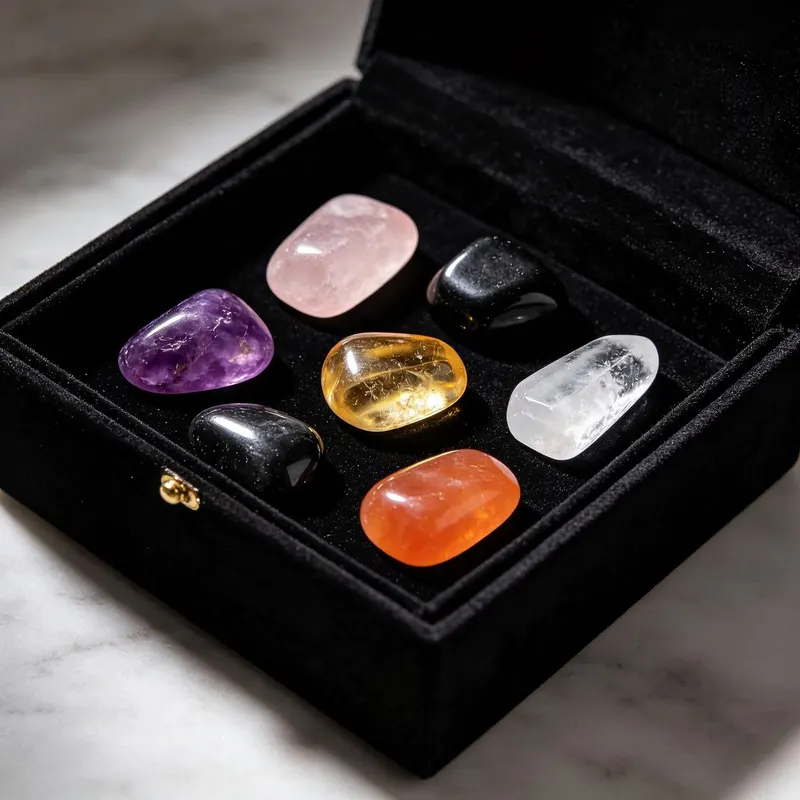
In other words, the care advice is concrete and worth following; the meaning is personal and worth exploring on your own terms. If you want a neutral starting point for building a practice around either stone, the Healing Crystal Starter Kit, 7 Stones + Guide includes both fluorite and amethyst alongside other stones, which makes it easy to compare how each feels in daily use.
When to Combine Them
Fluorite and amethyst pair naturally because they cover opposite ends of a workday. A simple structure many people use: fluorite during focused blocks, amethyst afterward.
- Morning to afternoon: Wear fluorite for deep work or study sessions. Keep it visible on your desk as a cue to stay with one task.
- Evening: Switch to amethyst, or place an amethyst cluster near where you read or meditate, to mark the transition out of work mode.
- Exam season: Fluorite for study blocks; amethyst for the anxious hours before and after. Neither replaces sleep, preparation, or actual rest.
- Layering: If you wear both, put the softer fluorite bracelet higher on the arm or on the non-dominant wrist to reduce knocks against desks and keyboards.
If you want a third, more neutral stone for either context, a Clear Quartz Point Pendant Necklace, Sterling Silver is traditionally associated with clarity and works as a quiet everyday piece that doesn't compete with either bracelet.
How to Choose: A Practical Checklist
- Name the problem first. Scattered attention points to fluorite; a mind that won't switch off points to amethyst.
- Check your wrist size. Measure snugly around your wrist and add roughly 1–1.5 cm for comfort. Most beaded bracelets are 17–19 cm; if you're between sizes, size up.
- Match the format to the use. Bracelets for wearing through the day; clusters or points for a fixed spot like a desk or nightstand.
- Inspect before buying. Look for even drill holes, secure knots or elastic, and no chips on bead edges. For clusters, check that points are intact.
- Set a realistic budget. Natural beaded bracelets typically run $20–$60. Be skeptical of "gem-grade" claims at low prices, and equally skeptical of inflated prices for ordinary material.
- Plan for care. If you're hard on jewelry, amethyst's hardness (7) is the more forgiving choice; fluorite (4) needs gentler handling.
FAQ
People Also Ask
Which is better for studying, fluorite or amethyst?
Fluorite is the traditional concentration stone for active study—it's associated with organizing thoughts and staying on task. Amethyst is better suited to calming pre-exam nerves and winding down after study. Many people use both on the same day for exactly that reason.
Can I wear fluorite and amethyst together?
Yes. They complement each other well: fluorite for focused work, amethyst for calm recovery. Because fluorite is soft (about 4 on the Mohs scale), wear it where it won't rub against harder stones or bang against a desk.
How do I cleanse or care for these stones?
Wipe both with a soft cloth. Avoid soaking fluorite, and keep it out of ultrasonic cleaners and salt water. Store fluorite separately from harder jewelry, and keep both away from prolonged direct sunlight. For energetic cleansing, many people prefer smoke or sound methods precisely because they don't expose soft stones to water.
How much should I expect to pay?
Natural beaded bracelets generally fall in the $20–$60 range, with deeper amethyst color and larger fluorite beads toward the higher end. Raw amethyst clusters vary widely with size and point quality. Precious-metal settings and genuinely gem-grade material cost more—expect those prices to reflect it.
Browse the Curated Collection
Explore the full edit here: Focus & Clarity Collection →
Shop the Stones
- Fluorite Focus Bracelet
- Amethyst Healing Bracelet
- Raw Amethyst Cluster
- Clear Quartz Pendant Necklace
Keep Exploring
Fluorite Meaning · Amethyst Meaning · Focus & Study
Crystals are intended to support personal and spiritual well-being and are not medical devices. They do not diagnose, treat, cure, or prevent any disease. If you're struggling with sleep, anxiety, or concentration, rely on proper rest, hydration, and professional medical guidance.