When Your Heart Feels Guarded
Maybe a relationship ended and you noticed something in your chest tighten—a bracing, a holding back. Maybe you've been so busy caring for everyone else that tenderness toward yourself got pushed to the bottom of the list. Or maybe nothing dramatic happened at all; you simply feel a little closed off, quick to criticize yourself, slow to trust.
In crystal and chakra traditions, that guarded feeling is often framed as an imbalance in the heart chakra—Anahata, the energetic center at the middle of the chest. Whether or not you work with chakras as literal energy, the language is useful: it gives a name to the experience of wanting to love more openly and not quite knowing how to start.
This guide covers the stones most traditionally associated with the heart chakra, how to choose between them, how to wear and care for them realistically, and a simple ritual you can return to when you need it. Think of it as a set of gentle tools for reflection—not a fix, but an invitation.
What Is the Heart Chakra?
The heart chakra (Anahata, Sanskrit for "unstruck") is described in yogic tradition as sitting at the center of the chest, near the sternum. It's associated with love, compassion, forgiveness, and connection—to other people and to yourself. The traditional colors are green and soft pink, and the element is air, which is why heart-centered practices so often involve the breath.
A balanced heart chakra, in this framework, feels open but not unprotected: able to give warmth, able to receive it, and able to hold boundaries without slamming shut. That last part matters. An "open heart" isn't the same as no boundaries at all—it's a heart that can stay soft while still knowing where it ends.
Signs of Imbalance
Traditional chakra writing describes imbalance as moving in one of two directions—closed off or overextended. You may recognize some of these:
- Closing off after hurt, grief, or disappointment
- Harsh self-criticism or a persistent feeling of being unworthy of love
- Difficulty trusting or feeling genuinely connected, even with people you care about
- Giving far past your capacity—overextending, then resenting it
- Feeling emotionally numb or flat
- Carrying grudges that feel heavy but hard to put down
- A habit of apologizing for needing anything at all
None of these are diagnoses. They're simply recognizable human experiences, and noticing them is the first step toward being kinder to yourself about them.
Best Heart Chakra Crystals
The stones below are the ones most often named in heart chakra traditions. They range from the classic (rose quartz) to the quietly practical (aquamarine) to the ones better suited to deeper emotional work (rhodonite).
Rose Quartz: The Classic Stone of Unconditional Love
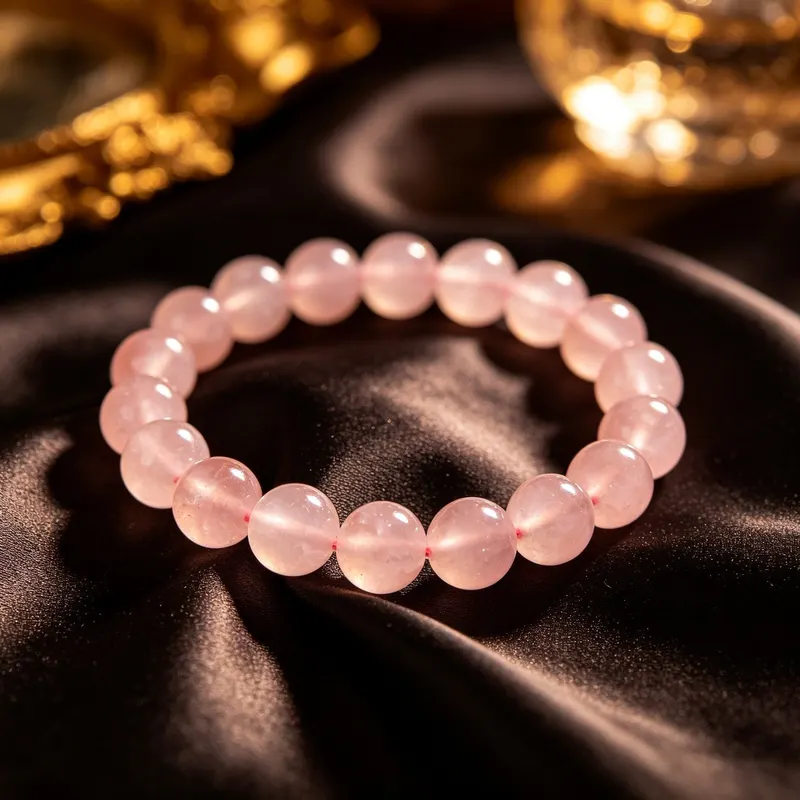
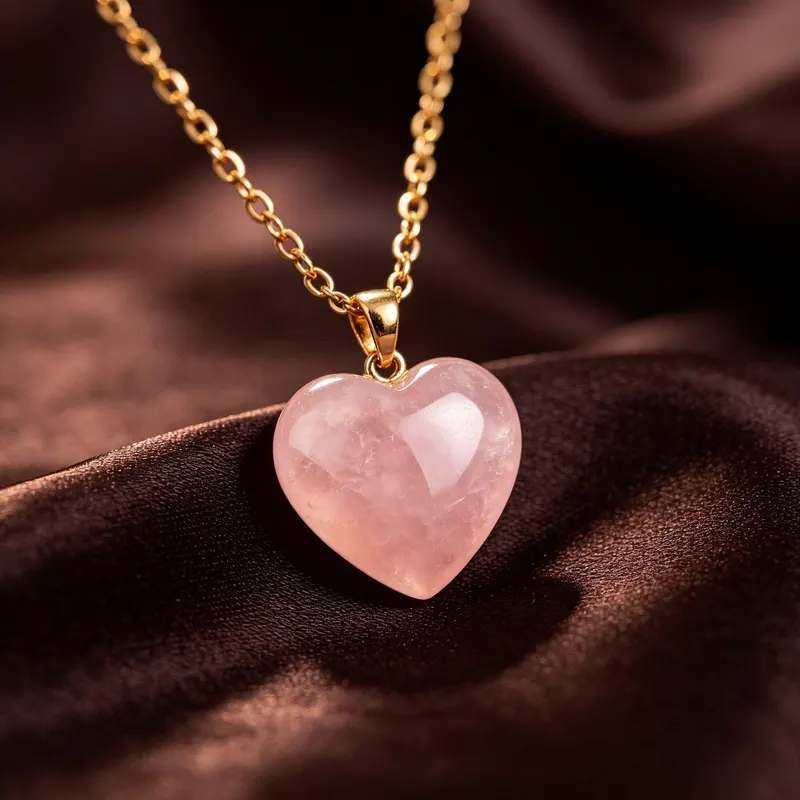
Rose quartz is the most widely recognized heart stone, traditionally associated with unconditional love, self-compassion, and gentle emotional softening. It's a good first choice if you're new to heart work or if your main struggle is being hard on yourself. A Rose Quartz Love Bracelet keeps it close to the wrist; a Rose Quartz Heart Pendant Necklace places it directly over the chest, which many people find more resonant for heart-focused practice.
Rhodonite: For Forgiveness and Emotional Wounds
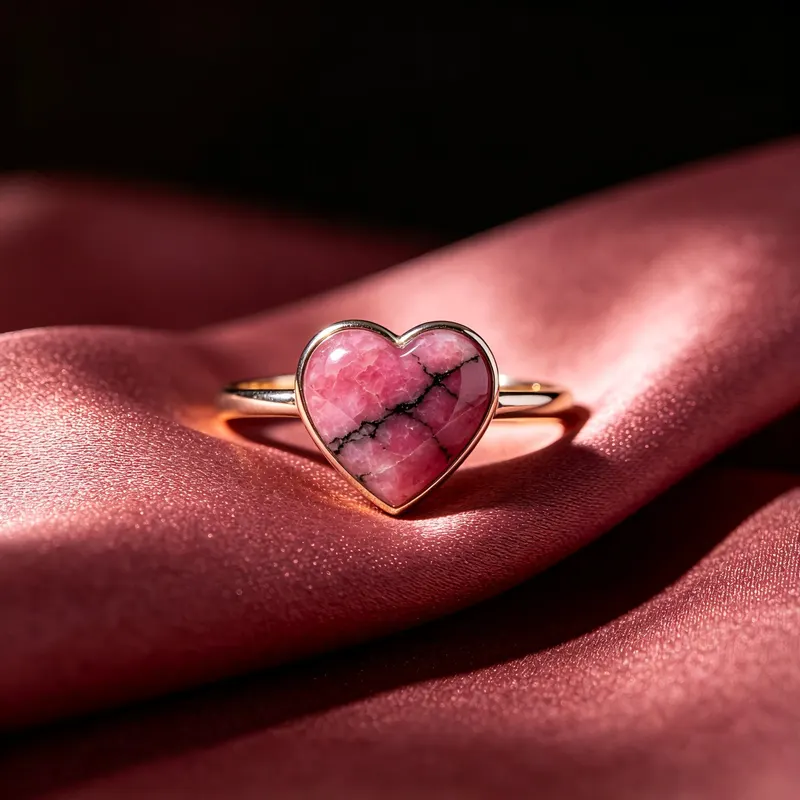
Rhodonite is traditionally associated with forgiveness—of others, and often more importantly, of yourself. It's a good companion when the work involves old hurt rather than general openness. The Rhodonite Heart Ring is a discreet way to carry that intention, and wearing it on the hand you use to write or reach out can serve as a small reminder.
Aquamarine: Calm Communication and Gentle Flow
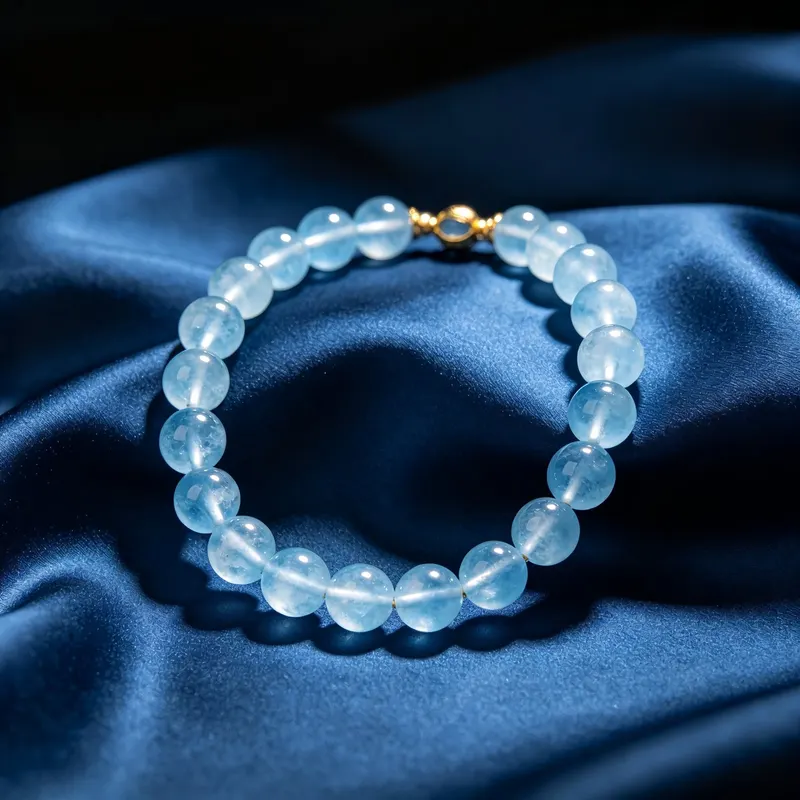
Aquamarine is traditionally associated with calm, clear communication and emotional steadiness—useful when the heart work involves saying difficult things kindly, or simply staying present without shutting down. The Aquamarine Serenity Necklace is a natural fit for anyone whose heart work overlaps with speaking their truth gently.
Green Stones: Aventurine and Jade
Green aventurine and jade are traditional heart-opening greens, associated with optimism, ease, and quiet good fortune. They're often recommended when the goal is lightness rather than deep processing—a good match if you want your practice to feel encouraging rather than heavy.
Supporting Stones Worth Knowing
Some practitioners pair heart stones with grounding or clarity stones. A Clear Quartz Point Pendant Necklace is traditionally used as an amplifier and can sit alongside a heart stone; a Amethyst Healing Bracelet is often chosen for calm and perspective when emotional work feels overwhelming. If you're building a first collection rather than buying a single piece, the Healing Crystal Starter Kit includes a curated set plus a guide, which is a sensible way to experiment before committing to larger pieces.
How to Choose: A Quick Comparison
Use this table to match a stone to what you're actually working on. There's no "best" heart crystal—only the one that fits your intention right now.
| Stone | Traditionally associated with | Best if you… | Typical price (bracelet/pendant) |
|---|---|---|---|
| Rose quartz | Unconditional love, self-compassion | Want a gentle, everyday starting point | $20–$60 |
| Rhodonite | Forgiveness, healing old wounds | Are working through hurt or resentment | $25–$70 |
| Aquamarine | Calm, clear communication | Need to speak kindly but honestly | $30–$90 |
| Green aventurine | Optimism, ease, lightheartedness | Want your practice to feel uplifting | $15–$45 |
| Jade | Serenity, quiet good fortune | Prefer a traditional, understated stone | $25–$80 |
Prices vary with stone quality, metal (gold-plated versus sterling silver), and craftsmanship. Be wary of anything dramatically cheaper than these ranges—very low prices usually mean dyed, glass, or reconstituted material. Ask sellers whether the stone is natural and untreated, and look for clear, close-up photos rather than heavily filtered ones.
What to Look For Before You Buy
- Natural versus treated: Rose quartz is rarely dyed, but "aquamarine" glass and dyed quartz are common. Ask directly.
- Color consistency: Natural stones vary. Perfectly uniform color across many pieces can suggest treatment.
- Metal quality: Sterling silver and solid gold last; gold-plated finishes wear over time, especially on rings and bracelets.
- Sizing: Bracelets are usually 6.5–7.5 inches; measure your wrist and add about half an inch for comfort. Rings should be sized properly—rhodonite is relatively soft, so a snug fit reduces knocks.
- Finish: Polished stones feel smooth and cool; rough or pitted surfaces are fine for clusters but not ideal for jewelry you'll wear daily.
What folklore claims — and what is verifiable
It's worth being clear about where tradition ends and verifiable fact begins. Both have value, but they answer different questions.
Traditional lore holds that heart chakra stones support emotional openness, compassion, and forgiveness, and that placing a stone over the chest during meditation deepens that connection. These are meaningful frameworks for reflection and ritual—but they are not scientific claims, and no crystal has been shown to treat or cure any condition.
What we can verify is the practical, material side:
- Hardness (Mohs scale): Rose quartz and clear quartz are about 7; aquamarine is 7.5–8; rhodonite is 5.5–6.5; jade is around 6–6.5. Softer stones scratch and chip more easily and are better suited to pendants and rings than to heavy daily wear.
- Water sensitivity: Quartz family stones tolerate brief water contact, but selenite dissolves and should never be soaked; rhodonite and jade are best kept dry to preserve polish.
- Sunlight: Rose quartz and amethyst can fade with prolonged direct sun. Store them away from a bright windowsill.
- Cleaning: Wipe with a soft, slightly damp cloth, dry fully, and avoid harsh chemicals, ultrasonic cleaners, and hot water—especially on plated metals.
- Storage: Keep softer stones separate from harder ones so they don't scratch each other.
If you want to "cleanse" a stone energetically, traditional methods include moonlight, sound, or resting it on a selenite plate—but from a care standpoint, plain gentle cleaning is what actually protects your piece.
A Heart-Opening Ritual
This is a simple, repeatable practice—five to ten minutes is plenty.
- Set up: Lie down or sit comfortably. Place a heart stone—rose quartz is the classic—over the center of your chest, or hold it in your non-dominant hand.
- Breathe: Breathe slowly into the chest for several minutes, letting the exhale be longer than the inhale.
- Repeat silently: "I am open, I am loved." Adjust the words so they feel true rather than forced—"I am learning to be open" is a fine alternative.
- Close gently: Rest a hand on your chest, thank yourself for the pause, and return to your day.
Build the habit with our self-love guide and learn more about the meaning of rose quartz.
FAQ
People Also Ask
Where do you place heart chakra stones?
Directly over the center of the chest during meditation, or worn as a pendant so the stone rests near the sternum. A bracelet works too—many people find the wrist more practical for everyday wear.
What color is the heart chakra?
Green and soft pink. That's why heart-centered stones tend toward those hues—rose quartz, rhodonite, aquamarine, aventurine, and jade.
How do I care for a heart chakra crystal?
Wipe it with a soft damp cloth and dry it fully. Keep softer stones like rhodonite away from hard knocks, store pieces separately, and avoid prolonged sun exposure for rose quartz. Never soak selenite.
Do I need more than one heart stone?
No. One stone you actually use is worth more than five you forget about. Start with rose quartz if you're unsure, and add rhodonite or aquamarine later if your focus shifts toward forgiveness or communication.
Shop the Stones
Keep Exploring
Rose Quartz Meaning · Self-Love Crystals · The 7 Chakras
Crystals are intended to support personal and spiritual well-being and are not medical devices. They do not diagnose, treat, cure, or prevent any disease. If you are struggling with your mental or physical health, please reach out to a qualified professional.