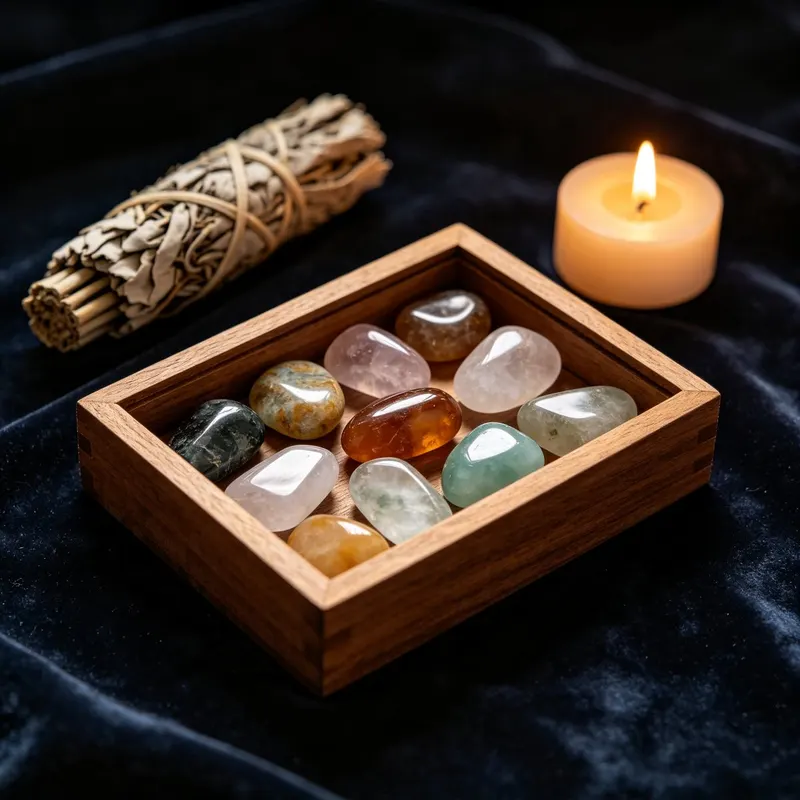
What Is a Crystal Grid?
A crystal grid is a set of stones arranged in a geometric pattern with a single, clearly stated intention at its center. The idea is simple: instead of working with one stone, you place several in relationship to each other — a center stone anchoring the pattern, surrounding stones echoing and amplifying it — and treat the whole arrangement as one focused object. In crystal practice, that combination is traditionally believed to be more potent than any single stone used alone.
If you have ever set three or four tumbled stones on a windowsill and felt oddly settled by the arrangement, you already understand the appeal. A grid simply makes that instinct deliberate. It gives your intention a physical home, a shape you can return to, and a small daily ritual that keeps your attention where you want it.
This tutorial walks you through building your first grid from scratch — what to gather, how to choose a center stone, how to lay out the points, how to "activate" the grid, and how to care for it over the weeks that follow. No prior experience is needed, and you do not have to buy anything special to begin.
What You'll Need
A first grid can be built with as few as five stones. Resist the urge to buy a dozen new pieces before you have tried one layout — start small, learn what feels right, and expand later.
- A center stone. Clear quartz is the classic choice because it is traditionally associated with amplification, but any stone that matches your intention works.
- Surrounding stones. Four to eight stones that support your goal — all the same type is simplest for a beginner.
- A flat base. A wooden tray, a cloth, a cork mat, or a printed sacred-geometry template. A base keeps small stones from migrating and makes the grid easy to move.
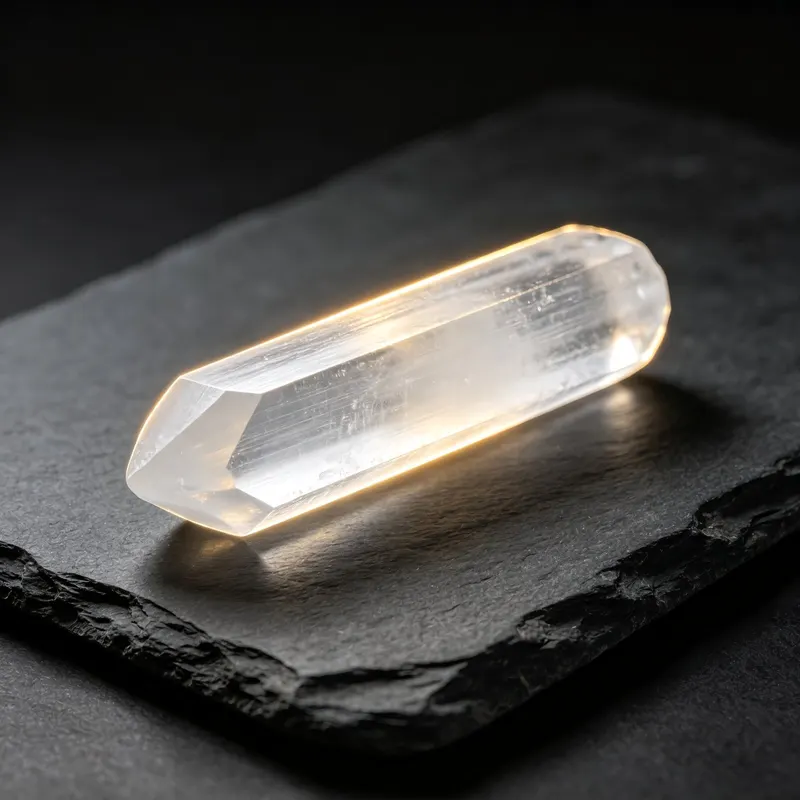
- A cleansing tool. A Selenite Cleansing Wand is the traditional choice for both clearing stones and activating the finished grid.
- An intention. One sentence, written down. This matters more than any object on the list.
Optional but helpful: a small notebook to record your intention, the date you built the grid, and how you felt about it over time. A grid is a practice, and a few lines of notes turn it into one you can actually learn from.
How to Choose Your Stones
The most common beginner mistake is choosing stones by color alone. A better approach is to choose by intention first, then by what you genuinely like looking at. You will keep a grid in view for weeks; pick stones whose appearance you find calming rather than merely impressive.
For the center, clear quartz is the traditional amplifier and pairs with almost anything. For the surrounding points, match the stone to your goal:
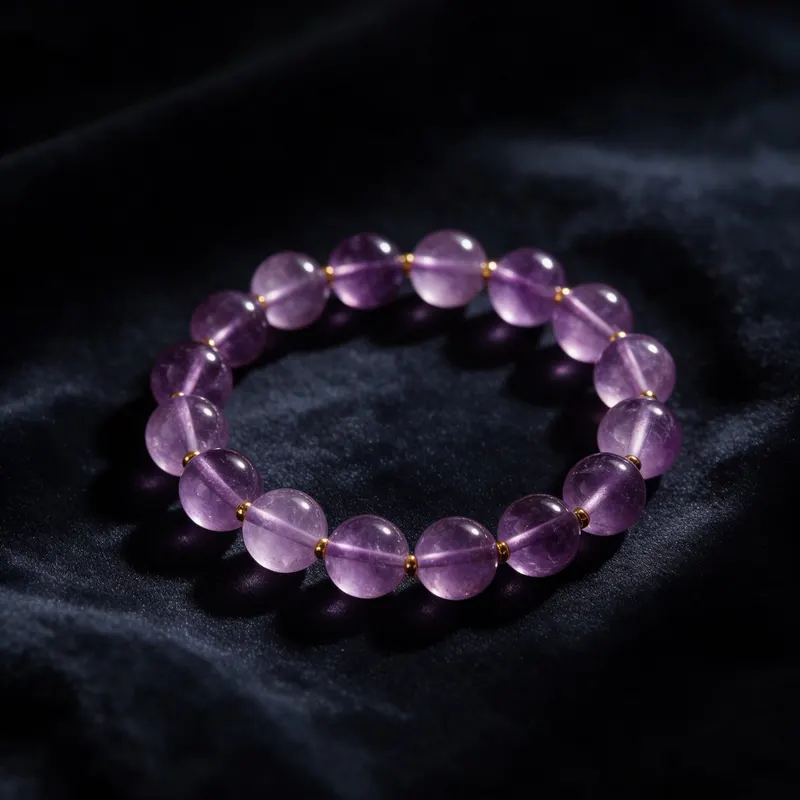
- Calm and clarity: amethyst, or a Amethyst Healing Bracelet for Calm & Clarity if you prefer to wear your intention as well as display it.
- Love and self-compassion: rose quartz, traditionally associated with the heart.
- Abundance and motivation: citrine, long believed to invite prosperity and forward momentum.
- Protection and grounding: black tourmaline or obsidian.
- Intuition and new beginnings: moonstone or labradorite.
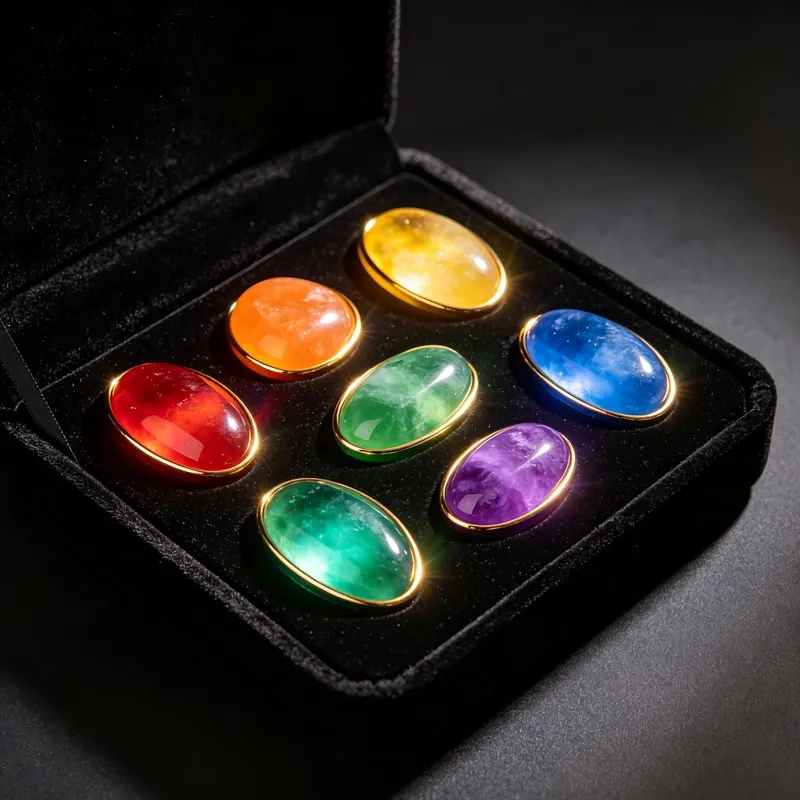
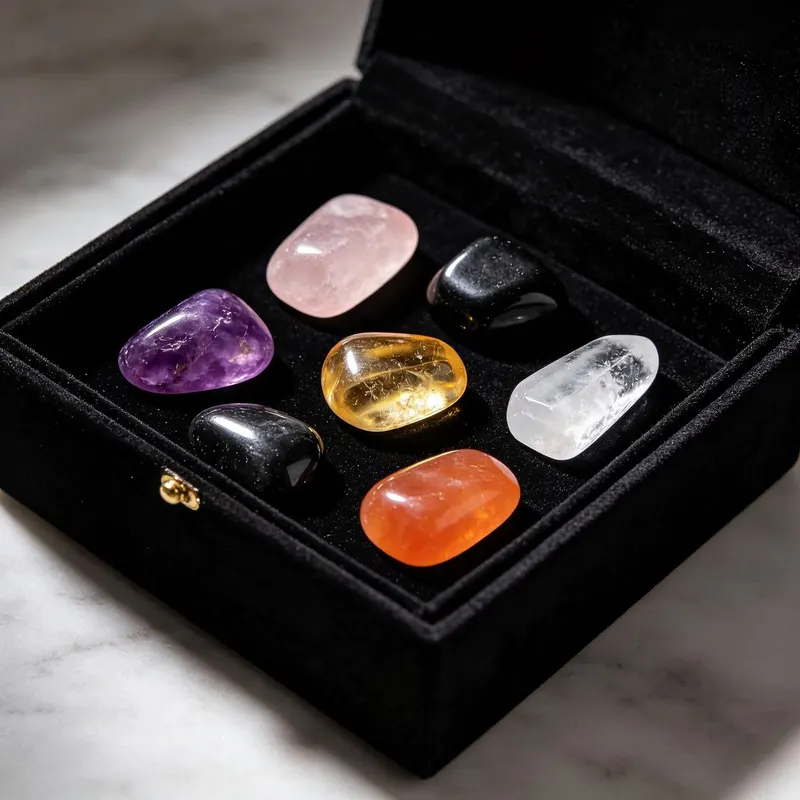
If you are unsure where to start, a mixed set removes the guesswork. The 7 Chakra Stone Set with Wooden Display Box gives you seven different stones plus a place to store them, which is convenient when you want to try several intentions over a few months. A Healing Crystal Starter Kit, 7 Stones + Guide is another low-risk entry point if you are building your collection from zero.
Step-by-Step: Building Your First Grid
1. Cleanse the stones and the space
Clear every stone and the surface you will work on before you begin. Rinse-safe stones can be wiped with a damp cloth; softer or water-sensitive stones should be cleared with sound, smoke, or a selenite wand instead. Our cleansing guide covers each method in detail.
2. Set one intention
Phrase it positively, in the present tense, and keep it to a single sentence. "I welcome calm into my mornings" works. "I want to stop being anxious" does not — it names the problem rather than the direction you want to move in. Write the sentence down; you will read it aloud when you activate the grid.
3. Place the center stone
Set your center stone first. This anchors the grid and establishes the physical middle of your pattern. Take a moment to hold it and restate your intention before you place it down.
4. Arrange the surrounding stones symmetrically
Work outward from the center in a pattern you can repeat evenly. A four-point cross is the simplest layout; a six-point flower-of-life pattern is a natural next step. Symmetry is the point — it makes the grid read as one object rather than a scatter of stones. Keep spacing consistent, roughly a stone's width apart.
5. Activate the grid
Hold your selenite wand and trace the imaginary lines between the stones — center to each point, then around the perimeter — while repeating your intention silently or aloud. There is no single correct order; what matters is that you move deliberately and stay with the sentence you wrote.
6. Maintain it
Leave the grid in place for days or weeks. Reactivate it briefly each day, or whenever you pass it. Many people refresh a grid every few weeks: cleanse the stones, restate or revise the intention, and rebuild. If the grid stops drawing your attention, that is usually a sign it is time to take it apart.
Grid Layouts by Goal
Layout choice is largely aesthetic — pick a pattern you find pleasing and can reproduce evenly. The table below pairs common intentions with a center stone, surrounding stones, and a simple layout.
| Intention | Center stone | Surrounding stones | Suggested layout |
|---|---|---|---|
| Protection & grounding | Clear quartz | Black tourmaline or obsidian | Four-point cross |
| Love & self-compassion | Rose quartz | Rose quartz, rhodonite | Six-point flower |
| Abundance & motivation | Citrine | Citrine, carnelian | Four-point cross |
| Calm & clarity | Clear quartz | Amethyst, aquamarine | Six-point flower |
| Intuition & new beginnings | Moonstone | Labradorite, moonstone | Six-point flower |
A few notes on the stones above. Black tourmaline is traditionally associated with shielding and steadiness, which is why it anchors protection grids. Rose quartz and rhodonite are both believed to support heart-centered reflection, and pairing them softens the tone of a love grid. Citrine and carnelian are classically linked to warmth and forward motion. For a calm grid, amethyst and aquamarine together invite a quieter, more spacious feeling — the Aquamarine Serenity Necklace for Calm Communication is a good way to carry that same intention with you during the day.
One practical tip: keep a single intention per grid. If you want to work on both protection and abundance, build two small grids rather than one crowded one. Clarity of purpose is what makes the arrangement feel coherent.
Traditional beliefs vs. verifiable facts
Crystal grids are a spiritual practice, not a scientific one, and it is worth being honest about the line between the two.
What the tradition says: that stones carry and transmit subtle energy, that a geometric arrangement focuses that energy toward an intention, and that a grid amplifies the effect of a single stone. These are longstanding beliefs within crystal and metaphysical traditions. They are meaningful to many people as a framework for reflection and ritual, but they are not claims that can be measured or tested.
What we can verify is the physical behavior of the stones themselves — and that matters for care:
- Hardness (Mohs scale): quartz-family stones (clear quartz, amethyst, citrine, rose quartz) sit around 7, which means they resist scratching but will dull or chip against harder materials. Keep them from knocking together in a drawer.
- Soft and porous stones: selenite is very soft (around 2) and water-soluble — never rinse it. Lapis lazuli and malachite are also water-sensitive and should be kept dry. Fluorite is soft enough to scratch easily.
- Sunlight: amethyst, rose quartz, citrine, and fluorite can fade with prolonged direct sun. A shelf out of direct sun is better than a bright windowsill for these.
- Water: only rinse stones you know are water-safe. When in doubt, use sound or smoke to cleanse instead.
- Heat and chemicals: keep all stones away from household cleaners, perfume, and hot surfaces.
None of this diminishes the practice — it simply means your grid will last longer if you treat the stones as the physical objects they are.
Care, Sizing, and What to Expect to Spend
Grid stones are usually small: tumbled pieces of roughly 0.5 to 1 inch (1.5–2.5 cm) work well for a tray-sized grid, while a center stone of 1 to 2 inches gives the pattern a clear focal point. Larger points suit a floor or altar grid; smaller ones suit a bedside table or desk.
Realistic pricing for a beginner setup in the US is modest. A set of tumbled stones typically runs from about $10 to $30, a selenite wand $10 to $25, and a mixed chakra set $25 to $60 depending on size and finish. You can absolutely build a first grid from stones you already own — the pattern and the intention do the work, not the receipt.
When buying, look for stones with clear, even color and no obvious cracks or glued repairs. Ask whether a piece is natural or heat-treated; citrine in particular is often heat-treated amethyst, which is common and generally accepted, but worth knowing. Avoid listings that promise specific outcomes — a stone is a reflective tool, not a guarantee.
FAQ
People Also Ask
Where should I put a crystal grid?
Somewhere undisturbed and visible — an altar, a shelf, a bedside table, or a desk corner. Out of direct sunlight is safer for color-stable stones like amethyst and rose quartz, and out of reach of children and pets if the pieces are small.
How long does a grid stay active?
As long as you maintain it. Many people keep a grid for a few weeks, reactivating it daily, then cleanse the stones and either rebuild or take it apart. There is no fixed expiration — let your attention guide you.
Do I have to use a selenite wand?
No. The wand is a convenient tool for tracing the lines and for cleansing, but your hand, a crystal point, or a feather works just as well. The gesture and the intention matter more than the object.
Can I build a grid with stones I already own?
Yes, and it is the best way to start. Any four to eight stones plus a center piece will do. Add specific stones later once you know which intentions you return to most.
Shop the Stones
- Clear Quartz Point Pendant Necklace, Sterling Silver
- Selenite Cleansing Wand for Energy Clearing
- 7 Chakra Stone Set with Wooden Display Box
- Raw Amethyst Cluster for Meditation & Altar
Keep Exploring
Set Intentions · Cleanse & Charge · Manifestation
Crystals are intended for reflection and personal ritual; they are not medical devices and do not diagnose, treat, cure, or prevent any disease. If you are struggling with your mental or physical health, please reach out to a qualified professional.