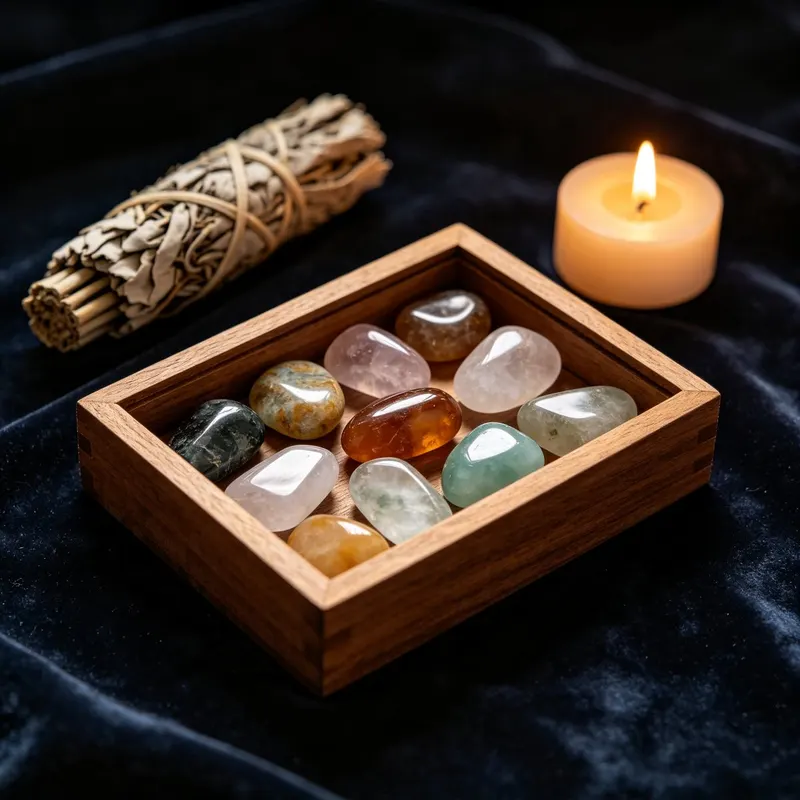
Why Hold a Stone While You Meditate
You have probably tried meditation before and found that your mind would not cooperate. Maybe you sat down, closed your eyes, and within ninety seconds you were replaying a conversation from Tuesday or drafting a to-do list. That is not a failure of willpower. It is what minds do. What many beginners lack is not discipline but a physical anchor—something for the hands and the attention to rest on when thoughts start pulling.
A crystal can serve as that anchor. Not because it does anything magical on its own, but because it is small, cool, weighted, and specific. When you hold a stone during meditation, you give your senses a job: notice the temperature, the texture, the edges, the weight in your palm. When attention drifts, you return to the stone. That simple loop—drift, notice, return—is the entire practice.
This guide walks you through a complete beginner's crystal meditation, from choosing your first stone to a 10-minute script you can follow today. It also separates what the crystal tradition claims from what we can actually verify, so you can practice with confidence rather than confusion.
Choosing Your First Meditation Crystal
You do not need a collection to begin. One stone is enough. The best choice is the one you find pleasant to hold and easy to look at—if you dislike the feel of a stone, you will not reach for it. That said, some stones are traditionally associated with qualities that suit meditation well. Below is a practical starting point.
| Stone | Traditionally associated with | Best for | Practical notes |
|---|---|---|---|
| Amethyst | Calm, clarity, spiritual quiet | Evening wind-down, quieting a busy mind | Widely available, affordable, comfortable in the hand |
| Clear quartz | Focus, clarity, amplification | Morning practice, concentration | Neutral look; pairs well with any intention |
| Rose quartz | Self-compassion, gentle care | Loving-kindness practice, self-care | Soft pink, smooth, easy to hold |
| Black tourmaline | Grounding, protection | Anxious days, grounding before sleep | Dense and heavy; a satisfying weight in the palm |
| Selenite | Cleansing, clearing | Clearing a space before practice | Soft stone—keep dry and handle gently (see care section) |
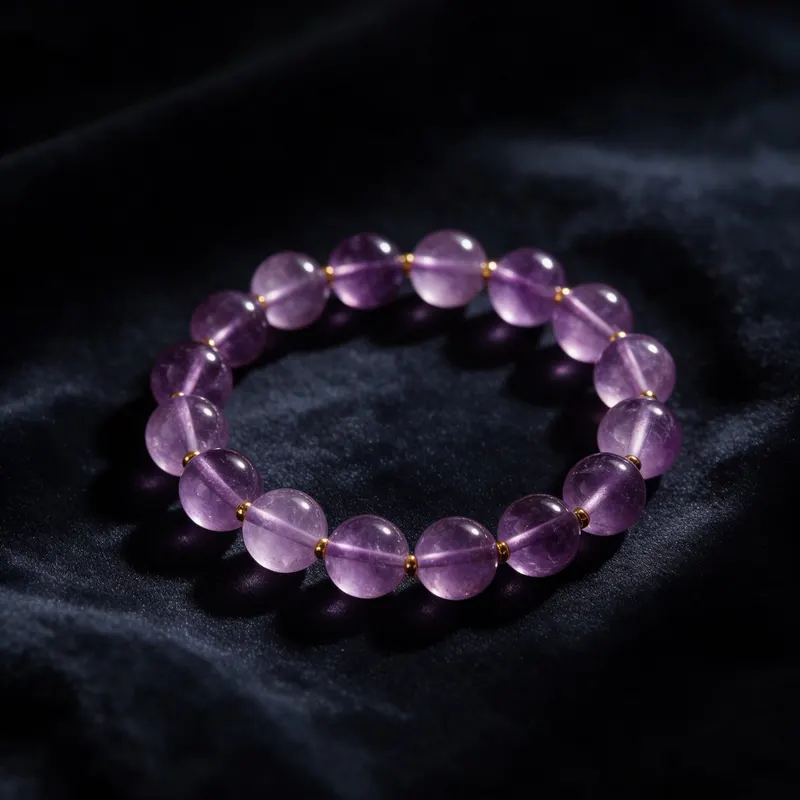
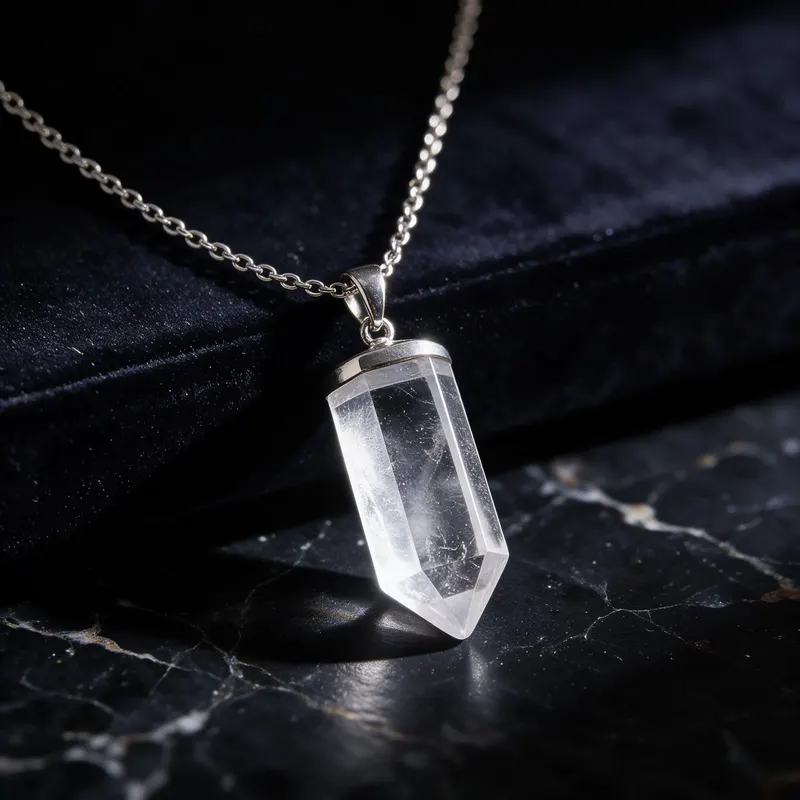
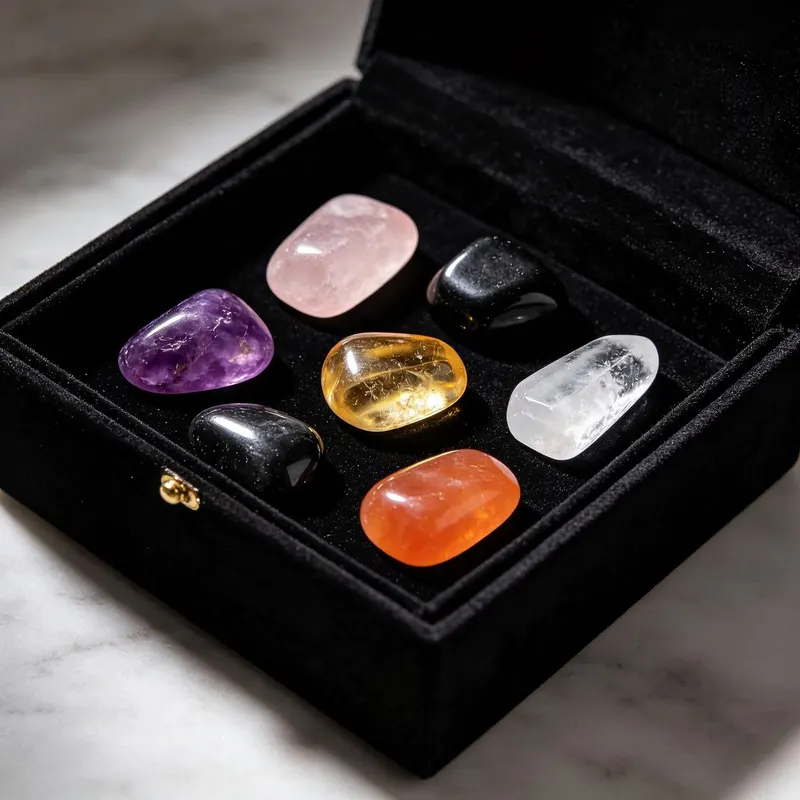
If you are drawn to a specific stone, start there. A Amethyst Healing Bracelet is a common first choice for calm-focused practice, while a Clear Quartz Point Pendant Necklace suits those who prefer to wear their anchor rather than hold it. If you cannot decide, a Healing Crystal Starter Kit gives you several stones to try over a week so you can notice which one you actually reach for.
What to look for when buying
- Size: A stone roughly 1–1.5 inches across fits comfortably in a closed palm. Bracelet beads are typically 6–10 mm; 8 mm is a versatile middle ground for most wrists.
- Feel: Smooth, tumbled stones are easiest for beginners. Raw clusters are better for altars than for holding.
- Weight: Heavier stones like black tourmaline or obsidian feel grounding; lighter stones feel less distracting.
- Price expectations: Tumbled stones and simple beaded bracelets commonly run from about $15 to $45. Sterling silver pendants with a genuine stone typically start around $40–$90. Be cautious of "rare" claims at very low prices—if the price seems too good for the stone, it probably is.
- Honesty in listings: A trustworthy seller names the stone, states whether it is natural or dyed, and shows real photos. Vague descriptions are a red flag.
Before You Begin: Set Up and Cleanse
Set-up takes two minutes and makes the practice easier. Find a spot where you will not be interrupted—a chair, a cushion, even the edge of your bed. Put your phone in another room or on silent. Have your stone within reach.
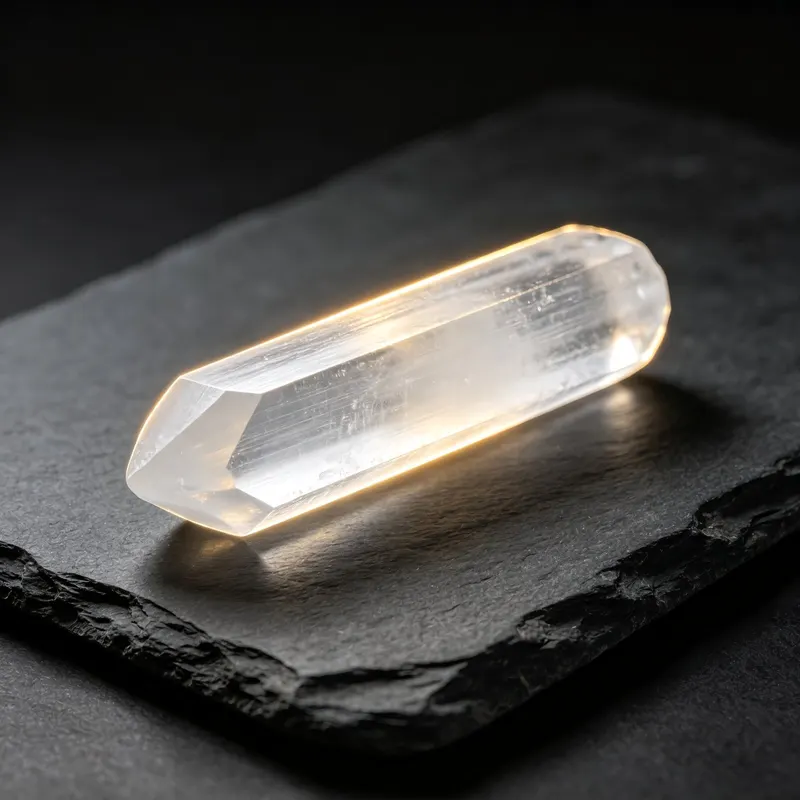
Many practitioners like to cleanse a new stone before first use, and to cleanse it periodically afterward. Traditional methods include rinsing in water, resting it in moonlight, or passing it through the smoke of incense. A Selenite Cleansing Wand is a popular, low-effort option—you simply rest your stone beside it or pass the wand slowly over it. Whether or not you find the ritual meaningful, it has a practical benefit: it marks a deliberate transition into practice, which helps your brain settle.
One caution: not every stone tolerates water or sunlight. We cover this in detail below, because it is the one place where beginners most often damage their stones.
A 10-Minute Beginner Practice, Step by Step
You do not need experience. A crystal simply gives your hands and attention something to settle on during meditation. Follow these steps in order; the whole sequence takes about ten minutes.
- Choose your stone. Pick one stone for this session—amethyst for calm or clear quartz for focus are both beginner-friendly. Hold it for a moment and notice whether it feels pleasant. If not, swap it.
- Sit comfortably with a straight back. Feet flat on the floor, hands resting in your lap or on your thighs. You do not need a special posture; you need one you can hold for ten minutes without fidgeting.
- Set a light intention. Silently or aloud, name what you are inviting into the session—"may I feel calmer," "may I focus on one thing," "may I be kinder to myself." Keep it simple and about your own experience, not about outcomes you cannot control.
- Hold the stone at heart level. Cup it in one or both palms, about a hand's width from your chest. Close your eyes or soften your gaze downward.
- Breathe slowly. Inhale for a count of four, hold for four, exhale for six. Repeat for ten rounds—roughly two minutes. If the counts feel strained, shorten them; the rhythm matters more than the numbers.
- Rest attention on the stone. Notice its temperature, its weight, the places where your fingers meet it. When your mind wanders—and it will—gently return to the physical sensation of holding it.
- Visualize, if it helps. Some people find it useful to imagine soft light from the stone spreading through the body with each exhale. If visualization feels forced, skip it and stay with sensation.
- Sit quietly for two minutes. Let go of counting and simply sit. Repeat your intention silently once or twice.
- Close. Open your eyes, thank yourself for the practice, and note in one sentence how you feel. A notebook helps you track patterns over weeks.
Placement: Holding, Wearing, or Chakra Placement
There is no single correct way to position a crystal during meditation. Choose whichever keeps your attention steady.
- In the palms: The simplest and most common method. Good for beginners and for stones you want to feel.
- Worn as jewelry: A bracelet or pendant keeps the stone in contact with the body without occupying your hands. A Rainbow Moonstone Bracelet or a Lapis Lazuli Wisdom Pendant works well if you prefer a hands-free practice.
- On a chakra point: In the chakra tradition, stones are placed on or near specific body points—amethyst near the brow, rose quartz over the heart, clear quartz wherever attention is wanted. This is a traditional framework, not a medical one. If you explore it, treat it as a way of focusing attention, and see our chakra guide for placement details.
- On an altar or nearby surface: A raw piece such as an Amethyst Cluster can sit in front of you as a visual anchor while you meditate with eyes half-open.
Folklore, and the facts we can check
Crystal meditation sits at the meeting point of two very different kinds of claim. It is worth being clear about which is which.
What the tradition says: For centuries, practitioners in various traditions have associated specific stones with specific qualities—amethyst with calm and spiritual clarity, rose quartz with the heart and self-compassion, black tourmaline with grounding and protection, citrine with abundance and joy. These associations are cultural and symbolic. They are traditionally associated with these qualities; they are not guarantees, and they do not replace medical or psychological care.
What we can verify: The physical properties of stones are well documented and worth knowing, because they affect how you care for your piece.
- Hardness (Mohs scale): Quartz-family stones (amethyst, clear quartz, citrine, rose quartz) rate about 7, which means they resist scratching but can still chip. Softer stones scratch easily—selenite is around 2, fluorite around 4, and both should be handled gently and kept away from harder stones in a drawer.
- Water sensitivity: Selenite dissolves in water and should never be rinsed. Fluorite and lapis lazuli can be damaged by soaking. Quartz, amethyst, and rose quartz tolerate a quick rinse, but prolonged soaking is unnecessary.
- Sunlight sensitivity: Amethyst, rose quartz, and fluorite can fade with prolonged direct sunlight. Store them away from a bright windowsill.
- Cleaning: A soft dry cloth is enough for most stones. For quartz-family pieces, a brief rinse and immediate dry is fine. Avoid harsh chemicals, ultrasonic cleaners, and hot water on any glued or plated jewelry.
- What no stone can do: Crystals do not diagnose, treat, cure, or prevent disease, and they do not produce love, wealth, or exam results. What a practice can do is give you a structured pause—and that pause, repeated daily, is where most of the benefit lives.
Crystals are for reflection and are not medical devices.
Building a Practice That Lasts
Ten minutes daily beats an hour once a month. Pick a consistent time—right after your morning coffee, or just before bed—and anchor the practice to something you already do. Keep your stone where you will see it: on your nightstand, desk, or beside your toothbrush.
If you want to vary your practice, try a different stone each week and note which ones you reach for on which kinds of days. Many people find they naturally gravitate toward calming stones on stressful days and focusing stones when they have work to do. That observation is itself useful information about your own patterns. When you bring home a new stone, a short activation ritual can help you start with intention, and our guide to meditation crystals covers more options if you want to expand.
FAQ
People Also Ask
Which crystal is best for meditation beginners?
Amethyst for calm or clear quartz for focus are both beginner-friendly and widely available. The best stone is the one you find pleasant to hold, since you are more likely to practice with a stone you like.
Where do you place a crystal during meditation?
Hold it in your palms at heart level, wear it as a bracelet or pendant, rest it on a traditional chakra point, or place it on a surface in front of you—whichever keeps your attention steady. There is no single correct placement.
How long should a beginner meditate with a crystal?
Five to ten minutes daily is an excellent, sustainable start. Consistency matters far more than duration; you can extend sessions once the ten-minute practice feels easy.
Do I need to cleanse my crystal, and how often?
Many practitioners cleanse a new stone before first use and periodically afterward—weekly, or whenever the practice starts to feel stale. Resting it beside a selenite wand, rinsing quartz-family stones briefly, or simply wiping with a dry cloth are all fine. Avoid water on selenite, fluorite, and lapis lazuli.
Start With One Stone
You do not need a full crystal collection to begin meditating. Choose one stone that feels good in your hand, set it somewhere you will see it tomorrow, and give yourself ten minutes. The practice is simple: hold, breathe, notice, return. If you would like a ready-made starting point, explore the Intuition & Spiritual Collection or begin with a Amethyst Healing Bracelet for calm, a Clear Quartz Pendant Necklace for focus, or a Healing Crystal Starter Kit if you would rather try several stones first.
Crystals are intended to support personal and spiritual well-being and are not medical devices. They do not diagnose, treat, cure, or prevent any disease. If you are struggling with your mental or physical health, please reach out to a qualified professional.