What Is a Crystal Pendulum?
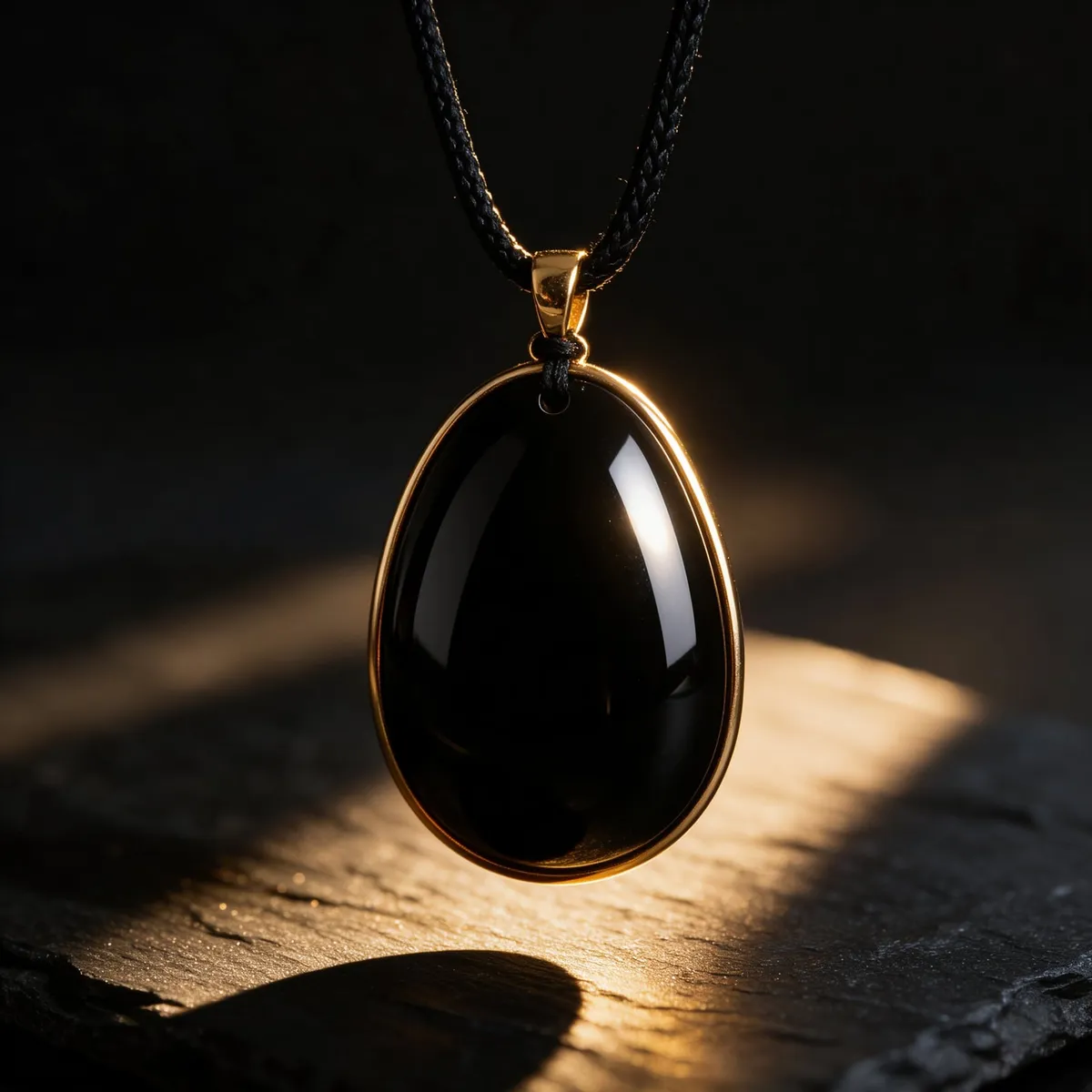
A crystal pendulum is a small, weighted stone suspended from a chain or cord, usually 6 to 10 inches long. You hold the free end between thumb and forefinger, let the stone hang steady, and observe how it moves in response to a spoken question. That's the whole mechanism—no batteries, no app, no screen.
Used as a focus tool, a pendulum is traditionally believed to help quiet overthinking so your own intuition feels easier to hear. Many people describe the practice as a moving meditation: the gentle swing gives restless attention something to rest on while a question settles. Think of it as a way to slow down and notice what you already sense—not a source of guaranteed answers.
If you've been curious but unsure where to start, this walkthrough covers holding and calibrating the pendulum, phrasing questions that actually work, reading movement without over-interpreting it, and choosing a stone that suits you. It's written for beginners, and it assumes you'd rather build a grounded practice than chase certainty.
Choosing Your First Pendulum
Almost any smooth, symmetrical stone works as a pendulum, but a few practical details matter more than the metaphysical ones. Look for a teardrop or faceted point shape that hangs straight, a chain that doesn't kink, and a weight between roughly 10 and 25 grams—heavy enough to swing predictably, light enough that your hand doesn't tire.
Traditionally, certain stones are associated with intuition and clear seeing. These are the most common starting points:
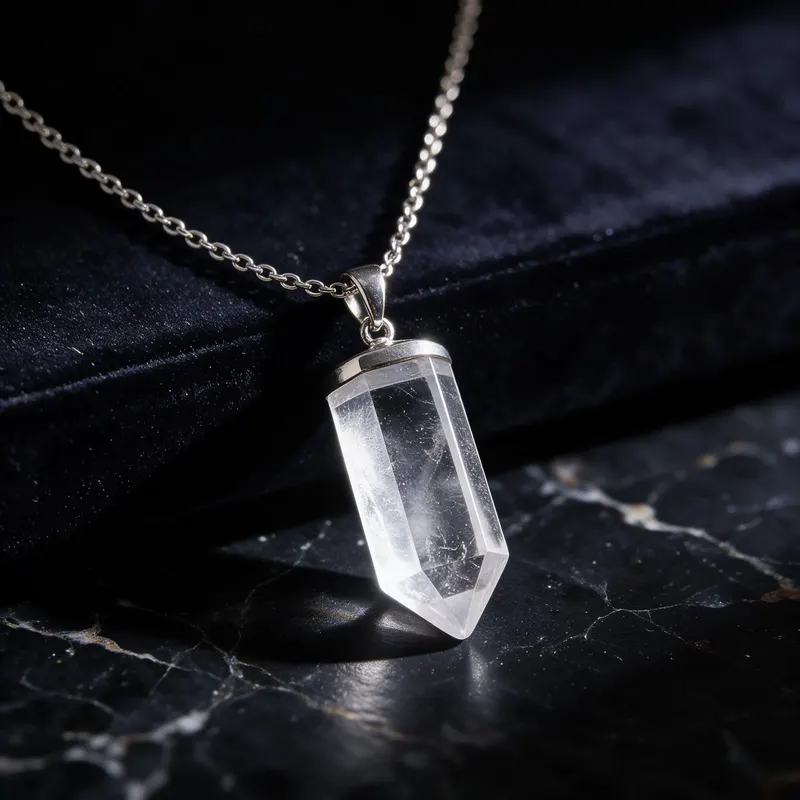
- Clear quartz — often called the most versatile choice; traditionally associated with clarity and amplification. A faceted point like the Clear Quartz Point Pendant Necklace, Sterling Silver can double as jewelry between sessions.
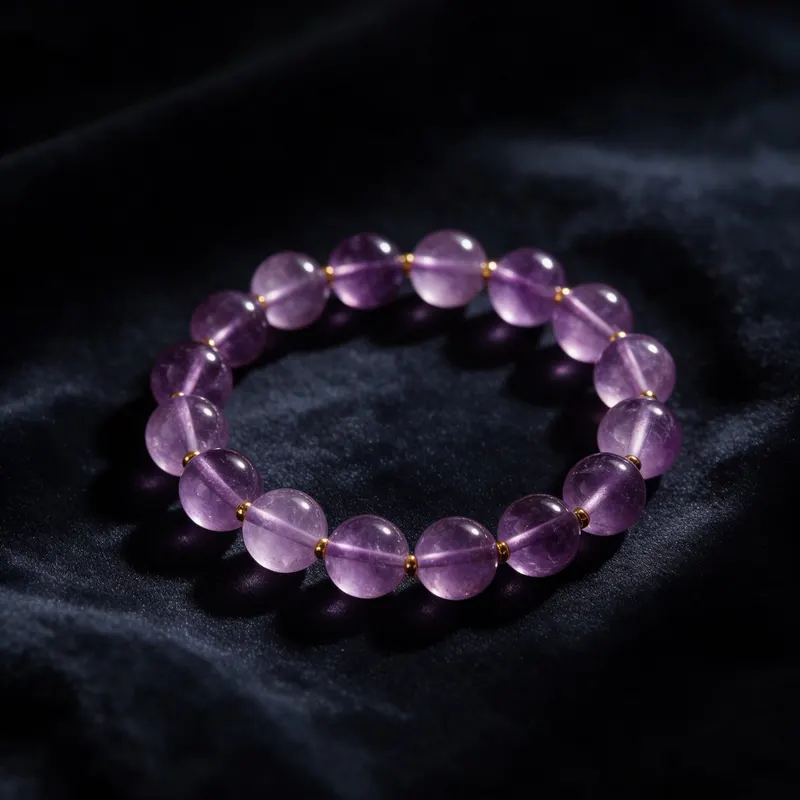
- Amethyst — believed to support calm and quiet reflection, which suits a practice built around slowing down. See the Amethyst Healing Bracelet for Calm & Clarity if you prefer to wear your stone rather than dangle it.
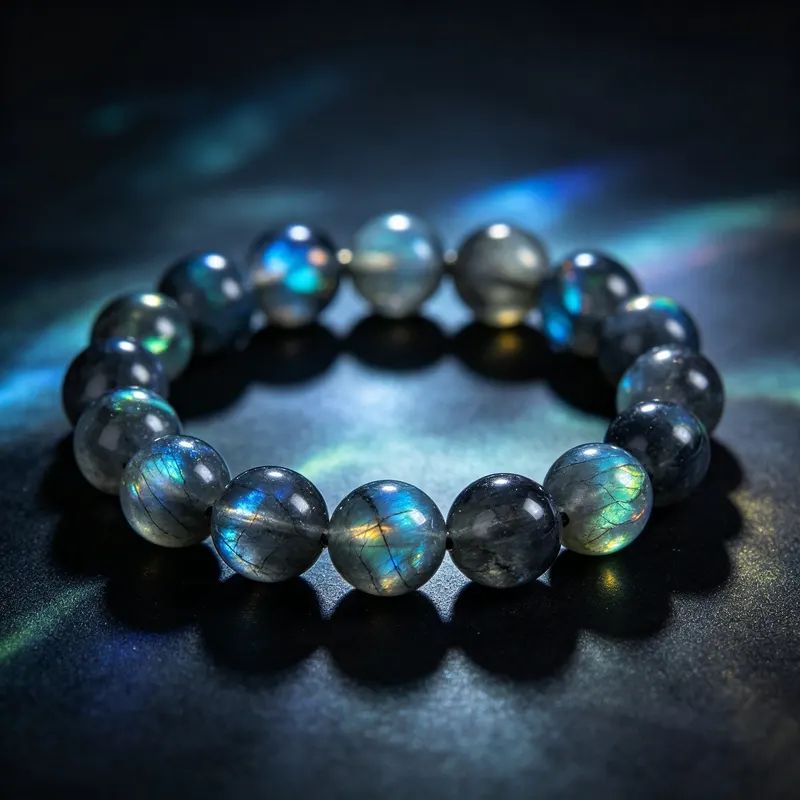
- Labradorite — traditionally linked to intuition and inner knowing; the Labradorite Bracelet for Intuition & Transformation is a popular pick for this work.
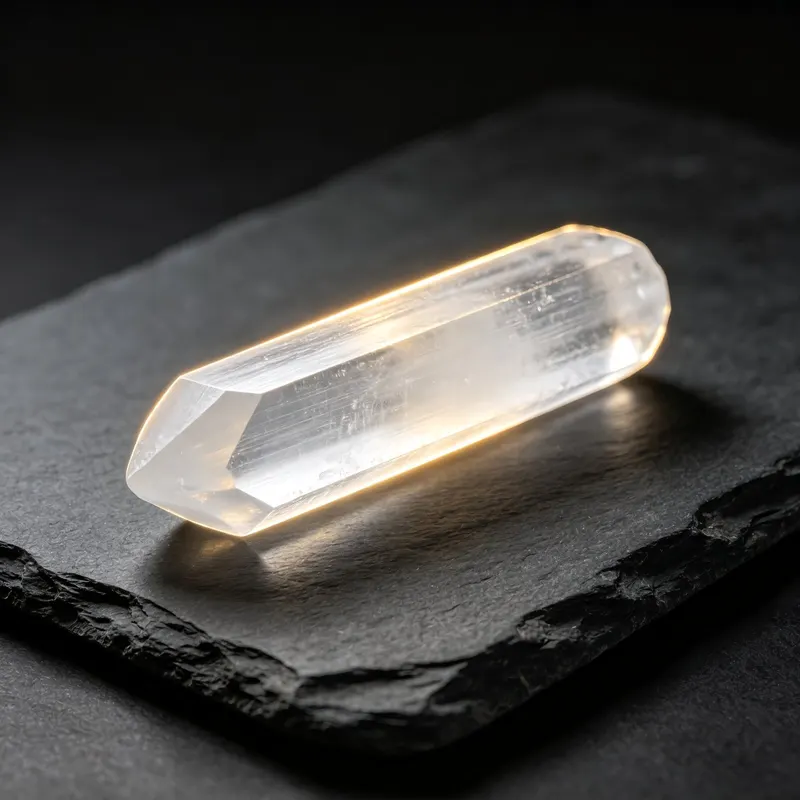
- Selenite — soft and luminous, often used for clearing space before a session rather than swinging; a Selenite Cleansing Wand for Energy Clearing makes a natural companion piece.
If you're buying a dedicated pendulum, expect to pay roughly $15–$40 for a simple stone-and-chain piece and $40–$80 for something with a sterling silver cap or a more carefully matched stone. You do not need to spend much. A pendant you already own, hung from a fine chain, is a perfectly legitimate first pendulum—and it keeps your budget free for a stone you'll actually enjoy holding.
Before You Begin: Setup and Intention
Set yourself up for a calm, unforced session. A few minutes of preparation makes a noticeable difference to how steady your hand feels.
- Cleanse the stone in whatever way suits its material—more on this in the care section below. A quick rinse of intention-setting (holding the stone and stating your purpose) is enough for most people.
- Choose a quiet moment. Background noise and notifications pull attention away from subtle movement.
- Set an honest intention—something like "I'm open to guidance that serves my highest good" or simply "I'd like clarity on this question." Avoid framing the session as a test you need to pass.
- Have a notebook nearby. Recording results is the single most useful habit for a beginner.
If you're building a small ritual around the practice, a stone you associate with focus or protection can help mark the start of a session. The Black Tourmaline Protection Bracelet for Grounding is traditionally used for exactly that—settling in before you begin.
How to Hold and Calibrate a Pendulum
Calibration is the step beginners skip, and it's the one that makes everything else legible. You're establishing a personal "yes," "no," and "maybe" signal before you ask anything that matters.
- Sit comfortably and rest your elbow on a table so your forearm is supported. Hold the chain between thumb and forefinger, about an inch from the top, and let the stone hang a few inches above the surface.
- Steady the swing. Wait until the pendulum is still, or gently stop it with your free hand. A moving pendulum can't give you a clean baseline.
- Ask for "yes." Say aloud or silently: "Show me yes." Note the direction—many people find front-to-back or side-to-side, but there's no universal standard. Give it 10–20 seconds.
- Repeat for "no" and "maybe." Still the pendulum between each. Record all three directions in your notebook.
- Re-check at the start of each session. Directions can shift with your mood, posture, or how tired your hand is. A quick recalibration takes under a minute.
If the pendulum won't settle at all, check three things: Is your elbow supported? Is your grip too tight? Are you holding your breath? Loosen your fingers, breathe out slowly, and try again. Small, faint movements are normal and often meaningful—don't wait for dramatic swings.
Asking Good Questions—and Reading the Answers
The quality of a pendulum session depends almost entirely on the questions. Vague or emotionally loaded questions produce muddled movement and, more importantly, muddled thinking.
| Instead of… | Try… | Why it works better |
|---|---|---|
| "Will I get the job?" | "Is there anything I'm overlooking about this job decision?" | Shifts from prediction to reflection you can act on |
| "Does he love me?" | "What do I need to understand about this relationship right now?" | Keeps the focus on your own clarity, not someone else's feelings |
| "Should I move?" | "Am I ready to make this decision this week?" | Narrow, time-bound, and answerable in a yes/no frame |
| "Is this crystal right for me?" | "Would it help to spend more time with this stone before deciding?" | Invites a next step rather than a verdict |
Ask one short, specific question at a time. Stay as neutral as you can—leading questions ("Isn't this a bad idea?") skew the result, and so does asking the same question repeatedly until you get the answer you want. When a session is done, write down what came up, then make your own decision using the pendulum as one input, not an order.
For questions that don't fit a yes/no frame—the "what should I focus on this month" kind—a narrative reading tends to serve better than a pendulum. Our free Dao Compass reading pairs an intuitive message with a supporting crystal, which can give you a richer starting point to bring back to your journal.
What tradition teaches — and what is provable
Pendulum practice sits at the meeting point of folklore and personal ritual, and it's worth being clear about which is which. Here's an honest split.
Traditional lore (belief, not established fact)
- That pendulum movement reflects intuition, subtle energy, or guidance from beyond the physical.
- That certain stones—clear quartz, amethyst, labradorite, moonstone—are "better" for intuition work.
- That pendulums can answer questions about the future or about other people's feelings.
- That stones need regular "cleansing" of absorbed energy.
These ideas are meaningful to many practitioners and can be genuinely useful as frames for reflection. They are not scientific claims, and we present them as tradition rather than fact. The honest explanation for pendulum movement is that it responds to tiny, often unconscious hand movements—which is precisely why it's a good mirror for your own state of mind, and a poor substitute for evidence.
What we can verify
- Hardness (Mohs scale): Quartz and amethyst sit at 7, labradorite around 6–6.5, moonstone 6–6.5, and selenite just 2. That means selenite scratches easily and should be handled gently and kept away from harder stones in a drawer.
- Water sensitivity: Selenite and moonstone should not be soaked—selenite can degrade in water, and moonstone's surface can dull. Quartz and amethyst tolerate a brief rinse but dislike prolonged soaking or harsh cleaners.
- Sunlight: Amethyst and rose quartz can fade with prolonged direct sun exposure; store them away from a bright windowsill.
- Chain and findings: Sterling silver tarnishes and benefits from a soft polishing cloth; gold-plated chains wear at contact points over time, so avoid wearing them in the shower or to bed.
- Care basics: Wipe stones with a soft dry or slightly damp cloth, dry fully, and store pendants separately in a pouch to prevent scratches.
None of this diminishes the practice—it just means you can care for your pendulum with the same practicality you'd apply to any piece of jewelry.
Cleansing and Caring for Your Pendulum
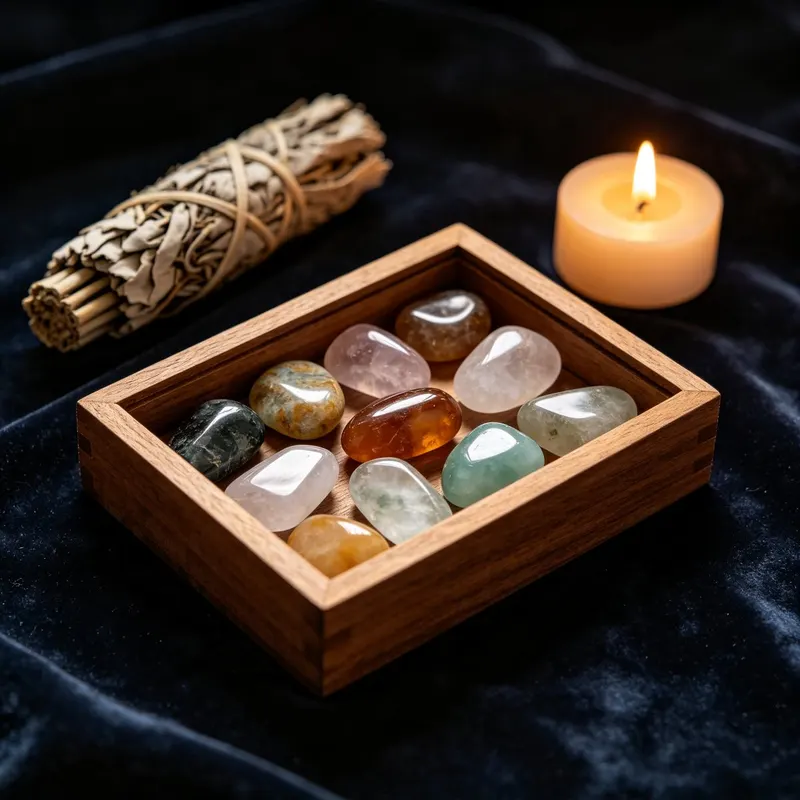
Traditional cleansing methods and physical care overlap more than you might expect. Choose based on the stone, not the ritual:
- Clear quartz, amethyst: brief rinse and pat dry, or a few hours of moonlight. Avoid long sun exposure for amethyst.
- Labradorite, moonstone: dry methods only—smoke, sound, moonlight, or resting on a selenite wand. Skip water.
- Selenite: never soak; wipe with a dry cloth and keep away from moisture entirely.
- All stones: store in a soft pouch, separate from harder pieces, and check the chain for kinks or wear every few weeks.
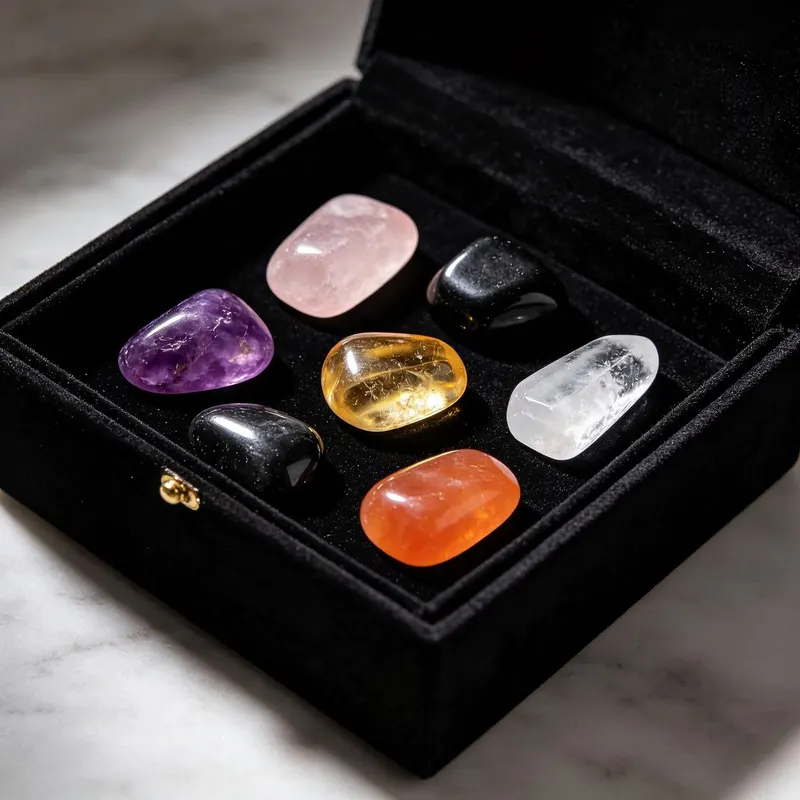
If you use a cleansing wand, the 7 Chakra Stone Set with Wooden Display Box gives you a tidy place to rest smaller pieces between sessions—useful if your practice is growing.
Frequently Asked Questions
Does a pendulum predict the future?
No—it's a tool for focusing intuition, not a guarantee of future events. Treat its movement as a prompt for reflection and pair it with your own judgment and, where relevant, real-world information.
Which crystal is best for a pendulum?
Clear quartz is the versatile classic; amethyst and labradorite are traditionally favored for intuition. The best choice is usually the stone you find pleasant to hold and easy to keep steady.
Why is my pendulum not moving?
Check that your hand is relaxed and supported, give it 20–30 seconds, and calibrate yes/no first. Very small movements are normal—don't force a bigger swing.
How often should I use it?
There's no set rule. Many people find short, occasional sessions (five to ten minutes) more useful than long daily ones, and it's worth pausing if you notice yourself asking the same question over and over.
Where to Go Next
Start with one stone, one notebook, and a handful of honest questions. If you'd like to explore further, browse the full Intuition & Spiritual Collection, or continue with our guides to third-eye chakra crystals, spiritual awakening crystals, and crystals for meditation.
Crystals are intended to support personal and spiritual well-being and are not medical devices. They do not diagnose, treat, cure, or prevent any disease. If you are struggling with your mental or physical health, please reach out to a qualified professional.