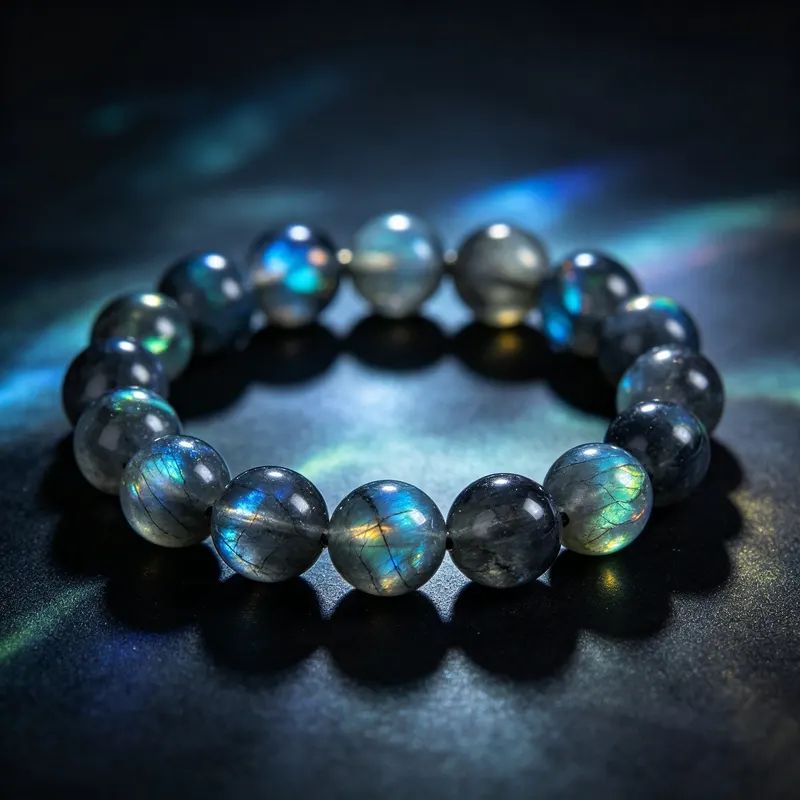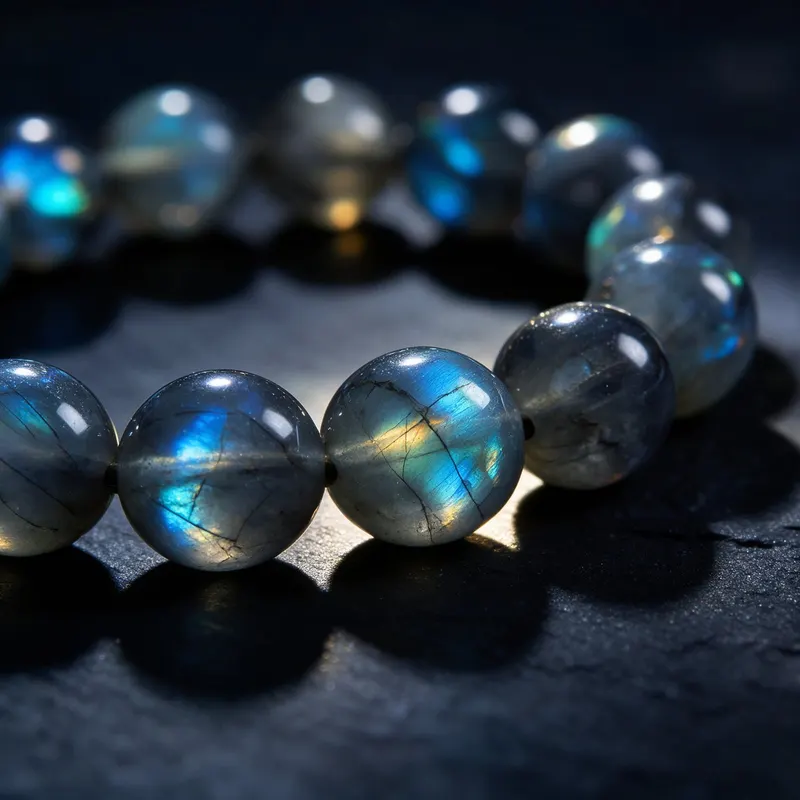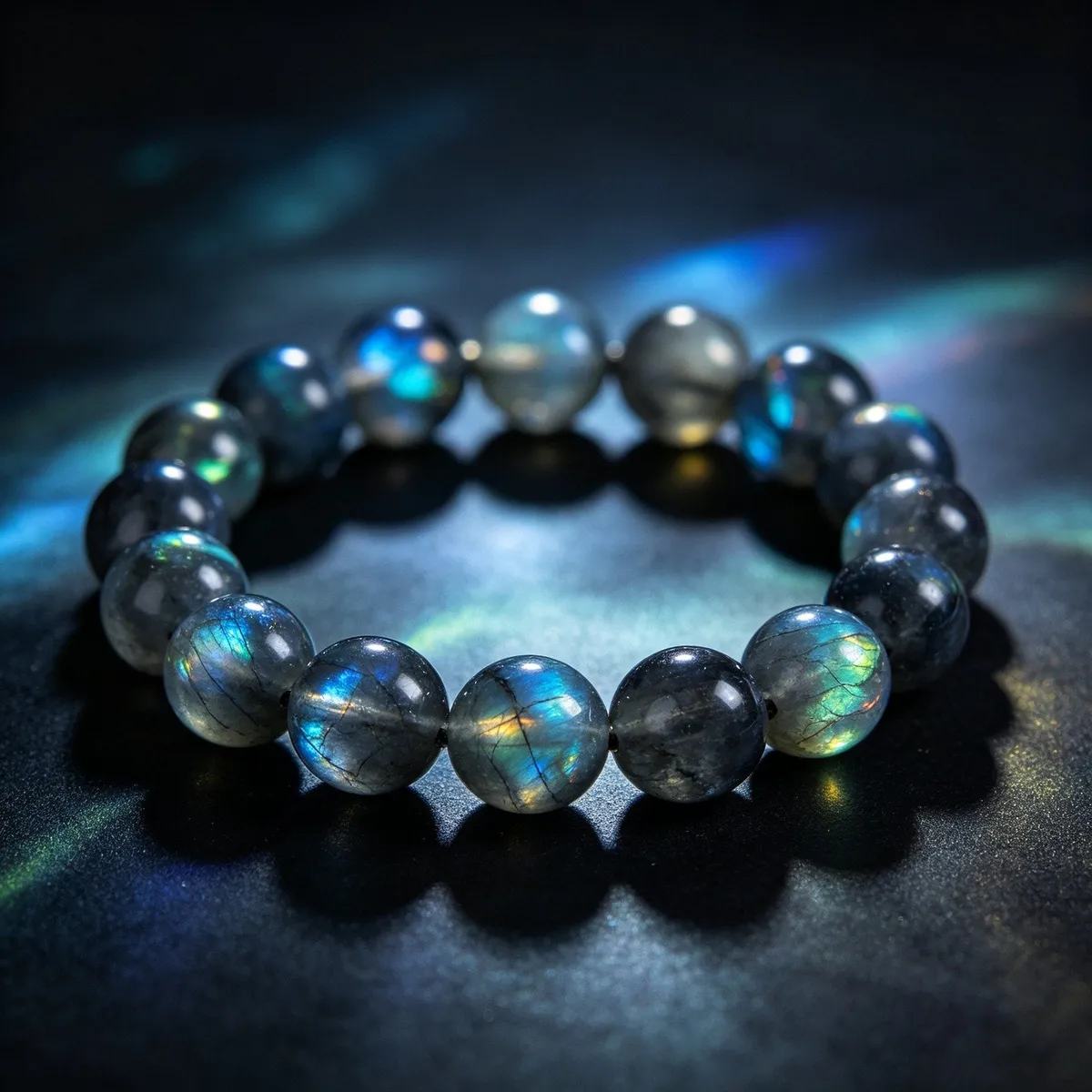
- Labradorite is a feldspar; its blue, green and gold flashes are called labradorescence — an optical effect caused by light scattering between microscopic internal layers, not a pigment in the stone.
- Traditionally the stone of magic, intuition and transformation, and used as a personal shield against energetic drain.
- It rates about 6–6.5 on the Mohs hardness scale: fine for pendants, earrings and bracelets, but it needs protection in rings.
- Skip ultrasonic cleaners, steam and harsh chemicals — a soft cloth with lukewarm water is enough.
- When buying, judge the stone by the flash you can actually see in ordinary room light, not by a photo taken under a spotlight.
If you have landed here, you are probably holding a stone that looks gray and unremarkable from one angle and then suddenly throws a sheet of electric blue across the room when you turn it. That moment is what sells labradorite — and it is also what makes the stone confusing to shop for, because two pieces from the same batch can look wildly different depending on how the light hits them.
Labradorite is one of the most popular stones in modern crystal practice, and for good reason: it is genuinely beautiful, widely available, and traditionally associated with intuition, protection and change. But a lot of what circulates online is either vague ("it raises your vibration") or overstated. This guide keeps the tradition intact while being honest about what is lore, what is geology, and what you actually need to know before you spend money.
Below you will find the meaning and history of the stone, how to evaluate a piece in person, how to wear and care for it, and a clear separation between what tradition claims and what can be verified. If you are in a season of change — a new job, a move, a relationship shift, or simply a stretch of absorbing other people's moods — labradorite is a stone many people reach for first.
The Stone of Magic: Meaning and History
Labradorite's reputation as a "stone of magic" is not a modern marketing invention. The stone was first described in the 18th century on the Labrador peninsula of Canada, where it was named after the region. According to a widely repeated piece of folklore — which we present as legend, not fact — the Inuit peoples of the area believed the Northern Lights had been trapped inside the rocks, and that a warrior struck the stone with a spear, releasing most of the light back into the sky. The flashes that remained are said to be what we see today.
Whether or not that story is literally true, it captures why the stone has held its grip on the imagination: it behaves like something alive. In crystal traditions, labradorite is associated with intuition, transformation, and the setting of energetic boundaries. It is often called a "shield" stone — not because it blocks anything physically, but because it is traditionally used by people who feel drained by crowds, conflict, or emotionally demanding work.
It is worth saying plainly: these are traditional associations, not medical or psychological claims. Labradorite is a beautiful object with a long cultural story, and it invites reflection. It is not a treatment for anything.
Where Labradorite Gets Its Flash
Unlike most crystals, labradorite's beauty is not just its color but its movement. The flash — called labradorescence — comes from light scattering between microscopically thin internal layers within the feldspar. As the stone turns, different wavelengths reach your eye, so the same piece can look blue from one angle, green from another, and gold from a third.
This matters practically. Because the effect is directional, a stone that looks dull in one orientation can be spectacular in another. When you shop, always tilt the piece through a full range of angles rather than judging it from a single photo or a single glance under store lighting. High-grade material with strong, broad blue flash is most often associated with Madagascar and Finland, though Canada, Norway and other regions also produce good stone. The strength and coverage of the flash — not the country of origin alone — is the best predictor of quality.
Labradorite Properties in Crystal Tradition
In crystal practice, labradorite is traditionally associated with the following themes. Treat these as invitations for reflection rather than promises of outcomes.
- Energetic boundary: Traditionally used as a personal "shield" — a reminder to notice when you are absorbing other people's stress and to return that energy to its source.
- Intuition: A long-standing companion for inner work, journaling, and any practice that asks you to listen to your own instincts before acting.
- Transformation: Often chosen during life changes — a new role, a move, a difficult conversation — to support a sense of steady ground under fast shifts.
- Creativity: Favored by writers, artists and designers for the way its flash mirrors the moment an idea "lands."
- Protection: Believed to support a feeling of calm resilience in crowded or emotionally heavy spaces.
Chakra and Zodiac Associations
Labradorite is most often connected to the third eye (intuition, insight) and the crown chakra (connection, peace). In a meditation practice it is typically held in the hand or placed near the forehead. The stone is associated with Leo, Scorpio and Sagittarius in Western crystal traditions, and it is sometimes given as a New Moon gift for fresh starts. None of these associations are fixed rules — many people simply choose the stone that feels right for the season they are in.
How to Wear and Use Labradorite
The most natural form is jewelry. A pendant close to the throat is traditional for speakers, teachers and anyone who wants to feel grounded before they speak. A Labradorite Bracelet for Intuition & Transformation keeps the flash at the wrist where it catches the light throughout the day and serves as a quiet visual cue to pause before reacting.
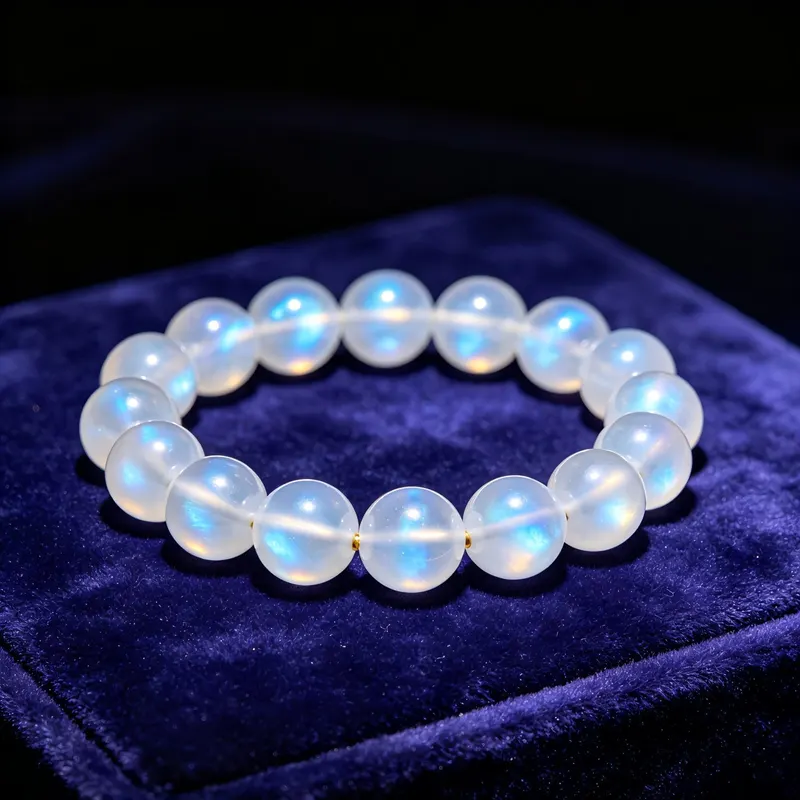
For home or workspace use, place a small piece near the front door to symbolically "filter" who and what you let in, or on a desk during deep work to remind yourself to listen before responding. Many people keep a piece in a bag or pocket during travel or crowded events. If you are building a practice around intuition, pairing labradorite with a Rainbow Moonstone Bracelet for Intuition & New Beginnings is a common and visually harmonious combination.
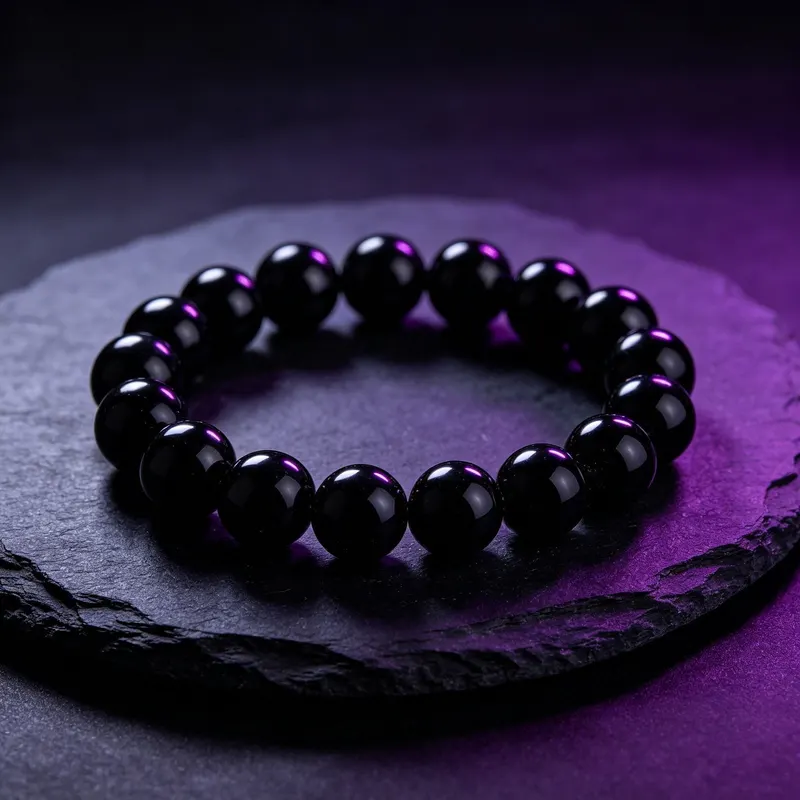
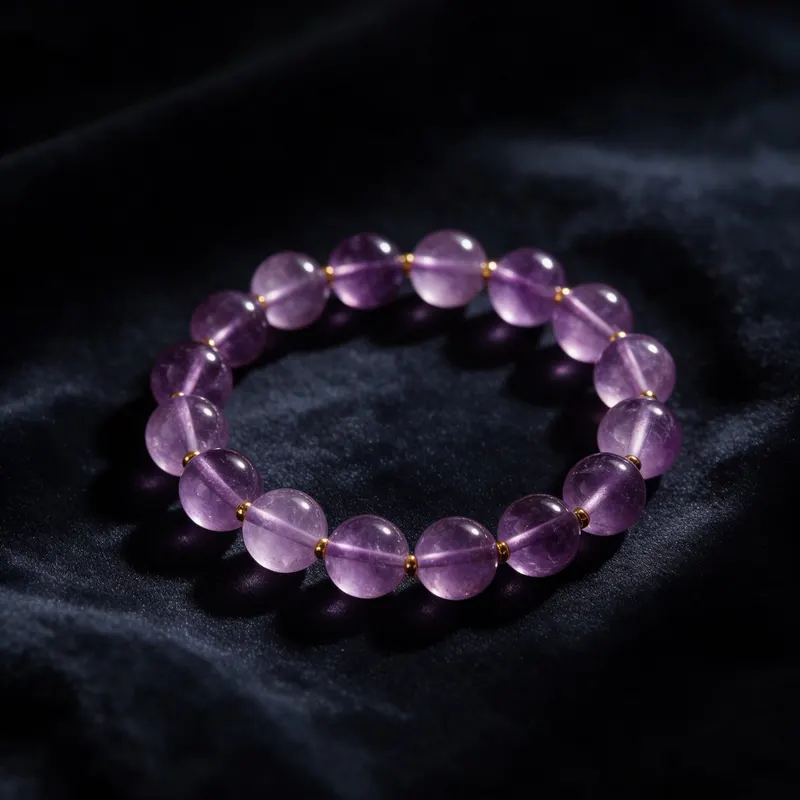
For grounding during emotionally heavy periods, labradorite is often worn alongside a darker, more stabilizing stone such as the Black Tourmaline Protection Bracelet for Grounding. And for meditation or evening wind-down, an Amethyst Healing Bracelet for Calm & Clarity is a natural companion — the two stones share the third-eye association and pair well in a small collection.
Labradorite vs. Moonstone: A Quick Comparison
Labradorite and moonstone are both feldspars with a moving inner light, which is why they are so often confused. The table below summarizes the practical differences.
| Feature | Labradorite | Moonstone |
|---|---|---|
| Optical effect | Labradorescence — bright, multi-color flash (blue, green, gold) | Adularescence — softer, blue-white sheen |
| Typical body color | Gray to dark gray, sometimes near-black | Milky white to peach or gray |
| Mohs hardness | About 6–6.5 | About 6–6.5 |
| Traditional themes | Protection, intuition, transformation | Intuition, new beginnings, calm |
| Best jewelry forms | Pendants, bracelets, earrings | Pendants, rings (with care), earrings |
| Care | Soft cloth, brief rinse, avoid ultrasonic | Soft cloth, avoid long soaks, avoid ultrasonic |
How to Choose a Labradorite Piece
Because the flash is directional, buying labradorite rewards a little patience. Use this checklist whether you are shopping online or in person.
- Look for flash coverage: A strong piece shows color across a broad area, not just a thin sliver at one angle.
- Tilt it through all angles: Rotate the stone slowly. Good labradorite reveals multiple colors as it turns.
- Check for cracks and pits: Surface fractures catch the light differently and can weaken the stone over time.
- Judge in ordinary light: Photos taken under spotlights exaggerate the flash. Ask for a photo or video in daylight if buying online.
- Consider the setting: For rings, choose a protective bezel setting rather than open prongs, given the stone's moderate hardness.
- Match the form to use: Pendants and bracelets are the most durable everyday choices; rings are best for occasional wear.
Realistic Price Expectations
Labradorite is an accessible stone. Small tumbled pieces and simple beaded bracelets are typically inexpensive, while pendants with strong, broad blue flash and clean sterling silver settings sit in the mid range. Large cabochons with exceptional multi-color flash command the highest prices. As a rule, pay for the flash you can actually see — not for a label. Be cautious of any seller promising specific outcomes or "certified" energetic properties; those are not verifiable claims.
What is handed down — and what we can verify
It is worth separating the cultural story of labradorite from the geological and practical facts. Both are interesting; they are just different kinds of knowledge.
- Tradition says: Labradorite shields the wearer from energetic drain and supports intuition and transformation. We can verify: These are long-standing cultural associations, not measurable effects. Many people find the stone a useful focal point for reflection.
- Tradition says: The stone holds the trapped light of the Northern Lights. We can verify: The flash is labradorescence, an optical effect caused by light interference within the stone's internal layers.
- Hardness: Labradorite rates about 6–6.5 on the Mohs scale. That is softer than quartz (7) and much softer than diamond (10), so it can scratch with rough daily wear — especially in rings.
- Water sensitivity: A brief rinse is generally fine, but avoid long soaks and salt water, which can dull the polish over time. Dry the stone promptly with a soft cloth.
- Sunlight: The flash itself does not fade, but prolonged direct sunlight can warm the stone's body color over time. Moonlight is the gentler option for display.
- Cleaning: Use a soft, slightly damp cloth and lukewarm water. Avoid ultrasonic and steam cleaners, and keep the stone away from household chemicals and perfume.
Crystals are for reflection and are not medical devices. They are not intended to diagnose, treat, cure or prevent any condition.
FAQ
People Also Ask
Is labradorite the same as moonstone?
No. Both are feldspars with a moving inner light, but labradorite's flash is brighter and more colorful, while moonstone's adularescence is softer and more blue-white. They are different stones with different traditional associations.
Can labradorite go in water?
A short rinse in lukewarm water is generally fine. Avoid long soaks, especially in salt water, which can dull the polish over time. Dry it promptly with a soft cloth.
Does labradorite fade?
The flash does not fade. Prolonged direct sunlight can warm the stone's body color over time, so store and display it away from a hot, sunny window. Recharge by moonlight if that fits your practice.
Who should wear labradorite?
Anyone drawn to it — particularly people doing inner or intuitive work, anyone in a season of change, and people in helping or "absorbing" professions who want a sense of energetic boundary. There is no rule about who "should" wear it; choose it if it feels right for you.
Closing Thoughts
Labradorite rewards attention. The same quality that makes it magical — its shifting, angle-dependent flash — is the quality that makes it worth examining closely before you buy. Whether you wear it as a daily reminder to protect your energy, keep it on your desk during deep work, or simply admire it as a genuinely remarkable piece of geology, it is a stone that invites you to slow down and look again. Start with a piece whose flash you love in ordinary light, care for it simply, and let the tradition be a lens for reflection rather than a promise.