Labradorite vs Moonstone: Telling These Flashy Feldspars Apart
You are standing at a crystal shop or scrolling a product page, and two pale, shimmering stones keep catching your eye. One glows like moonlight on water; the other flashes peacock teal and gold from a darker base. They look related—and they are. Both labradorite and moonstone belong to the feldspar family, and both owe their magic to the way light interacts with layers inside the stone. But they are different minerals with different looks, different traditional meanings, and different care needs.
This guide compares them side by side so you can tell them apart at a glance, understand what each is traditionally associated with, and choose the one that fits your intention—whether that is navigating a season of change or inviting calmer intuition into your daily routine. We will also separate the lore from what can actually be verified about hardness, sensitivity and care, so you can buy and wear either stone with confidence.
If you are shopping for a first piece or adding to a stack, the practical details matter as much as the shimmer. Let's start with the quick visual tell, then go deeper.
The Quick Tell: How to Tell Them Apart at a Glance
The single fastest way to distinguish the two is to look at the base color and the quality of the glow.
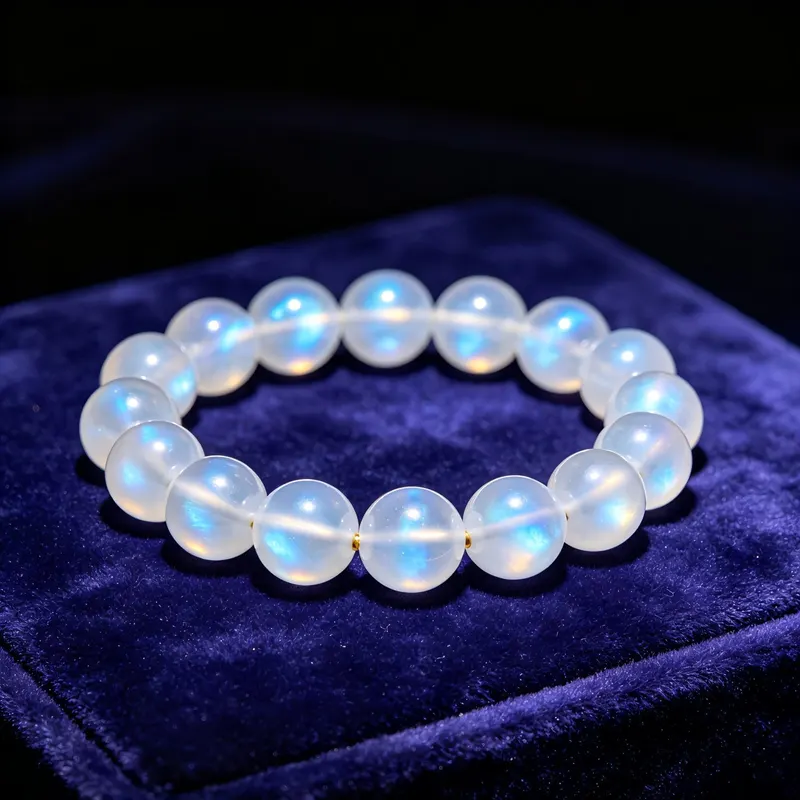
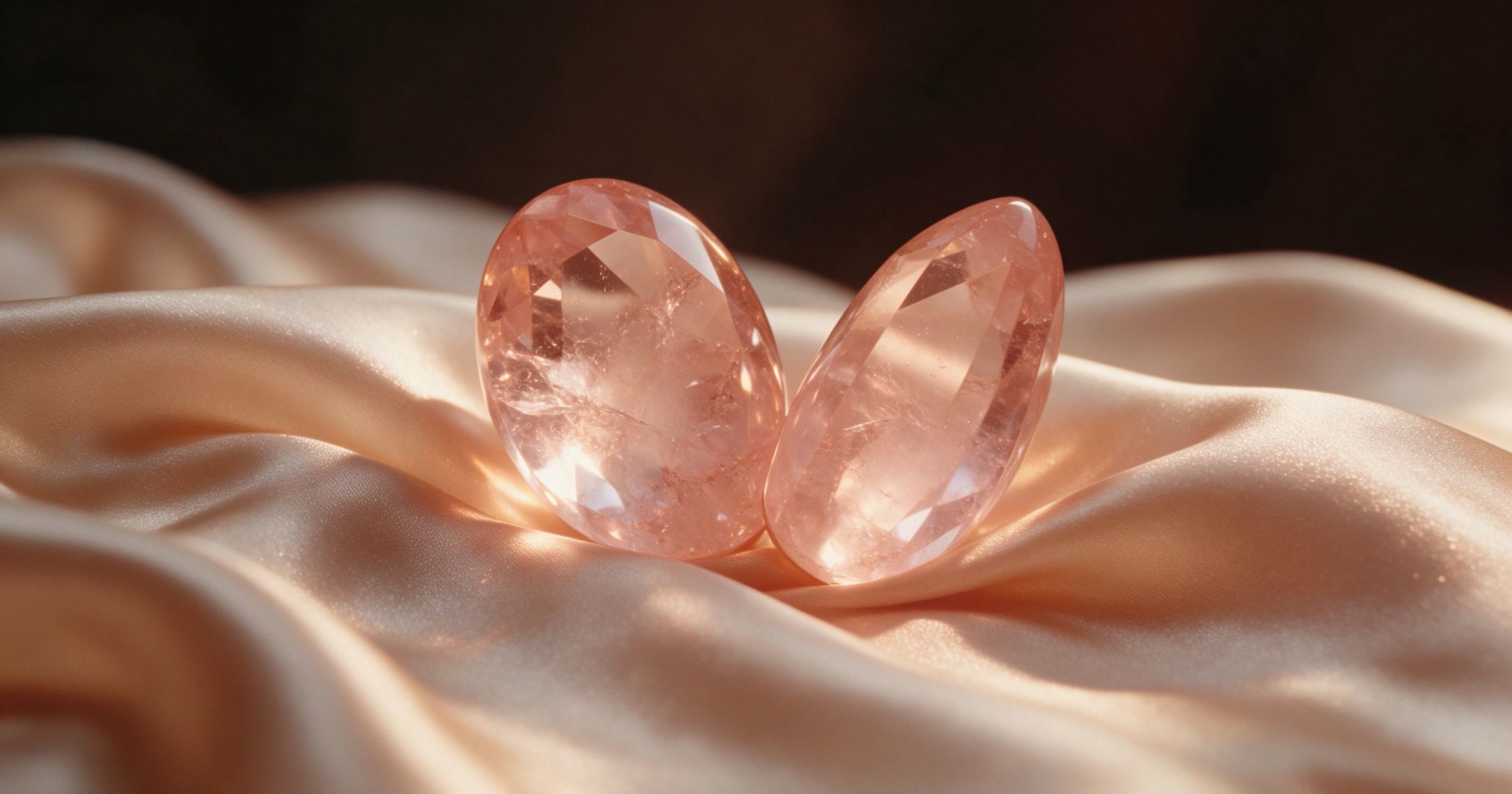
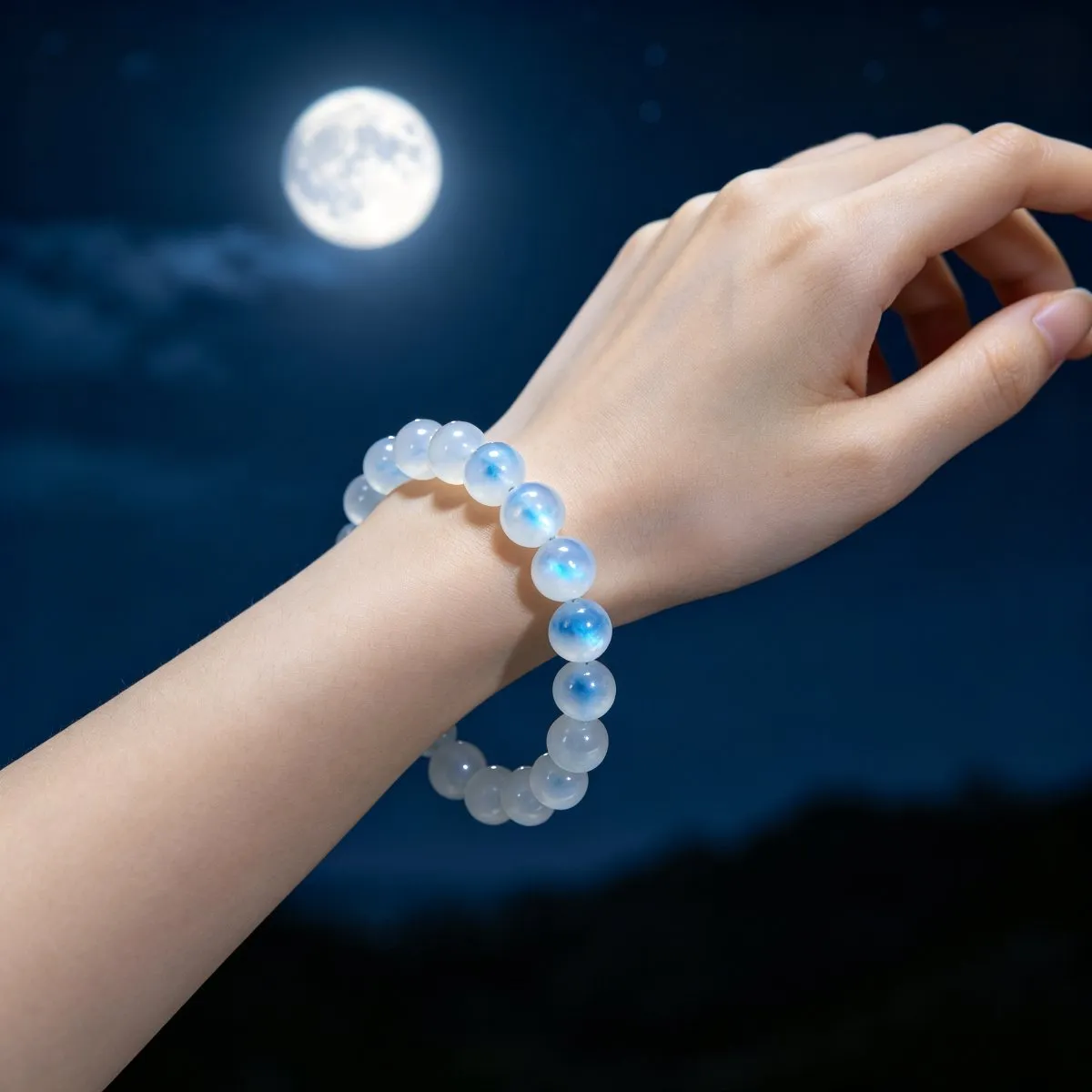
- Moonstone usually has a pale, milky or translucent body—often white, cream, peach or grey—with a soft, floating blue or white sheen that seems to hover just under the surface. The glow is gentle and diffuse.
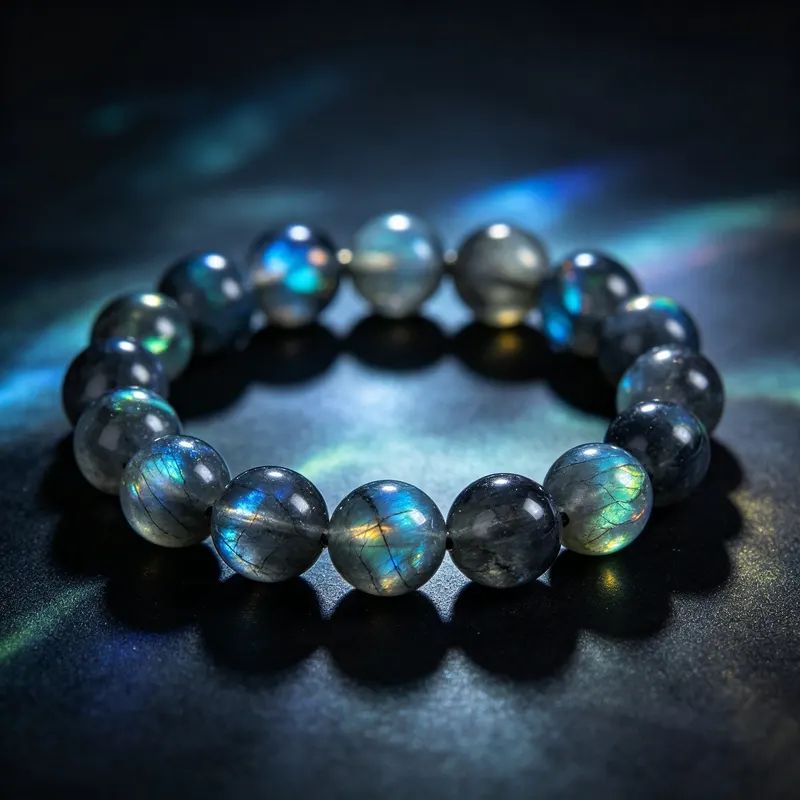
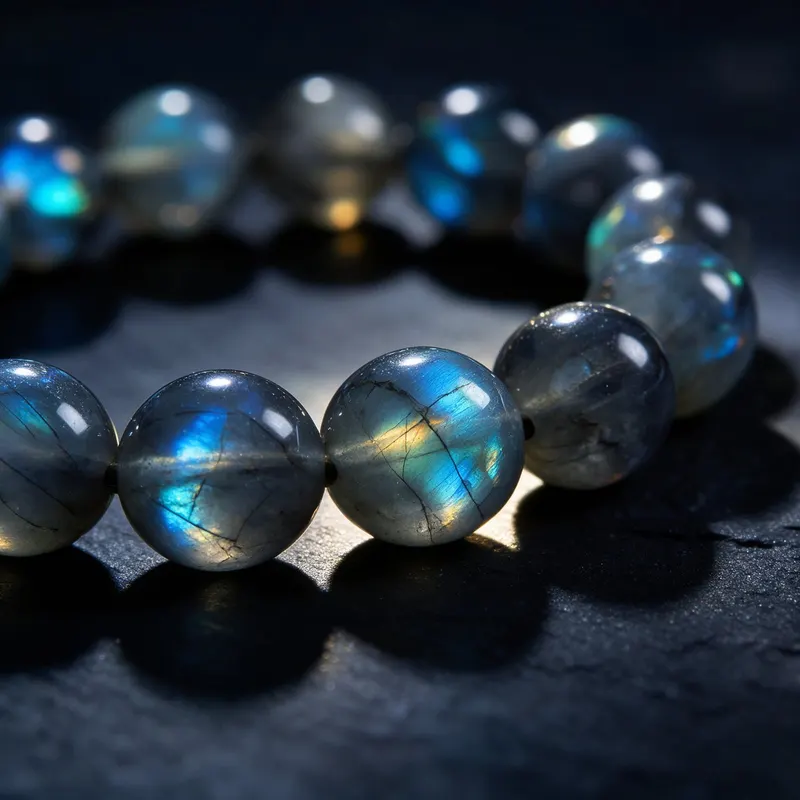
- Labradorite typically has a darker grey, black or brownish base, and its flash is stronger and more directional—teal, blue, gold, green or violet appearing as you tilt it. Some pieces show several colors at once.
Hold each stone under direct light and rotate it slowly. Moonstone's sheen tends to stay soft and consistent; labradorite's flash can appear and disappear dramatically as the angle changes. That "now you see it, now you don't" quality is part of why labradorite has a reputation for magic.
What Causes the Shimmer? A Little Geology
Both stones are feldspars, but the optical effects come from different internal structures.
Labradorescence is the name for labradorite's flash. It comes from light interfering as it reflects off microscopic layers inside the stone. Those layers act a bit like a prism, producing the characteristic blue-green-gold sheen. The effect is strongest on a cut or polished face and can be subtle on rough pieces.
Adularescence is the soft, billowing glow of moonstone. It is caused by light scattering off very fine, alternating layers of two feldspar minerals within the stone. The result is that milky, moonlit shimmer rather than a sharp flash.
You do not need to remember the terms, but knowing them helps you search for the right stone and describe what you want to a seller. If a listing promises "rainbow flash," it is almost certainly labradorite. If it promises a "blue sheen," think moonstone.
Labradorite: Transformation, Intuition and Everyday Magic
Labradorite is traditionally associated with transformation, intuition and protection during periods of change. In crystal lore it is often called the stone of magic—not because it does anything on its own, but because it is believed to support inner shifts and creative insight. Many people keep a piece nearby when they are starting something new, making a difficult decision, or simply want a visual reminder to trust their instincts.
Because the flash moves as you move, labradorite is a natural choice for jewelry you will wear and notice throughout the day. A bracelet is a practical way to keep it close: the Labradorite Magic Bracelet shows its peacock flash in motion and works well stacked with quieter stones. If you prefer a pendant or a palm stone for meditation, look for pieces with a clear, centered flash rather than a scattered one.
In terms of use, labradorite invites you to:
- Set an intention before a big change or creative project.
- Keep it on your desk or altar as a reminder to stay curious.
- Pair it with grounding stones if you find its energy stimulating.
Moonstone: Intuition, Cycles and New Beginnings
Moonstone is traditionally tied to intuition, feminine cycles and fresh starts. Its soft glow has long made it a stone of calm reflection, and it is often associated with emotional balance and gentle transitions. Where labradorite is associated with dramatic transformation, moonstone is associated with quiet, gradual change—the kind that happens over time.
It is a popular choice for anyone beginning a new chapter: a new job, a move, a new relationship, or a personal reset. The Rainbow Moonstone Bracelet is a good everyday option because the pale, iridescent beads layer easily with other pieces and feel light on the wrist. For a more ceremonial feel, a moonstone kept on a bedside table or altar can serve as a visual cue for winding down and listening to your own instincts.
Moonstone invites you to:
- Pause and check in with how you feel before making a decision.
- Mark a new beginning with a small ritual or intention.
- Wear it as a calming, neutral accessory that pairs with almost anything.
Side-by-Side Comparison
| Feature | Labradorite | Moonstone |
|---|---|---|
| Base color | Darker grey, black or brown | Pale white, cream, peach or grey |
| Optical effect | Strong, directional flash (labradorescence) | Soft, floating glow (adularescence) |
| Typical flash colors | Teal, blue, gold, green, violet | White, blue, occasionally rainbow |
| Traditional associations | Transformation, intuition, everyday magic | Intuition, cycles, new beginnings |
| Mohs hardness | About 6–6.5 | About 6–6.5 |
| Best everyday format | Bracelet or pendant that catches light | Bracelet, ring or small pendant |
| Care notes | Avoid harsh chemicals and knocks | Avoid harsh chemicals and knocks |
Notice that the hardness and care needs are very similar. The main differences are visual and symbolic, which makes the choice largely a matter of which look and intention resonate with you.
The traditional view, and what is verifiable
Crystal lore is rich, but it is important to separate traditional associations from verifiable facts. Here is a clear breakdown.
Traditional lore
- Labradorite is believed to support transformation and intuition and is often called a stone of magic.
- Moonstone is traditionally associated with intuition, feminine cycles and new beginnings.
- Both are sometimes used in meditation or intention-setting rituals.
Verifiable facts
- Both are feldspar minerals with a Mohs hardness of roughly 6 to 6.5, meaning they can be scratched by harder materials like quartz or diamond.
- Both are sensitive to harsh chemicals, prolonged heat and strong knocks. Remove jewelry before swimming in chlorinated water, cleaning with bleach, or doing heavy physical work.
- Clean both with lukewarm water and a soft cloth. Avoid ultrasonic cleaners and steam, which can damage some stones.
- Store them separately from harder stones to prevent scratches.
In short, the tradition gives you a meaningful framework for using these stones, while the facts tell you how to keep them looking their best. Neither stone is a medical device, and neither can promise specific outcomes.
How to Choose (and What to Look For)
Choosing between labradorite and moonstone comes down to three questions: What look do you want? What intention are you drawn to? And how will you wear it?
- Choose labradorite if you love a dramatic flash, darker tones, and a stone associated with change and creative insight. Look for a clear, centered flash and a smooth polish with no obvious cracks.
- Choose moonstone if you prefer a soft, luminous look and a stone associated with calm intuition and new beginnings. Look for an even sheen and a body color you enjoy—white and peach are common, blue sheen is prized.
- Choose both if you want a layered, iridescent stack. They complement each other well because one is dark and flashy and the other is pale and gentle.
When shopping, check the following:
- Clarity of effect: The shimmer should be visible in normal light, not just under a phone flash.
- Surface quality: Look for smooth edges and no deep pits or cracks, especially on bracelets and rings.
- Size and fit: For bracelets, measure your wrist and add about half an inch for a comfortable fit. Bead size affects the look—8mm is a common, versatile choice.
- Price expectations: Simple bead bracelets in either stone typically range from about $25 to $80 depending on bead size and quality. Pendants and rings vary more widely. Be cautious of unusually low prices that promise "perfect rainbow flash" on every bead.
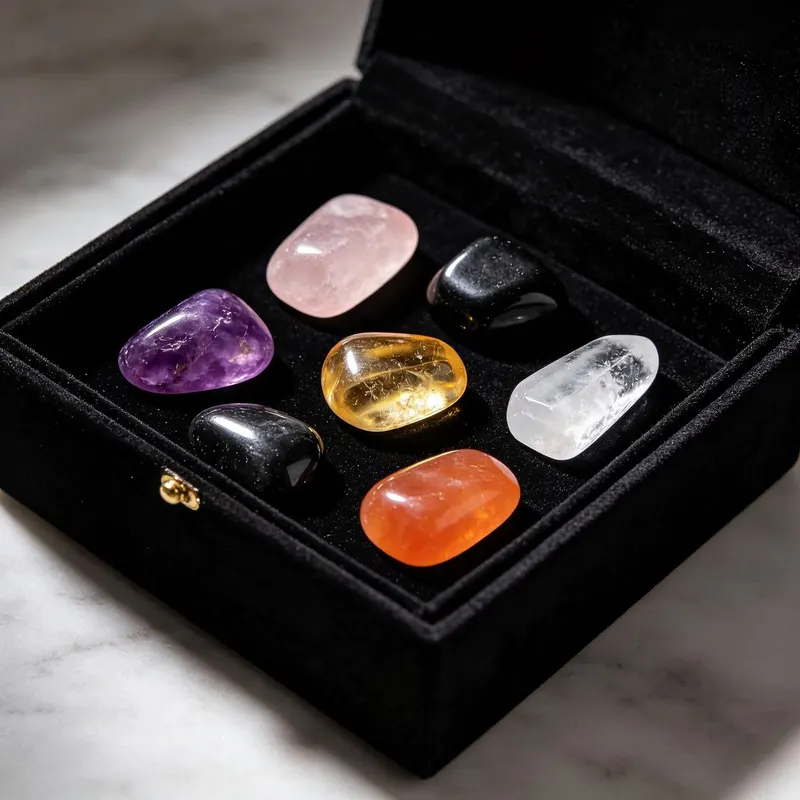
If you are building a small collection, a starter set can help you compare stones in person. The Healing Crystal Starter Kit includes several stones and a guide, which is useful if you are still learning to identify different materials.
Care and Cleansing for Both Stones
Because labradorite and moonstone share similar hardness and sensitivity, their care routines are nearly identical.
- Cleaning: Wipe with a soft, damp cloth. Avoid harsh cleaners, bleach and abrasive polishes.
- Storage: Keep each piece in its own pouch or compartment to prevent scratches from harder stones.
- Wearing: Remove before swimming, showering with harsh soaps, or doing yard work.
- Cleansing rituals: Many people cleanse stones by leaving them in moonlight or smudging with smoke. If you use water, keep it brief and dry the stone thoroughly afterward.
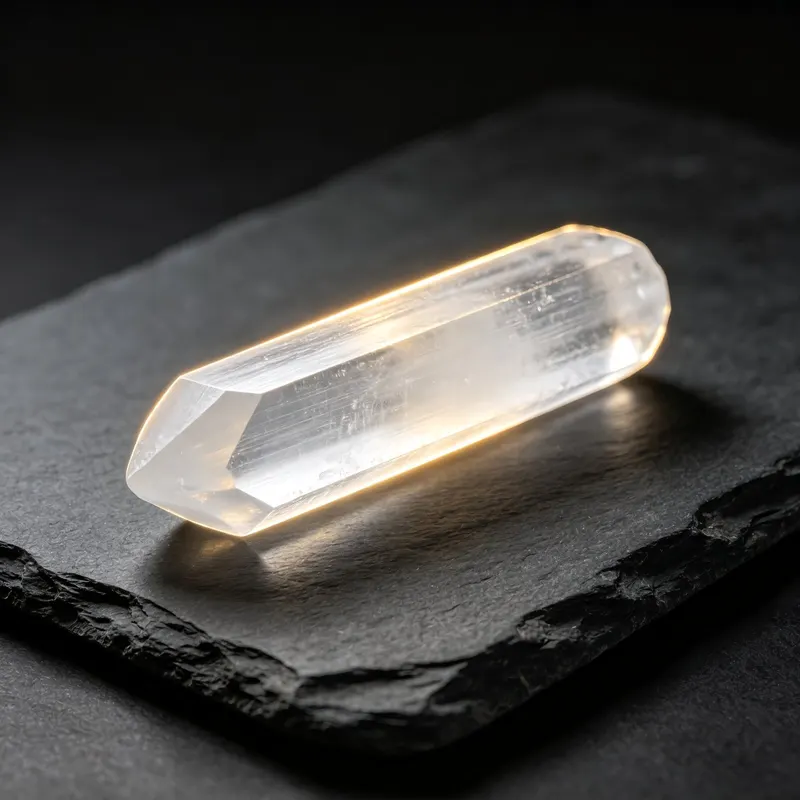
If you enjoy cleansing rituals, a Selenite Cleansing Wand is a popular tool for clearing a small crystal collection without water. Selenite itself is soft and water-soluble, so keep it dry.
FAQ
People Also Ask
How can I tell labradorite from moonstone?
Moonstone has a soft white-blue floating glow on a pale base; labradorite shows stronger teal, gold and violet flashes across a darker base. Rotate the stone under light—labradorite's flash changes dramatically with angle, while moonstone's sheen stays gentle.
Which is more protective, labradorite or moonstone?
Neither is a primary protection stone. Labradorite is traditionally associated with transformation and moonstone with intuition. If protection is your focus, a stone like black tourmaline is more commonly chosen for that purpose.
Can I wear labradorite and moonstone together?
Yes. They layer beautifully because their colors and finishes contrast. Just be mindful of scratches—both are around 6 to 6.5 on the Mohs scale, so store them carefully when not wearing them.
Are labradorite and moonstone safe to wear every day?
They are generally fine for everyday wear as jewelry, but they are not indestructible. Avoid harsh chemicals, knocks and prolonged heat, and remove them during rough physical activity. Crystals are for reflection and are not medical devices.
Browse the Curated Collection
Explore the full edit here: Intuition & Spiritual Growth Collection →
Shop the Stones
Keep Exploring
Labradorite Meaning · Moonstone Meaning · Crystal Shapes
Crystals are intended to support personal and spiritual well-being and are not medical devices. They do not diagnose, treat, cure, or prevent any disease. Shift workers and caregivers should rely on proper sleep, hydration and professional medical guidance.