Two Black Stones, Different Origins
You're holding two black stones in a shop, or scrolling two listings that look nearly identical, and wondering whether it actually matters which one you choose. It does—but not for the reason most crystal content suggests. Obsidian and onyx differ in how they form, how they feel in the hand, how they age with wear, and how much they cost. Those differences are concrete and easy to check. The meanings people assign them are a separate layer, and worth understanding on their own terms.
This guide walks through both: the geology and the lore, kept clearly apart. You'll learn how to tell the two apart by eye and by touch, what each is traditionally associated with, how to care for each, what realistic prices look like, and how to pick the stone that fits what you're actually looking for—whether that's a grounding everyday piece or a disciplined, polished accent.
If you've been drawn to black stones for protection or focus, the choice between obsidian, onyx, and a few close relatives comes down to a handful of practical questions. We'll answer them in order.
Obsidian vs Onyx at a Glance
Here's the comparison most people need before anything else. Read across the rows and note where the two diverge most sharply—origin, luster, and care.
| Feature | Black Obsidian | Black Onyx |
|---|---|---|
| What it is | Volcanic glass (rapidly cooled lava, not crystalline) | Banded chalcedony—a form of microcrystalline quartz |
| Hardness (Mohs) | About 5–5.5 | About 6.5–7 |
| Luster | Glassy, mirror-like, can show a rainbow or sheen | Waxy to matte, often with faint parallel bands |
| Fracture | Conchoidal (smooth, curved, shell-like breaks); sharp edges | More even, less glassy breakage |
| Typical look | Deep black, sometimes translucent at thin edges | Solid to banded black; bands visible in good light |
| Care sensitivity | Scratches and chips more easily; keep away from hard knocks | More durable; still avoid harsh chemicals and steam |
| Traditional association | Protection, grounding, truth-facing, release | Self-discipline, stamina, steady focus |
| Price feel | Modest; large raw pieces affordable | Wide range; dyed "onyx" is common and cheap |
What Obsidian Actually Is
Obsidian is natural volcanic glass. It forms when lava cools so quickly that minerals don't have time to crystallize, leaving a smooth, non-crystalline solid. That's why it looks like dark glass and breaks with those distinctive curved, shell-like fractures—the same property that made it valuable for ancient toolmaking. Most obsidian is black, but iron and other trace elements can produce sheen varieties: golden, silver, or rainbow flashes across the surface.
Because it's glass, obsidian sits lower on the Mohs hardness scale—roughly 5 to 5.5—and is more prone to scratching and chipping than quartz-family stones. A pendant or ring in daily wear will pick up fine scratches over time; that's normal and not a defect. Handle raw or freshly fractured pieces with care, since the edges can be genuinely sharp.
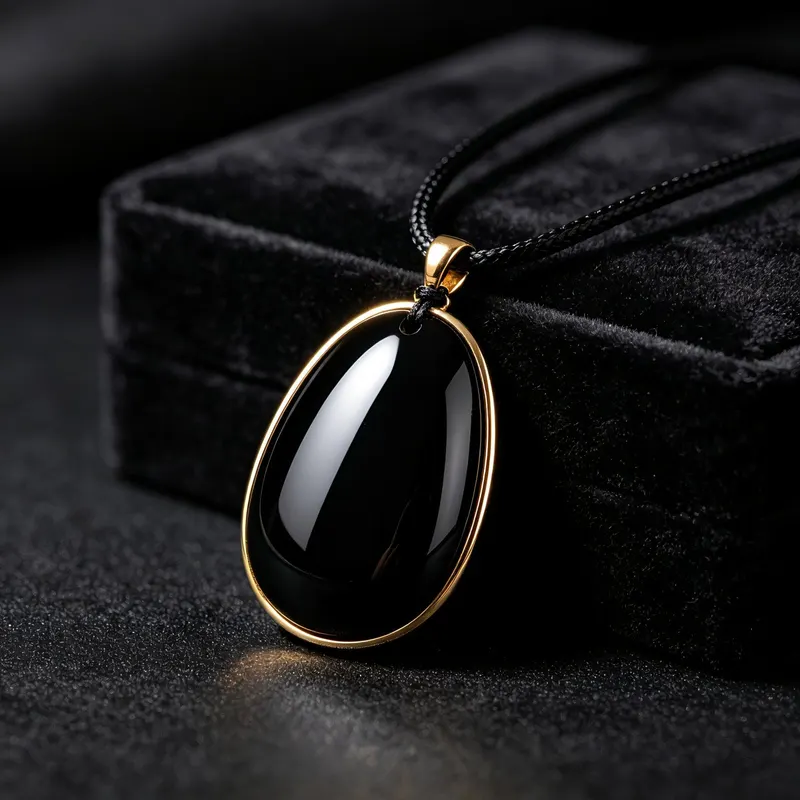
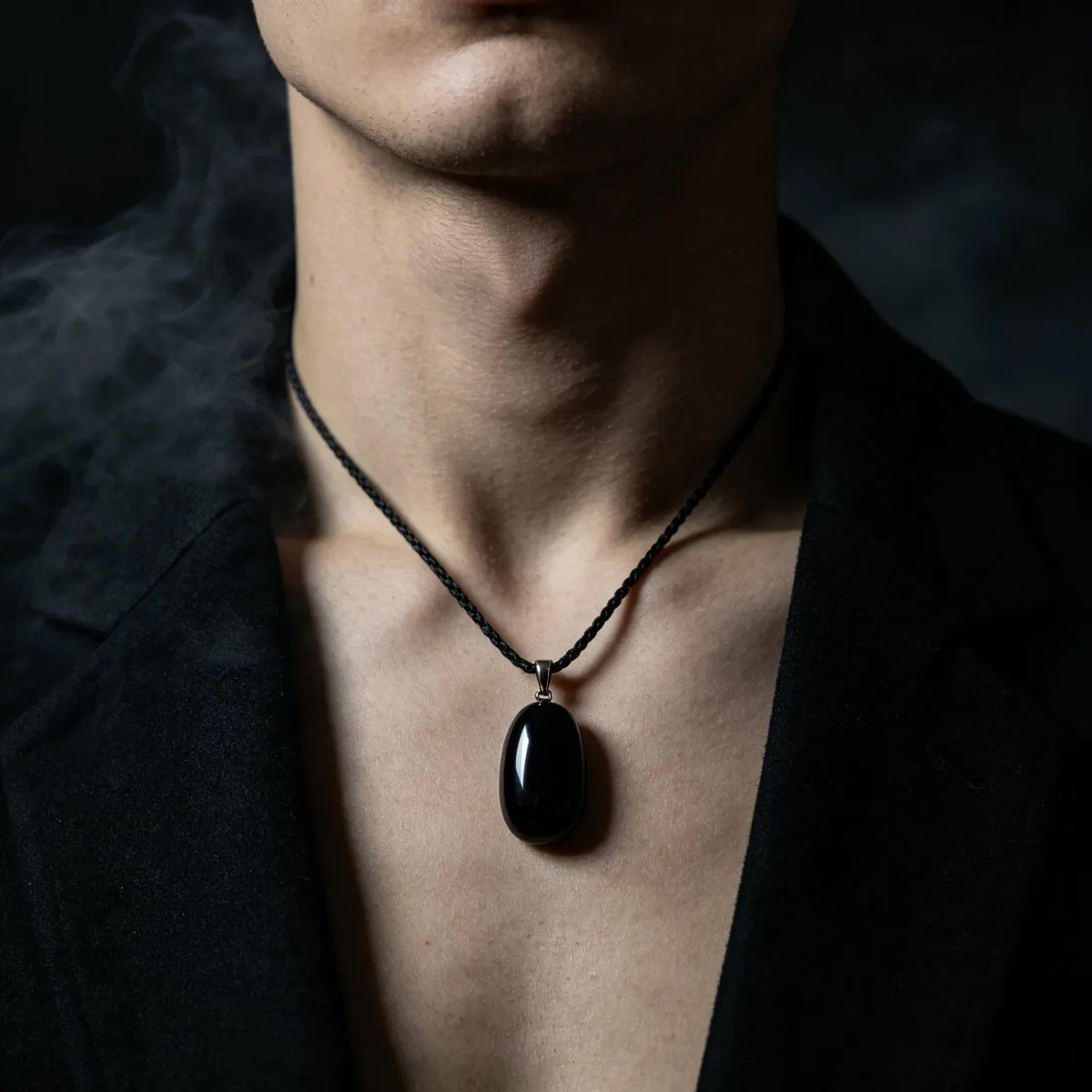
Traditionally, obsidian is treated as a mirror stone: a protector used for grounding and for facing uncomfortable truths. It's often described as intense and inward-facing rather than gentle. If that framing appeals to you, a sleek piece like the Black Obsidian Teardrop Protection Pendant Necklace keeps the stone close without the bulk of a raw chunk.
What Onyx Actually Is
Onyx is banded chalcedony, a microcrystalline form of quartz. In its natural state it shows parallel bands of color—classically black and white, but also brown, red, and gray. "Black onyx" in jewelry is frequently dyed to achieve an even, deep black, because uniform natural black is less common than banded material. This is an important, verifiable point: much of the affordable black onyx on the market is treated, and reputable sellers will say so if asked.
At roughly 6.5 to 7 on the Mohs scale, onyx is noticeably harder and more wear-resistant than obsidian. It takes a high polish, which is why it appears so often in rings, cabochons, and carved pieces. Its luster is waxy to matte rather than glassy, and in good light you can often spot faint banding—one of the simplest ways to distinguish it from obsidian.
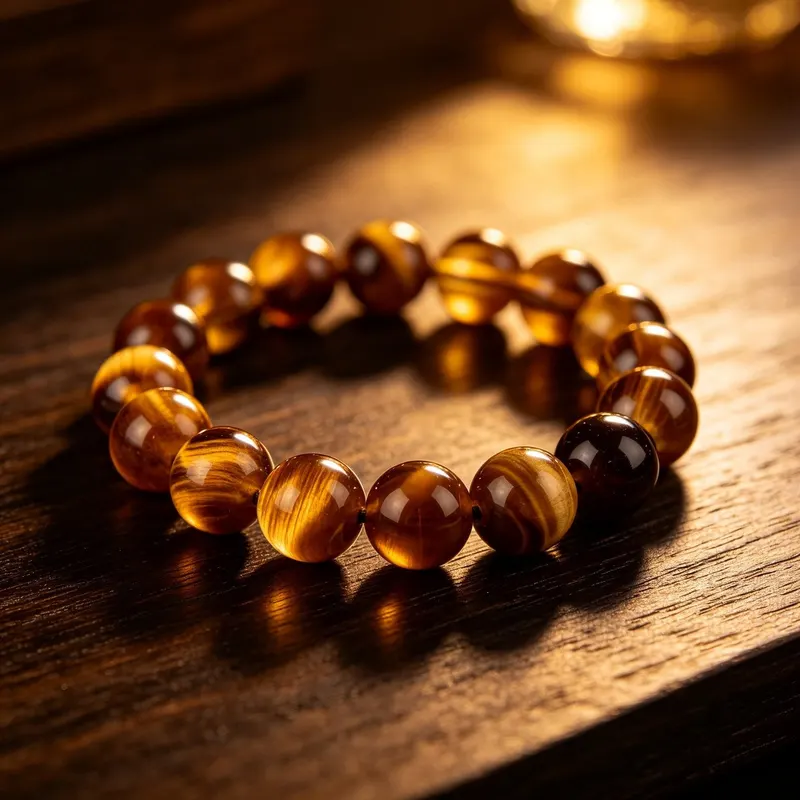
Traditionally, onyx is associated with self-discipline, stamina, and steady focus. It's framed as a stone of endurance and willpower—closer in feel to tiger's eye than to obsidian's intensity. If that's the quality you want, the Tiger's Eye Confidence Bracelet for Focus & Courage is a natural companion or alternative, since both are traditionally linked to resolve and follow-through.
How to Tell Them Apart
You can usually separate obsidian from onyx in under a minute with your eyes and hands. Use this checklist when shopping in person or evaluating photos online.
- Look for bands. Tilt the stone in good light. Faint parallel banding points to onyx; a uniform glassy black points to obsidian.
- Check the luster. Glassy and mirror-like suggests obsidian; waxy or matte suggests onyx.
- Look for sheen. A rainbow, silver, or golden flash across the surface is characteristic of sheen obsidian, not onyx.
- Weigh the durability. If it's a ring or a piece you'll wear hard, the harder stone (onyx) resists scratches better.
- Ask about treatment. For onyx, ask whether the color is natural or dyed. A good seller answers plainly.
- Inspect edges. Glassy, sharp-feeling chips suggest obsidian; onyx tends to wear more evenly.
- Be skeptical of "black onyx" at rock-bottom prices. Uniform deep black at a very low price is often dyed material—fine if disclosed, worth knowing either way.
What lore says — and what the evidence shows
Crystal lore and materials science answer different questions, and it helps to keep them separate. Here's the honest split.
Traditional lore (belief, not established fact): Obsidian is traditionally associated with protection, grounding, and facing truth; it's often described as drawing you inward. Onyx is traditionally associated with discipline, endurance, and steady focus. These are cultural and spiritual framings passed down through crystal traditions—they invite reflection and ritual, and many people find them meaningful. They are not claims about physical effects.
What we can verify: Obsidian is volcanic glass at about 5–5.5 Mohs; onyx is banded chalcedony quartz at about 6.5–7 Mohs. Obsidian is more prone to scratching and chipping; onyx is more durable and more often dyed for uniform color. Both are sensitive to some degree to harsh chemicals, ultrasonic cleaners, and steam, and both should be kept away from prolonged direct sun if you want to preserve color in treated pieces.
Care basics for both: Wipe with a soft damp cloth and mild soap, rinse, and dry fully. Store separately from harder stones like quartz or diamond to avoid scratches—especially obsidian. Avoid perfumes, chlorine, and household cleaners. Skip ultrasonic and steam cleaning for obsidian and for any dyed onyx.
Crystals are for reflection and personal ritual; they are not medical devices and do not diagnose, treat, cure, or prevent any disease.
Which Black Stone Should You Choose?
Match the stone to your intent and how you'll wear it. A few clear paths:
- Choose obsidian if you want a grounding, truth-facing piece and don't mind gentler handling—pendants and display pieces suit it well.
- Choose onyx if you want discipline and stamina in a durable, polished form—rings and everyday accents make sense.
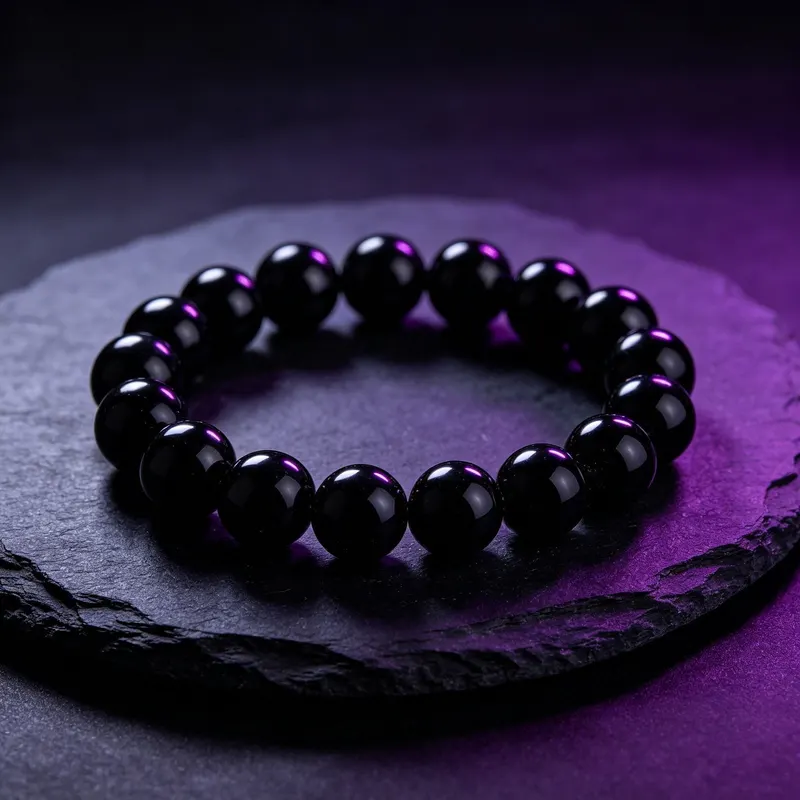
- Consider black tourmaline if your main goal is an everyday protective buffer; it's the traditional go-to and wears well in a bracelet. The Black Tourmaline Protection Bracelet for Grounding is a practical starting point.
- Consider tiger's eye if willpower and confidence are the focus rather than protection.
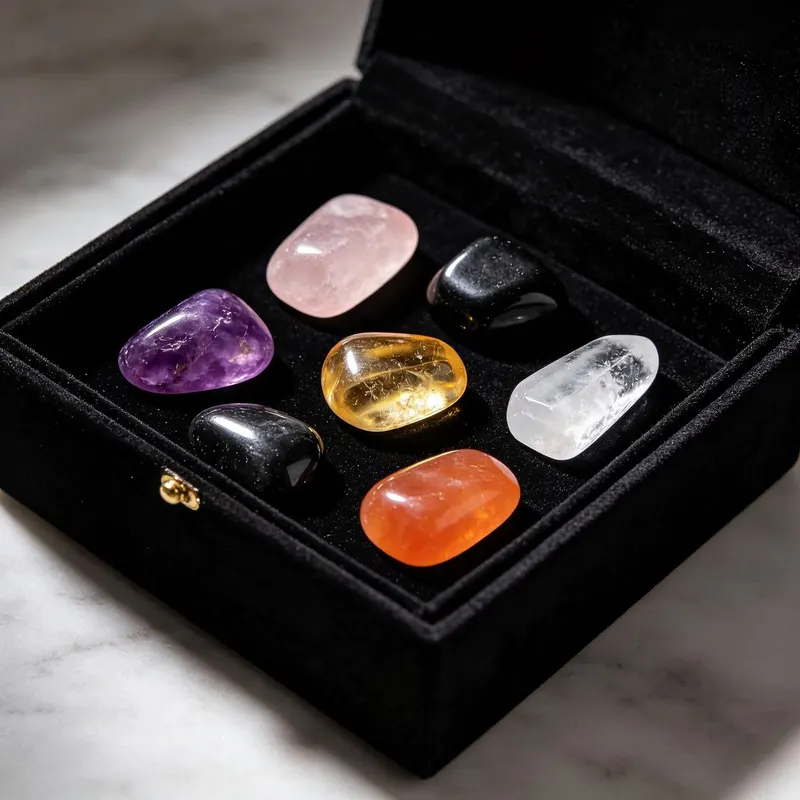
- Building a set? A curated kit lets you compare stones side by side before committing to one. The Healing Crystal Starter Kit, 7 Stones + Guide includes a guide to help you learn the differences hands-on.
On sizing and price: bracelets are typically sold in stretch or clasped styles measured in inches—measure your wrist and add about half an inch for a comfortable fit. Pendants are usually one-size on an adjustable or fixed chain; check the chain length. Realistically, simple obsidian and onyx pieces run from modest entry prices up to higher figures for larger, well-cut, or gold-set stones; dyed onyx is at the low end. Expect to pay more for natural, undyed banded onyx and for sheen obsidian with a strong flash.
FAQ
People Also Ask
Is black obsidian the same as onyx?
No. Obsidian is volcanic glass with a glassy fracture and a hardness around 5–5.5; onyx is banded chalcedony quartz, harder at roughly 6.5–7, with a waxy luster and often visible bands.
Which black stone is best for protection?
In tradition, black obsidian and black tourmaline are the protective choices; onyx is used more for discipline and stamina. Which one suits you is a matter of preference and how you'll wear it.
Is black onyx usually dyed?
Often, yes—uniform deep black is frequently achieved by dyeing banded material. It's common and not inherently a problem, but a reputable seller will disclose it. Natural banded onyx shows its layers.
Can I wear obsidian every day?
You can, but treat it gently. As a softer glass, it scratches and chips more easily than quartz-family stones, so it's best kept away from hard knocks and stored separately.
Browse the Curated Collection
Explore the full edit here: Protection & Grounding Collection →
Shop the Stones
- Black Obsidian Protection Pendant
- Black Tourmaline Protection Bracelet
- Tiger's Eye Confidence Bracelet
Keep Exploring
Obsidian Meaning · Tourmaline vs Obsidian · Protection Crystals
Crystals are intended to support personal and spiritual well-being and are not medical devices. They do not diagnose, treat, cure, or prevent any disease. If you have health concerns, rely on qualified medical guidance.