Two Paths to an Open Heart
Maybe you've been carrying something heavy for a while—a friendship that ended badly, a breakup you're still untangling, or a slow habit of putting everyone else's needs ahead of your own. You're drawn to heart-centered stones, but the shelf is crowded, and two pink candidates keep catching your eye: rose quartz and rhodonite. They look related at a glance, yet they're asked to do quite different work.
Rose quartz is the stone most people meet first—soft, translucent, and almost universally described as the crystal of unconditional love. Rhodonite is its more textured cousin: pink threaded with black manganese veins, traditionally reached for when the heart needs steadiness rather than sweetness. One invites you to soften; the other invites you to stand your ground while you heal.
This guide compares them honestly—what each is traditionally associated with, how they differ in color, hardness, and care, how to choose for your situation, and how to wear them together without turning your wrist into a rock shop. We'll also separate the lore from what we can actually verify, because a stone you understand is a stone you can care for well.
Rose Quartz: Gentle, Radiating, Unconditional
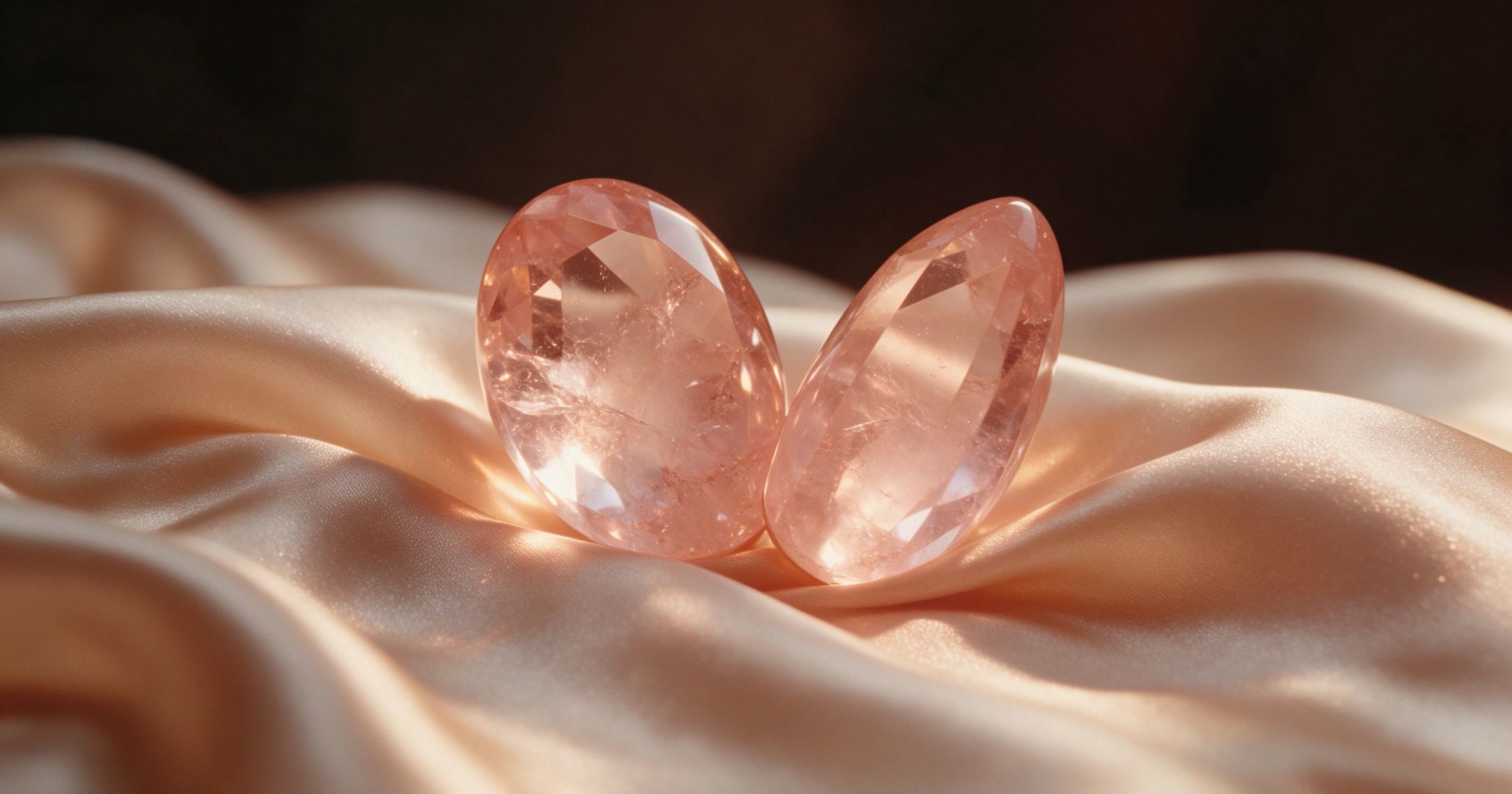
Rose quartz is a pink variety of quartz, and its color comes from trace elements—titanium, iron, or manganese depending on the deposit—rather than from the dramatic inclusions you see in other stones. It's usually translucent to milky, ranging from pale ballet pink to a deeper rosy hue, and it's one of the most abundant and affordable crystals on the market.
In crystal tradition, rose quartz is associated with the heart chakra and with self-compassion first, romantic connection second. That order matters. The stone is often described as radiating outward—a soft, steady warmth rather than a targeted push. It's believed to support gentleness toward yourself, which is why it's so often recommended for people who are hard on themselves, grieving, or simply learning to receive care.
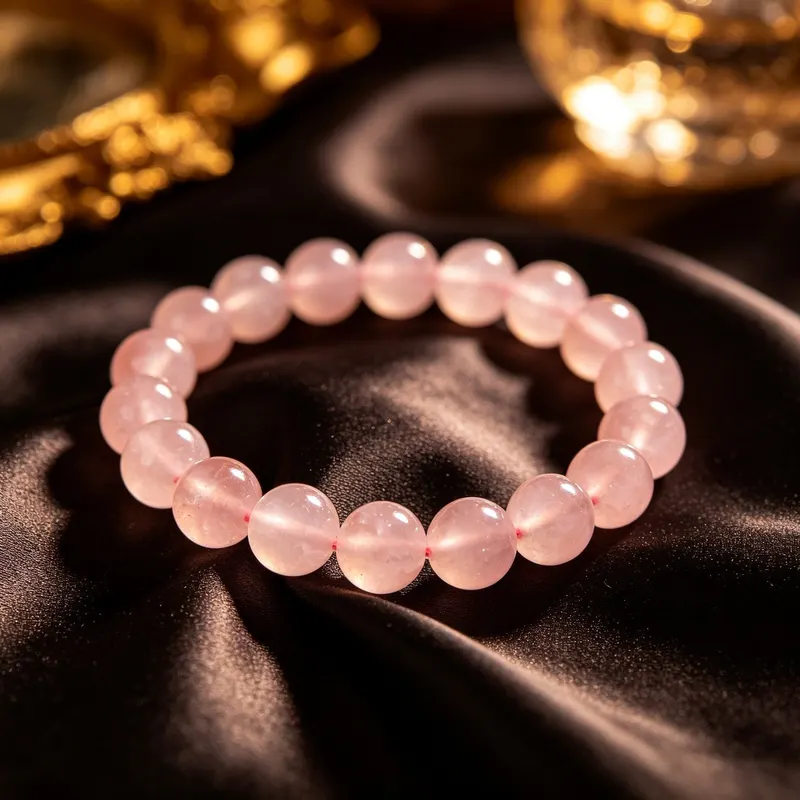
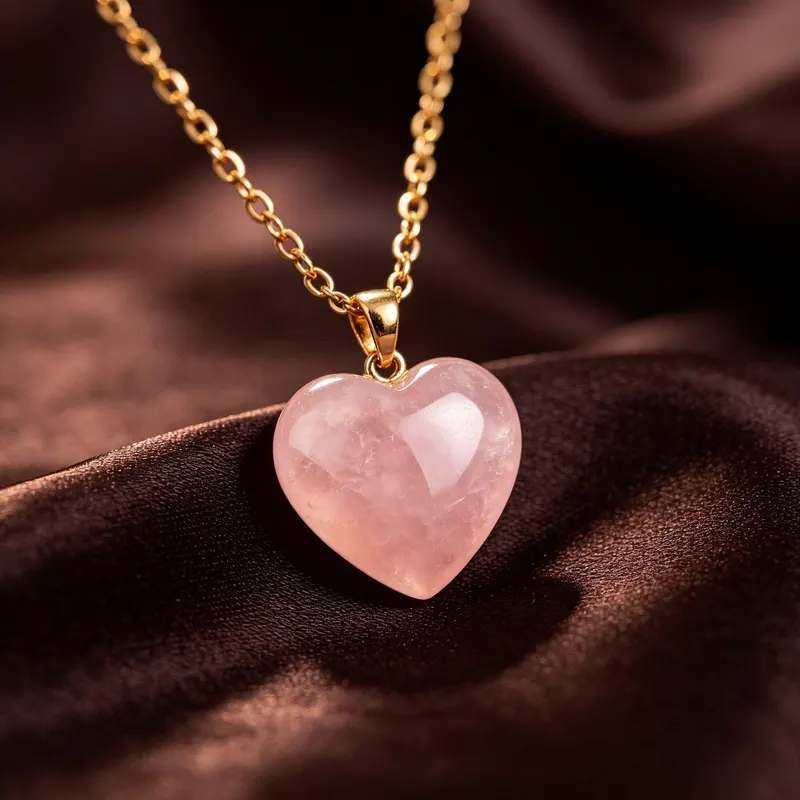
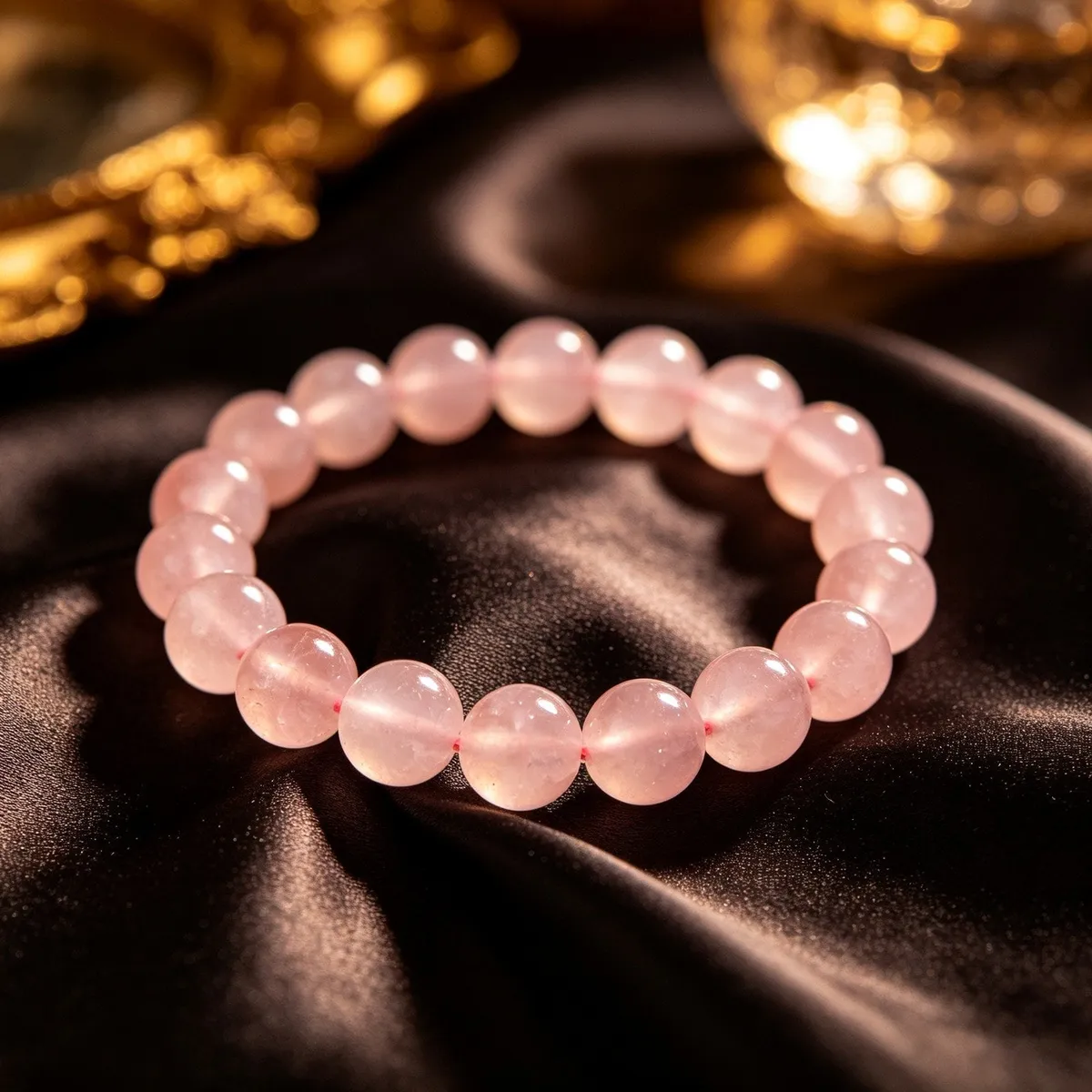
Practically, rose quartz is a forgiving stone to own. It's durable enough for daily wear in a protected setting, widely available in bracelets, pendants, and palm stones, and easy to pair with almost anything. If you want a physical anchor for a self-love or gratitude practice, the Rose Quartz Love Bracelet for Self-Love & Heart is a natural starting point—worn on the left wrist by tradition, close to the pulse. For something you can keep against the chest during meditation or a hard conversation, the Rose Quartz Heart Pendant Necklace, Gold-Plated sits right at the heart center.
Best for: softening self-criticism, inviting warmth into relationships, comforting rituals, and anyone new to crystals who wants a gentle, low-maintenance first piece.
Rhodonite: Steady Balance After Hurt
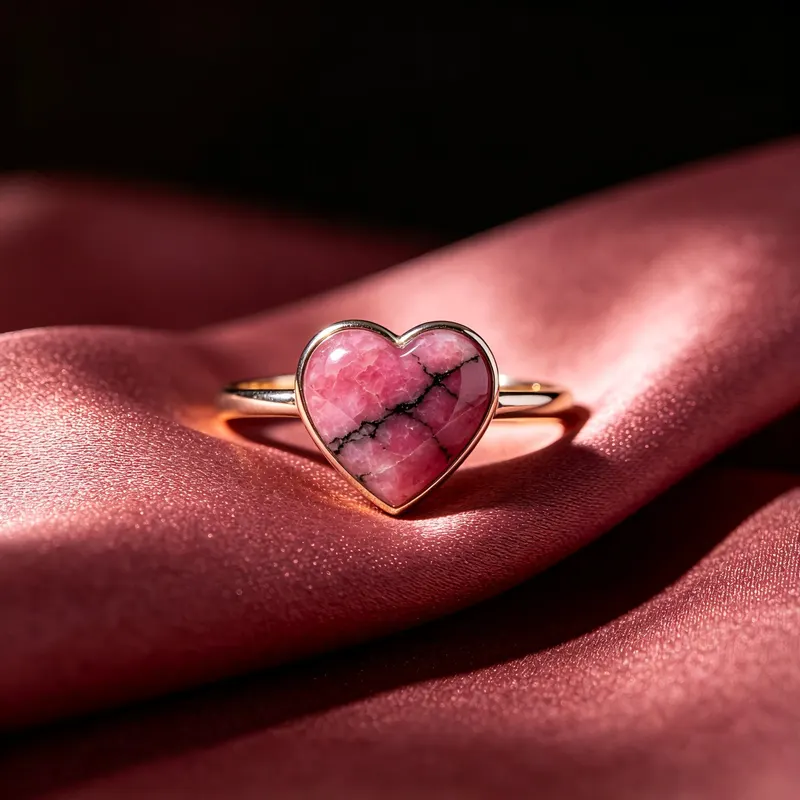
Rhodonite is not a quartz at all—it's a manganese silicate, and that manganese is what gives it its signature look: a pink to rose-red base veined and mottled with black manganese oxide. No two pieces are identical, which is part of its appeal. It's noticeably heavier in feel than rose quartz and typically opaque rather than translucent.
Where rose quartz radiates, rhodonite is traditionally described as grounding and steadying. It's most often associated with emotional balance, forgiveness, and healthy boundaries—particularly during recovery from hurt. The lore frames it as a stone for the messy middle of healing: not the honeymoon phase of self-love, but the part where you're rebuilding trust, learning to say no, and letting go of resentment without pretending the hurt didn't happen.
Because rhodonite is a ring-friendly stone when set with care, it lends itself to discreet daily reminders. Our Rhodonite Heart Ring for Love & Forgiveness is designed for exactly that—something you feel on your hand when you're about to over-explain, over-give, or text someone you shouldn't. It's also a good companion stone if you're doing forgiveness work, whether that's toward another person or yourself.
Best for: boundary-setting, post-breakup recovery, forgiveness practices, and anyone who finds purely "sweet" stones a little too soft for where they are right now.
Rose Quartz vs Rhodonite at a Glance
| Feature | Rose Quartz | Rhodonite |
|---|---|---|
| Mineral family | Quartz (silicon dioxide) | Manganese silicate (a pyroxenoid) |
| Typical color | Pale to deep pink; translucent to milky | Pink to rose-red with black manganese veining |
| Mohs hardness | 7 | 5.5–6.5 |
| Traditional association | Unconditional love, self-compassion, heart chakra | Emotional balance, forgiveness, boundaries |
| Energy described as | Soft, radiating, nurturing | Steady, grounding, stabilizing |
| Best everyday format | Bracelet or pendant | Ring, pendant, or palm stone |
| Care notes | Fade-prone in prolonged sun; avoid harsh cleaners | More scratch-prone; keep away from acids and abrasives |
| Typical price (US) | $15–$60 for bracelets; $30–$90 for pendants | $25–$70 for rings; $20–$60 for bracelets |
Prices reflect typical retail ranges for natural stone in simple settings; sterling silver or gold-plated findings and larger stones push toward the higher end.
How to Choose for Where You Are
The honest answer is that the "right" stone depends less on the stone and more on the question you're holding. Use this checklist as a starting point:
- Choose rose quartz if your inner voice is harsh, you're learning to receive love, or you want a gentle daily anchor for gratitude and self-care.
- Choose rhodonite if you're recovering from a specific hurt, working on boundaries, or notice you keep repeating the same forgiving-too-fast pattern.
- Choose both if you want the softness of rose quartz paired with rhodonite's steadiness—many people wear one on each wrist or a ring plus a pendant.
- Consider your lifestyle first. If you're rough on jewelry, a rhodonite ring may show wear faster than a rose quartz bracelet; if you're in the sun a lot, keep rose quartz out of prolonged direct light.
- Look at the stone, not just the label. Rose quartz should be evenly pink without dye pooling in cracks; rhodonite should show natural black veining, not painted-on lines.
- Check the setting. For daily wear, prefer sterling silver or gold-filled over plated brass, and make sure the stone sits in a closed or prong setting that won't snag.
If you're also curious how these two compare to other heart-centered stones, our guide to heart chakra crystals puts them in broader context.
The traditional view, and what is verifiable
Crystal lore is rich, and it's worth being clear about which claims are traditional and which are measurable. Here's the honest split:
What tradition says: Rose quartz is associated with unconditional love and the heart chakra; rhodonite is associated with emotional balance, forgiveness, and boundaries. These are cultural and spiritual frameworks, not clinical claims. We use language like "traditionally associated with" and "believed to" deliberately—crystals invite reflection, and that reflection can be genuinely useful, but it is not a substitute for care from a qualified professional.
What we can verify: Rose quartz is quartz with a Mohs hardness of 7, making it reasonably scratch-resistant for daily wear but still vulnerable to chipping on hard impacts. Its color can fade with prolonged UV exposure, so store it away from direct sun. Rhodonite is softer (roughly 5.5–6.5 on the Mohs scale) and more prone to scratching and edge wear, especially in rings—so treat it gently and remove it for gardening, gym sessions, and cleaning. Neither stone should be cleaned with harsh chemicals; warm water, mild soap, and a soft cloth are sufficient. Rhodonite's manganese content means it's best kept away from strong acids.
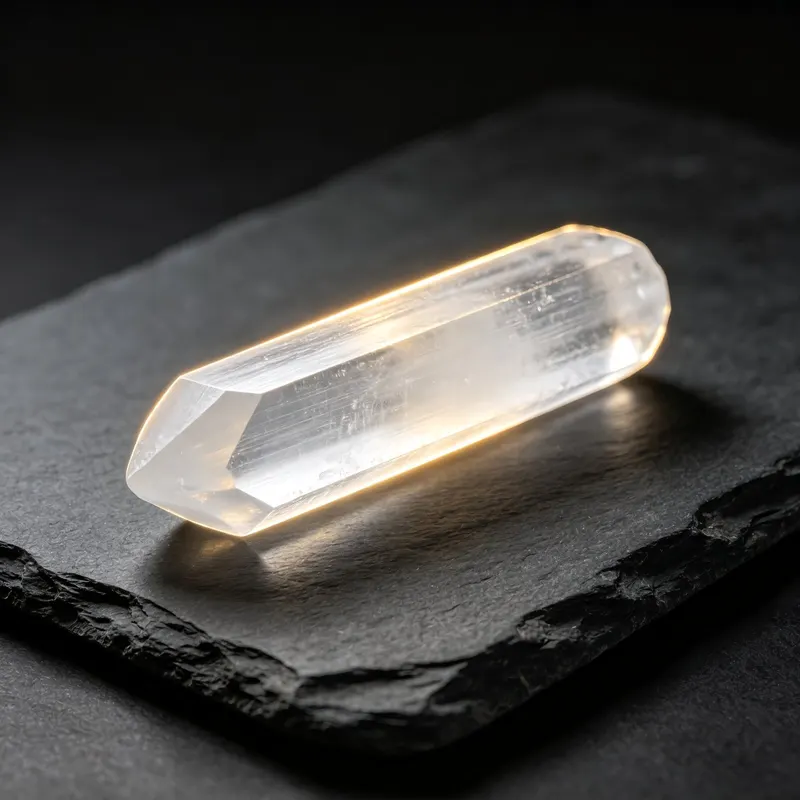
For cleaning and recharging, a soft dry cloth and moonlight or sound are gentle options; avoid saltwater soaks for rhodonite, which can dull its surface over time. If you use a cleansing tool, a Selenite Cleansing Wand for Energy Clearing is a traditional, low-risk way to refresh either stone without water.
Crystals are for reflection and are not medical devices. They do not diagnose, treat, cure, or prevent any disease. If you're struggling with your mental or physical health, please reach out to a qualified professional.
Wearing and Pairing Them
There's no rule that says you must pick one. A common approach is to wear rose quartz on the left wrist (traditionally the receiving side) and rhodonite as a ring or on the right—softness in, steadiness out. If you prefer a single piece, a rose quartz pendant layered with a rhodonite ring gives you both without visual clutter.
For a fuller heart-centered stack, you might pair either stone with a Amethyst Healing Bracelet for Calm & Clarity, which is traditionally associated with calm and is a natural companion to heart work. Keep metal finishes consistent—mixing sterling silver and gold-plated pieces is fine, but matching them reads more intentional. And if you're building a small collection rather than buying one hero piece, a Healing Crystal Starter Kit, 7 Stones + Guide is a sensible way to experiment before committing to a signature stone.
FAQ
People Also Ask
Is rhodonite the same as rose quartz?
No. Rose quartz is a pink variety of quartz (hardness 7); rhodonite is a manganese silicate with black veining (hardness roughly 5.5–6.5). They differ in composition, durability, and traditional associations.
Which is better after a breakup?
Rhodonite is traditionally favored for steady recovery and boundary work, while rose quartz offers gentler comfort and self-compassion. Many people use both—rose quartz for the soft days, rhodonite for the days you need to hold your line.
Can they be worn together?
Yes. They're a compatible heart-centered pairing. A common arrangement is rose quartz on the left wrist and a rhodonite ring on the right hand.
How do I care for each stone?
Clean both with warm water, mild soap, and a soft cloth. Keep rose quartz out of prolonged direct sunlight to slow color fading, and treat rhodonite gently—it scratches more easily, so remove rings before heavy tasks and avoid acids and abrasive cleaners.
Closing
Rose quartz and rhodonite aren't rivals so much as two tempos of the same work: one softens, one steadies. If you're unsure, start with the stone that matches the question you're actually asking—comfort or boundaries—and let the other join later. Explore both in our Love & Relationships Collection, and keep reading with our guides to rose quartz meaning and rhodonite meaning.