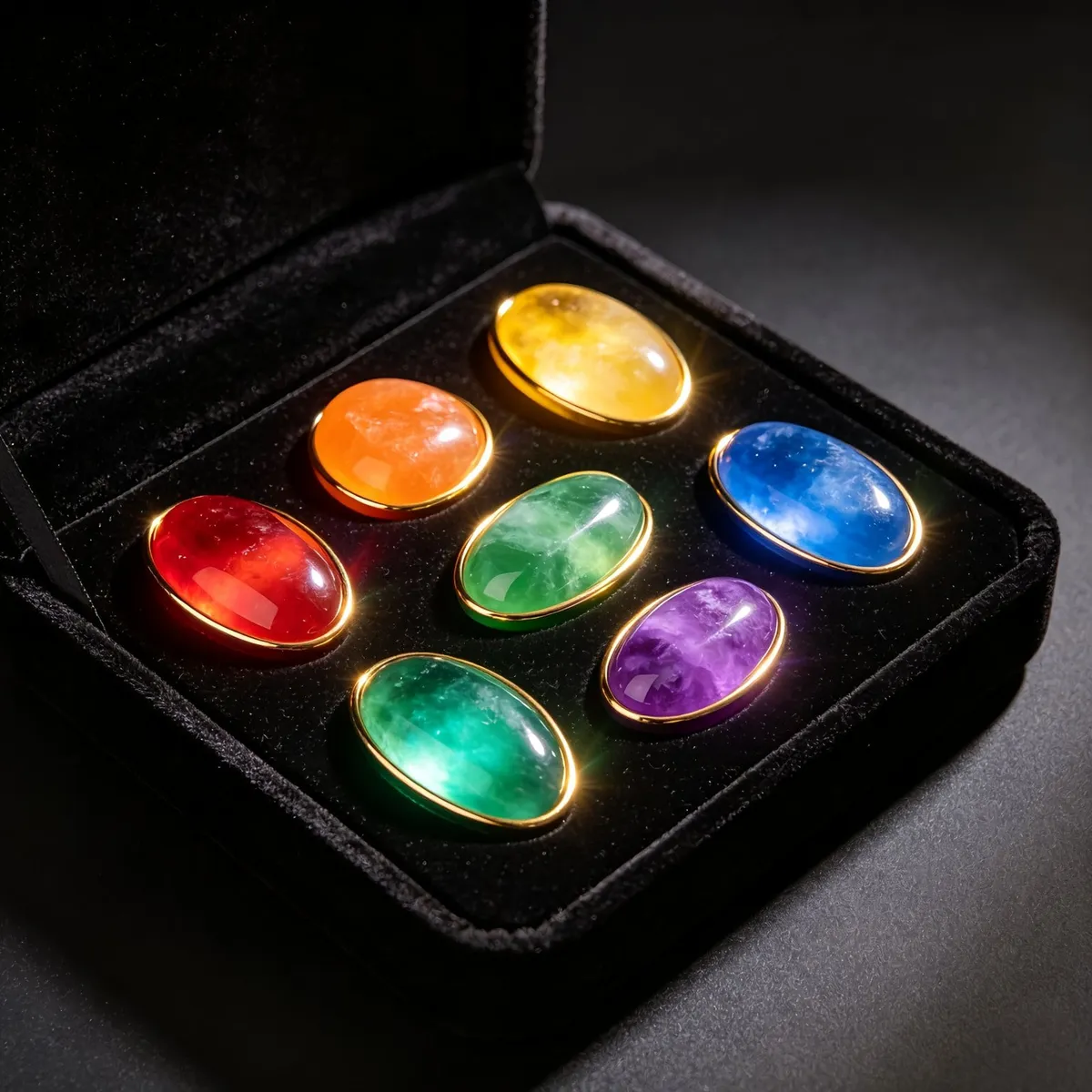
One Bracelet, Seven Energy Centers
Maybe you bought a 7 chakra bracelet on a trip, received one as a gift, or finally clicked "add to cart" after seeing the rainbow of stones on a friend's wrist. Now it's sitting on your dresser and you're not entirely sure what to do with it—which wrist it belongs on, whether the order of the colors matters, or how to keep it from collecting dust along with your good intentions.
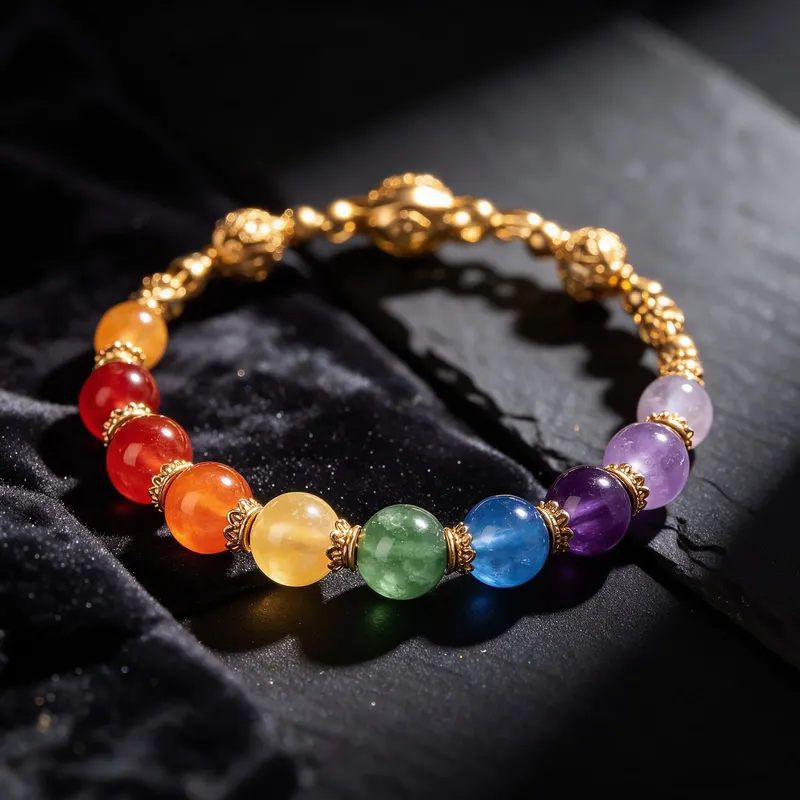
A 7 chakra bracelet is different from a single-stone piece. Instead of carrying one intention, it strings together a stone for each major chakra, from the root (red) to the crown (violet or white). In practice, it works as an all-in-one reminder to check in with yourself—body, emotion, voice, spirit—rather than laser-focusing on a single goal. That makes it a forgiving first piece for beginners and a practical everyday anchor for people who already have a meditation or journaling habit.
This guide walks through what each color traditionally represents, how to choose a bracelet that actually fits, which wrist to wear it on, how to "balance" with it, and how to clean and cleanse it without damaging the stones. We'll also be honest about which parts are tradition and which parts are simple materials science.
What Each Color Represents
In chakra tradition, each center is associated with a color, a location in the body, and a theme. A well-made 7 chakra bracelet places the stones in order—root to crown or crown to root—so the sequence reads like a small map. Here's the conventional correspondence:
- Red (root) — traditionally associated with safety, stability, and grounding
- Orange (sacral) — creativity, emotion, and pleasure
- Yellow (solar plexus) — confidence, will, and personal power
- Green (heart) — love, compassion, and connection
- Blue (throat) — communication and honest expression
- Indigo (third eye) — intuition and insight
- Violet or white (crown) — spirit, awareness, and connection to something larger
Stone choices vary by maker. Common pairings include garnet or red jasper for the root, carnelian for the sacral, citrine or yellow jade for the solar plexus, green aventurine or rose quartz for the heart, lapis lazuli or sodalite for the throat, amethyst for the third eye, and clear quartz or amethyst for the crown. If you want to go deeper into the system itself, read the seven chakras guide and the balancing guide.
How to Choose a 7 Chakra Bracelet
Not all chakra bracelets are created equal, and a few practical checks will save you from a piece that breaks in a month or irritates your wrist.
Sizing and fit
Most beaded bracelets use 8mm stones, which suit average wrists; 6mm feels lighter and works well for smaller wrists or stacking, while 10mm makes a bolder statement. Measure your wrist snugly with a soft tape or a strip of paper, then add roughly half an inch (about 1.3 cm) for a comfortable fit—enough to slide slightly without falling off. If you're between sizes, size up; a bracelet that's too tight will dig in and wear through its elastic faster.
What to look for
- Genuine, consistent stones — natural variation is normal, but stones should look like stone, not uniform plastic. Look for visible inclusions and slight color differences.
- Strong elastic — a doubled or triple-knotted cord holds up better than a single strand. Check the knot is tucked and secure.
- Ordered color sequence — a thoughtful maker arranges stones root-to-crown (or crown-to-root) rather than randomly.
- Comfortable finish — beads should be smooth, evenly drilled, and free of sharp edges.
Realistic price expectations
Mass-market chakra bracelets made with dyed or synthetic beads often run $10–$20. A bracelet using genuine natural stones with decent elastic typically falls in the $25–$60 range. Pieces with larger stones, sterling silver accents, or hand-selected beads can reach $70–$120 or more. Price alone doesn't guarantee quality—read the stone list, look closely at photos, and be skeptical of any bracelet promising to "heal" a specific condition.
Which Wrist—and How to Wear It
Tradition offers a simple rule: wear it on the left wrist to receive balancing energy, or the right wrist to express it outward. There's no universal "correct" side, so choose based on what you want from the piece—calm and receptivity on the left, action and outward intention on the right. Many people simply wear it on their non-dominant hand for comfort.
Practical notes: take it off before swimming, showering, or heavy workouts, since water and sweat degrade elastic over time. If you wear a watch or other bracelets, keep the chakra bracelet on the opposite wrist or separate it with a soft band to avoid abrasion. And if a stone ever feels uncomfortable or the bracelet leaves marks, loosen it—no tradition requires a tight fit.
How to Balance With Your Bracelet
"Balancing" isn't a technical procedure so much as a short, repeatable practice. The bracelet is a cue; the work is your attention.
- Cleanse before first wear. A quick rinse of intention—holding the bracelet and setting a simple aim—is enough. See the cleansing section below for methods.
- Start with a breath check-in. Once a day, hold the bracelet, close your eyes, and take three slow breaths. Notice where you feel tension.
- Work color by color. When something feels "off," pause and breathe into that color for a moment—red for feeling ungrounded, blue before a difficult conversation, violet when you want quiet perspective.
- Journal it. Jot one line about which color drew your attention that day. Over a week or two, patterns often emerge.
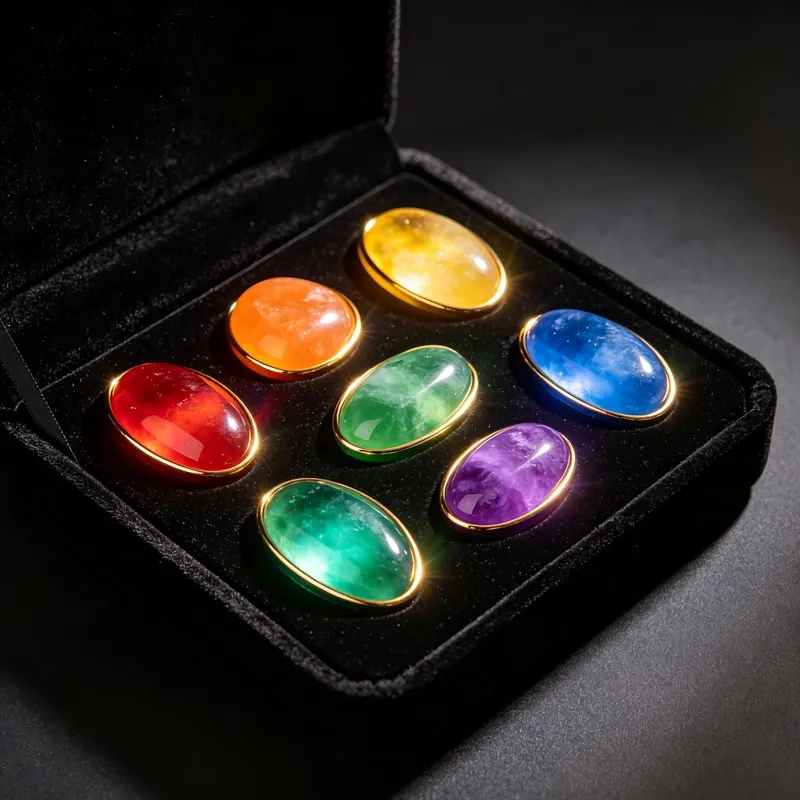
- Deepen with a seated practice. A matching 7 Chakra Stone Set with Wooden Display Box lets you lay the stones along the body during meditation, which many people find more immersive than a bracelet alone.
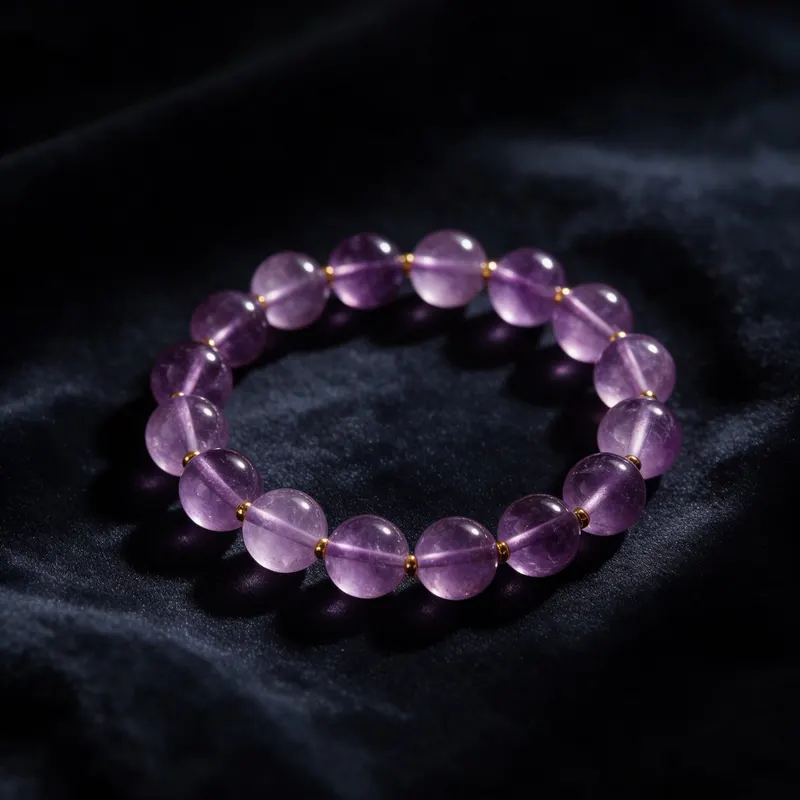
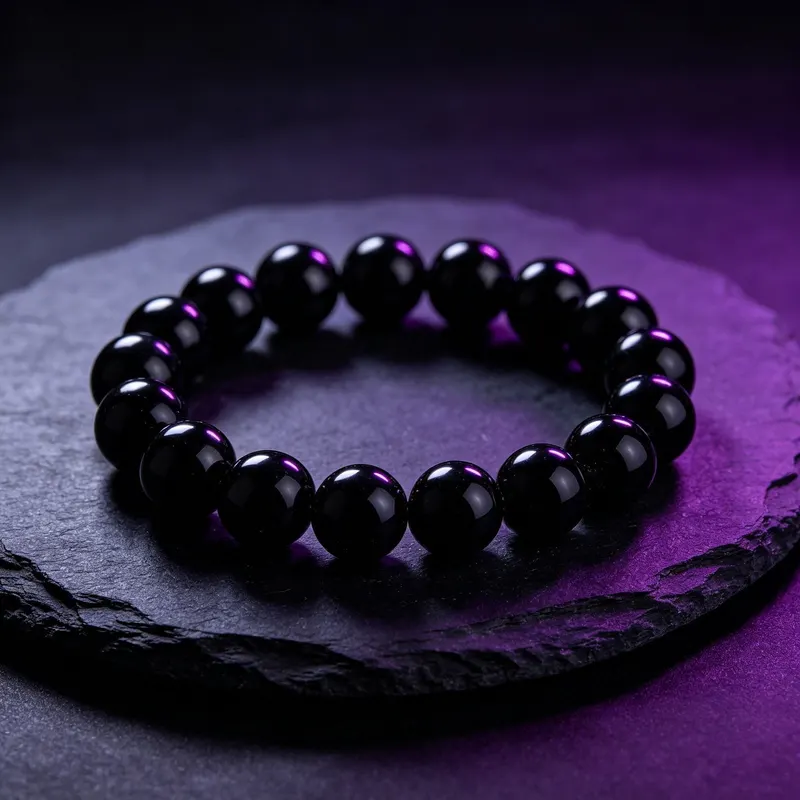
If you're building a broader practice, single-stone pieces can complement the bracelet: an Amethyst Healing Bracelet for calm and clarity, or a Black Tourmaline Protection Bracelet for grounding on stressful days. The 7 Chakra Balancing Bracelet remains the all-in-one anchor.
How to Clean and Cleanse It
There are two kinds of cleaning, and it helps to keep them separate: physical cleaning (removing oils, sweat, and dust) and energetic cleansing (the traditional practice of "resetting" a stone).
Physical cleaning
Wipe beads with a soft, slightly damp cloth and dry immediately. Avoid soaking the bracelet, since water weakens elastic and some stones don't tolerate it. Skip harsh chemicals and ultrasonic cleaners.
Energetic cleansing
- Selenite — rest the bracelet on or beside a Selenite Cleansing Wand overnight. Selenite is traditionally used to clear other stones, and it's a gentle, dry method.
- Moonlight — leave it on a windowsill overnight, especially around a full moon.
- Smoke — pass it through incense or dried herbs briefly.
- Sound — a bell or singing bowl works if that's your practice.
Cleanse about once a week, or after a particularly stressful stretch. Avoid prolonged sunlight (some stones fade) and saltwater soaks (salt can dull finishes and corrode metal findings).
What tradition teaches — and what is provable
It's worth being clear about where tradition ends and verifiable fact begins. The chakra system is a spiritual framework, not a scientific one. What we can verify is how the stones behave physically—and that matters for care.
| Claim or property | What tradition says | What we can verify |
|---|---|---|
| Chakra colors | Each color corresponds to an energy center and theme | A cultural and spiritual framework; not measurable by science |
| Stone "energy" | Stones carry and exchange subtle energy | Belief-based; no scientific mechanism established |
| Hardness (Mohs) | — | Quartz-family stones (amethyst, citrine, clear quartz) rank about 7; softer stones like selenite (~2) scratch easily |
| Water sensitivity | Water "cleanses" energy | Some stones (selenite, halite) dissolve or degrade in water; elastic weakens when soaked |
| Sunlight | Sun "charges" stones | Prolonged UV can fade amethyst, rose quartz, and citrine |
| Care | Cleanse regularly | Gentle dry cleaning and dry cleansing methods protect both stones and elastic |
In short: enjoy the tradition, but care for the bracelet as you would any piece of jewelry. Crystals are for reflection and are not medical devices.
FAQ
People Also Ask
Which wrist should a chakra bracelet go on?
Tradition favors the left wrist to receive balancing energy and the right to project it outward. Choose the side that matches your intention—or simply your non-dominant hand for comfort.
How often should I cleanse a 7 chakra bracelet?
About once a week, or after a stressful stretch, using selenite, moonlight, smoke, or sound. Keep it dry and out of prolonged direct sun.
Can I shower or swim with it?
It's best not to. Water and sweat degrade elastic, and some stones are water-sensitive. Remove it before bathing, swimming, or heavy workouts.
Do I need to wear it every day for it to "work"?
No. The bracelet is a reminder, not a requirement. Wearing it when you want a cue for a breath or a check-in is enough—consistency of attention matters more than constant wear.
Browse the Curated Collection
Explore the full edit here: Chakra Healing Collection →
Shop the Stones
Keep Exploring
Seven Chakras · Chakra Balancing · Activate a Crystal
Crystals are intended to support personal and spiritual well-being and are not medical devices. They do not diagnose, treat, cure, or prevent any disease. If you're dealing with a health concern, rely on qualified medical guidance.