When the Words Won't Come
You know the feeling. There's something you need to say—to a partner, a manager, a friend, a room full of people—and the sentence forms perfectly in your head. Then it reaches your throat and stops. Maybe it comes out sharper than you meant. Maybe it doesn't come out at all, and you spend the rest of the day rehearsing what you should have said.
In the chakra tradition, this is the territory of the vishuddha, or throat chakra—the center associated with expression, listening, and the meeting point between what you feel and what you're willing to voice. Whether or not you work with chakras as a framework, the underlying question is a practical one: how do you speak clearly without losing kindness, and how do you stay quiet without disappearing?
This guide pairs traditional throat chakra affirmations with the stones most often associated with that center, plus a concrete practice you can run before a hard conversation. It's a reflective tool, not a fix—but a good one, if you use it with intention.
What the Throat Chakra Is Traditionally Associated With
In yogic and Ayurvedic systems, the throat chakra is the fifth of seven energy centers, traditionally linked to the color blue and to the element of space or ether. Its associations are expression, truthful speech, active listening, and discernment—knowing what to say, what to hold, and when each is appropriate.
Traditional teachings describe the balanced throat chakra as a kind of fluency: saying what you mean without over-explaining, hearing others without rehearsing your reply, and setting a boundary without needing to justify it. An imbalanced throat chakra is described in two directions—either under-expressed (swallowing words, chronic self-interruption, fear of being heard) or over-expressed (talking over others, speaking before thinking, using volume as armor).
None of this is a diagnosis. It's a vocabulary—a way of noticing a pattern in how you communicate and giving yourself a ritual to work with it. For a deeper look at the stones and symbolism, see our throat chakra guide.
Affirmations for Clear, Kind Expression
An affirmation works best when it's specific enough to feel true and gentle enough that your body doesn't reject it. Start with one, not five. Say it aloud—the sound of your own voice is part of the practice.
For everyday clarity
- I speak my truth with calm clarity.
- My voice is worthy of being heard.
- I say what I mean, and I mean what I say.
- I can be honest and kind in the same sentence.
For listening
- I listen as openly as I speak.
- I can pause before I respond.
- I make room for other voices without losing my own.
For boundaries
- I am allowed to say no with respect.
- My "no" does not require a paragraph of explanation.
- I can hold a boundary and stay warm.
If a phrase feels hollow, soften it: "I am learning to speak my truth" is often more believable than "I speak my truth," and belief is what makes repetition useful rather than mechanical.
Before a Difficult Conversation: A Five-Minute Practice
This is the part most affirmation lists skip. Saying a sentence in the mirror is not the same as walking into a hard conversation. Use this sequence about five to ten minutes beforehand.
- Breathe and release the jaw. Hum on a low note, then exhale slowly through the mouth. The throat and jaw hold tension that flattens your voice—loosening them is practical, not mystical.
- Name the outcome in one sentence. "I want to be understood" or "I want to hear their side." Write it down if you can. One sentence, not a script.
- Choose one affirmation and say it aloud three times. Slower than feels natural.
- Hold your stone. If you wear one, touch it at the throat as a physical cue—a reminder to pause before you speak.
- Set one listening intention. For example: "I will let them finish before I respond."
Affirmations to carry in with you: I choose words that are true and gentle. I breathe, pause, and respond—not react. I can be direct without being harsh.
Throat Chakra Stones: How to Choose
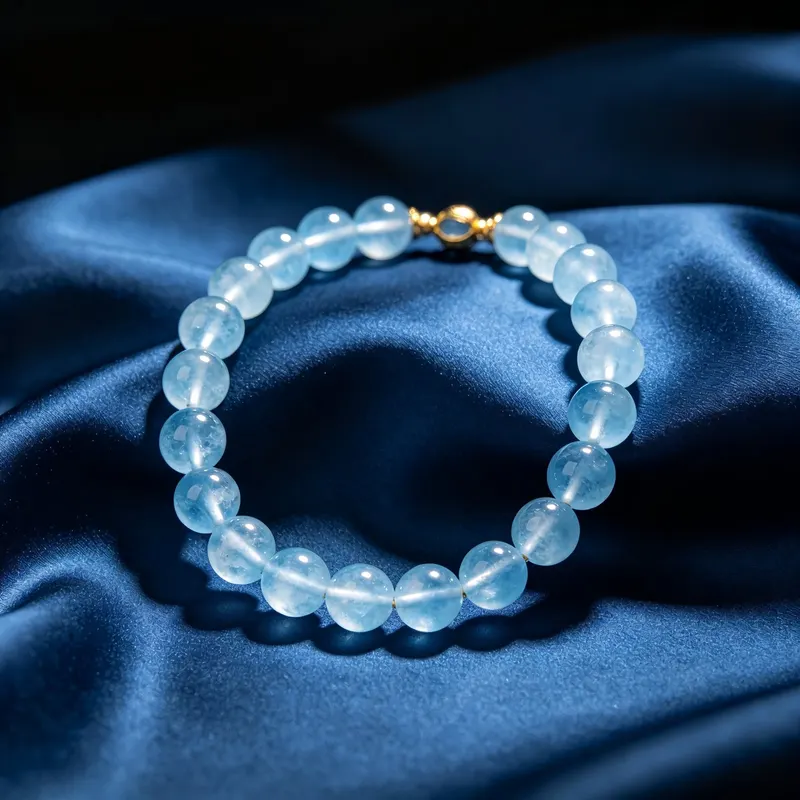
Aquamarine and lapis lazuli are the traditional blue stones of the throat chakra, but they serve slightly different temperaments. Aquamarine is the calmer of the two—associated with soothing speech and steadying nerves. Lapis lazuli is deeper and more assertive—traditionally linked to wisdom, truth-telling, and confident self-expression. Many people keep both: aquamarine for conversations that make them anxious, lapis for moments that call for conviction.
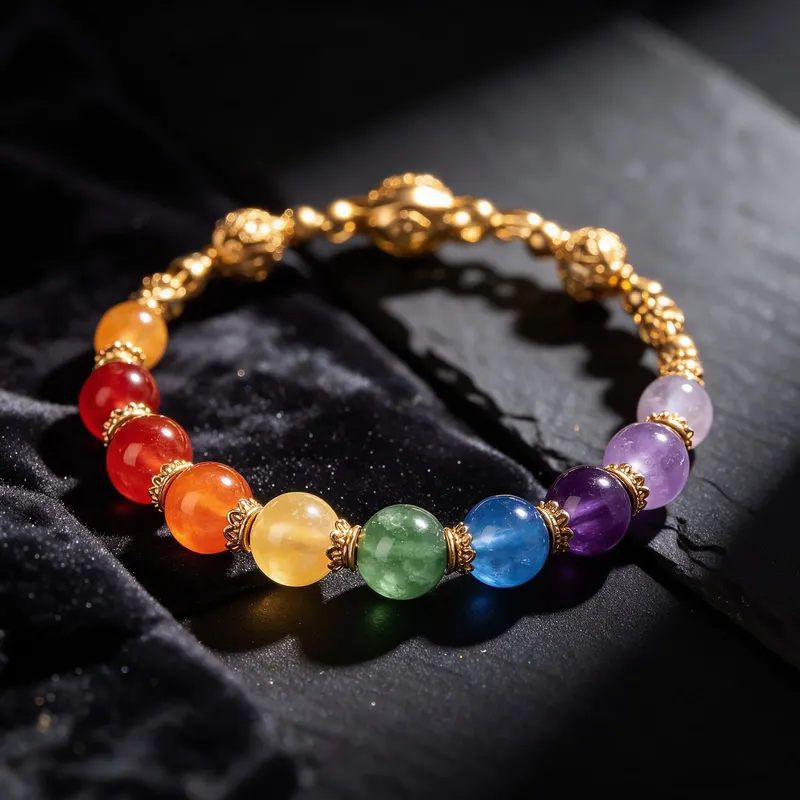
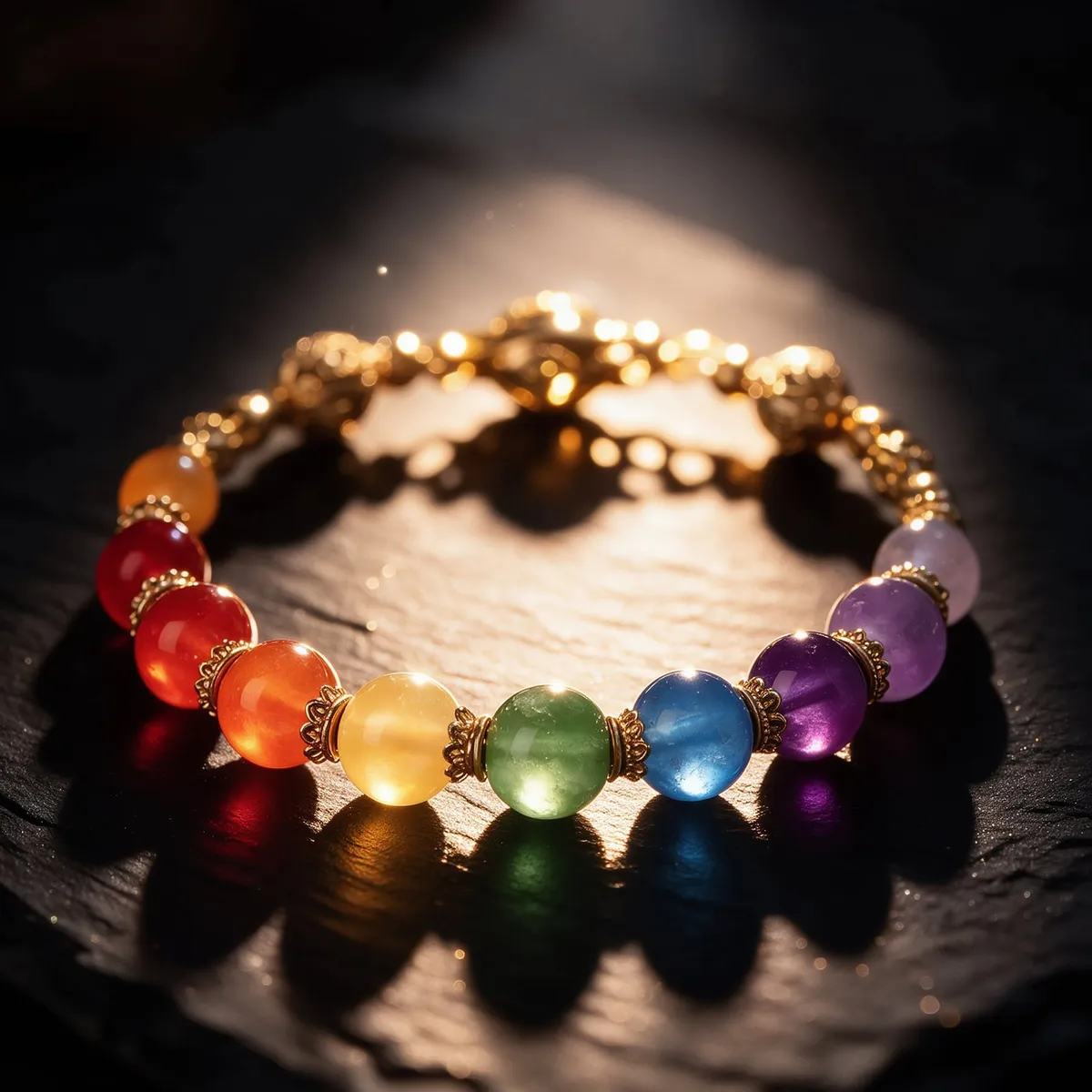
Wear either near the throat, as the tradition suggests. The Aquamarine Serenity Necklace sits at the collarbone and suits daily wear; the Lapis Lazuli Wisdom Pendant is a more deliberate piece for presentations, negotiations, or any day you need to hold your ground. If you prefer a bracelet, the 7 Chakra Balancing Bracelet includes a blue stone among its mixed set and works as a broader daily anchor.
| Stone | Traditional association | Best for | Typical price (US) |
|---|---|---|---|
| Aquamarine | Calm communication, soothing speech | Anxious conversations, sensitive talks | $35–$90 (pendant) |
| Lapis lazuli | Wisdom, truthful expression | Presentations, negotiations, conviction | $40–$110 (pendant) |
| Blue lace agate | Gentle words, patience | Everyday wear, listening practice | $20–$45 (bracelet) |
| Fluorite (blue/green) | Focus, clear thought | Organizing thoughts before speaking | $25–$55 (bracelet) |
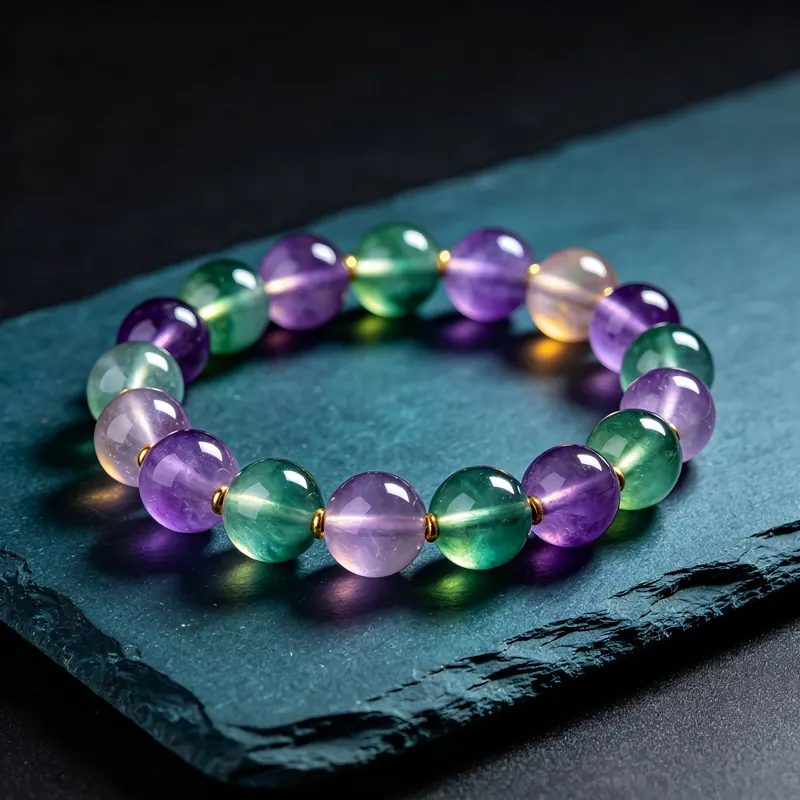
If focus is the missing piece—racing thoughts that tangle your words—the Rainbow Fluorite Focus Bracelet is a practical companion, traditionally associated with concentration and mental clarity. And if you're new to working with stones at all, the Healing Crystal Starter Kit includes seven stones with a guide, so you can experiment before committing to a single piece.
What to Look For When Buying
Stone quality varies enormously, and the throat chakra stones are no exception. A few things worth checking before you buy:
- Color and clarity. Aquamarine should be a clear, even blue to blue-green; milky or heavily included stones are common and fine, but avoid pieces with obvious dye pooling in cracks. Lapis should be deep blue with natural pyrite flecks—uniform, flat blue with no variation is often dyed.
- Metal and finish. Sterling silver and gold-plated settings are standard at this price point. Gold-plated chains wear faster than solid gold; if you plan to wear daily, expect plating to fade over a year or two.
- Chain length. For a throat-chakra pendant, 16–18 inches typically places the stone at the collarbone or just below—the traditional placement. Measure an existing necklace you like before ordering.
- Bracelet sizing. Measure your wrist snugly and add about half an inch. Most beaded bracelets run 6.5–7.5 inches; check the listing.
- Realistic expectations. Genuine aquamarine and lapis are not cheap. A pendant under about $15 is likely glass, dyed quartz, or a composite—not necessarily a problem, but know what you're buying.
Traditional beliefs vs. verifiable facts
It's worth separating the lore from the facts, so you can enjoy the first without being misled about the second.
Traditional lore: Aquamarine is believed to calm the mind and support honest, gentle speech; lapis lazuli is traditionally associated with wisdom and truthful expression. These are symbolic and reflective associations, passed down through crystal and chakra traditions. They are not clinical claims, and no stone has been shown to treat communication anxiety or any other condition.
What we can verify: the physical properties of the stones, which matter for care.
- Hardness (Mohs): Aquamarine is 7.5–8, durable enough for daily wear. Lapis lazuli is softer at 5–6 and can scratch or chip—store it separately and avoid knocking it against hard surfaces. Fluorite is soft at 4 and should be worn with care.
- Water sensitivity: Aquamarine tolerates brief water contact but prolonged soaking can dull it. Lapis lazuli should be kept away from water, perfume, and household cleaners—it's porous and can absorb liquids and lose polish. Fluorite is also water-sensitive.
- Sunlight: Aquamarine can fade with prolonged direct sun; lapis is generally stable but best kept out of harsh light.
- Cleaning: Wipe with a soft, dry cloth. Avoid ultrasonic cleaners and harsh chemicals on lapis and fluorite.
- Metals: Remove plated jewelry before showering, swimming, or exercising to extend its life.
Crystals are for reflection and are not medical devices. If communication anxiety is persistent or distressing, a qualified therapist or counselor is the right resource—not a stone.
FAQ
People Also Ask
Which stone is best for the throat chakra?
Aquamarine for calm, steady speech and lapis lazuli for truthful, confident expression are the traditional choices. Blue lace agate is a gentler alternative for everyday wear.
How do I know if my throat chakra is "blocked"?
Traditional signs include holding back your truth, interrupting yourself, or fearing to speak—as well as the opposite, such as talking over others. Treat these as prompts for reflection, not a diagnosis.
How often should I say my affirmations?
Once or twice a day is plenty—most usefully right before a conversation that matters. Consistency matters more than volume. Say them aloud, slowly, and notice how your body responds.
Can I wear aquamarine and lapis together?
Yes. Many people wear aquamarine daily and reach for lapis for specific occasions. If you wear both, keep the softer lapis away from hard knocks and store pieces separately to prevent scratching.
A Closing Note
The throat chakra is really about a simple, difficult skill: saying what's true without being unkind, and listening without disappearing. Affirmations and stones won't do that work for you—but they can give you a pause, a cue, and a reminder of the kind of speaker you're trying to become. Start with one phrase, one stone, and one conversation. That's enough.
Explore the full edit in our Chakra Healing Collection, or keep reading: Throat Chakra Crystals · Daily Affirmations · Crystals for Public Speaking.
Crystals are offered for wellness, reflection, and ritual—not as medical or psychological treatment. If you are struggling with persistent low mood, anxiety, anger, grief, or trauma, please reach out to a qualified professional.