The Chakra of Expression
The throat chakra, or Vishuddha, is the fifth of the seven chakras in yogic and Ayurvedic tradition. It sits at the base of the throat and is traditionally associated with communication, listening, truth, and self-expression. The word Vishuddha is often translated as "especially pure," and the chakra's element is sound (akasha), which is why chanting, humming, and speaking aloud are common practices in throat chakra work.
If you have ever rehearsed a sentence in your head for ten minutes and then said something completely different out loud, you already know what a throat chakra imbalance is said to feel like. Maybe you swallow your opinion in meetings, apologize before you've finished a thought, or find yourself over-explaining to avoid being misunderstood. Or perhaps the opposite: you speak quickly, interrupt, and only later hear how it landed. Both patterns are traditionally read as signs that the throat center could use attention.
Crystals are one of the gentlest tools for this kind of reflection. They don't change how you speak on their own, but they give you a physical anchor: something to hold, wear, or glance at that reminds you to slow down, breathe, and choose your words with care. This guide covers the stones most associated with Vishuddha, how to choose and wear them, how to care for them, and a short practice you can try before your next difficult conversation.
Signs of a Blocked Throat Chakra
Traditional chakra teaching describes imbalance in two directions: a throat center that feels constricted (under-expressed) and one that feels scattered or overactive (over-expressed). Neither is a diagnosis. They are simply patterns you might recognize in yourself.
- Under-expressed: difficulty saying what you really mean, fear of being judged when speaking, a habit of agreeing when you don't, or a voice that trails off.
- Over-expressed: interrupting, talking over others, oversharing, or speaking sharply and regretting it.
- Listening: feeling chronically unheard, or noticing you struggle to stay present when someone else is talking.
- Physical habits: a tight jaw, a clenched throat when nervous, or frequent throat-clearing before you speak.
- Creative expression: writing, singing, or presenting feels shut down or blocked.
If any of these are persistent or distressing, crystals are not the answer on their own. A therapist, speech coach, or doctor is. Think of the stones below as companions to real-world practice, not replacements for it.
Best Throat Chakra Crystals
Soft blue stones are the classic match for Vishuddha, and each has a slightly different character. Here's how the most common ones are traditionally understood, so you can pick the one that fits the work you're actually doing.
| Crystal | Color | Traditionally associated with | Best for |
|---|---|---|---|
| Aquamarine | Pale blue to blue-green | Calm, articulate speech, steadying nerves | Interviews, presentations, hard conversations |
| Lapis lazuli | Deep blue with gold flecks | Truthful expression, wisdom, inner authority | Speaking up when you'd rather stay quiet |
| Blue lace agate | Soft banded blue | Gentle communication, soothing nervous energy | Nervous speakers, sensitive conversations |
| Clear quartz | Clear to milky white | Clarity, focus, amplifying intention | Paired with any blue stone to sharpen focus |
| Sodalite | Royal blue with white veins | Logic, clear thinking, calm self-expression | Debates, negotiations, structured talks |
| Blue kyanite | Streaky blue | Honest speech, alignment, cutting through confusion | When you need to say the hard thing kindly |
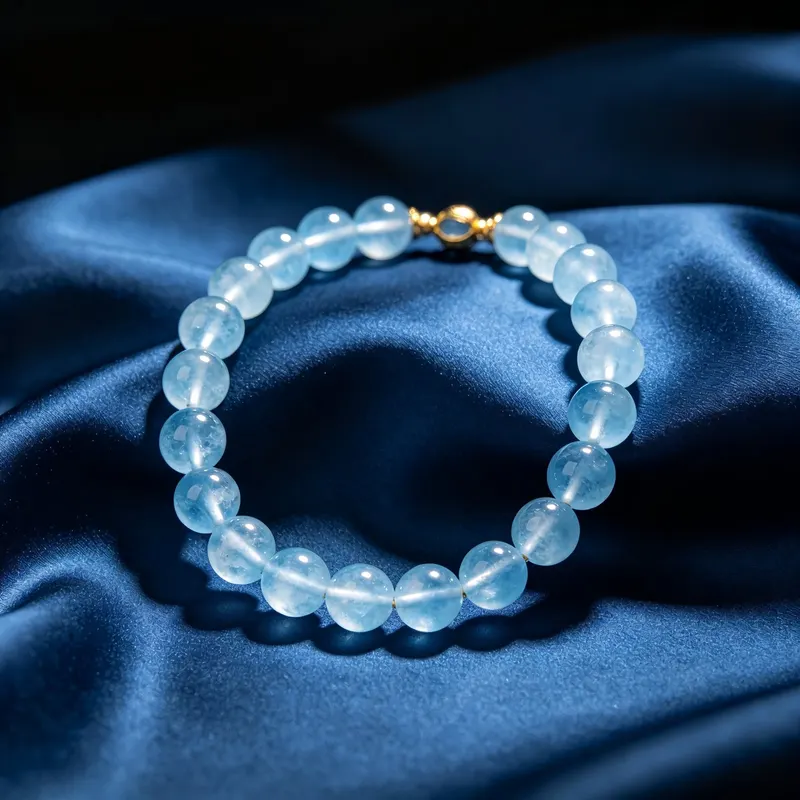
Aquamarine is the stone most people reach for first. It's traditionally used for calm, articulate speech, and its cool color is a natural cue to slow your breathing. Our Aquamarine Serenity Necklace is designed to sit right at the throat, which makes it a practical choice for anyone who wants a visible reminder before a meeting.
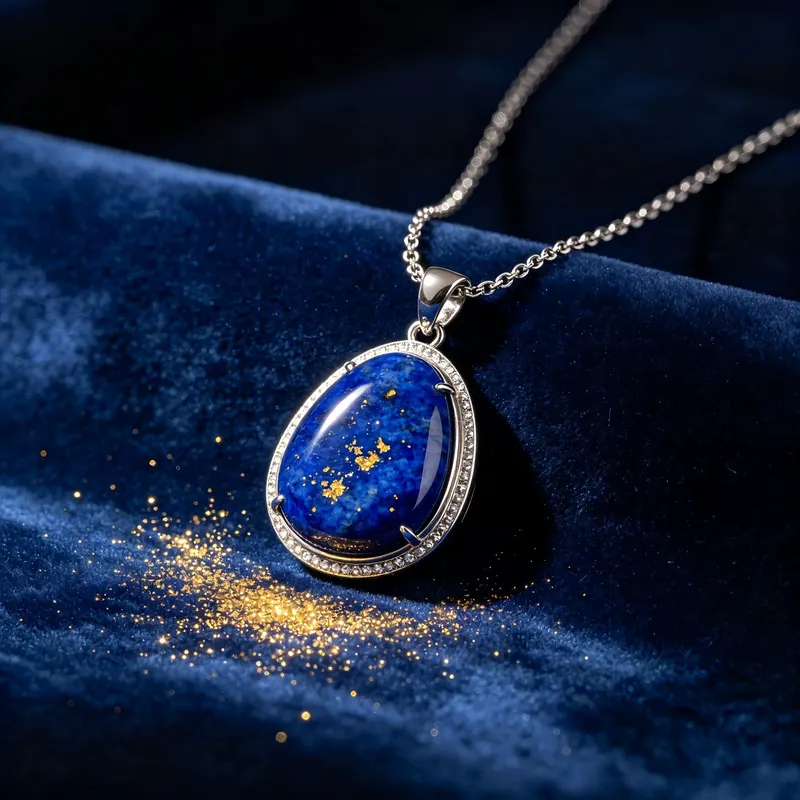
Lapis lazuli is the deeper, more assertive option. It's believed to support truthful expression and inner authority, which makes it a good companion when the challenge isn't nerves but courage: asking for the raise, naming a problem, or saying no. The Lapis Lazuli Wisdom Pendant is a natural fit for that work.
Blue lace agate is the gentle favorite for nervous communicators. It's soft, affordable, and easy to find in small tumbled pieces you can slip into a pocket before a phone call.
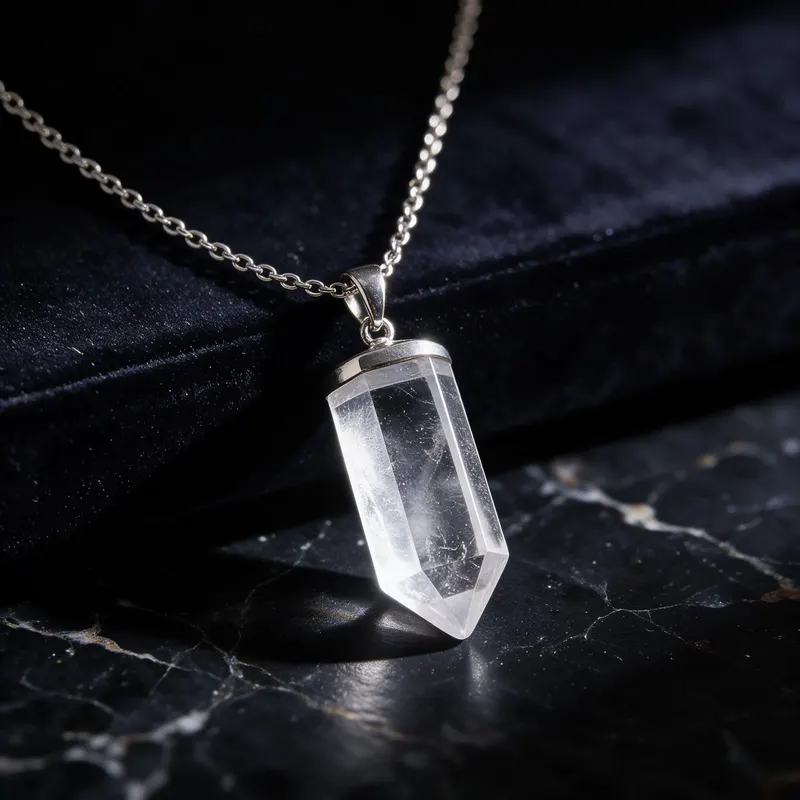
Clear quartz isn't blue, but it's often paired with throat chakra stones because it's traditionally associated with clarity and focus. If you want a single piece that works across several chakras, a Clear Quartz Point Pendant Necklace is a versatile starting point.
How to Choose a Throat Chakra Stone
You don't need every stone on the list. A single piece you actually wear will do more for you than a drawer full of crystals you forget about. Use this checklist to narrow it down.
- Match the stone to the situation. Nerves before a presentation? Aquamarine or blue lace agate. Speaking up in a conflict? Lapis lazuli or blue kyanite.
- Choose the format you'll use. A pendant sits closest to the throat and is the most literal choice. A bracelet is easy to wear daily. A tumbled stone in your pocket works if you don't wear jewelry.
- Check the metal. Sterling silver and gold-plated chains are common; if you have sensitive skin, look for sterling silver or surgical steel over plated base metals, which can wear through over time.
- Look at the stone, not just the photo. Natural stones vary in color and pattern. Slight variation is a sign of a real stone, not a flaw.
- Set a realistic budget. Small tumbled throat chakra stones typically run $5–$15. Beaded bracelets usually fall in the $20–$45 range. Pendants with a sterling silver or gold-plated chain generally run $35–$90, with larger or higher-grade stones costing more. If a piece is priced far below that for a large, flawless stone, be skeptical.
How to Use Them
Wear a pendant so it rests near the collarbone or the base of the throat, where you can feel it when you swallow or take a deep breath. That small physical cue is the point: each time you notice it, you get a chance to check in with how you're speaking and listening.
Before a meeting, interview, or difficult conversation, try this: hold the stone at your collarbone, take five slow breaths, and say one true sentence out loud. It can be as simple as "I have something to say" or "I'm nervous, and I'm still here." Speaking it aloud matters, because sound is the element of this chakra.
If you prefer not to wear jewelry, a tumbled stone in your pocket or on your desk works just as well. Some people keep a small stone next to their phone as a reminder to pause before replying to a tense message.
A Speaking-Truth Practice
This is a short, repeatable practice you can do in about five minutes. It combines breath, sound, and a crystal as an anchor.
- 1. Settle. Sit comfortably and rest the stone at your throat or hold it in your hand.
- 2. Breathe. Take five slow breaths, letting each exhale be a little longer than the inhale.
- 3. Hum. Hum on a low, steady note for three breaths. Notice the vibration in your throat and chest.
- 4. Speak one true sentence. Say something honest and simple out loud. It doesn't need to be profound.
- 5. Listen. Sit in silence for one minute and notice what comes up. Listening is half of this chakra's work.
If you're working through the chakras in sequence, this practice pairs naturally with the third eye, which sits just above the throat and is associated with insight and intuition.
What tradition teaches — and what is provable
Crystal healing is a spiritual and cultural tradition, not a science. It's worth being clear about which claims are traditional lore and which are simple, verifiable facts about the stones themselves.
Traditional lore: Aquamarine is believed to calm nervous speech; lapis lazuli is traditionally associated with truth and wisdom; blue lace agate is said to soothe anxious communicators. These are meaningful frameworks for reflection, but they are not medical claims, and no crystal has been shown to treat anxiety, speech disorders, or any health condition.
What we can verify: hardness, sensitivity, and care. Aquamarine and clear quartz both rank 7–7.5 on the Mohs hardness scale, so they're durable enough for daily wear but can still scratch. Lapis lazuli is much softer, around 5–6, and is sensitive to water, heat, and household chemicals, so keep it away from perfume, chlorine, and long soaks. Sodalite is similar at 5.5–6. Blue lace agate sits around 6.5–7 and is generally water-safe but should be kept out of prolonged sunlight, which can fade its color. Clear quartz is water-safe and sun-safe, which is part of why it's so easy to care for.
Care basics: wipe pendants with a soft dry cloth after wearing, store softer stones separately from harder ones so they don't get scratched, and remove jewelry before swimming, showering, or applying lotion. Avoid ultrasonic cleaners on lapis, sodalite, and any stone with visible inclusions.
Crystals are for reflection and are not medical devices. They do not diagnose, treat, cure, or prevent any disease. If you are struggling with your mental or physical health, please reach out to a qualified professional.
FAQ
People Also Ask
What crystal helps you speak clearly?
Aquamarine and blue lace agate are the most commonly chosen stones for calm, clear speech, while lapis lazuli is traditionally associated with truthful expression and confidence. Many people wear one and keep another nearby for different situations.
Where do you wear a throat chakra stone?
As a pendant or necklace resting near the collarbone and throat is the most traditional placement. A bracelet or a stone in your pocket works too; the point is to keep it where you'll notice it during the day.
What color is the throat chakra?
Sky blue to deep blue is traditionally associated with Vishuddha. That's why aquamarine, lapis lazuli, blue lace agate, sodalite, and blue kyanite are the classic matches.
Can I wear my throat chakra crystal every day?
Yes, with care. Harder stones like aquamarine and clear quartz handle daily wear well. Softer stones like lapis lazuli and sodalite should be removed before swimming or showering and kept away from perfume and cleaning products.
Shop the Stones
Keep Exploring
Third Eye Crystals · Heart Chakra Crystals · Social Confidence Crystals
The throat chakra is less about having the perfect words and more about the willingness to say the true ones. A single stone, worn or carried, can be a quiet reminder to breathe before you speak and to listen as carefully as you talk. Start with one piece that fits the conversations you're actually having, and let the practice grow from there.