A Stone of Steady Power
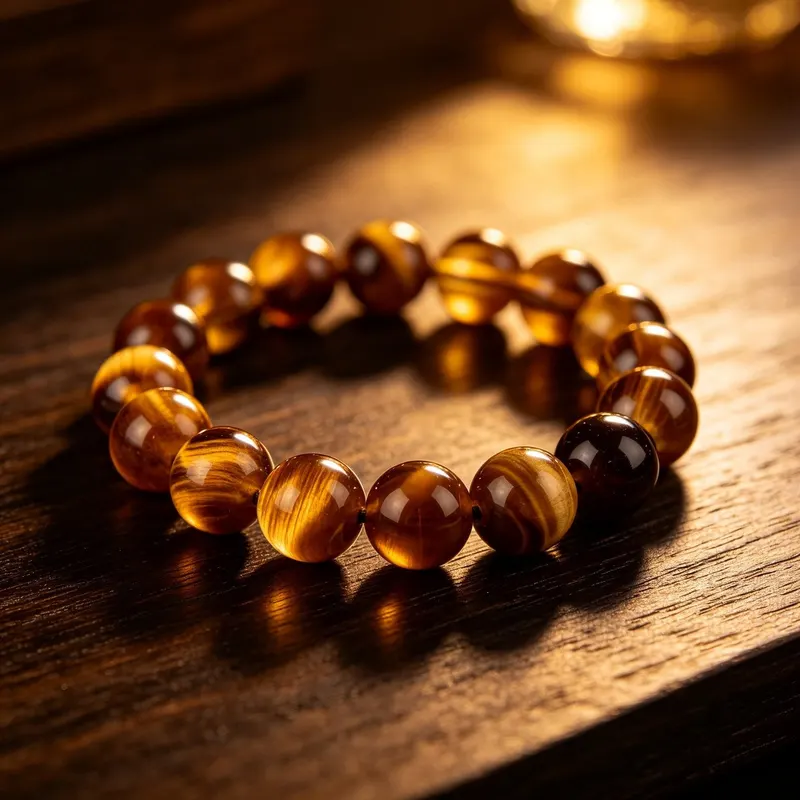
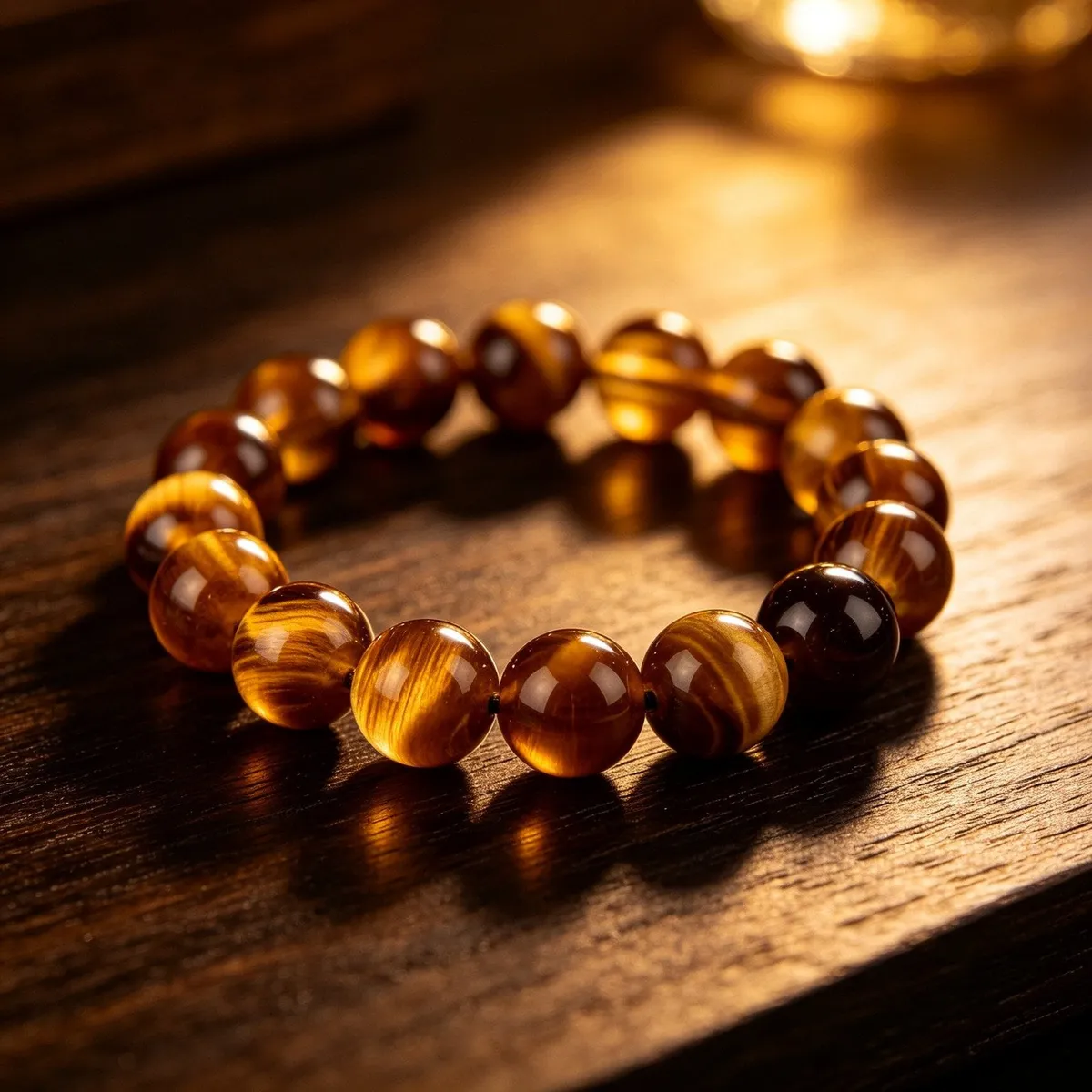
You have a presentation, a hard conversation, or a stretch of weeks where you need to keep showing up—and you want something tangible to anchor that intention. Tiger's eye is one of the most popular stones for exactly this moment. It is a golden-brown chatoyant quartz that shimmers like a cat's eye when the light moves across it, and it has long been carried as a talisman of courage, protection, and grounded determination.
What makes tiger's eye so approachable is that it does not ask you to be fearless. Traditionally, it is associated with calm, steady action under pressure—the kind of confidence that shows up quietly rather than loudly. That is why it appeals to people who want willpower and focus without the hype.
This guide covers what tiger's eye is, how it forms, what the tradition says about it, how to choose and care for it, and how to actually use it in daily life. We will keep the lore clearly labeled as lore, and separate it from what you can verify with your own eyes and hands.
What Tiger's Eye Actually Is
Tiger's eye is a variety of quartz that forms when crocidolite (a blue asbestos mineral) is replaced by silica over time while preserving the original fibrous structure. Those parallel fibers are what create the stone's signature chatoyancy—the moving band of light that looks like a cat's eye. The golden-brown color comes from iron oxides, primarily limonite and goethite.
Most tiger's eye on the market today comes from South Africa, with additional supply from Australia and India. It is an abundant, affordable stone, which is good news: you can find genuine, well-cut pieces without spending a fortune. The trade also produces related stones—hawk's eye (blue-gray, less oxidized) and pietersite (a brecciated mix)—but classic golden tiger's eye is the most common and the most recognizable.
Because it is quartz, tiger's eye is durable enough for everyday jewelry. That said, the fibrous structure means it can sometimes show weak planes, so a well-polished, crack-free piece matters more than a large one.
Tiger's Eye Properties
In crystal and metaphysical traditions, tiger's eye is described in a few consistent ways. These are traditional associations, not medical claims:
- Courage: traditionally associated with bold, calm action under pressure—the "steady hand" stone.
- Willpower: believed to support motivation and follow-through, especially when you are tempted to quit early.
- Grounding: traditionally linked to the Root and Solar Plexus chakras, which is why it is often used in grounding practices.
- Protection: long considered a lucky, shielding stone—historically carried as an amulet against misfortune.
- Focus: many people keep a piece on their desk as a visual cue for concentration and clear decision-making.
If you are building a practice around confidence and follow-through, tiger's eye is a natural centerpiece. It pairs well with the ideas in our guide to crystals for confidence.
How to Use Tiger's Eye
Tiger's eye is practical, which is part of its charm. You do not need an elaborate ritual to work with it. A few simple approaches:
- Wear it on demanding days. A bracelet on your dominant wrist keeps the stone in view and gives you a physical cue to slow down and breathe before you act.
- Keep a stone in your workspace. Place it near your keyboard or on your desk as a reminder of the intention you set—finish the task, make the call, hold your ground.
- Hold it before a hard conversation. Take a few breaths with the stone in your palm and name what you want to bring to the conversation: calm, clarity, honesty.
- Pair it with a grounding routine. Use it alongside breathwork, a short walk, or a journaling habit. The stone is a cue, not a substitute for the practice.
- Carry a tumbled piece. A smooth tumbled stone in a pocket is discreet and easy to hold when you need a moment of steadiness.
For a wearable option, the Tiger's Eye Confidence Bracelet is designed as a daily piece—simple, durable, and easy to layer with other grounding stones.
Pairing and Grounding
Tiger's eye plays well with others. Because it sits at the intersection of courage and grounding, it layers naturally with stones that support motivation or protection.
- With citrine: citrine is traditionally associated with motivation and abundance, making it a natural companion when you are working toward a goal. The Citrine Abundance Bracelet pairs well with tiger's eye for a "steady effort, positive momentum" combination.
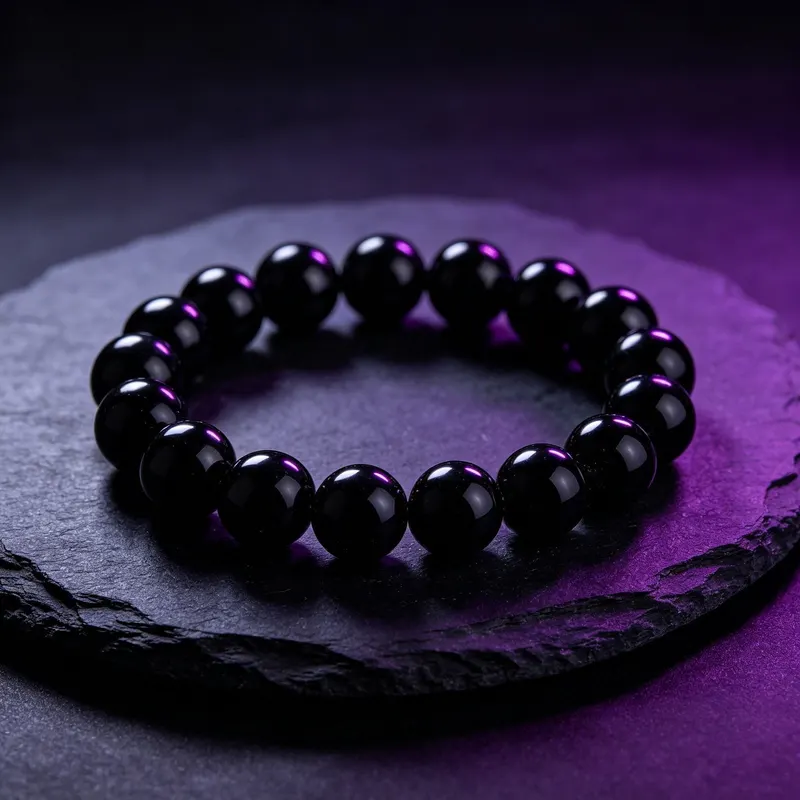
- With black tourmaline: black tourmaline is a classic grounding and protection stone. The Black Tourmaline Protection Bracelet is a good pairing when you want an extra sense of stability in a busy environment.
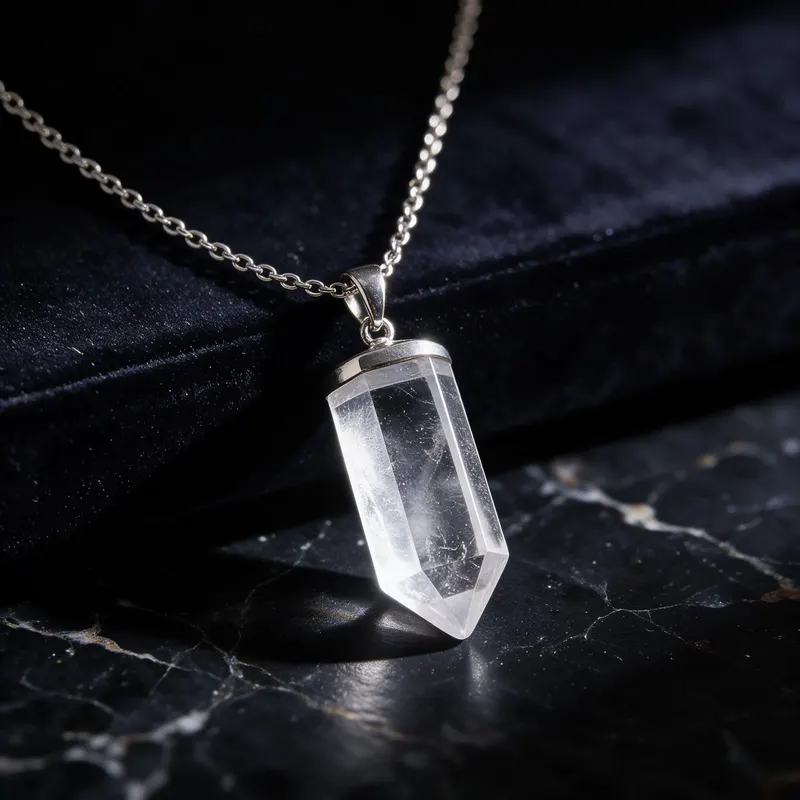
- With clear quartz: clear quartz is often used as an amplifier and clarity stone. A Clear Quartz Point Pendant Necklace can sit alongside tiger's eye if you want to emphasize focus and clear thinking.
If grounding is your main goal, our guide to grounding practices offers more context on how to build a routine around these stones.
Tiger's Eye vs. Similar Stones
Tiger's eye is often confused with—or compared to—a few other golden and chatoyant stones. Here is a quick comparison to help you choose:
| Stone | Look | Traditional Association | Best For |
|---|---|---|---|
| Tiger's Eye | Golden-brown, silky chatoyancy | Courage, willpower, grounding | Daily wear, focus, confidence |
| Hawk's Eye | Blue-gray, chatoyant | Calm insight, protection | Quiet reflection, steady nerves |
| Citrine | Translucent yellow to amber | Motivation, abundance, joy | Goal-setting, creative momentum |
| Carnelian | Orange-red, translucent | Creativity, motivation, confidence | Starting projects, energy |
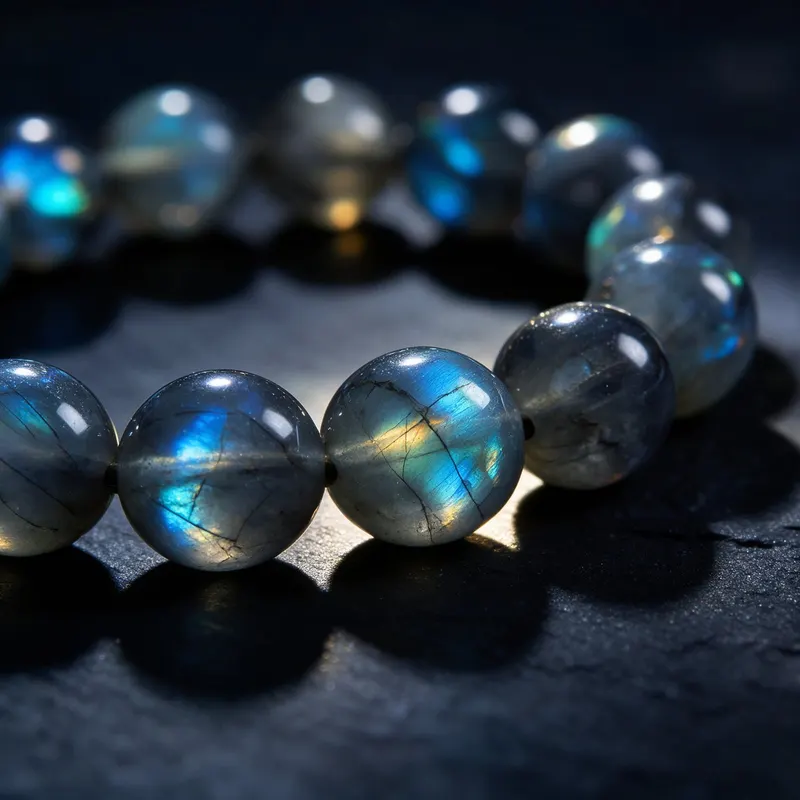
| Labradorite | Gray with blue/gold flash | Intuition, transformation, protection | Change, intuition work |
If you are drawn to the "fire" of motivation, the Carnelian Creativity Bracelet is a good alternative or companion. If you want intuition and transformation rather than steady courage, the Labradorite Bracelet may be a better fit.
How to Choose a Tiger's Eye Piece
Because tiger's eye is affordable and abundant, you can be picky. Here is a practical checklist:
- Look for the "eye." Tilt the stone in the light. A good piece shows a clear, moving band of light that shifts as you rotate it. A dull or static surface is a sign of a lower-quality cut.
- Check for cracks and pits. The fibrous structure can create weak planes. Run a fingernail gently across the surface—it should feel smooth, not catch on chips or fissures.
- Choose even color. Golden-brown with a consistent tone is classic. Some pieces show darker banding, which is natural and fine; avoid stones that look washed out or muddy.
- Match the size to the use. Bracelets are typically 8mm or 10mm beads; 8mm suits smaller wrists and layering, while 10mm makes a bolder statement. Measure your wrist and add about 0.5 inch (1.3 cm) for a comfortable fit.
- Check the setting. For pendants, look for a secure bail and a smooth bezel that will not snag clothing. Sterling silver and gold-plated settings are common at accessible price points.
- Set realistic price expectations. Tiger's eye is one of the more affordable stones. Tumbled stones often run a few dollars, bracelets typically fall in the $20–$60 range, and pendants vary with the metal. If a piece is priced like a rare gemstone, ask why.
If you are new to crystals and want a starting point, the Healing Crystal Starter Kit includes a curated set of stones and a guide, which can help you compare tiger's eye with other grounding stones.
Folklore, and the facts we can check
It helps to keep two things separate: what crystal traditions say about tiger's eye, and what you can verify about the stone itself.
What the tradition says: Tiger's eye has been carried as an amulet of courage and protection for centuries. In modern crystal practice, it is associated with the Solar Plexus and Root chakras, with willpower, and with steady confidence. These are traditional associations and beliefs—they are meaningful to many people as a focus for intention, but they are not scientific claims.
What we can verify:
- Hardness: Tiger's eye is quartz, with a Mohs hardness of about 7. That makes it durable for everyday jewelry, though it can still scratch against harder materials like diamond or corundum.
- Water sensitivity: Polished tiger's eye tolerates brief contact with water, but prolonged soaking is not recommended—especially for pieces with glued settings or plated metals. Remove bracelets before swimming or showering.
- Sunlight: Tiger's eye is generally stable in sunlight and does not fade quickly, but prolonged direct sun can dull the polish over time. Store it away from harsh light.
- Care: Wipe with a soft, dry cloth. Avoid ultrasonic cleaners and harsh chemicals, which can damage the polish or the setting. Store separately to prevent scratching.
- Cleansing: Traditional cleansing methods include moonlight, sound, or a selenite wand. The Selenite Cleansing Wand is a popular tool for this practice. These methods are about ritual and intention, not physical cleaning—use a soft cloth for that.
Crystals are for reflection and are not medical devices. They do not diagnose, treat, cure, or prevent any disease. If you are struggling with your mental or physical health, please reach out to a qualified professional.
FAQ
People Also Ask
Which chakra is tiger's eye for?
Primarily the Solar Plexus (confidence and willpower) and Root (grounding) chakras, according to traditional crystal practice.
Can I wear tiger's eye every day?
Yes. At about 7 on the Mohs scale, it is durable enough for daily wear. Remove it before swimming, showering, or heavy physical work to protect the polish and any metal setting.
How do I tell real tiger's eye from a fake?
Look for the moving chatoyant band—it should shift as you tilt the stone. Fakes or imitations often have a flat, printed, or static pattern. Also check for natural color variation and a cool, weighty feel; glass or resin imitations tend to feel lighter and warmer.
Can I combine tiger's eye with other crystals?
Yes. It pairs naturally with citrine for motivation, black tourmaline for protection, and clear quartz for clarity. Choose based on the intention you want to set, and keep the combination simple.
Keep Exploring
Tiger's eye is a practical stone for practical moments—the meeting, the conversation, the project that needs follow-through. Start with one piece you will actually wear or keep within reach, set a clear intention, and let it serve as a daily reminder of the courage you are already building.
Continue with Crystals for Confidence, Crystals for Grounding, and Citrine Meaning & Properties.