Intentional, Yet Fully Professional
You want your crystals with you at work, but your office has a dress code, a client-facing role, or a manager who notices everything. Maybe you're in finance, law, healthcare, or a conservative corporate environment where a chunky rainbow bracelet would raise eyebrows. Or you work in a "business casual" office that still skews formal, and you'd rather your jewelry read as polished than personal.
The good news: crystal jewelry doesn't have to be loud. The most office-appropriate pieces are the ones that look like fine jewelry first—muted tones, classic shapes, clean metalwork—and carry your intention quietly. A black tourmaline bracelet beside a watch, a small clear quartz pendant at the collarbone, a tiger's eye bead that reads as warm neutral. Nobody needs to know what it means unless you tell them.
This guide covers which stones work best in professional settings, how to size and style them, what to look for when buying, realistic price ranges, and where tradition ends and verifiable facts begin. Crystals are for reflection and are not medical devices.
What Makes Crystal Jewelry "Office-Appropriate"
Office-appropriate comes down to four practical factors: color, scale, finish, and setting. Get these right and your crystal reads as ordinary fine jewelry.
- Color: Neutrals—black, brown, gold, smoky gray, clear, deep navy—blend into professional wardrobes. Bright pink, vivid orange, and multicolor stacks stand out.
- Scale: Beads in the 6–8 mm range sit close to the wrist and disappear under a cuff. Pendants smaller than a dime stay subtle at the collarbone.
- Finish: Polished stones look like glass or semi-precious jewelry; matte stones read more casual and bohemian. For formal offices, polished is safer.
- Setting: Sterling silver, gold-plated, or simple wire-wrapped settings look intentional. Macramé, leather cord, and oversized raw chunks read weekend.
One more factor: noise and movement. Dangling charms that clink on a desk or catch on keyboards are distracting in shared workspaces. Close-fitting bracelets and short pendants are quieter and more practical.
Office-Appropriate Picks
These pieces are chosen for neutral tones, restrained scale, and classic styling. Each is traditionally associated with a quality that suits a workday—focus, calm, confidence—but the styling is what makes them wearable Monday through Friday.
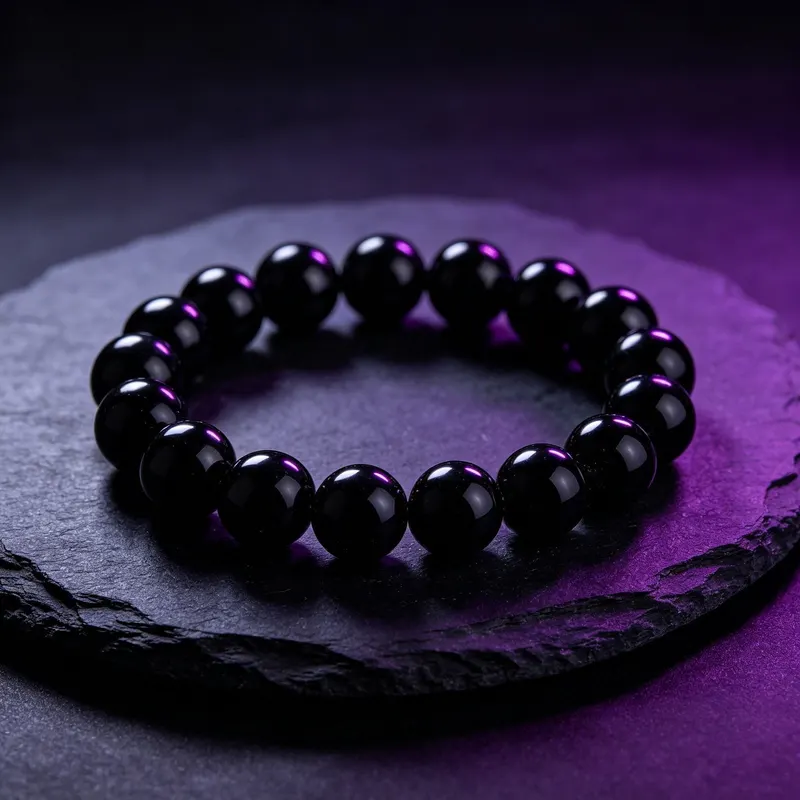
- Black Tourmaline Protection Bracelet for Grounding — Deep black beads read as neutral and blend with a watch or metal band. Traditionally associated with grounding and boundary-setting, which many people find useful on high-pressure days.
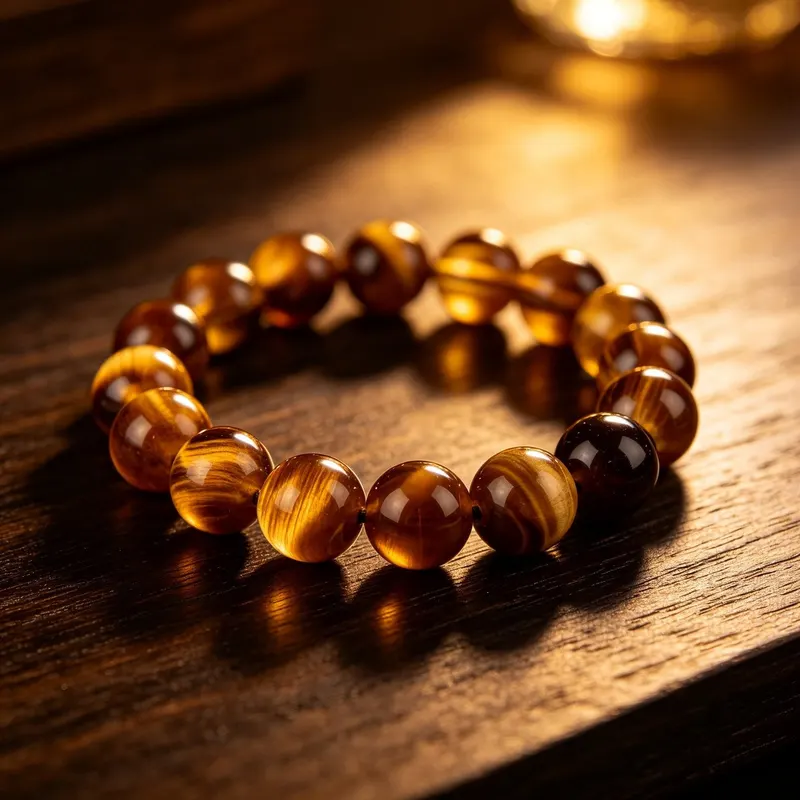
- Tiger's Eye Confidence Bracelet for Focus & Courage — The banded gold-brown chatoyancy looks like classic semi-precious jewelry. Warm enough to pair with brown, navy, gray, and camel tailoring.
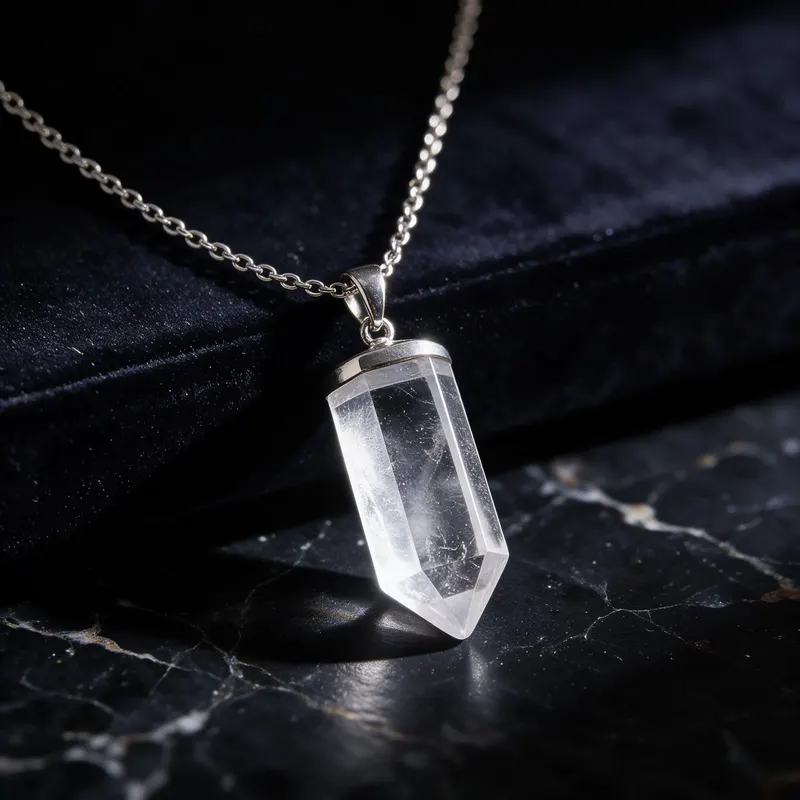
- Clear Quartz Point Pendant Necklace, Sterling Silver — A small, clean point on a fine silver chain sits discreetly at the collarbone and tucks under a collar when you need it to. Clear quartz is traditionally associated with clarity and focus.
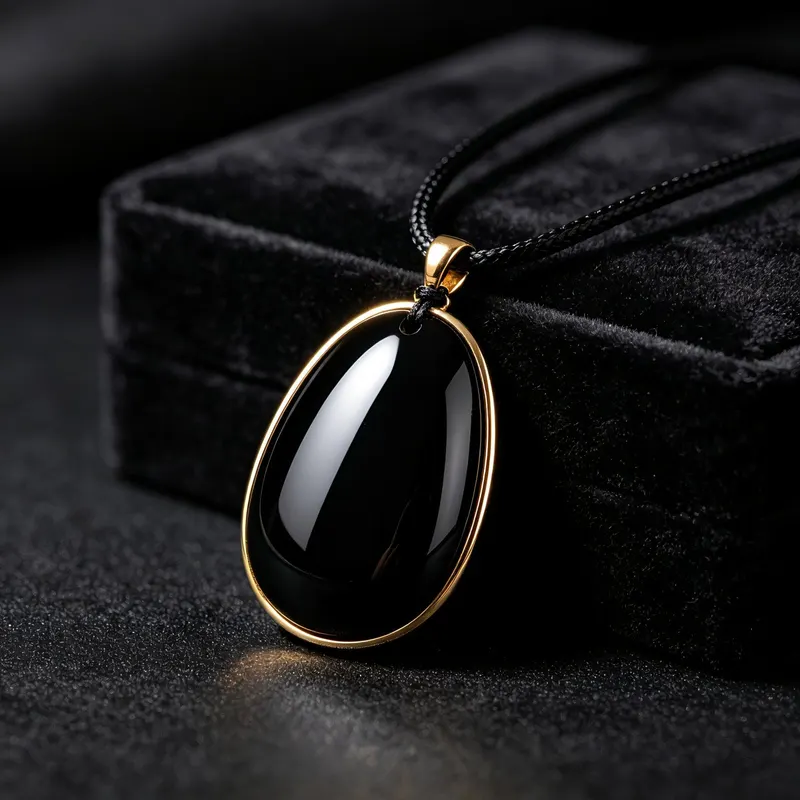
- Black Obsidian Teardrop Protection Pendant Necklace — Glossy black in a simple teardrop shape reads as minimalist jewelry. A good option if you prefer pendants to bracelets.
- Rainbow Fluorite Focus Bracelet for Concentration — Fluorite's banded greens and purples are more colorful than black or brown, so choose this if your office is relaxed or creative. Traditionally associated with focus.
- Lapis Lazuli Wisdom Pendant, Gold-Plated Chain — Deep navy blue with gold flecks looks formal and pairs well with suits. Traditionally associated with wisdom and clear communication.
Comparison: Which Stone Suits Which Office
Use this table to match a stone to your workplace culture and the quality you'd like to keep in mind during the day. "Traditional association" reflects lore, not a guarantee of any outcome.
| Stone | Look | Best For | Traditional Association | Watch-Outs |
|---|---|---|---|---|
| Black tourmaline | Matte or polished black | Formal, conservative offices | Grounding, boundaries | Can look plain; check bead uniformity |
| Tiger's eye | Banded gold-brown, chatoyant | Business casual, client meetings | Confidence, focus | Warm tones clash with cool palettes |
| Clear quartz | Colorless, glassy | Any office; under collars | Clarity, focus | Can look like plain glass if poorly cut |
| Black obsidian | Glossy, mirror-black | Minimalist or creative offices | Protection, truth | Very dark; can feel heavy visually |
| Lapis lazuli | Deep blue with gold flecks | Formal, suit-heavy environments | Wisdom, communication | Porous; avoid perfume and harsh cleaners |
| Rainbow fluorite | Banded green and purple | Relaxed or creative offices | Concentration | More colorful; softer stone, chips easily |
Style It for Work: A Practical Checklist
These guidelines keep crystal jewelry looking deliberate rather than distracting.
- Choose 6–8 mm beads for bracelets if you wear a watch; 8–10 mm is fine if you wear the bracelet alone.
- Wear one bracelet beside a watch rather than a stack. If you want two, keep both in the same color family.
- Keep pendants small—roughly dime-sized or smaller—and close to the collarbone on an 16–18 inch chain.
- Match metal to your other jewelry: silver with silver, gold-plated with gold. Mixed metals can look accidental in formal settings.
- Check your dress code for rules on bracelets (some healthcare and food-service roles restrict them for hygiene and safety).
- Save bright, chunky, or multicolor pieces for weekends and off-site days.
- Test the fit: a bracelet should sit snug enough not to slide over your hand but loose enough to rotate freely.
How to Choose: What to Look For and What to Pay
Quality varies widely in crystal jewelry, and price usually tracks bead size, stone grade, and metal type. Here's what to check before you buy.
What to look for
- Consistent bead size and shape. Uneven beads suggest lower-grade sorting and wear less comfortably.
- Clear drilling. Holes should be centered and clean, with no chipping around the edges.
- Secure stringing. Look for sturdy elastic or knotted cord; ask whether the bracelet is re-stringable.
- Honest metal labeling. "Gold-plated" means a thin layer over a base metal—fine for occasional wear, but it will fade with sweat and perfume. Sterling silver is more durable.
- Accurate stone names. A reputable seller names the stone plainly rather than using trade names that imply something it isn't.
Realistic price expectations
Beaded bracelets in the 6–10 mm range typically fall between roughly $20 and $60 depending on stone and metal findings. Small pendants on sterling silver or gold-plated chains generally run from about $35 to $90. Lapis lazuli and higher-grade tiger's eye tend to sit at the upper end; clear quartz and black tourmaline are usually more affordable. Be cautious of "certified" claims or prices that seem too low for the metal described—there's no universal certification body for crystal jewelry, so ask the seller directly about materials.
Tradition vs. evidence: what holds up
Crystal lore is rich, but it's worth separating tradition from measurable fact so you can make informed choices.
What tradition says
Many traditions associate black tourmaline with grounding and protection, tiger's eye with courage and focus, clear quartz with clarity, and lapis lazuli with wisdom and communication. These associations are cultural and symbolic. They are not scientific claims, and wearing a stone does not guarantee any outcome—professional or personal. Think of them as reminders or anchors for intentions you set yourself.
What we can verify
- Hardness (Mohs scale): Clear quartz is 7, tiger's eye about 6.5–7, black tourmaline 7–7.5, and lapis lazuli only 5–6. Softer stones scratch and chip more easily, especially in a ring or on a wrist that rests on a desk.
- Water sensitivity: Selenite dissolves in water; lapis lazuli is porous and can be damaged by soaking. Avoid wearing these in the shower or while washing dishes.
- Sunlight sensitivity: Some stones—including amethyst, rose quartz, and fluorite—can fade with prolonged direct sun exposure. Store them away from a sunny windowsill.
- Care basics: Wipe polished stones with a soft dry cloth. Avoid ultrasonic cleaners and harsh chemicals on porous stones. Remove jewelry before swimming, exercising, or applying perfume and lotion.
- Metal wear: Gold plating wears with friction and sweat; sterling silver tarnishes and can be polished. Neither is a health claim—just maintenance.
If you want to cleanse a stone energetically, traditional methods include moonlight, sound, or a selenite wand—but these are ritual practices, not verified effects. A Selenite Cleansing Wand for Energy Clearing is a common tool for this, kept dry and away from water.
FAQ
People Also Ask
What crystal looks most professional?
Black tourmaline and tiger's eye read as classic neutral jewelry in almost any office. Clear quartz in a small silver pendant is another safe choice because it looks like minimalist fine jewelry.
Can I wear crystal jewelry to a corporate job?
Yes—choose small, neutral, polished pieces worn like ordinary fine jewelry. Check your employee handbook for any restrictions on bracelets, especially in healthcare or food-service roles.
How do I size a crystal bracelet?
Measure your wrist snugly with a soft tape, then add about half an inch for comfort. Most beaded bracelets list their circumference; if you're between sizes, size up so the bracelet doesn't press into your wrist during long desk sessions.
How should I care for office crystal jewelry?
Wipe stones with a dry cloth, remove pieces before showering or exercising, and store them separately to avoid scratches. Keep softer stones like lapis and fluorite away from water and harsh cleaners, and rotate pieces so plating and elastic last longer.
Browse the Curated Collection
If you're building a small, work-friendly rotation, start with one neutral bracelet and one discreet pendant. The Abundance & Success collection gathers pieces suited to professional settings, and the Healing Crystal Starter Kit, 7 Stones + Guide is a practical way to explore which stones you gravitate toward before committing to jewelry.
Keep exploring: Desk Workers · First Day · Men's Style
Crystals are offered for wellness and ritual, not as medical or psychological treatment. They are not medical devices and are not intended to diagnose, treat, cure, or prevent any condition.