You've picked out a crystal bracelet, you love how it looks on your wrist — and then a small, nagging question shows up: does it actually matter which arm you wear it on? Maybe you've heard that the left side "receives" and the right side "releases," or that you should wear certain stones on a specific wrist and never the other. Maybe you've been switching it back and forth all week, unsure whether you're doing it "right."
Here's the reassuring part: wrist choice is one of the most flexible parts of crystal practice. It's a way of focusing intention, not a pass/fail test. But the receiving-and-releasing tradition is genuinely useful once you understand where it comes from and how to apply it to your own life — your dominant hand, your daily routine, even which wrist your watch already lives on.
This guide walks through the tradition, gives you a stone-by-stone reference you can actually use, and separates the symbolic layer from the practical one (fit, care, and what a bracelet can realistically do). By the end you'll know exactly which wrist to reach for — and why.
The receiving vs. releasing tradition, explained
In many crystal and energy traditions, the body is described as having a flow of energy that moves in through the left side and out through the right. The left is often called the receiving side — associated with drawing in, absorbing, and inviting qualities you want to cultivate. The right is the releasing side — associated with letting go, projecting outward, and shielding.
This is a symbolic framework, not a physical mechanism. It has roots in older metaphysical and yogic ideas about subtle energy channels, and it varies by tradition — some schools reverse it, and many practitioners ignore it entirely. What makes it useful is that it turns a piece of jewelry into a small daily reminder. Deciding "I'm wearing this on the left because I want to invite more calm into my week" is a way of stating an intention to yourself every time you glance down.
So treat the left/right question as a focusing tool. It gives your bracelet a job. If the framework doesn't resonate with you, that's completely fine — comfort and consistency matter more than which arm you choose.
Wear on the left to receive
Choose the left wrist when your goal is to draw something in or cultivate a quality. In practice, that usually means stones associated with calm, love, abundance, clarity, and gentle support.
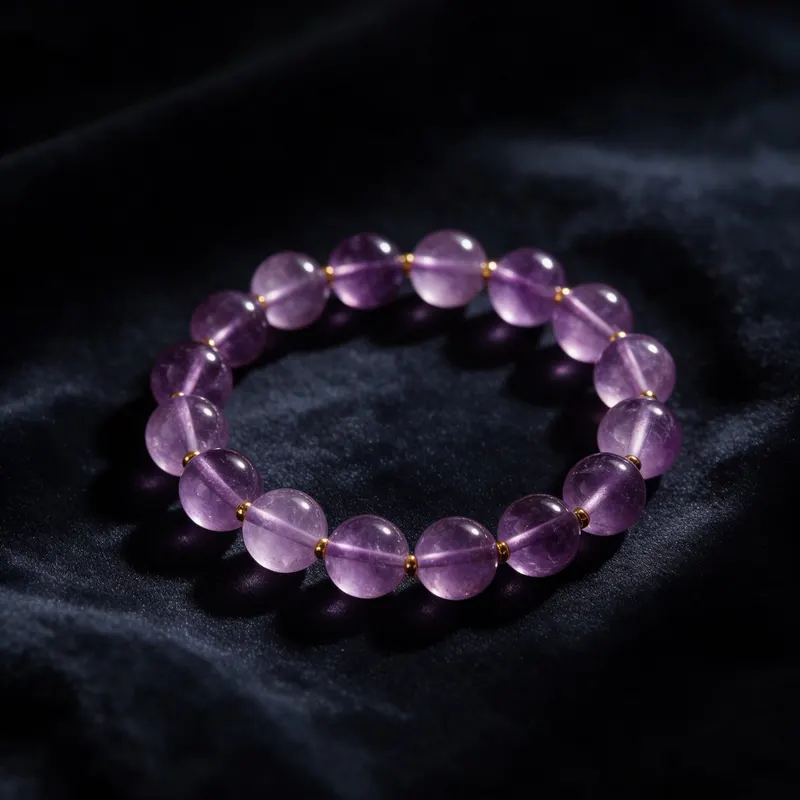
- Calm and clarity: Amethyst is traditionally associated with a settled mind and quieter evenings — a natural left-wrist choice if you want to invite more ease into your day. The Amethyst Healing Bracelet for Calm & Clarity is an easy starting point.
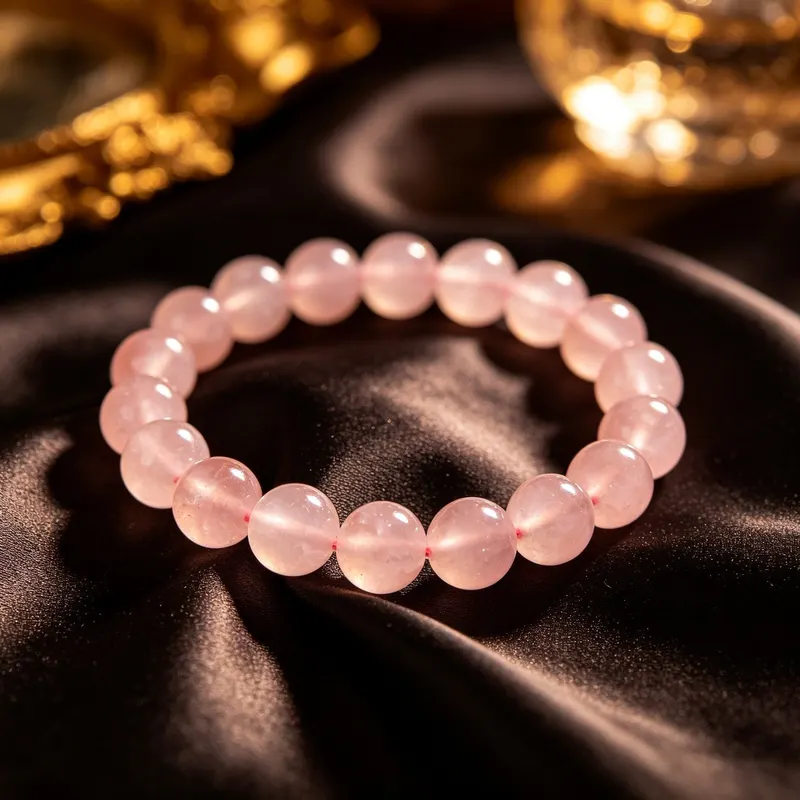
- Love and self-care: Rose quartz is believed to support openness and self-compassion, which fits the receiving side well. The Rose Quartz Love Bracelet for Self-Love & Heart is the classic pick.
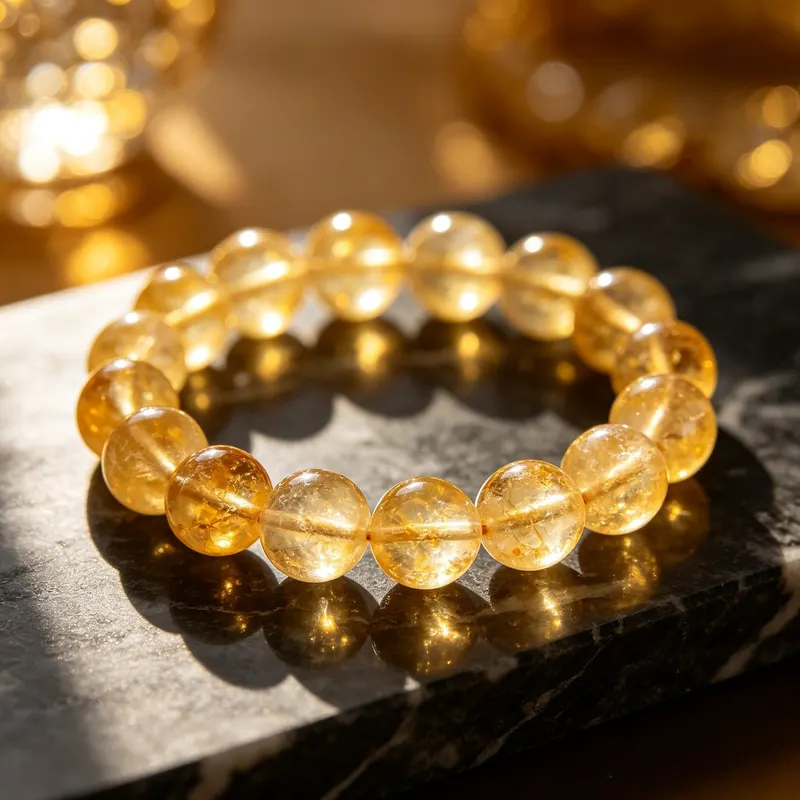
- Abundance and motivation: Citrine is traditionally associated with optimism and forward momentum; many people wear it on the left to "invite in" opportunity. See the Citrine Abundance Bracelet for Prosperity & Joy.
- Intuition and new beginnings: Moonstone and labradorite are often worn on the left when the goal is inward reflection rather than outward action.
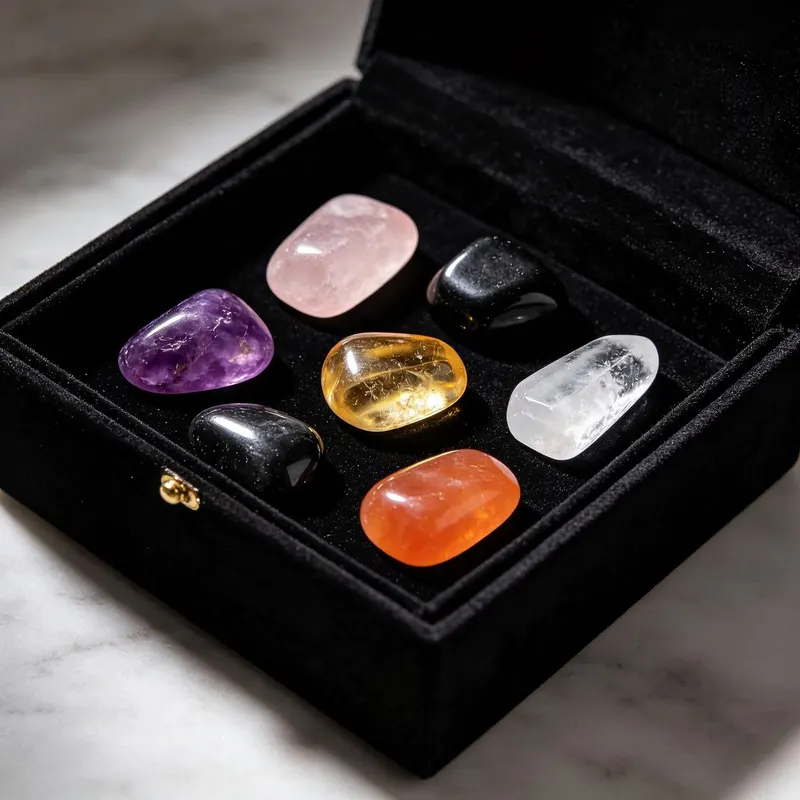
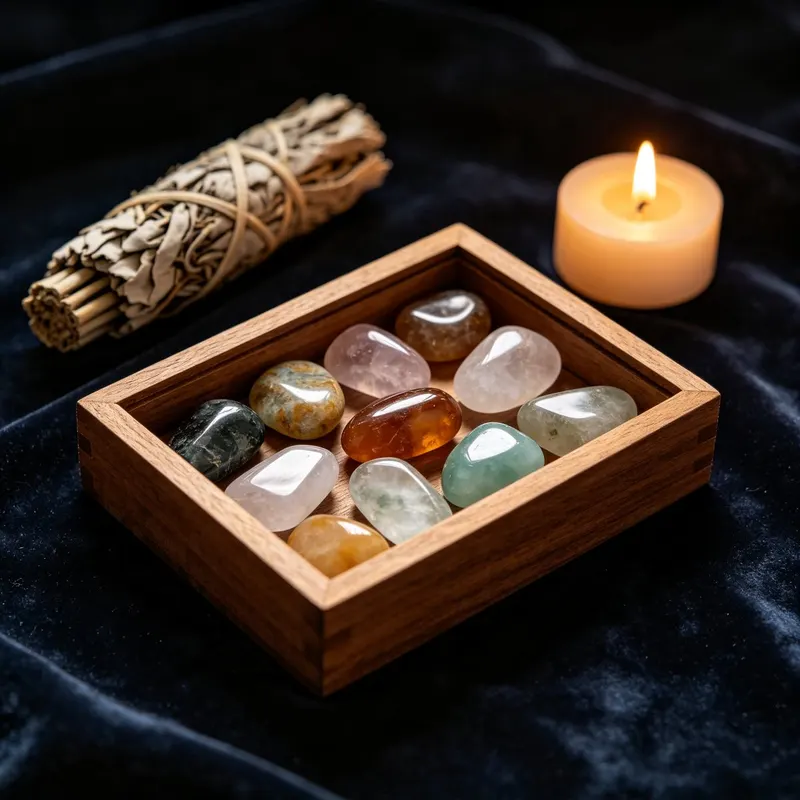
If you're building a small collection, the Healing Crystal Starter Kit, 7 Stones + Guide is a practical way to experiment with which stones you actually reach for before committing to a full bracelet wardrobe.
Wear on the right to release
Choose the right wrist when your goal is to let go, clear space, or project something outward — confidence, boundaries, or simply the intention to stop carrying stress around.
- Releasing stress and negativity: Black tourmaline and obsidian are the traditional "let it go" stones. The Black Tourmaline Protection Bracelet for Grounding is often worn on the right as a boundary-setting reminder.
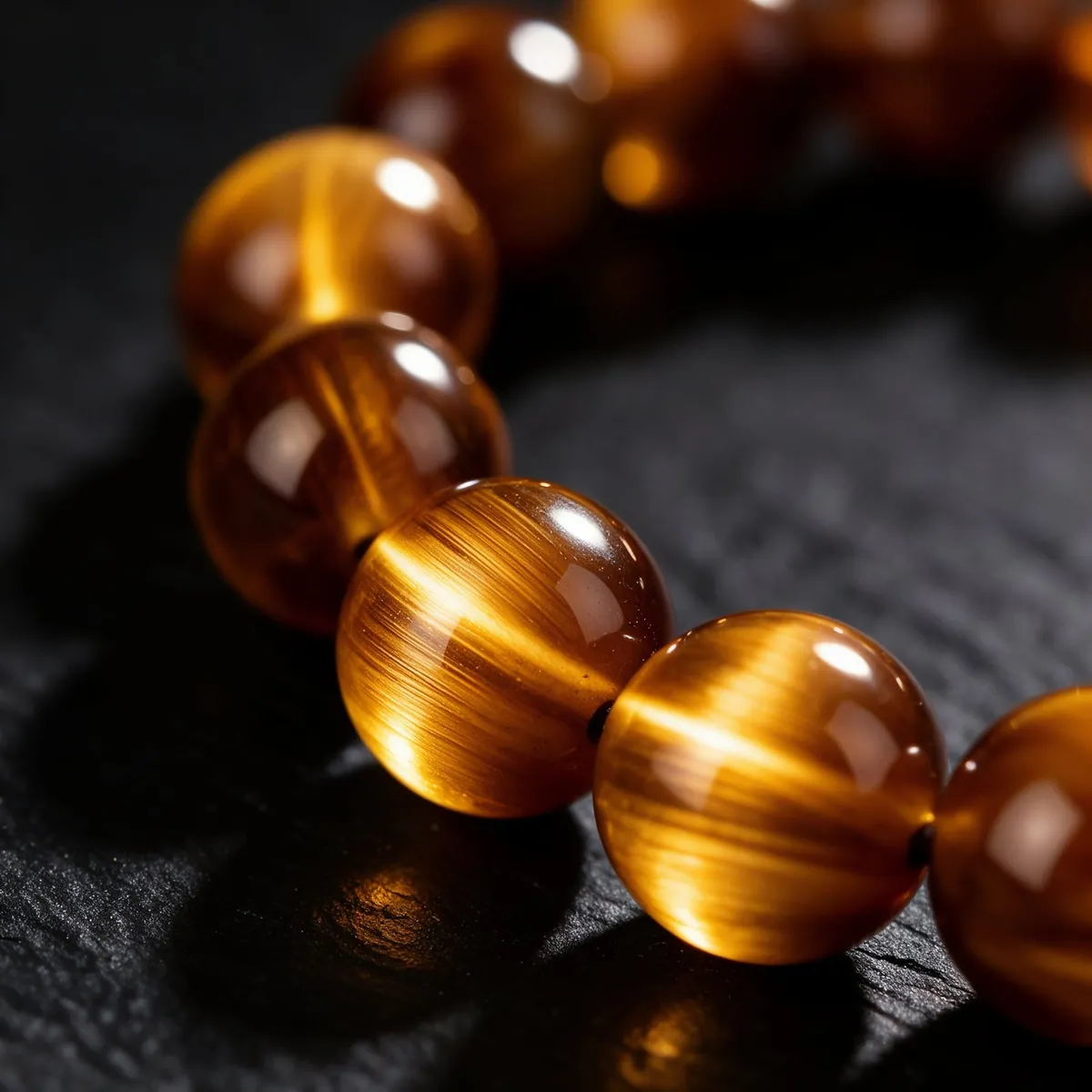
- Outward confidence: Tiger's eye and carnelian are associated with courage and momentum — qualities you project rather than absorb. The Tiger's Eye Confidence Bracelet for Focus & Courage suits a right-wrist wearer heading into a demanding week.
- Shielding your environment: If your intention is protection for a space or a situation rather than for yourself, the releasing side is the traditional choice.
One practical caveat: if you're right-handed and use that hand constantly — typing, cooking, writing — a beaded bracelet on the right wrist will take far more wear and tear. That's a real reason to move it to the left even if the tradition points right.
Which wrist for which stone: a quick-reference table
Use this as a starting point, not a rulebook. The "traditionally worn" column reflects common practice; the "best practical choice" column factors in daily wear and comfort.
| Stone | Traditionally associated with | Common wrist | Practical note |
|---|---|---|---|
| Amethyst | Calm, clarity, reflection | Left | Softer stone (Mohs 7); avoid knocking against hard surfaces |
| Rose quartz | Love, self-compassion | Left | Durable enough for daily wear; keep away from prolonged sun |
| Citrine | Optimism, abundance | Left | Fades in strong sunlight over time |
| Black tourmaline | Grounding, boundaries | Right | Sturdy; a good choice for a dominant wrist |
| Obsidian | Protection, honesty | Right | Hard but can chip at edges; check the setting |
| Tiger's eye | Confidence, focus | Right | Very durable; suits active wear |
| Moonstone | Intuition, new beginnings | Left | Softer (Mohs 6–6.5); handle with care |
| Clear quartz | Clarity, amplification | Either | Hard and versatile; a good "any wrist" stone |
For a pendant version of the "either wrist" approach, the Clear Quartz Point Pendant Necklace, Sterling Silver sidesteps the wrist question entirely and works as a daily anchor.
What if you're left-handed, or wear a watch?
The receiving/releasing tradition is about the sides of the body, not about handedness. So if you're left-handed, the symbolic mapping stays the same: left receives, right releases. What changes is practicality.
- Dominant-hand wear: Your dominant hand does more work, so a bracelet there gets more friction and knocks. If the tradition points to your dominant wrist but it feels annoying, switch — the intention still holds.
- Watch conflicts: Many people wear a watch on the left. Stacking a beaded bracelet against a metal watch can scratch softer stones and wear through elastic faster. Consider moving the bracelet to the free wrist, or wearing the watch on the other arm.
- Desk work: If you type all day, a bracelet resting on the keyboard edge is uncomfortable. Some people wear it slightly higher on the forearm or choose a looser fit for desk days.
- Sleep and exercise: Take bracelets off for sleep, gym sessions, and swimming. Elastic stretches, and water plus sweat shortens its life.
If you want to wear two bracelets at once, a common approach is to pair a receiving stone on the left with a releasing stone on the right — for example, amethyst on the left and black tourmaline on the right — so the two intentions don't compete for the same wrist.
Traditional beliefs vs. verifiable facts
It's worth being clear about which parts of crystal practice are tradition and which are simple material facts. Both matter, but they're different kinds of claims.
Traditional lore (symbolic, not scientific)
- The left side "receives" and the right side "releases" energy.
- Specific stones are associated with specific qualities — amethyst with calm, rose quartz with love, citrine with abundance, black tourmaline with protection.
- Wearing a stone on a particular wrist "directs" its energy.
These are meaningful frameworks for reflection and ritual. They are not measurable effects, and no crystal can promise an outcome — not love, not wealth, not exam results. Think of them as prompts for intention-setting.
Verifiable facts (materials and care)
- Hardness varies. On the Mohs scale, quartz-family stones like amethyst and clear quartz sit around 7; moonstone is softer at roughly 6–6.5; tiger's eye is about 7; obsidian is around 5–5.5 despite feeling glassy. Softer stones scratch and chip more easily.
- Sunlight fades some stones. Citrine, rose quartz, and amethyst can lose color with prolonged direct sun. Store them away from a bright windowsill.
- Water isn't always safe. Selenite dissolves and damages in water; many porous or dyed stones can be affected too. Avoid soaking bracelets, and remove them before swimming or showering.
- Elastic wears out. Most beaded bracelets are strung on elastic cord that stretches and eventually snaps. Restringing is normal maintenance, not a defect.
- Fit matters. A bracelet should sit snug enough not to slide over your hand but loose enough to rotate comfortably — typically about a half-inch of ease around the wrist.
Crystals are intended for reflection and personal ritual; they are not medical devices and do not diagnose, treat, cure, or prevent any disease.
How to choose your wrist (and your bracelet) in practice
If you're deciding right now, run through this short checklist:
- Name your intention. Are you inviting something in (calm, love, focus) or letting something go (stress, a habit, a boundary you need)? In → left. Out → right.
- Check your dominant hand. If the tradition points to your busy hand and it bothers you, prioritize comfort.
- Measure your wrist. Wrap a soft tape measure snugly around your wrist bone. Add about half an inch for a comfortable beaded fit. Most adult wrists fall between 6 and 7.5 inches.
- Inspect the stone and string. Look for even color, no obvious cracks, and a taut elastic with a secure knot. Natural stones vary — small inclusions are normal, not flaws.
- Set realistic price expectations. Simple beaded bracelets in genuine amethyst, rose quartz, or tiger's eye typically run from around $20 to $60 depending on bead size and quality. Rarer stones and sterling silver or gold-plated settings cost more. Be cautious of "museum-grade" claims at bargain prices.
- Commit for a week. Wear it on your chosen wrist for seven days and notice whether the reminder is useful. If it isn't, switch — nothing is broken.
For cleansing and resetting your bracelet between intentions, a Selenite Cleansing Wand for Energy Clearing is a traditional companion — just keep it dry, since selenite is water-sensitive.
FAQ
People Also Ask
Does wearing a crystal bracelet on the "wrong" wrist stop it from working?
No. Wrist choice is a focusing tradition, not a requirement. The bracelet's meaning comes from the intention you attach to it, and that intention travels with you regardless of which arm it's on.
Should left-handed people reverse the left/right rule?
Most traditions keep the same mapping — left receives, right releases — regardless of handedness. That said, comfort should win. If your dominant wrist is uncomfortable, wear it on the other side.
Can I wear more than one crystal bracelet at once?
Yes. A common approach is one receiving stone on the left and one releasing stone on the right. If you stack on the same wrist, separate harder stones from softer ones to reduce scratching, and avoid stretching the elastic by over-stacking.
How do I clean and care for a crystal bracelet?
Wipe it with a soft, slightly damp cloth and dry it immediately. Avoid soaking, harsh cleaners, and prolonged direct sunlight. Remove it for swimming, showering, and heavy exercise, and check the elastic periodically for fraying.
The bottom line
The left-wrist-receives, right-wrist-releases tradition is a simple, elegant way to give your bracelet a purpose. Use it as a starting point: left for what you want to invite in, right for what you want to let go of, and either side when comfort or practicality makes the call. The stone you choose and the intention you set matter far more than the arm it sits on — so pick the wrist that lets you wear it daily, and let the ritual do its quiet work.
Crystals are for reflection and are not medical devices. They do not diagnose, treat, cure, or prevent any disease. If you're struggling with your mental or physical health, please reach out to a qualified professional.