When Your Whole Day Happens at a Desk
You know the feeling: it's 3 p.m., your eyes are dry and grainy, your shoulders have crept up toward your ears, and you've reread the same sentence four times. The screen hasn't moved, but your focus left hours ago. For people who work at a desk or in front of a monitor—writers, analysts, designers, students, anyone whose day is measured in tabs and notifications—the challenge isn't motivation. It's sustaining attention and physical ease across a long, static stretch.
This is where a small, deliberate desk ritual can help. Not because a stone absorbs blue light or neutralizes a router, but because a well-chosen object on your desk can act as a cue: a physical reminder to look away, drop your shoulders, take one slow breath, and return to the single task in front of you. Rituals work by giving your attention somewhere to land.
Below is a practical, honest guide to building a desk-and-screen setup with crystals—what to choose, how to use it, how to care for it, and where tradition ends and verifiable fact begins. Think of the stones as anchors for habits, not as substitutes for the habits themselves.
The Real Culprit Is Posture, Light and Breaks
Let's be clear from the start: no crystal blocks screen emissions, corrects your posture, or fixes eye strain. Those problems are solved by ergonomics, sensible lighting, and regular movement—full stop. The widely used 20-20-20 rule (every 20 minutes, look at something 20 feet away for 20 seconds) and a monitor positioned at roughly arm's length with the top of the screen near eye level do more for your comfort than any object on your desk.
What a desk stone can genuinely do is serve as a cue. Placed where your hand naturally rests, it becomes a tactile trigger for the micro-break you keep forgetting to take. That's a behavioral role, and it's a useful one—many people find that a physical anchor makes a new habit easier to remember than a phone alert they've learned to swipe away.
A Desk Set That Earns Its Place
You don't need a dozen stones competing for space. Three or four, each with a clear job, is plenty. Here's a compact set that covers focus, grounding, and a daily reset.
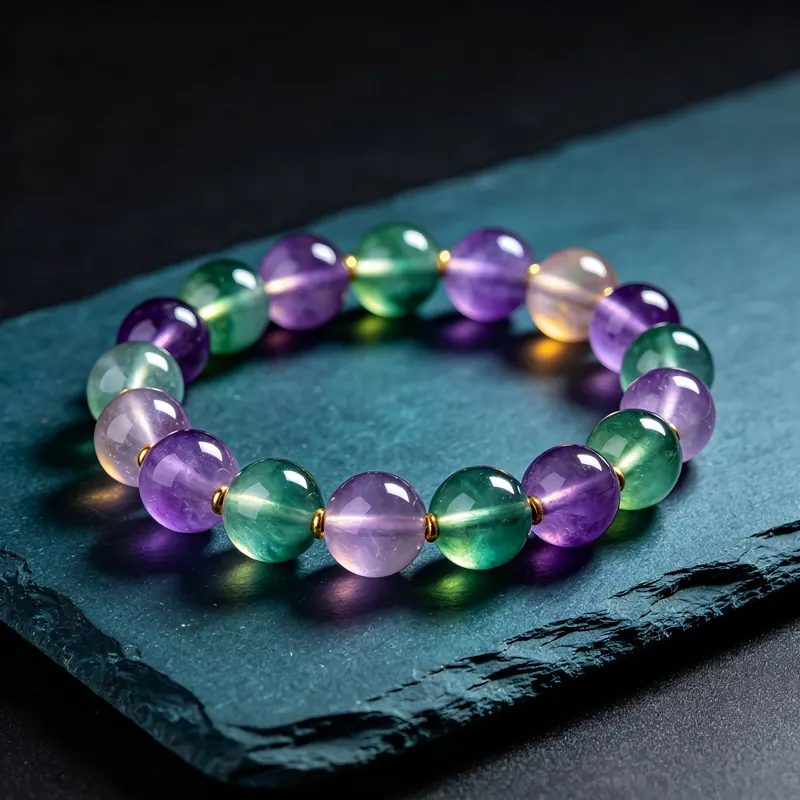
- Focus: Rainbow Fluorite Focus Bracelet for Concentration — fluorite is traditionally associated with clear thinking and organizing attention across competing tasks. Wear it or set it beside your keyboard as your "single-task" cue.
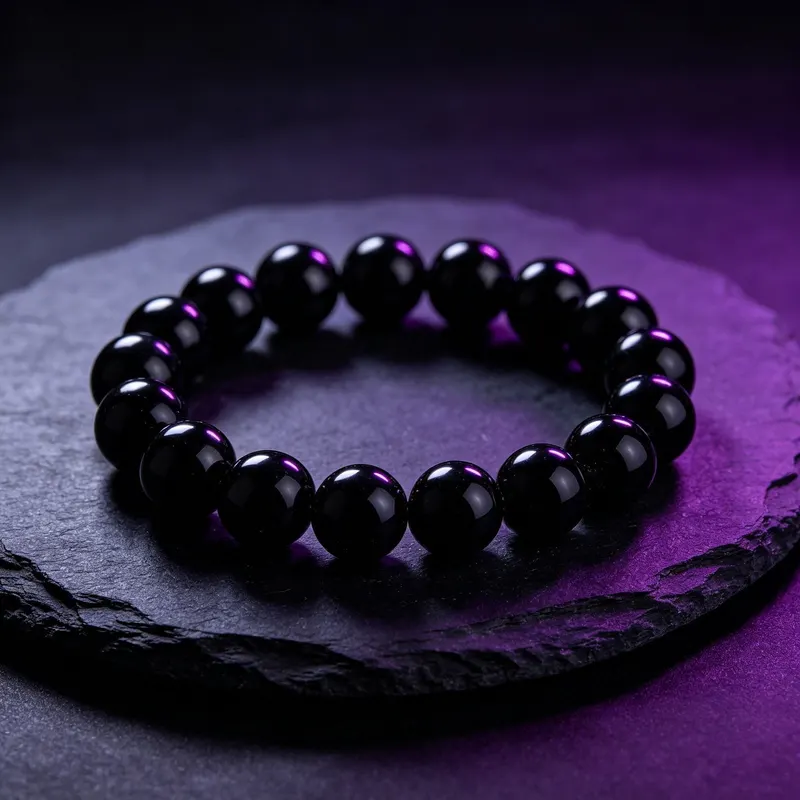
- Grounding: Black Tourmaline Protection Bracelet for Grounding — a steadying anchor for high-pressure stretches like deadlines, reviews, or difficult calls. Traditionally associated with protection and calm.
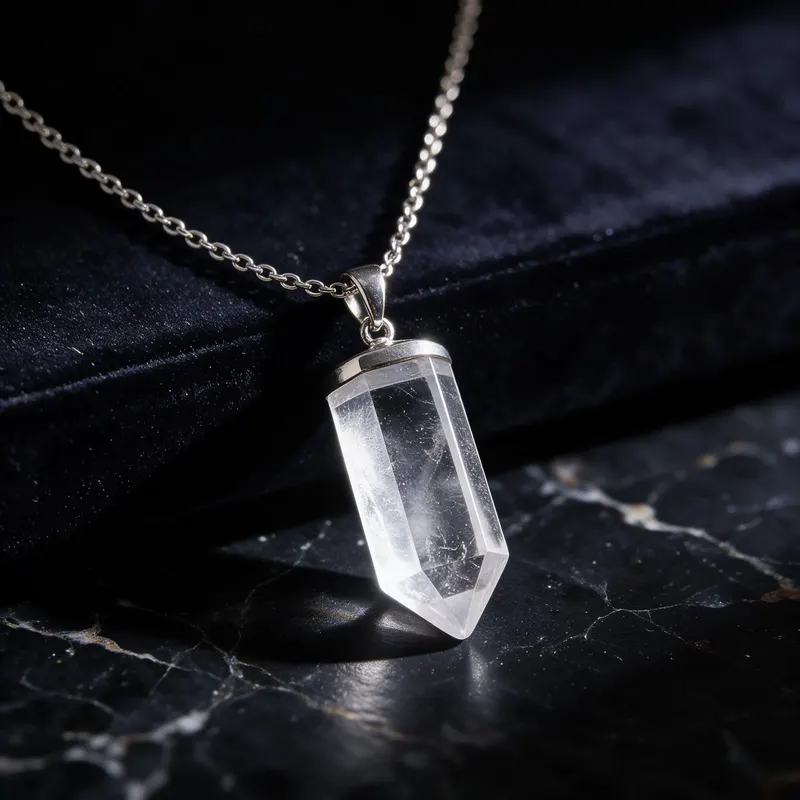
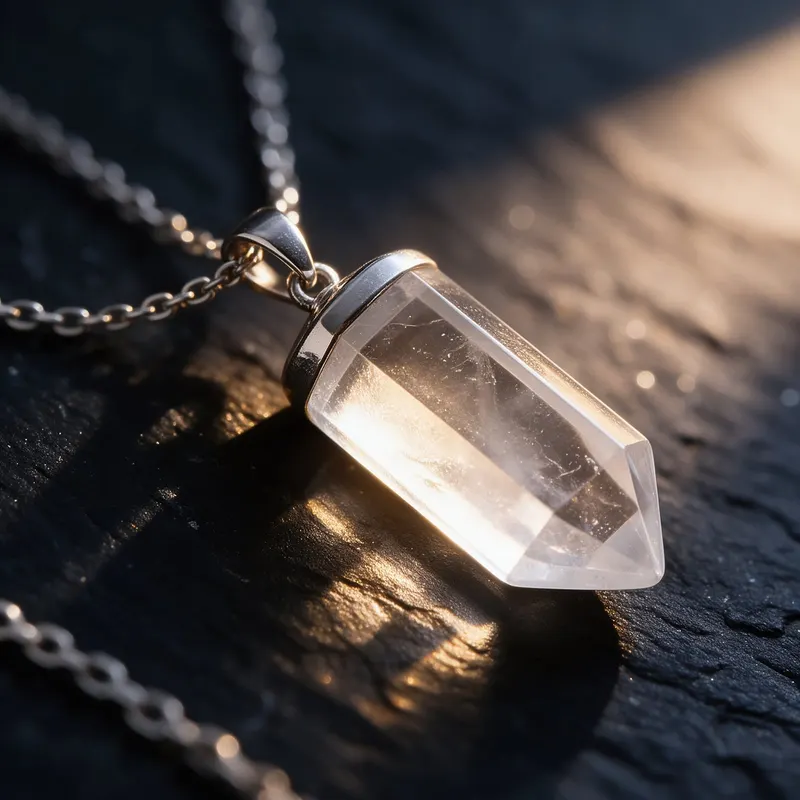
- Intention: Clear Quartz Point Pendant Necklace, Sterling Silver — clear quartz is the classic "programming" stone; many people set one daily priority into it each morning. Worn on a chain, it's also a quiet reminder at your collarbone.
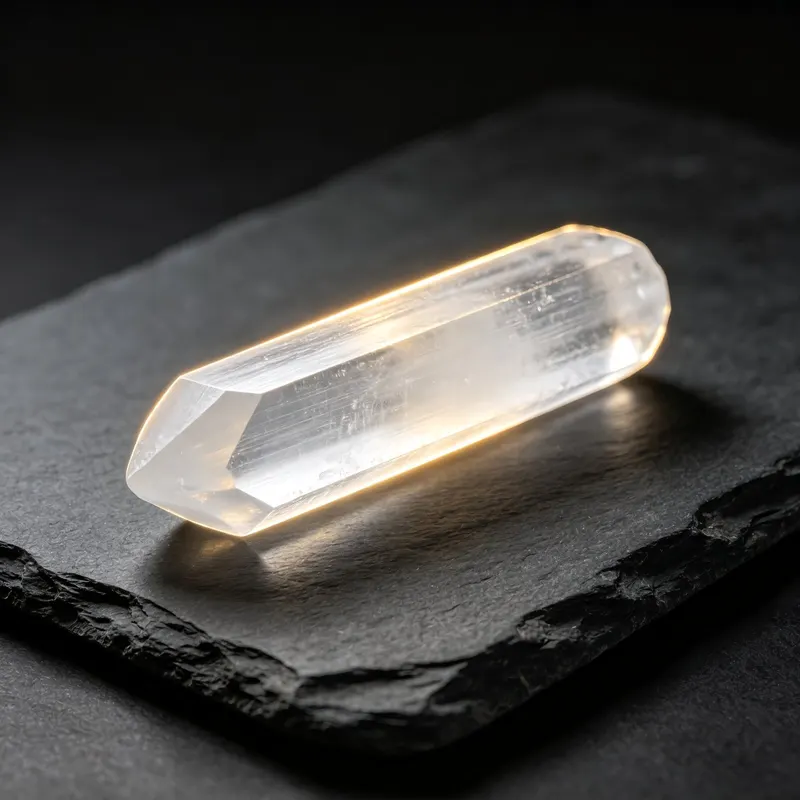
- Reset: Selenite Cleansing Wand for Energy Clearing — a simple end-of-day ritual object for "clearing" the desk and closing out work mentally.
If you prefer a single piece to start, pick the one that matches your main struggle: scattered focus (fluorite), tension and overwhelm (black tourmaline), or a desire for a daily intention-setting habit (clear quartz). You can always add later.
Choosing Your Desk Stone: A Quick Checklist
Before you buy, run through these practical questions. They'll save you from a purchase that looks lovely but doesn't fit your workspace.
- Form factor: A bracelet is easy to wear and remove; a pendant stays on through meetings; a small cluster or wand sits on the desk. Match the form to how you'll actually use it.
- Size and fit: For bracelets, measure your wrist with a soft tape and add roughly 0.5 inch (about 1.25 cm) for comfort. Bead bracelets usually list a circumference—check it against your measurement rather than guessing.
- Desk footprint: If space is tight, a pendant or bracelet takes up none. A raw cluster needs a clear corner where it won't get knocked into your coffee.
- Color and finish: Choose something you genuinely like looking at—you'll notice it more, which is the whole point of a cue.
- Care needs: Some stones dislike water or prolonged sun (see the section below). If your desk gets direct afternoon sun or you tend to clean with a spray bottle, factor that in.
- Budget realism: Bead bracelets and small tumbled or raw pieces typically run from modest to mid-range; sterling silver pendants and larger display pieces cost more. Expect prices to reflect metal type, stone quality, and size—not mystical "power."
A Sustainable Work Rhythm
The stones only help if they're attached to a routine. Here's a simple rhythm you can adapt. The goal is consistency, not perfection.
- Morning (2 minutes): Set one intention into your clear quartz—one priority for the day, stated plainly. Place your fluorite where your hand rests.
- Every 25 minutes: Hold your fluorite, look 20 feet away for 20 seconds, and blink deliberately. This pairs the 20-20-20 habit with a tactile cue.
- Every hour: Stand, roll your shoulders back and down, and take one slow breath. Touch your black tourmaline as the trigger.
- Midday: Step away from the screen entirely for a few minutes—water, a short walk, daylight on your face.
- End of day: Tidy the desk, pass the selenite wand over the surface if that ritual appeals to you, and mentally "close" work. Put the stones away or turn them face-down so the desk reads as off-duty.
If a 25-minute cadence feels rigid, use 45–50 minutes with a longer break. The interval matters less than the repetition.
What tradition teaches — and what is provable
Crystal traditions are rich and worth exploring, but they're lore, not laboratory data. Here's a clear separation so you can enjoy the symbolism while making practical choices about care.
| Stone | Traditional association (lore) | What we can verify (facts & care) |
|---|---|---|
| Fluorite | Focus, clarity, mental organization | Mohs hardness 4; relatively soft—keep away from harder stones and abrasive cleaners; avoid prolonged soaking |
| Black tourmaline | Protection, grounding, calm | Mohs hardness 7–7.5; durable for daily wear; wipe with a soft dry cloth |
| Clear quartz | Clarity, intention-setting | Mohs hardness 7; tough but can chip; safe with brief water contact, dry thoroughly |
| Selenite | Cleansing, clearing | Mohs hardness about 2; water-soluble—never soak or rinse; keep dry and dust with a soft brush |
A few practical notes that follow from the table: fluorite and selenite are the delicate ones—store them separately and keep them dry. Black tourmaline and clear quartz tolerate normal handling but still appreciate gentle care. Prolonged direct sunlight can fade some colored stones over time, so if your desk faces a bright window, rotate pieces or move them out of the glare. And regardless of what any tradition says, none of these stones is a medical device or a substitute for professional eye or ergonomic care.
What to Look For When You Buy
Quality varies widely, and a few checks go a long way. Look for listings that name the stone and, where relevant, the metal (sterling silver, gold-plated). For bracelets, confirm the bead size and the elastic or clasp type—elastic is convenient but check the fit so it isn't stretched tight. For pendants, note the chain length and metal so you know what touches your skin. Photos should show the actual stone's color and pattern; natural variation is normal and often a sign of genuine material. If a description leans on dramatic health claims, treat that as a caution flag rather than a selling point.
FAQ
People Also Ask
Do crystals protect against screen radiation or EMFs?
There is no reliable evidence that crystals block electromagnetic fields or screen emissions. Protect your eyes and body with breaks, good lighting, and ergonomics; use stones as focus and habit anchors instead.
Which crystal is best for concentration at work?
Fluorite is the traditional focus stone, associated with organizing attention across competing tasks. Pair it with a concrete habit—like the 20-20-20 break—so the stone has something real to cue.
How do I clean and care for desk crystals?
Dust with a soft dry cloth. Keep soft stones like fluorite and selenite away from water and hard objects; selenite should never be soaked. Store pieces separately to avoid scratches, and keep colored stones out of prolonged direct sun.
How many crystals do I actually need on my desk?
Start with one or two that match your main need—focus, grounding, or intention-setting. Add more only if each has a clear role; a crowded desk defeats the purpose of a calm, uncluttered workspace.
Closing Thoughts
The most useful desk crystal is the one you'll actually notice, touch, and let remind you to look up, breathe, and reset. Choose a piece that fits your space and your habits, care for it simply, and let it support the routines that genuinely ease screen strain. Explore more in our Focus & Clarity Collection, and if you're building out a workspace, our guides to office crystals and fluorite go deeper.
Crystals are for reflection and ritual; they are not medical devices and are not intended to diagnose, treat, cure, or prevent any condition.