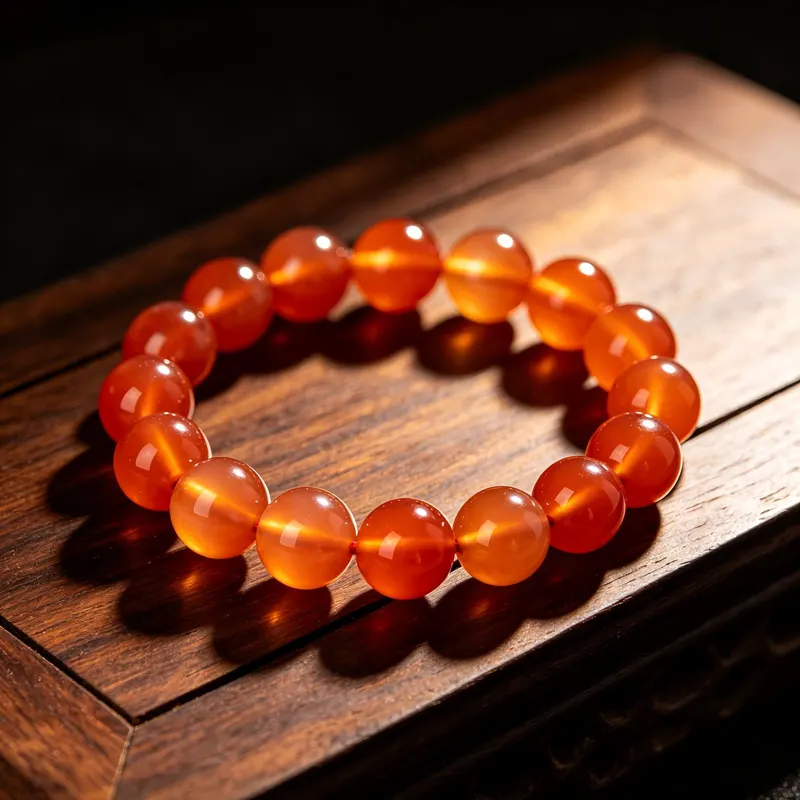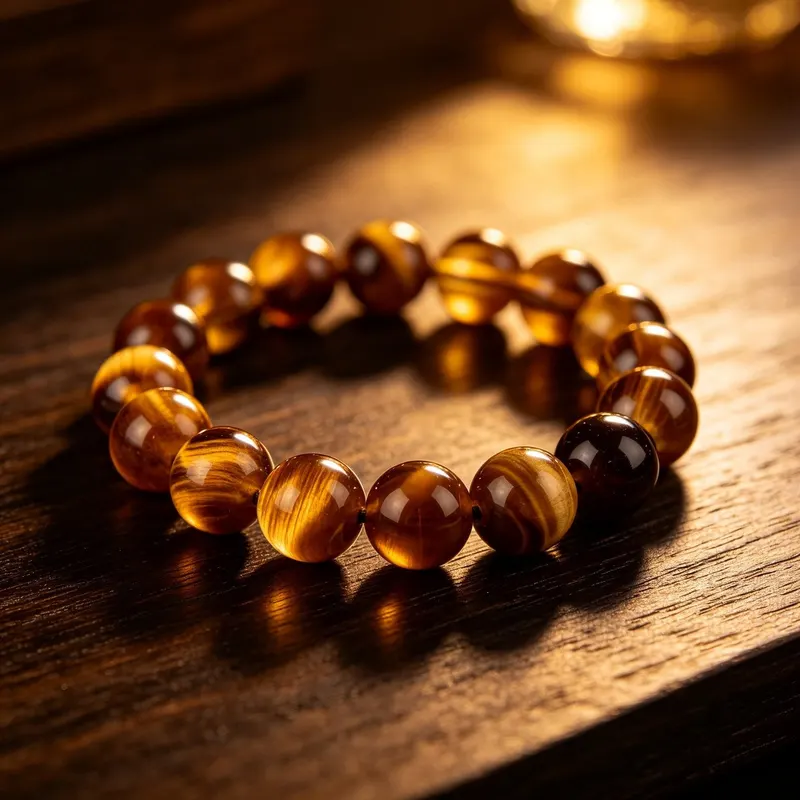
The short version: runners most often choose carnelian for drive, tiger's eye for steady focus, and red jasper for stamina and recovery — durable stones that tolerate sweat and movement.
Why Runners Reach for Crystals
You have a training plan, a race date circled on the calendar, and a body that sometimes disagrees with both. On the long-run days when your legs feel heavy and your head is loud, what you often need isn't more data from your watch—it's a small, physical reminder of why you started. That's where crystals come in for many runners: not as performance enhancers, but as tangible anchors for intention, grit and calm.
Crystals won't lower your heart rate or shave minutes off a personal best. What they can do is give your pre-run ritual a focal point, mark the transition from "getting ready" to "running," and offer something to touch at the start line or mid-interval when you need to reconnect with your goal. Think of a stone as a cue card for your mind, worn on your wrist or carried in a pocket.
This guide covers which stones runners tend to choose and why, how to wear them safely during training, how to size and care for them, and—importantly—what the tradition claims versus what we can actually verify about each stone's durability and sensitivity.
How Runners Actually Use Crystals
The most useful way to work with a crystal is to attach it to a repeatable moment in your routine. A few approaches that runners commonly find practical:
- Pre-run intention. Before you head out, hold your stone for ten to twenty seconds and name one word or phrase for the session—"steady," "patient," "strong finish." This is a mental warm-up, not a magic spell.
- Start-line anchor. Touch the stone in your pocket or on your wrist as the gun goes off to settle nerves and refocus on your pacing plan.
- Mid-effort reset. During a hard interval or the late miles of a long run, a quick touch and a breath can interrupt a spiral of negative self-talk.
- Post-run reflection. Hold the stone after you cool down and note one thing that went well and one thing to adjust. This turns the object into a training journal of sorts.
If you prefer a structured daily practice, our morning routine guide shows how a short crystal ritual can slot into the start of your day, before you even lace up.
Durable, Energizing Stones for Training
Runners tend to favor stones that are hard, chip-resistant and easy to clean, plus stones whose traditional associations match the mental state they want to cultivate. Here's a practical shortlist.
- Carnelian Creativity Bracelet for Motivation & Fire — Traditionally associated with vitality, motivation and forward momentum. A natural fit for speed sessions and race day.
- Tiger's Eye Confidence Bracelet for Focus & Courage — Believed to support steady willpower and grounded confidence, which many runners lean on during the hard middle miles.
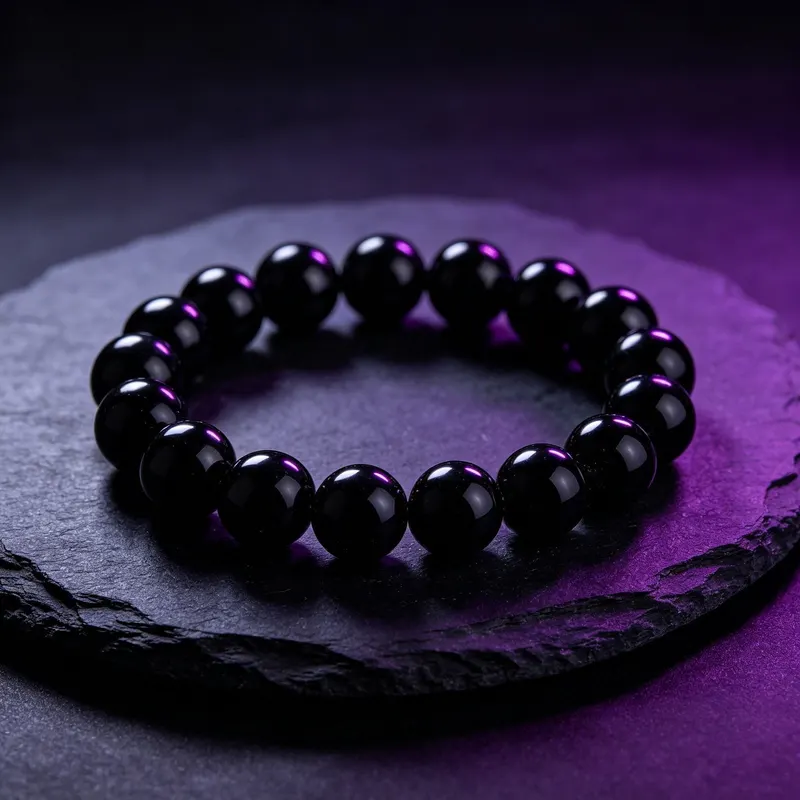
- Black Tourmaline Protection Bracelet for Grounding — Traditionally used for grounding and a sense of protection; a calming choice for long, solitary efforts.
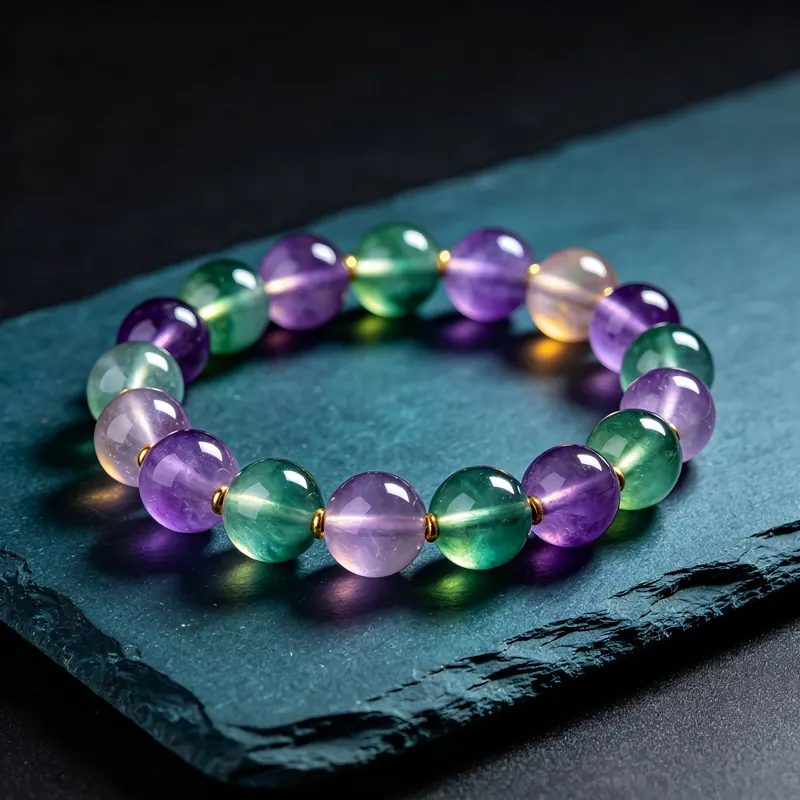
- Rainbow Fluorite Focus Bracelet for Concentration — Often associated with focus and clear thinking—useful for tempo runs and race-pace work.
- Labradorite Bracelet for Intuition & Transformation — Traditionally linked to intuition and adaptability, which suits trail running and unpredictable conditions.
If you're new to crystals and want to experiment before committing to a single stone, the Healing Crystal Starter Kit, 7 Stones + Guide lets you try several and see which one you actually reach for.
Quick Comparison: Which Stone for Which Moment?
| Stone | Traditional association | Best running moment | Durability note |
|---|---|---|---|
| Carnelian | Vitality, motivation | Speed work, race day | Hard (Mohs ~6.5–7); keep away from prolonged sun |
| Tiger's eye | Grit, steady confidence | Long runs, tough intervals | Very durable (Mohs ~6.5–7); water-safe |
| Black tourmaline | Grounding, protection | Recovery days, anxious pre-race nerves | Hard (Mohs ~7–7.5); avoid harsh cleaners |
| Rainbow fluorite | Focus, clarity | Tempo runs, race-pace work | Softer (Mohs 4); avoid knocks and soaking |
| Labradorite | Intuition, adaptability | Trail runs, new routes | Moderate (Mohs ~6–6.5); avoid drops |
Wear Safely While Training
Beaded bracelets and pendants are fine for many runs, but they aren't indestructible. A little care keeps both your jewelry and your skin happy.
- Check the fit. A bracelet should sit snugly enough that it won't slide over your hand or catch on gear, but loose enough that it doesn't press into your wrist. Measure your wrist with a soft tape and add roughly 0.5 inch (about 1.25 cm) for a comfortable fit.
- Remove for high-risk sessions. Take off beaded jewelry for swimming, heavy lifting, contact sports and very high-sweat sessions—elastic cords degrade faster with repeated moisture and salt.
- Watch for chafing. If a bracelet rubs during long runs, switch to a pendant tucked under your shirt or carry a small tumbled stone in a running belt or zippered pocket.
- Keep it off your watch hand. Wearing a bracelet on the same wrist as a watch or GPS can cause scratching and discomfort; many runners prefer the opposite wrist.
- Inspect regularly. Check the elastic for fraying and the clasp on any pendant. Replace worn cords before a race rather than mid-training block.
Traditional beliefs vs. verifiable facts
Crystal traditions are rich and worth exploring, but they're not the same as measurable physical properties. Here's a clear split between lore and fact.
Traditional lore
In crystal and I Ching traditions, carnelian is associated with vitality and motivation, tiger's eye with courage and willpower, and black tourmaline with grounding and protection. These are cultural and spiritual associations—beliefs that many people find meaningful—not scientifically established effects on athletic performance. Crystals are for reflection and are not medical devices.
Verifiable facts: hardness, water and sunlight
What we can verify are the physical properties that affect how a stone holds up in daily wear:
- Mohs hardness describes scratch resistance on a 1–10 scale. Quartz-family stones like carnelian and tiger's eye sit around 6.5–7, making them reasonably durable for everyday wear. Fluorite is softer at about 4 and scratches more easily.
- Water sensitivity varies. Selenite dissolves in water and should never be soaked; softer stones and some porous materials can be damaged by prolonged moisture. Harder stones like quartz are generally water-tolerant but should still be dried after sweat or rain.
- Sunlight sensitivity matters for some colored stones, including amethyst and citrine, which can fade with prolonged direct sun exposure. Store them away from a sunny windowsill.
- Care basics apply across the board: wipe with a soft, damp cloth, dry thoroughly, avoid harsh chemicals and ultrasonic cleaners unless a jeweler confirms it's safe, and store separately to prevent scratching.
If you want to explore the lore in more depth, our grounding guide covers the traditional associations in more detail.
Pre-Run Intention and Recovery Mindset
The mental side of endurance is where a crystal earns its place. A simple pre-run intention practice takes under a minute:
- Hold your stone and take three slow breaths.
- Name one word for the session—"steady," "brave," "patient."
- Set one realistic goal: finish the distance, hold pace, or simply show up.
- After the run, hold the stone again and note one win and one adjustment.
On recovery days, the same object can shift roles. Holding a grounding stone while you stretch or foam-roll can serve as a cue to slow down and let the training settle. For a broader look at pairing crystals with movement, see our workout energy guide.
FAQ
People Also Ask
Which crystal is good for running motivation?
Carnelian is the stone most traditionally associated with motivation and vitality, with tiger's eye often chosen for grit and steady willpower. Neither guarantees performance—they work as motivational cues alongside your training.
Is it safe to run in a crystal bracelet?
A snug, well-fitted bracelet is generally fine for easy runs. Remove beaded jewelry for swimming, heavy lifting or very high-sweat sessions to protect the elastic cord, and check for fraying regularly.
How do I choose the right size bracelet?
Measure your wrist snugly with a soft tape, then add about 0.5 inch (1.25 cm) for a comfortable fit. If you're between sizes, size up slightly so the bracelet doesn't press into your wrist during runs.
What's a realistic price for a crystal bracelet?
Expect roughly $20–$60 for a beaded bracelet in natural stone, depending on the stone and craftsmanship. Pendants with sterling silver or gold-plated settings typically run higher. Be cautious of prices that seem unusually low for a stone described as rare or high-grade.
Browse the Curated Collection
Explore the full edit here: Bestsellers Collection →
Shop the Stones
- Carnelian Creativity Bracelet for Motivation & Fire
- Tiger's Eye Confidence Bracelet for Focus & Courage
- Black Tourmaline Protection Bracelet for Grounding
Keep Exploring
Gym Energy · Morning Routine · Grounding
Crystals are intended to support personal and spiritual well-being and are not medical devices. They do not diagnose, treat, cure, or prevent any disease. If you are struggling with your mental or physical health, please reach out to a qualified professional.