A Talisman for the Road
You know the feeling: the 4 a.m. alarm, the shoes-off shuffle at security, the seat that reclines eleven degrees. Travel pulls us out of routine—different beds, crowded terminals, long transit days—and even a trip you've looked forward to can leave you feeling scattered rather than restored. That's why so many travelers tuck a small stone into a pocket or wear one on the wrist: not as a magic charm, but as a familiar touchpoint in unfamiliar places.
Crystals won't get your flight on time or keep your luggage from going to the wrong city. What they can do is give you a physical anchor for the kind of attention you want to bring to a journey—steadiness in a crowd, calm during turbulence, clarity when you're jet-lagged and staring at a foreign train map. Think of a travel stone as a reminder object, the way a ring or a worn photograph can be.
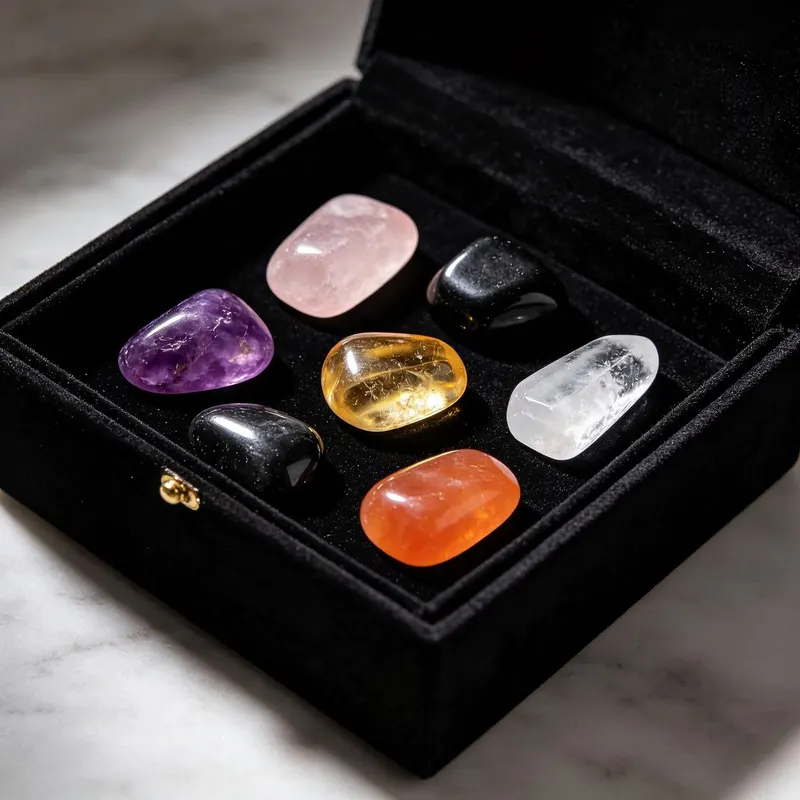
This guide covers the stones most often chosen for travel, how to choose and size them, how to pack them so they survive the trip, and what the tradition actually claims versus what you can verify about the material itself. If you're new to all of this, our Healing Crystal Starter Kit, 7 Stones + Guide is a low-pressure way to begin before committing to a single piece.
Best Travel Companions
The most useful travel stones tend to fall into two camps: those traditionally associated with protection and grounding, and those believed to support calm and mental clarity. Here's how the most common choices compare.
| Stone | Traditionally associated with | Best form for travel | Practical notes |
|---|---|---|---|
| Black tourmaline | Shielding, grounding in busy spaces | Bracelet or tumbled stone | Hard (7–7.5 Mohs); durable for daily wear |
| Black obsidian | Protection, honest self-reflection | Pendant worn under clothing | Volcanic glass (about 5–5.5 Mohs); chips more easily than quartz |
| Clear quartz | Clarity, amplification of intention | Small pendant or tumbled point | Hard (7 Mohs); easy to clean, very durable |
| Amethyst | Calm, winding down, restful evenings | Bracelet or small cluster for the hotel room | 7 Mohs, but fades with prolonged direct sun |
| Labradorite | Intuition, navigating the unknown | Bracelet | 6–6.5 Mohs; avoid knocking against hard surfaces |
| Moonstone | New beginnings, intuition | Bracelet | 6–6.5 Mohs; keep away from household cleaners |
In practice, most travelers settle on one or two pieces rather than a full collection. A few strong options:
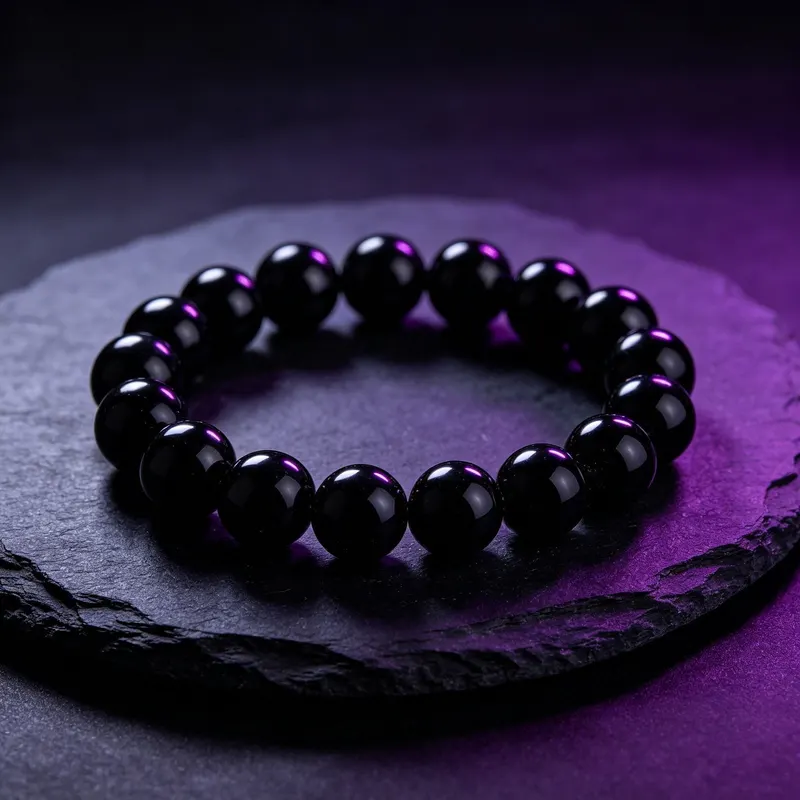
- For crowds and high-stimulation spaces: a Black Tourmaline Protection Bracelet for Grounding stays on your wrist through security and sightseeing alike.
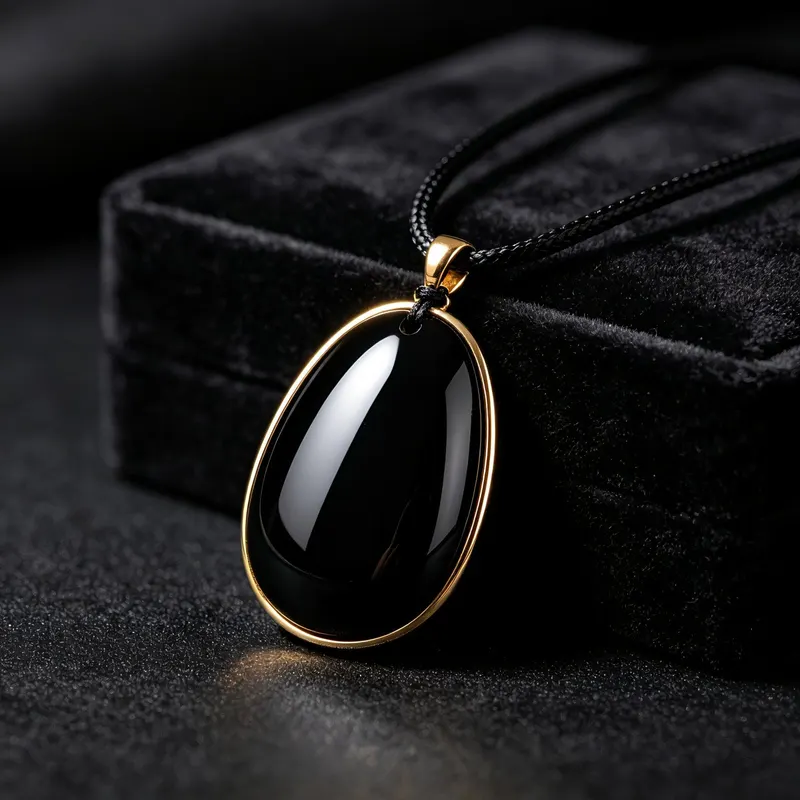
- For nervous flyers: a Black Obsidian Teardrop Protection Pendant Necklace sits close to the body and can be worn under a shirt—discreet, and easy to hold during takeoff.
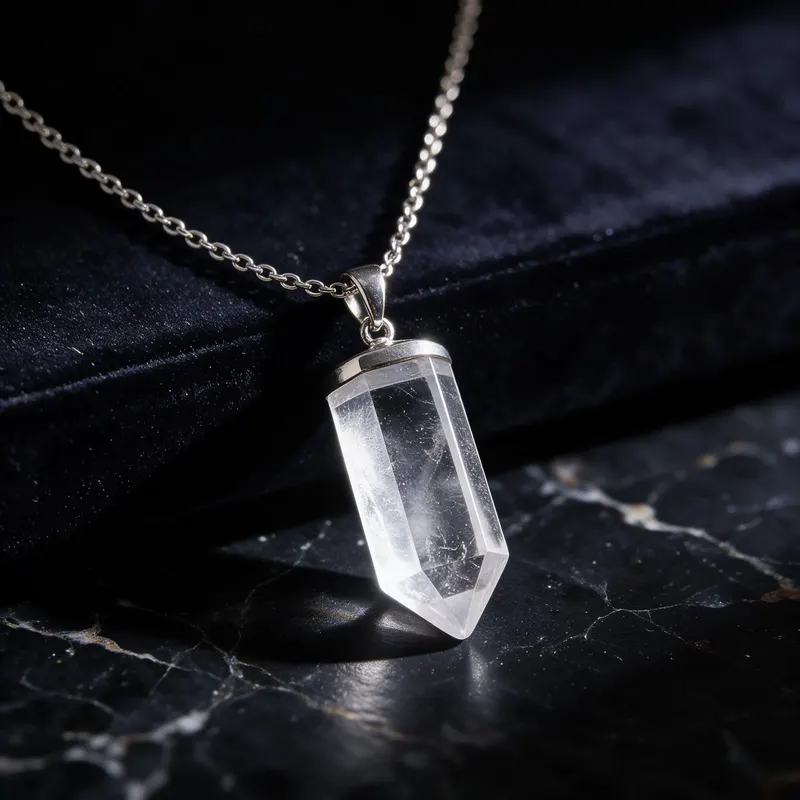
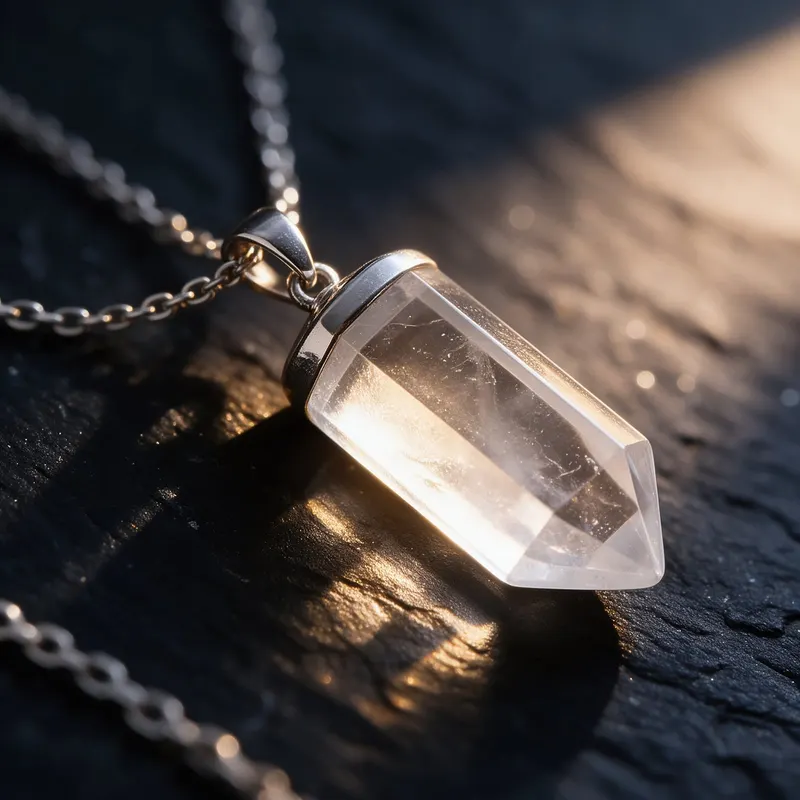
- For mental clarity on long transit days: a Clear Quartz Point Pendant Necklace, Sterling Silver is light, hard-wearing, and pairs with almost anything you'd pack.
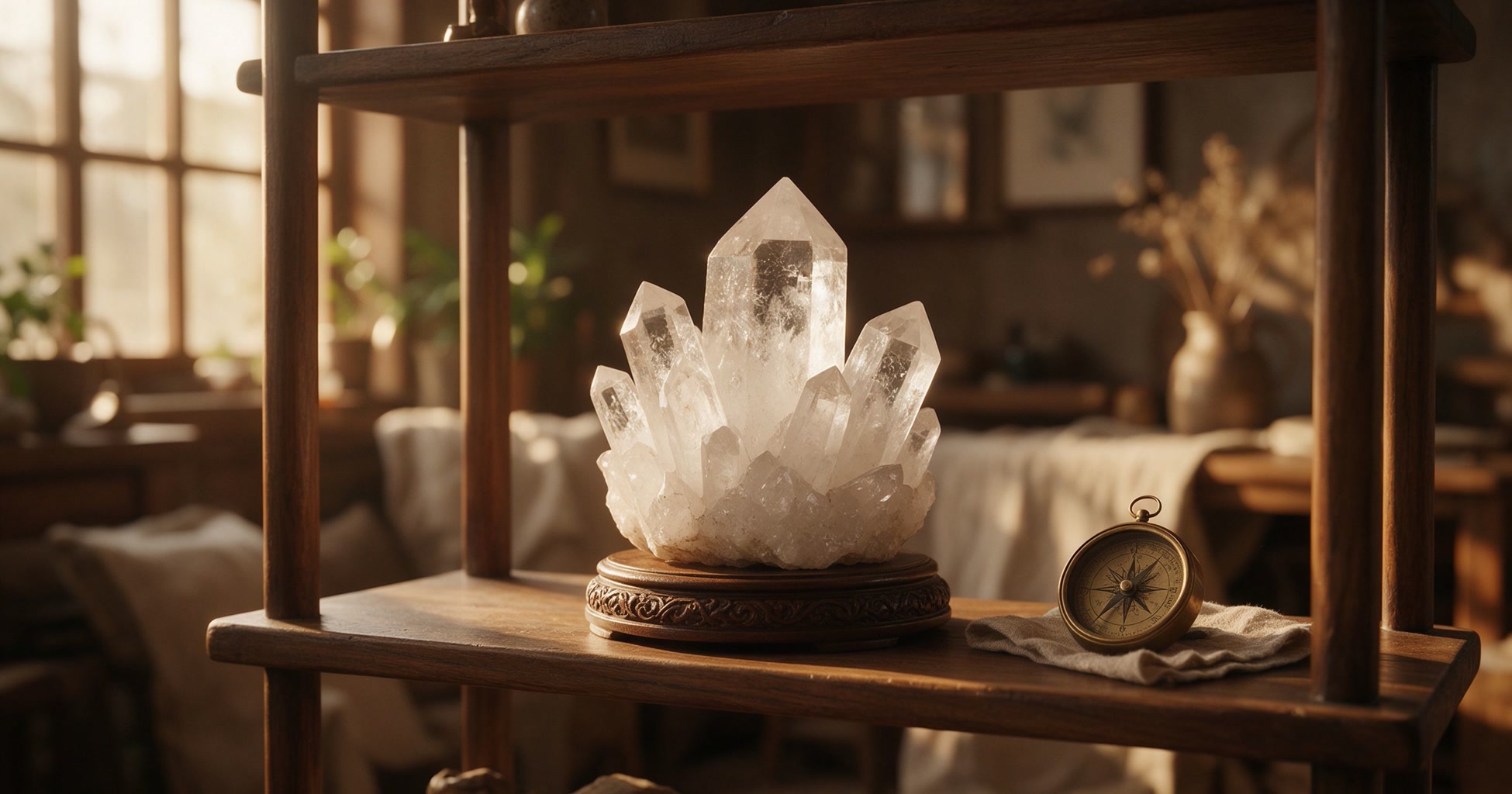
- For winding down in a hotel room: a Raw Amethyst Cluster for Meditation & Altar makes a small, calming focal point on a nightstand—if you have room in a checked bag.
- For trips that feel like fresh starts: a Rainbow Moonstone Bracelet for Intuition & New Beginnings is traditionally associated with transitions and unfamiliar territory.
How to Choose (and Size) a Travel Stone
Start with the moment you most want help with. Dread the middle seat? Look at grounding stones like black tourmaline or obsidian. Anxious about navigating a new city alone? Labradorite or moonstone, traditionally associated with intuition, may appeal. Want to stay sharp through a red-eye connection? Clear quartz or fluorite are the usual picks for focus.
Then get practical about form:
- Bracelets: Measure your wrist with a soft tape just below the wrist bone, then add roughly half an inch for a comfortable fit. Beaded bracelets typically come in 7–8 inch lengths; if you're between sizes, size up. On a long flight, wrists can swell slightly, so a snug bracelet may feel tighter than usual.
- Pendants: Check the chain length and clasp type. A pendant you can tuck under clothing is less likely to snag on seatbelts or bag straps, and less likely to attract questions if you'd rather keep your practice private.
- Tumbled stones: The size of a thumbnail is ideal—big enough to hold, small enough to forget in a pocket. Anything larger becomes a packing decision.
Look for natural variation. Genuine stones vary in color and pattern; perfectly uniform, suspiciously cheap pieces are often dyed or glass. Ask what the stone is and where it's from, and expect a small card or listing that names the material honestly.
How to Carry Them
A durable black tourmaline bracelet travels on your wrist, an obsidian pendant stays under clothing, and a small tumbled clear quartz fits in any bag. A few habits make the difference between a stone that lasts years and one that arrives scratched:
- Use a soft pouch. A drawstring cloth bag keeps stones from knocking against keys, coins, and each other. Obsidian and moonstone in particular chip on hard edges.
- Keep one stone accessible. Put your travel piece in your personal item, not the checked bag—you'll want it during the flight, not after.
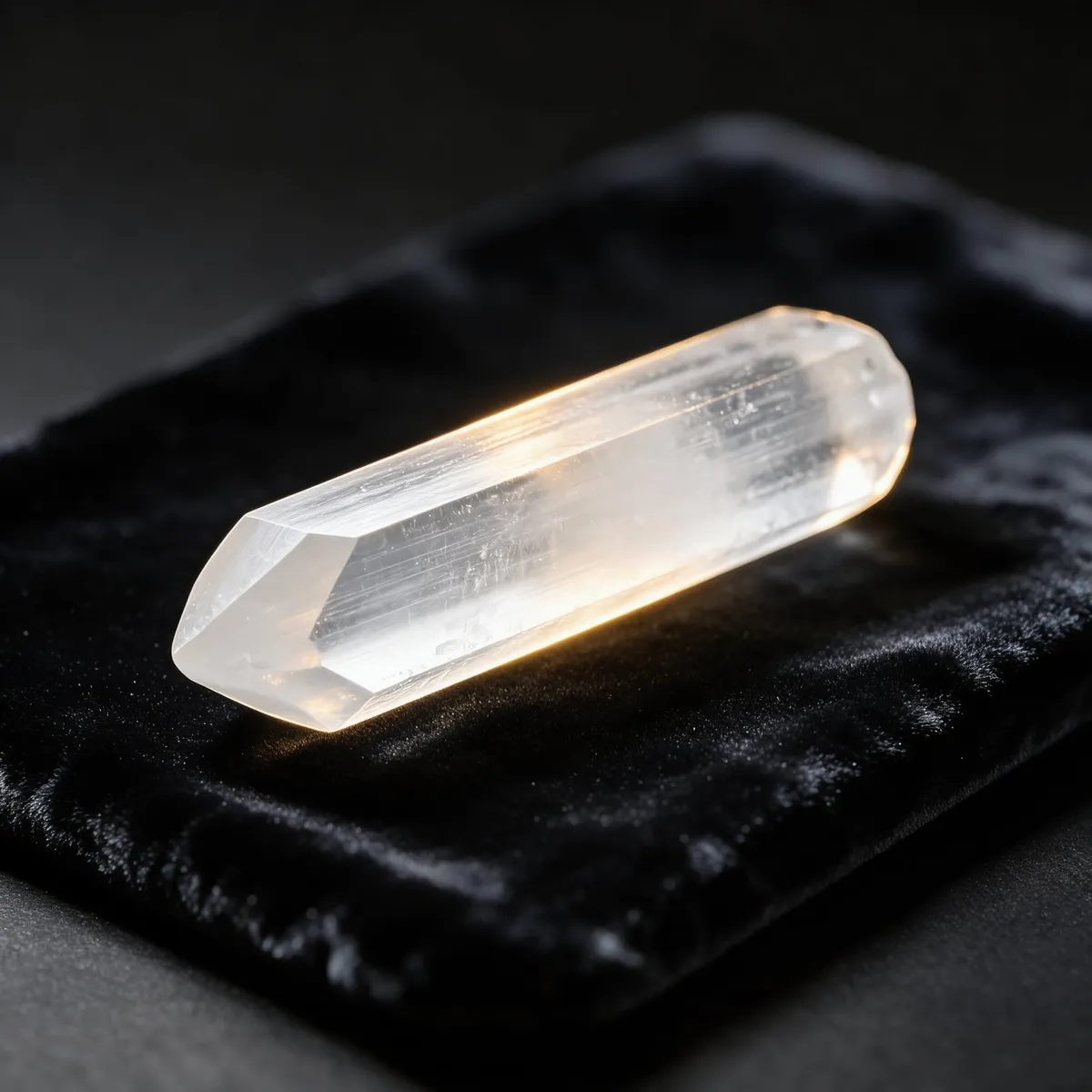
- Pack clusters and wands carefully. Wrap them in a sock or shirt, or nestle them in a hard-sided case. A Selenite Cleansing Wand for Energy Clearing is beautiful but fragile and water-soluble, so it needs its own protection.
- Mind the metal. Sterling silver and gold-plated chains tarnish and wear faster in humidity; a small anti-tarnish pouch helps, and so does drying jewelry fully after swimming.
A Calm-in-Transit Practice
During turbulence, delays, or a packed train, hold your stone and follow a slow box breath—inhale for four, hold for four, exhale for four, hold for four. Repeat for a few rounds. The stone isn't doing the work; it's giving your hands and attention somewhere to rest while your breathing slows.
Two variations travelers find useful:
- The arrival reset: before you leave the airport or station, pause for three slow breaths with your stone in hand, and name one thing you're looking forward to. It marks the transition from transit mode to being somewhere.
- The evening wind-down: set your stone on the nightstand and spend two minutes breathing before bed. If you carry amethyst, this is the moment it's traditionally associated with.
If travel anxiety is intense or persistent, a crystal is not a substitute for support. Our guide to stress relief crystals covers complementary practices, and a qualified professional is the right resource for anything that's affecting your daily life.
The traditional view, and what is verifiable
Crystal traditions are old and varied, and it's worth being clear about which claims are lore and which are simple materials science.
What the tradition says: Black tourmaline is traditionally associated with shielding and grounding; obsidian with protection and honest reflection; clear quartz with clarity and amplification of intention; amethyst with calm and restful evenings. These are cultural and spiritual associations, not established effects. We present them as invitations to reflection—"believed to," "traditionally associated with"—not as promises.
What we can verify: Hardness, durability, and care requirements are measurable. On the Mohs scale, quartz-family stones (clear quartz, amethyst, citrine) sit around 7, tourmaline around 7–7.5, obsidian around 5–5.5, and moonstone and labradorite around 6–6.5. That means quartz and tourmaline tolerate daily wear well, while obsidian, moonstone, and labradorite scratch and chip more easily and should be stored separately. Amethyst's color can fade with prolonged direct sunlight, so don't leave a cluster on a sunny windowsill for weeks. Selenite is water-soluble—never wash it; dust it with a dry cloth. Most other stones can be wiped with a damp cloth and mild soap, then dried thoroughly.
What we can't verify—and won't claim—is that any stone prevents illness, brings luck, or guarantees a safe trip. Crystals are for reflection and are not medical devices.
Can You Fly With Crystals?
Yes. Tumbled stones and jewelry are fine in carry-on or checked luggage, and small pouches generally clear security without issue. A few practical notes: very large clusters or dense stone spheres can look unusual on an X-ray and may invite a bag check, so keep big display pieces in checked luggage. Loose stones in a pocket can set off a metal detector's sensitivity or simply get lost—use a pouch. And if you're traveling internationally, check your destination's rules on importing raw materials, which vary.
For more on choosing protective stones, explore the wider protection guide, stay rooted with grounding stones, and ease travel nerves with our stress guide.
FAQ
People Also Ask
What is the best crystal to travel with?
There's no single answer—it depends on what you want support with. Black tourmaline is the most popular choice for grounding in crowds, obsidian for a sense of protection, and clear quartz for clarity on long transit days. Many travelers carry one grounding stone and one calming stone.
Can you bring crystals on a plane?
Yes—crystal jewelry and tumbled stones are allowed in both carry-on and checked bags. Keep small stones in a pouch so they don't get lost, and pack large clusters in checked luggage to avoid an extra security check.
Where should I keep crystals while traveling?
Wear them as a bracelet or pendant, or keep them in a soft pouch in your personal bag for easy access during the flight. Avoid loose stones in pockets, where they're easily lost or scratched by keys.
How do I clean a travel stone?
Wipe most stones with a damp cloth and mild soap, then dry fully. Never soak selenite, and keep amethyst out of prolonged direct sun. Store harder stones separately from softer ones like obsidian and moonstone.
Shop the Stones
- Black Tourmaline Protection Bracelet for Grounding
- Black Obsidian Teardrop Protection Pendant Necklace
- Clear Quartz Point Pendant Necklace, Sterling Silver
- Rainbow Moonstone Bracelet for Intuition & New Beginnings
- Healing Crystal Starter Kit, 7 Stones + Guide
Keep Exploring
Protection Crystals · Grounding Crystals · Stress Relief Crystals
Crystals are intended to support personal and spiritual well-being and are not medical devices. They do not diagnose, treat, cure, or prevent any disease. If you are struggling with your mental or physical health, please reach out to a qualified professional.