You have a bowl or a tuning fork, a shelf of stones, and a nagging question: does any of this actually do anything? Or maybe your situation is more practical. You've read that water can ruin certain crystals, that salt scratches, and that smoke bothers your lungs or your landlord. You want a cleansing method that won't damage a soft stone, a silver setting or a glued-on bail—and that you can do in a small apartment without setting anything on fire.
Sound cleansing is that method. It requires no water, no smoke, no salt and no physical contact with the stone. You strike a tone, let it ring, and move it around the piece. That's the whole physical procedure. The rest is attention and intention.
This guide covers what sound cleansing is traditionally understood to do, which tools work and how to use them, exact timings, how to handle jewelry and fragile specimens, and—importantly—what we can actually verify about crystals versus what belongs to the realm of tradition. By the end you'll be able to cleanse a single ring or an entire collection in under ten minutes.
Why Sound Cleansing Is So Useful
Most cleansing methods involve a medium that touches the stone: water, salt, smoke, soil, sunlight. Each of those has a failure mode. Water dissolves selenite and can cloud halite; salt is abrasive and can pit softer stones; direct sun can fade amethyst, rose quartz and fluorite over time; smoke leaves a residue on porous surfaces and isn't welcome in every home.
Sound sidesteps all of it. The stone is never touched, never wetted, never heated. That makes sound the default recommendation for three categories in particular:
- Soft or porous stones—selenite, halite, malachite, rhodochrosite, and anything with a rough or drusy surface.
- Jewelry with metal settings—water and salt accelerate tarnish on sterling silver and can loosen glued settings. Sound does neither.
- Whole collections at once—one bowl tone can cover a shelf of stones in a single pass, which matters if you keep a display or an altar.
It is also quiet, portable and repeatable. A tuning fork fits in a bag; a small singing bowl fits on a nightstand. If you cleanse often—daily, or before each meditation—that convenience is the difference between a practice that sticks and one that doesn't.
What You Can Use
Three tools cover almost every situation. You don't need all of them.
Singing bowls
A Tibetan bowl (usually a bronze alloy) or a crystal bowl (usually quartz) produces a sustained, complex tone with strong overtones. Crystal bowls tend to be louder and more piercing; Tibetan bowls are warmer and easier to play quietly. For a small collection, a bowl 4–6 inches in diameter is plenty—larger bowls are louder but not more effective. Strike with a padded mallet, then run the mallet slowly around the rim to sustain the tone.
Tuning forks
A tuning fork gives a clean, single frequency and is the most precise option. Strike it on a rubber pad (not on a hard surface, which can damage the tines) and hold it near—not against—the stone. Tuning forks are ideal for jewelry and single pieces because you can bring the tone within an inch of the setting without touching it. Any fork in the 128–528 Hz range works; the specific frequency is a matter of preference, not requirement.
Your voice
Humming, chanting a single sustained vowel, or toning "ah" or "om" works and costs nothing. Voice is the most portable option and, for many people, the most embodied—you feel the vibration in your chest as well as hearing it. Hold a steady tone for 20–30 seconds while directing your attention toward the stones.
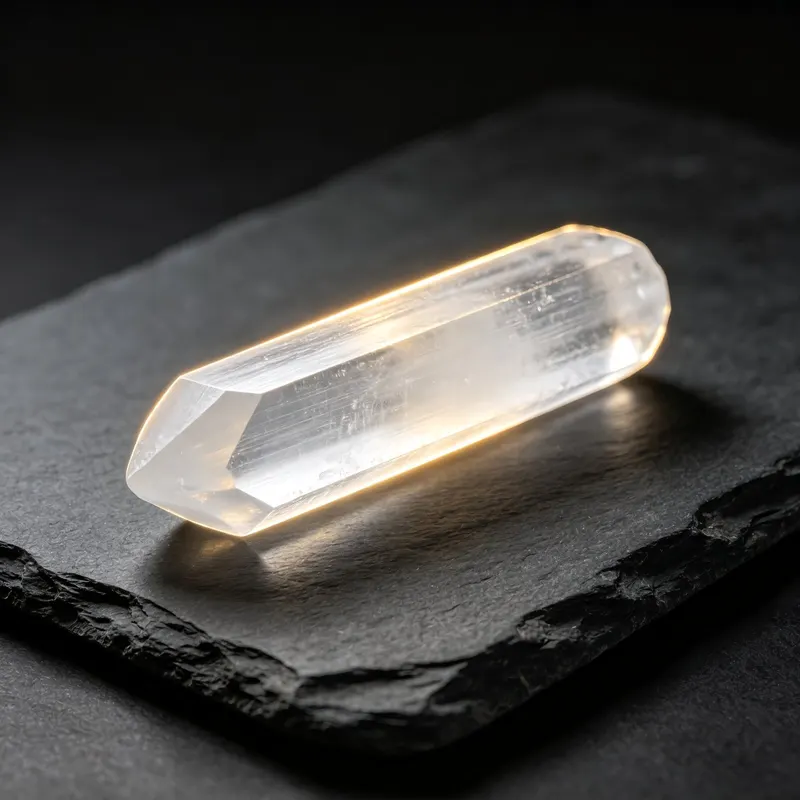
Optional support: a Selenite Cleansing Wand is traditionally used as a resting place between sound sessions. Selenite is water-soluble, so it should never be rinsed—which makes it a fitting companion to a no-water method. Resting a bracelet on or beside the wand between wears is a common habit, though it is a traditional practice rather than a verified one.
The Method, Step by Step
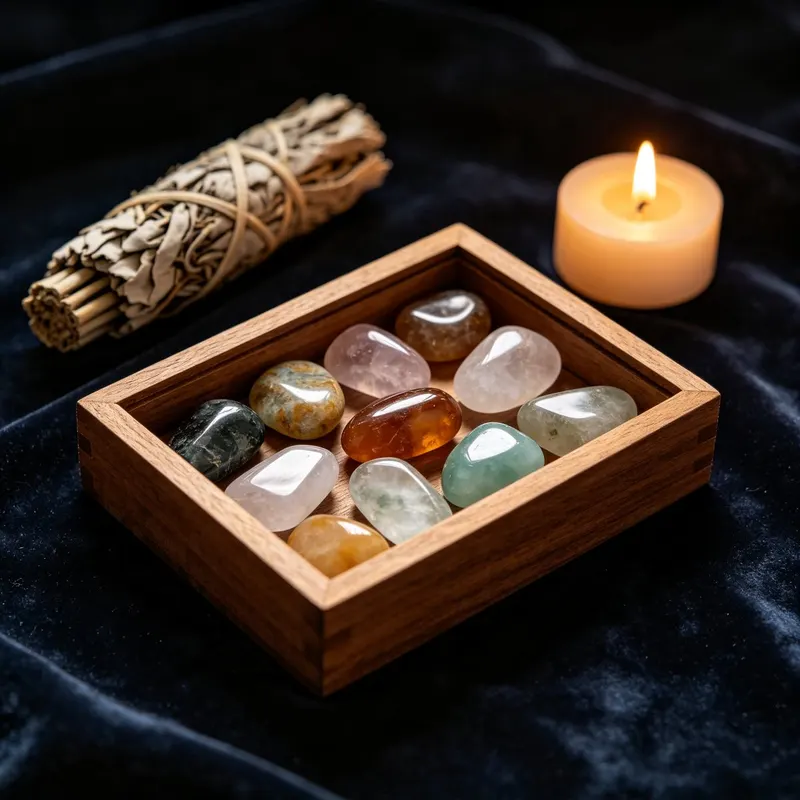
- Clear a space. Set the stones on a clean cloth or wooden tray. Remove metal jewelry that might rattle, and silence your phone.
- Position the sound source. Place the bowl or fork within about a foot of the stones. For a single pendant or ring, six inches is fine.
- Begin the tone. Strike the bowl or fork and let it ring. If using a bowl, run the mallet around the rim to sustain it.
- Move slowly. Pass the tone around each piece—over the top, around the sides—at a pace that feels deliberate rather than rushed. If using your voice, simply direct your attention to each stone in turn.
- Hold for 30–60 seconds per small group. A single ring or pendant needs less; a shelf of stones needs a full minute or two.
- End on felt completion. There is no fixed duration. Stop when the space feels settled—when the tone has faded and your attention has nowhere further to go.
- Rest and store. Return pieces to their pouch, box or display. For daily upkeep, rest frequently worn pieces on a selenite wand or in a closed drawer away from direct sun.
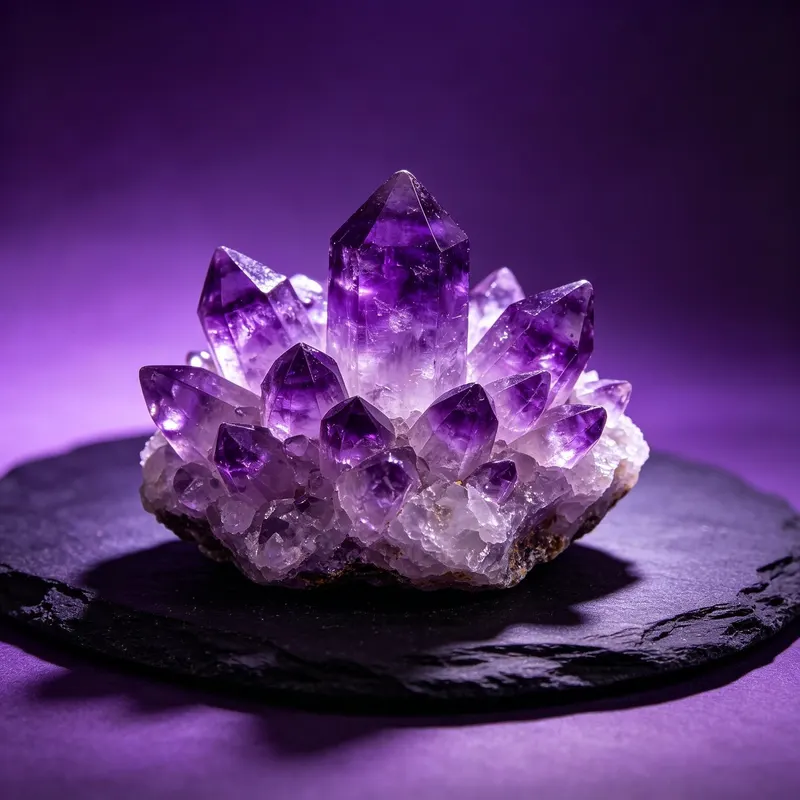
If you keep a meditation setup, a Raw Amethyst Cluster makes a natural anchor point—place it at the center of the arrangement and sound the whole group around it. The cluster's rough surface is exactly the kind of texture that water and salt would damage, which is why sound suits it.
Timing: How Long Is Enough?
Timing is where most people overthink. The honest answer is that there is no verified minimum or maximum—sound cleansing is a ritual practice, not a measured procedure. What follows is practical guidance based on what people actually do, not on any study.
| Situation | Suggested duration | Notes |
|---|---|---|
| Single ring or pendant | 15–30 seconds | Use a tuning fork held near, not against, the setting |
| One bracelet | 30 seconds | Hold the tone above the beads; rotate the piece once |
| Small group (3–6 stones) | 45–60 seconds | Move the tone around the group in a slow circle |
| Full shelf or altar | 2–3 minutes | Sweep the bowl tone across the whole arrangement |
| Newly acquired piece | 60 seconds, then again next day | A longer first session is common practice; repeat once if it feels unfinished |
| Daily upkeep | 15–20 seconds | Brief and frequent beats long and rare |
One practical caution: crystal singing bowls can be loud. If you share walls, play a Tibetan bowl quietly or use a tuning fork instead. Volume is not correlated with effectiveness in any tradition we know of.
Adapting the Method to Jewelry and Fragile Stones
Sound is the safest general method, but a few pieces deserve specific handling.
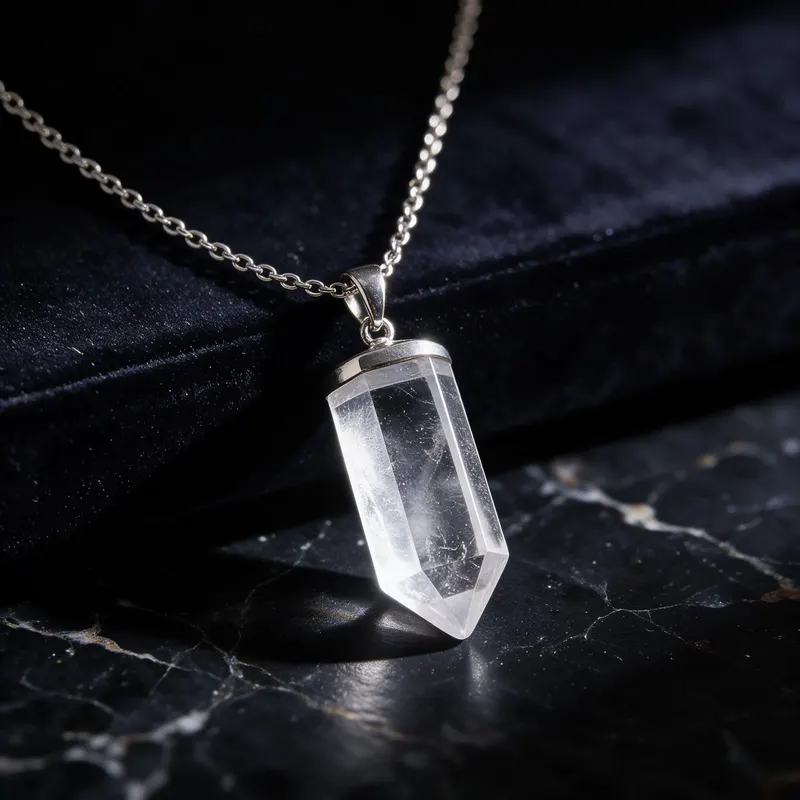
- Metal-set pendants—hold the fork near the stone, not against the metal, and avoid striking the piece itself. A Clear Quartz Point Pendant in sterling silver is a good example: the silver will tarnish faster with water or salt, so sound is the low-risk choice. Wipe the silver with a soft cloth afterward; that's ordinary jewelry care, not cleansing.
- Glued settings and bails—never immerse these in water regardless of the stone. Sound avoids the issue entirely.
- Soft or water-soluble stones—selenite, halite, malachite and rhodochrosite should never be rinsed. Sound and dry brushing only.
- Fractured or drusy specimens—sound is fine, but handle the piece by its base, not its crystals, and keep it on a padded surface.
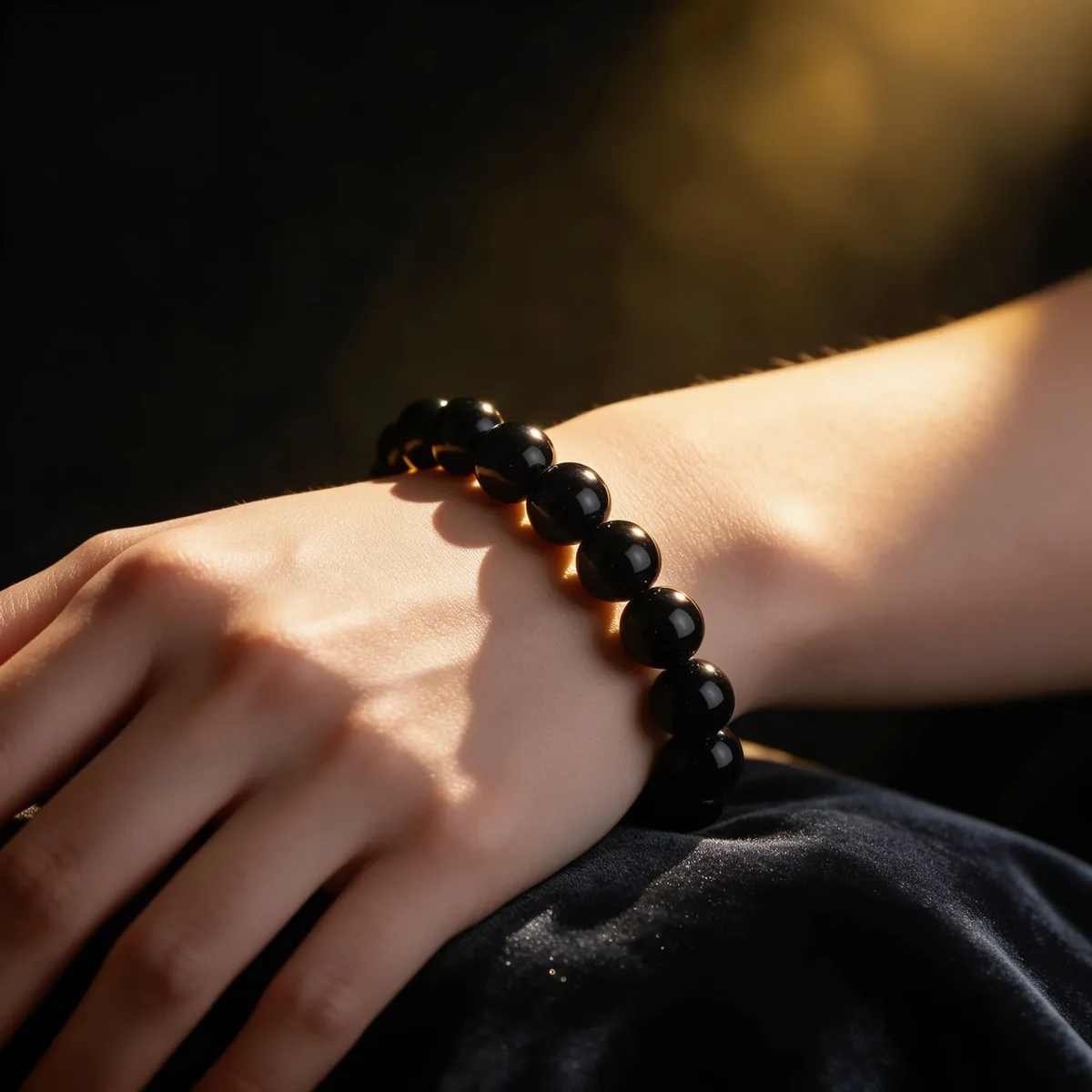
- Elastic bracelets—sound won't stretch or degrade the cord the way repeated soaking can. A Labradorite Bracelet or a Rose Quartz Love Bracelet can simply be sounded in place on a cloth.
A quick pre-cleanse checklist
- Is the stone soft (can it be scratched by a coin or fingernail)? If yes, no water—sound is ideal.
- Is there metal, glue or elastic? If yes, avoid soaking; sound is safe.
- Is the piece fragile or drusy? Handle by the base and pad the surface.
- Do you have a quiet ten minutes? That's the only real requirement.
Tradition and evidence, side by side
This is the section most crystal guides skip, and it's the one that makes the rest trustworthy. It helps to separate two kinds of claims: what practitioners traditionally believe, and what can be checked by anyone with a reference book.
Traditional lore. In many crystal and sound-healing traditions, sound is understood to "reset" or "clear" a stone's energy, and stones are described as absorbing or holding energy from their environment. Crystal singing bowls and tuning forks are traditionally associated with calm, focus and a sense of spaciousness. These are meaningful frameworks for ritual and reflection—many people find a sounding session genuinely settling—but they are not measurable claims, and we present them as tradition, not fact.
What we can verify. Hardness, solubility and light sensitivity are documented material properties. These determine how you should care for a stone, and they are the reason sound cleansing is often the safest option.
| Stone | Mohs hardness | Water / sunlight sensitivity | Care note |
|---|---|---|---|
| Selenite | ~2 | Water-soluble; can be damaged by moisture | Never rinse; dry dust only; sound cleansing ideal |
| Halite (rock salt) | ~2.5 | Dissolves in water | Keep dry; avoid humid storage |
| Malachite | ~3.5–4 | Porous; damaged by acids and prolonged water | Dry clean only; avoid salt |
| Fluorite | 4 | Can fade in prolonged direct sun | Store away from a sunny windowsill |
| Amethyst | 7 | Can fade with long sun exposure | Water-safe; keep out of direct sun |
| Rose quartz | 7 | Can fade in strong sun over time | Water-safe; store in a drawer or shaded spot |
| Clear quartz | 7 | Generally stable | Water-safe; wipe metal settings dry |
| Labradorite | 6–6.5 | Generally stable; avoid harsh chemicals | Wipe with a damp cloth, dry immediately |
Two takeaways follow. First, "water-safe" and "sun-safe" are different questions—amethyst tolerates water but not years of direct sun. Second, sound cleansing is the one method that is safe across every row of that table, which is why it's a sensible default when you're unsure.
Crystals are for reflection and ritual; they are not medical devices and are not a substitute for professional care.
FAQ
People Also Ask
How long should sound cleansing take?
Roughly 30–60 seconds per small group, 15–30 seconds for a single piece, and 2–3 minutes for a full shelf. Trust the felt sense of completion rather than a timer—there's no verified minimum.
Is sound cleansing safe for all crystals?
Yes. Because it involves no water, salt, heat or contact, it is one of the safest methods for soft, soluble, porous and metal-set stones. The main caution is volume, not the stones.
Do I need a singing bowl, or can I just hum?
Your voice works. A sustained hum or tone for 20–30 seconds, directed toward the stones, is a complete practice. A bowl or tuning fork simply makes the tone steadier and easier to sustain.
How often should I cleanse with sound?
There's no fixed rule. Many people sound a piece when it's newly acquired, after it's been worn or handled a lot, and briefly before meditation. Daily 15-second upkeep is common and harmless.
Browse the Collection
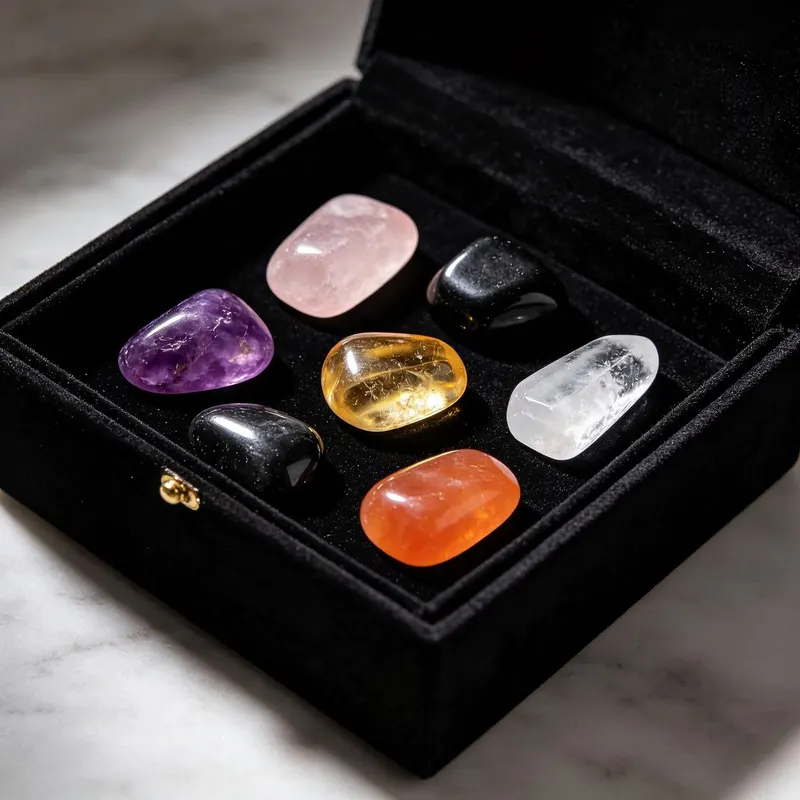
If you're building a sound-cleansing setup, start with a piece you'll actually use. A Healing Crystal Starter Kit gives you seven stones to practice on, and the Clear Quartz Point Pendant Necklace is a good everyday piece for a tuning-fork session. Explore the full edit in our Raw Stones & Sets Collection.
Keep Exploring
Cleanse & Charge · Incense · Visualization
Crystals are offered for wellness, reflection and ritual—not as medical or psychological treatment. If you are struggling with persistent low mood, anger, grief or trauma, please reach out to a qualified professional.