Why Crystal Necklaces Tangle - and How to Layer Them Beautifully
You have two or three crystal pendants you love, and you want to wear them together. The problem is that by the time you reach your desk, the chains have braided themselves into a knot, the pendants are clinking against each other, and the whole stack has slid to one side of your collarbone. Layering looks effortless in photographs, but it rarely stays that way without a little planning.
The good news is that tangle-free layering comes down to a few controllable variables: chain length, chain weight, pendant size, and how the stones relate to one another. Get those right and your stack will sit flat, read as intentional, and stay comfortable through a full day - whether you are wearing one quiet pendant or a three-stone composition.
This guide walks through chain lengths and spacing, how to choose stones that complement rather than compete, practical tangle-prevention habits, care for delicate chains and softer stones, and realistic price expectations. It is written for US readers building a small, wearable collection rather than a display case.
Start With Chain Length: The Spacing Rule
The single most useful rule is spacing. Two chains of the same length will always tangle, because they occupy the same physical space. Give each layer at least two inches of separation in length, and the pendants will settle at different heights on the chest.
A reliable set of anchor lengths:
- 14–16 inches: choker or high-collar level. Best for a small, light pendant that sits above the collarbone.
- 18 inches: the classic collarbone length. The most flattering single length for most people and the natural home for a heart or teardrop pendant.
- 20–22 inches: mid-chest. Good for a slightly larger stone that needs room to hang.
- 24–30 inches: long layer. Often worn alone or as the base of a two-piece stack, since a long chain plus a short one rarely tangles.
If you are layering three pieces, 16 / 18 / 20–22 is a dependable formula. If you are layering two, 16 / 20 or 18 / 24 gives clearer visual separation than 18 / 20.
Also consider your own proportions. A 16-inch chain sits differently on a 5'2" frame than on a 5'10" one. Before committing to a length, measure a chain you already wear comfortably and compare it to the listed length of the piece you are considering. When in doubt, choose the longer option - a pendant that hangs slightly low looks better than one that sits too high and crowds your collarbone.
A Three-Layer Formula That Works
If you want a starting point rather than a blank canvas, this composition balances weight, color, and meaning:
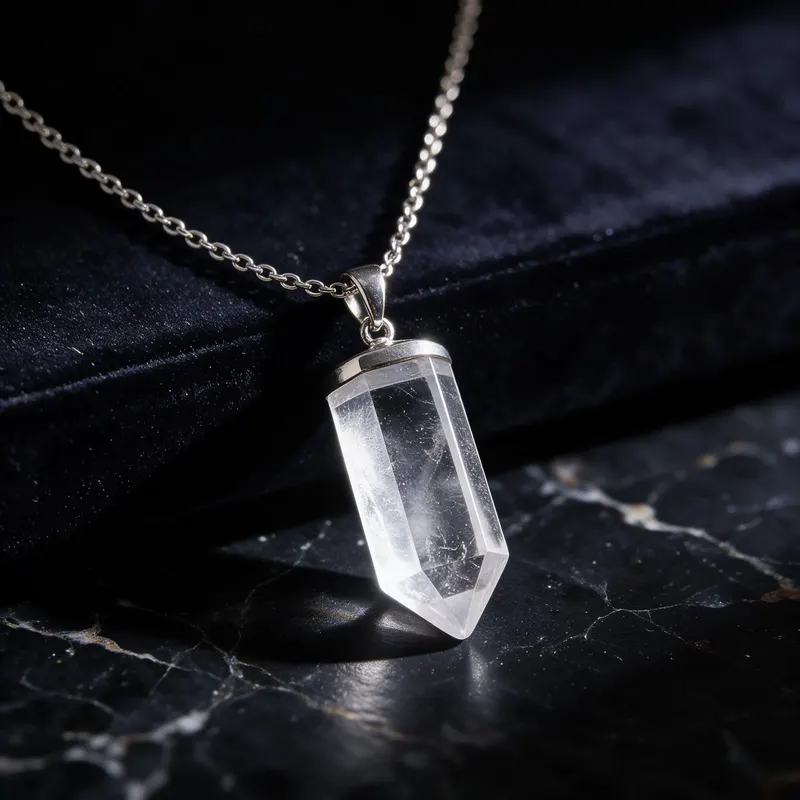
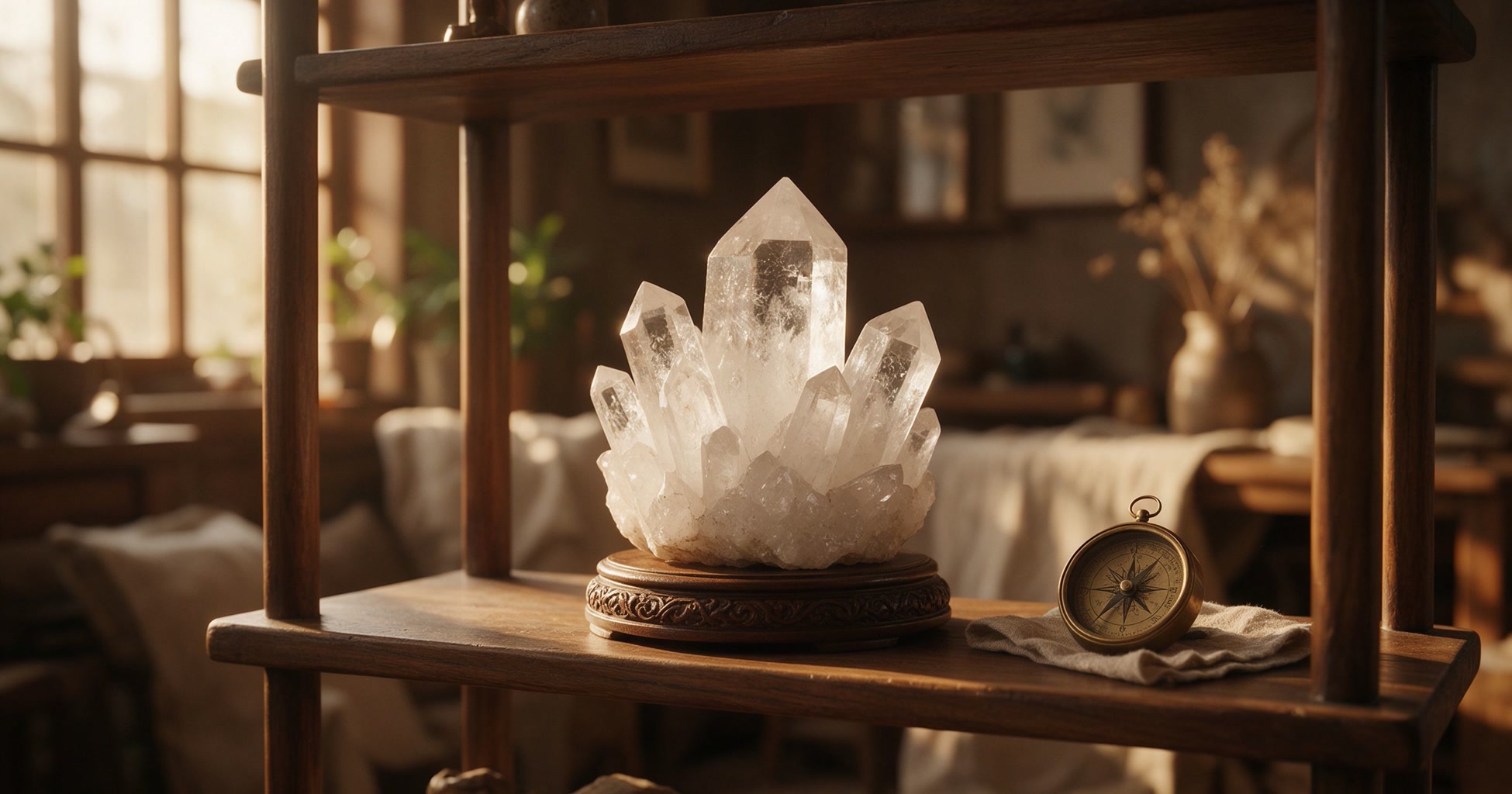
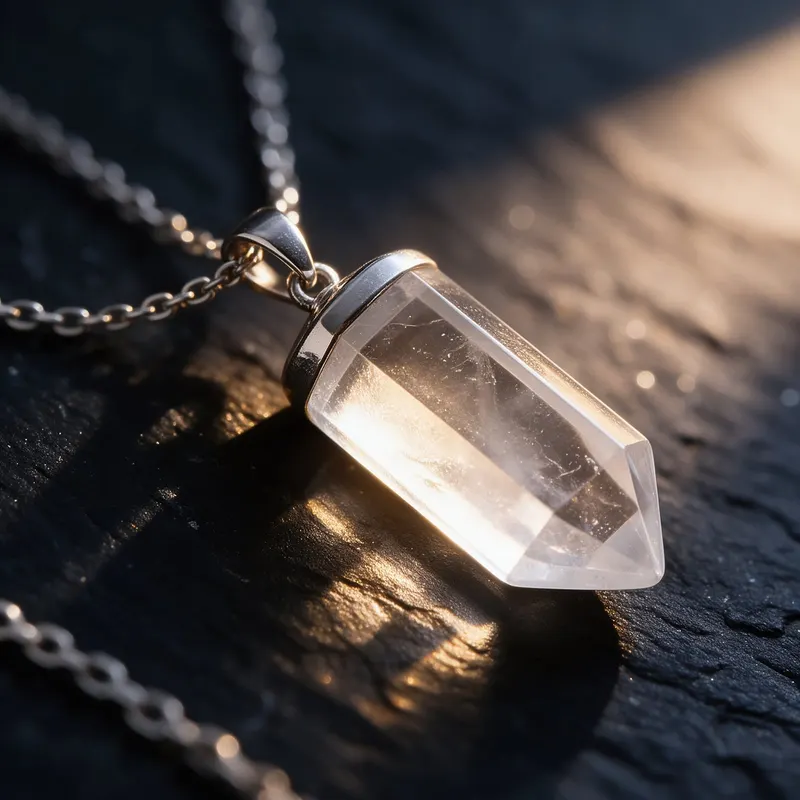
- 16" choker level: a small, bright stone such as the Clear Quartz Point Pendant Necklace, Sterling Silver. Clear quartz is visually light, so it does not overwhelm the layers below it. It is traditionally associated with clarity and focus.
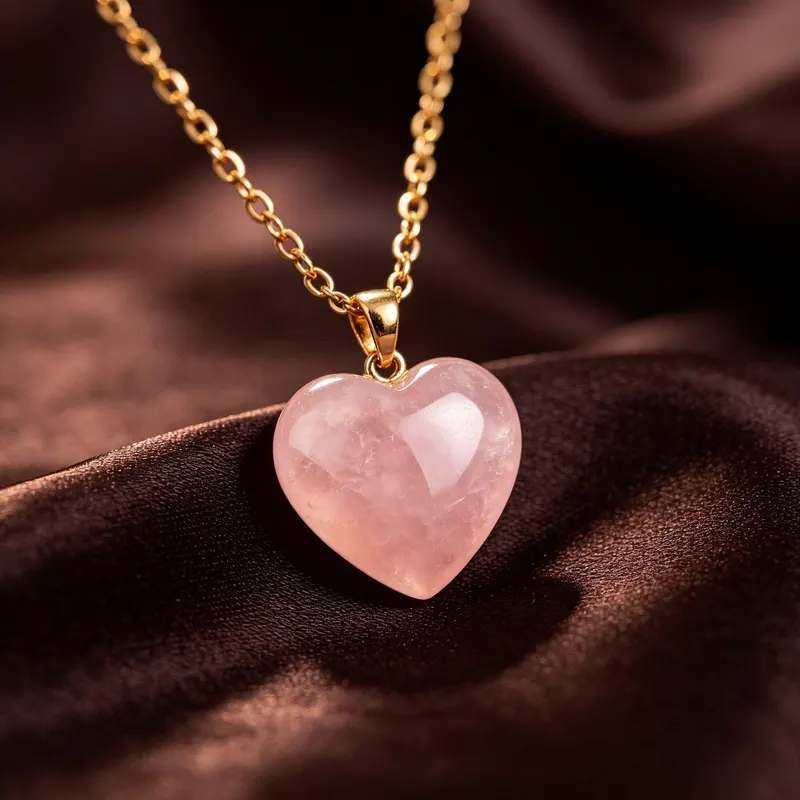
- 18" collarbone: the Rose Quartz Heart Pendant Necklace, Gold-Plated, sitting near the heart. Rose quartz is traditionally associated with self-love and gentle relationships. A heart shape reads as soft and personal at this length.
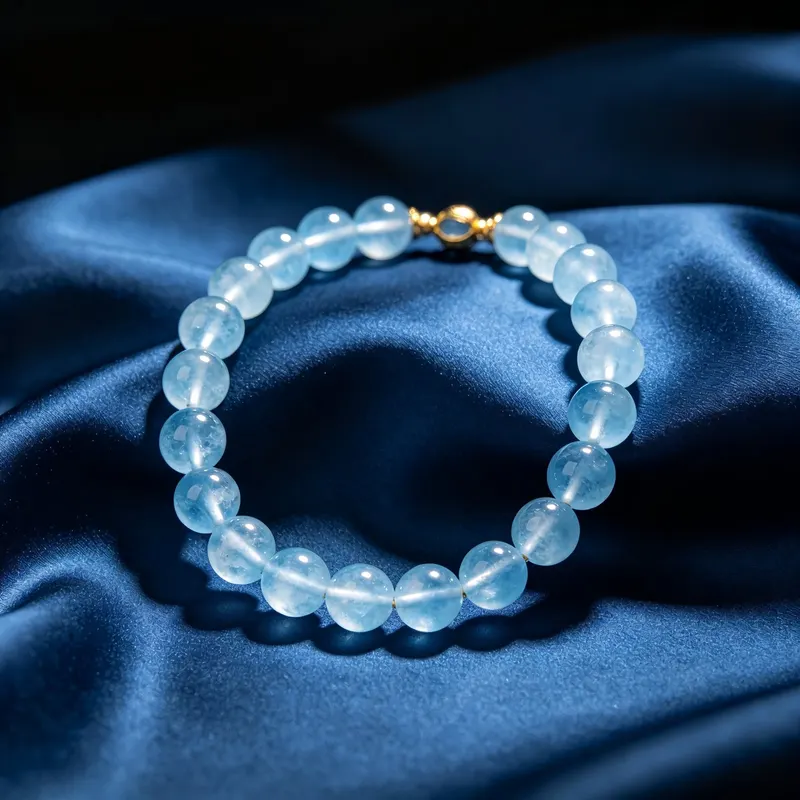
- 20–22" longest: the Aquamarine Serenity Necklace for Calm Communication as the anchor. Aquamarine is believed to support calm, clear communication, and its cool blue balances the warmth of rose quartz.
Notice what makes this work: one small and bright, one warm and rounded, one cool and slightly larger. The stones differ in color temperature and shape, so each layer stays legible instead of blurring into a single mass.
Choosing Stones That Complement, Not Compete
Layering is a design decision as much as a spiritual one. Two approaches tend to look best.
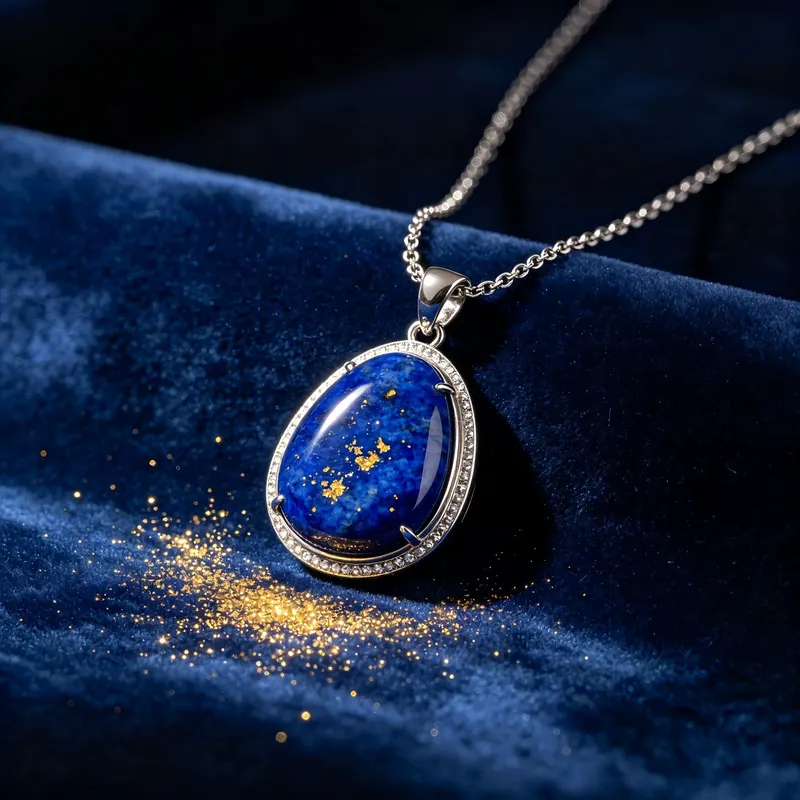
Harmonious palette. Stay within a family - soft pinks, creams, and pale blues; or deep blues, blacks, and golds. The Lapis Lazuli Wisdom Pendant, Gold-Plated Chain layers naturally with aquamarine and clear quartz, since all three sit in the cool range. Lapis is traditionally associated with wisdom and honest speech.
Deliberate contrast. Pair one warm stone with one cool stone and let a metallic chain act as the bridge. A gold-plated chain next to a silver one can look intentional if the pendants echo each other in size; it looks accidental if the metals and the stones are all fighting.
A simple test: hold the pieces together in daylight before you put them on. If your eye jumps between three equally loud pendants, remove one. The strongest stacks usually have one focal stone and one or two supporting pieces.
You can also layer by intention rather than by color. A protection-focused pendant worn with a calm-focused pendant is a coherent pairing - for example, the Black Obsidian Teardrop Protection Pendant Necklace as a longer layer beneath a lighter stone. Obsidian is traditionally associated with grounding and truth. Keep the obsidian as the longest layer, since dark, heavier pendants tend to dominate when placed high.
Tangle-Free Checklist: Before You Leave the House
- Check the spacing. Are your chains at least two inches apart in length? If not, remove or swap a layer.
- Vary the chain weight. A fine 1mm chain next to a slightly heavier 2mm chain tangles less than two identical fine chains, because they move differently.
- Vary pendant weight. A light pendant and a heavier pendant settle at different points and are less likely to swing into each other.
- Limit yourself to two or three layers. Beyond three, tangling increases faster than visual payoff.
- Fasten clasps at the back and check the clasp alignment. Clasps that sit at different points around the neck reduce the chance of them catching on each other.
- Test the movement. Turn your head side to side and look down. If a pendant swings into another, the lengths are too close.
- Keep pendants from resting directly on top of each other. Overlapping stones can scratch softer materials over time.
- Store each chain separately. A small pouch or a divided jewelry tray per necklace prevents the knots that form in a drawer.
The lore, and what we can actually verify
Crystal jewelry carries centuries of symbolic meaning, and it also carries practical material properties. It helps to keep the two separate.
What the tradition says. Different stones are traditionally associated with different qualities - amethyst with calm and reflection, rose quartz with love and self-care, aquamarine with calm communication, obsidian with grounding and protection, lapis lazuli with wisdom. Many people wear these stones as a daily reminder or as part of a meditation or journaling ritual. These associations are cultural and symbolic. They invite reflection; they are not claims about health or life outcomes.
What we can verify. These are measurable facts about the materials:
- Hardness (Mohs scale). Quartz varieties, including clear quartz, amethyst, and rose quartz, sit around 7. Aquamarine is roughly 7.5–8. Lapis lazuli is softer, around 5–6, and obsidian is about 5–5.5. Softer stones scratch more easily, so keep them from rubbing against harder pendants and store them separately.
- Water sensitivity. Clear quartz and amethyst tolerate brief contact with water, but prolonged soaking is unnecessary. Rose quartz and aquamarine are generally fine with a quick wipe. Lapis lazuli is porous and should not be soaked. Obsidian is durable but its surface can show wear.
- Sunlight sensitivity. Amethyst and rose quartz can fade with prolonged direct sun exposure. Store them away from a sunny windowsill.
- Metal care. Gold-plated and sterling silver chains tarnish and wear with perfume, lotion, sweat, and chlorine. Put jewelry on last and take it off first. Wipe chains with a soft dry cloth after wear.
- Cleaning. Use a soft, slightly damp cloth for the stone and a dry cloth for the chain. Avoid ultrasonic cleaners and harsh chemicals, especially on plated metals and porous stones.
A quick comparison for layering decisions:
| Stone | Approx. Mohs hardness | Water | Sunlight | Layering note |
|---|---|---|---|---|
| Clear quartz | ~7 | Brief contact only | Stable | Good light top layer |
| Amethyst | ~7 | Brief contact only | Can fade | Keep away from sunny storage |
| Rose quartz | ~7 | Quick wipe | Can fade | Pair with softer metals, not abrasive stones |
| Aquamarine | ~7.5–8 | Quick wipe | Stable | Harder; avoid rubbing against lapis |
| Lapis lazuli | ~5–6 | Do not soak | Stable | Keep separate from harder stones |
| Obsidian | ~5–5.5 | Quick wipe | Stable | Heavier; works as a long layer |
For a deeper clean, the Selenite Cleansing Wand for Energy Clearing is often used in crystal-care routines as a symbolic clearing tool. Keep in mind that selenite itself is soft and water-soluble, so store it dry and away from moisture.
Sizing, Budget, and What to Look For
Sizing. Measure a chain you already wear well and compare it to the listed length. Remember that pendant drop adds length: a 16-inch chain with a one-inch pendant hangs like a 17-inch piece. If you are between sizes, go longer for the bottom layer and shorter for the top.
What to look for. Check the clasp type - a lobster clasp is easier to fasten one-handed than a spring ring. Look for chains with soldered links rather than open jump rings, which pull apart under weight. For pendants, check that the bail (the loop the chain passes through) is smooth and wide enough to slide freely; a tight bail causes the pendant to sit crooked and catch on neighboring chains.
Realistic price expectations. In the US market, a simple sterling silver chain with a small quartz pendant typically falls in the $30–$80 range. Gold-plated pendants with a genuine stone often run $40–$100. Solid gold settings and larger, higher-clarity stones move well above that. Be cautious of prices that seem too low for the stated materials, and ask what the plating thickness is if gold-plated. Plated jewelry is a reasonable choice for occasional wear but will wear faster with daily use.
If you are building a collection gradually, start with one versatile 18-inch pendant and add layers over time. The Healing Crystal Starter Kit, 7 Stones + Guide is a useful reference if you want to learn stone properties before committing to a specific pendant.
FAQ
People Also Ask
How do you stop layered necklaces from tangling?
Space chains at least two inches apart in length, vary chain and pendant weights so the layers move differently, and store each necklace separately. Fastening clasps at slightly different points around the back of the neck also reduces catching.
How many crystal necklaces can you layer?
Two to three is the practical sweet spot. Beyond three, tangling increases and the composition starts to look crowded. If you want more visual interest, add a bracelet or ring instead of another necklace.
Can I layer different metals, like gold and silver?
Yes. Mixed metals can look deliberate when the pendants echo each other in size or shape. The risk is visual clutter, so keep the stones to a coherent palette and let one metal dominate.
How should I care for layered crystal necklaces?
Put jewelry on last and remove it first. Wipe chains with a dry cloth after wear, keep plated metals away from perfume and chlorine, and store each piece in its own pouch. Avoid soaking porous stones like lapis lazuli, and keep amethyst and rose quartz out of prolonged direct sunlight.
Build Your Stack One Layer at a Time
Layering crystal necklaces well is less about buying more and more about spacing, weight, and intention. Start with one length you love, add a second at least two inches away, and let the stones relate to each other rather than compete. A calm, considered stack will stay comfortable and tangle-free - and it will mean more because each layer was chosen on purpose.
Crystals are offered for reflection and ritual. They are not medical devices and are not intended to diagnose, treat, cure, or prevent any condition.