You're standing at your dresser with a crystal bracelet in one hand, and the question is oddly practical: does it go on the left wrist or the right? Maybe you've read that the left side "receives" and the right side "releases," or a friend told you to wear your rose quartz on the left and your black tourmaline on the right. Maybe you just want to know which wrist will feel right and not slide around all day.
The good news is that this is one of the most flexible questions in crystal practice. The left-versus-right rule comes from a living tradition, not a fixed law, and it's meant to be adapted to your body, your daily routine, and what you're actually hoping to do with the stone. In this guide we'll walk through the traditional reasoning, show you how to choose a side by intention, and then get practical about fit, care, and what the stones can and can't do.
Treat the wrist rule as a ritual that helps you pay attention. It works best when it's simple, repeatable, and comfortable enough that you'll actually wear the bracelet.
A Simple Energy Tradition
In one popular tradition, the wrists act like doors. The left side is understood as the receiving side—the hand that draws energy into your field—while the right side sends energy out and releases what you no longer need. This framing is common in Western crystal practice and draws loosely on ideas about the body's energy channels, but it's a symbolic map rather than a measured one.
What matters is that the map gives you a way to be intentional. When you put a bracelet on, you're making a small decision about what you want more of, or what you'd like to set down. That moment of choosing is the real practice. If you want the broader basics first, our guide to how to wear crystal bracelets covers the fundamentals.
Wear on the Left to Receive
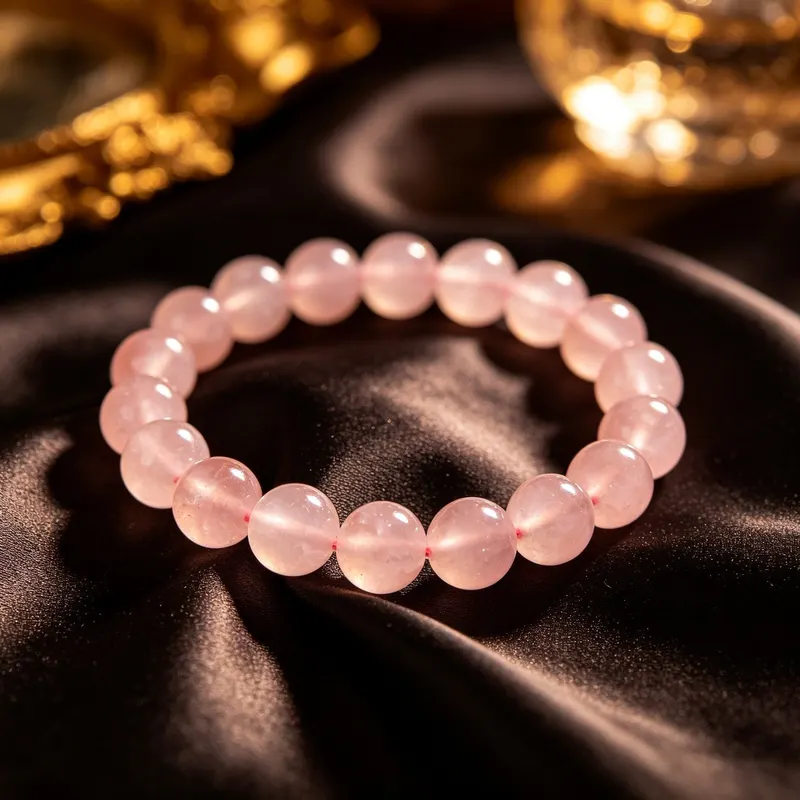
The left wrist is traditionally associated with drawing energy toward you: calm, comfort, love, clarity, abundance, protection. If your intention is to invite something in, the left side is the natural choice.
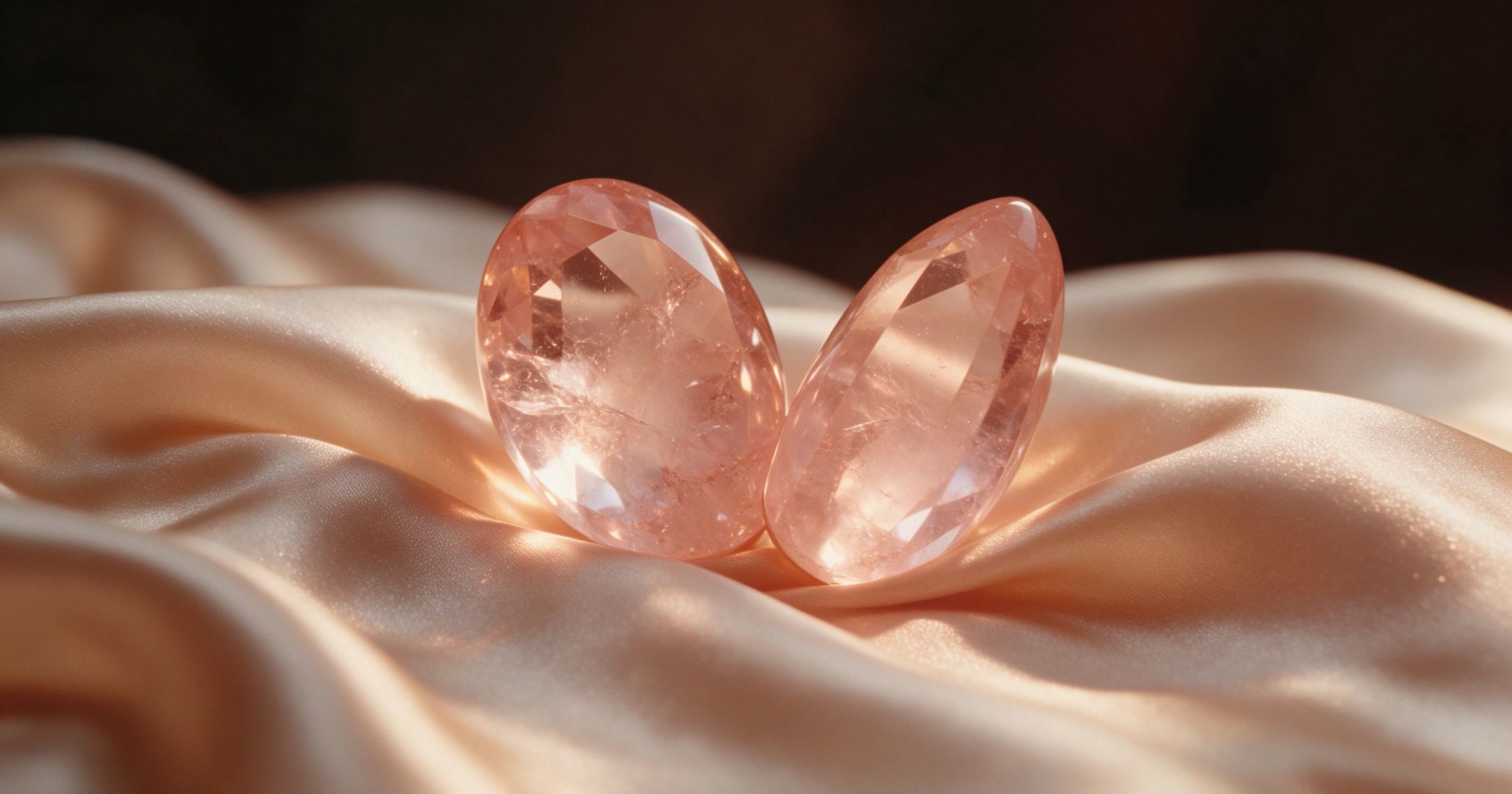
- Inviting love and self-compassion in → the Rose Quartz Love Bracelet for Self-Love & Heart on the left, where rose quartz is traditionally associated with the heart and gentle self-regard.
- Receiving calm and clarity → amethyst is believed to support a quieter mind, which makes it a natural left-wrist stone for evenings or meditation.
- Drawing in steadiness and protection → black tourmaline or obsidian on the left when you want to feel grounded rather than to push something away.
- Healing, self-care, and replenishment → any stone you reach for when you feel depleted and want to feel filled back up.
A useful shorthand: if you can finish the sentence "I want more ___ in my life," the left wrist fits.
Wear on the Right to Release
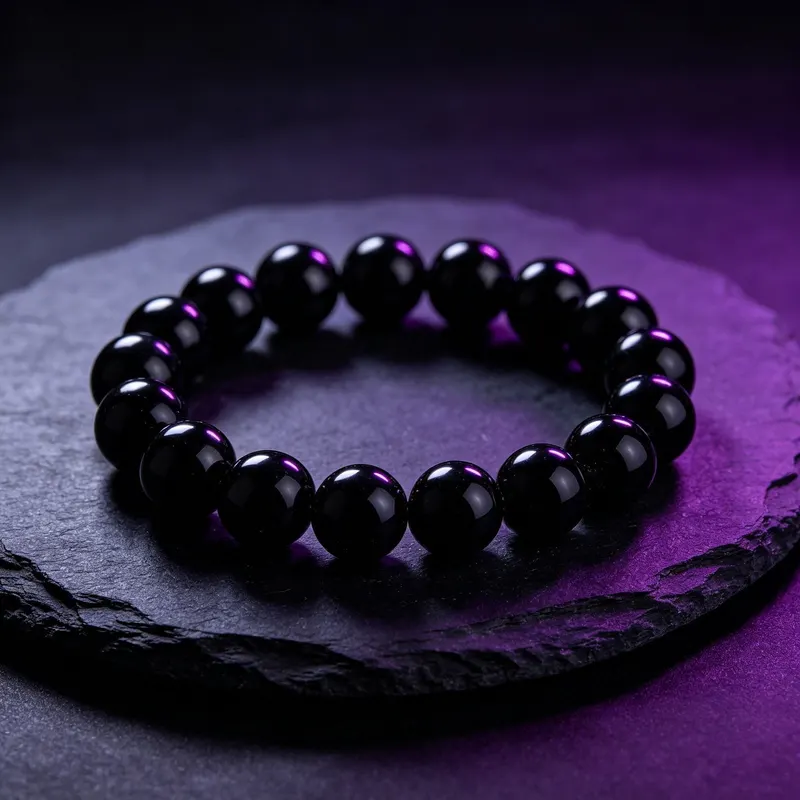
The right wrist is traditionally associated with sending energy outward and letting go. This is the side for releasing stress, clearing what feels stuck, and projecting qualities you want to carry into the world—confidence, clear communication, focus.
- Letting go of stress or heaviness → the Black Tourmaline Protection Bracelet for Grounding on the right, where it's traditionally used to release and shield.
- Sending confidence outward → tiger's eye or carnelian on the right before a presentation, interview, or difficult conversation.
- Releasing habits and old patterns → a stone chosen for transformation, worn on the right as a reminder that you're actively setting something down.
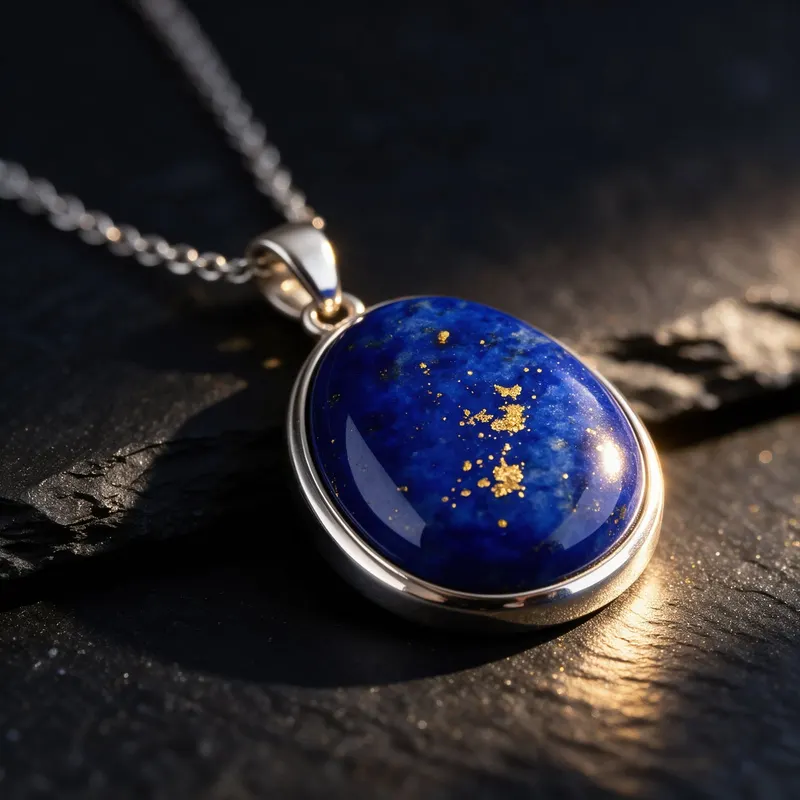
- Speaking with clarity → aquamarine or lapis lazuli on the right when your intention is outward communication.
The shorthand here: if you can finish the sentence "I want to release ___" or "I want to bring ___ into the room," the right wrist fits.
Left or Right? A Quick Comparison
Use this table as a starting point, then adjust for comfort. None of these assignments are rules you can break—they're intentions you can choose.
| Intention | Traditional wrist | Example stones | When it helps most |
|---|---|---|---|
| Invite love, self-care | Left | Rose quartz, rhodonite, moonstone | Morning routine, journaling, rest days |
| Receive calm and clarity | Left | Amethyst, clear quartz, fluorite | Meditation, winding down, focused work |
| Draw in protection and grounding | Left | Black tourmaline, obsidian | Travel, crowded days, feeling scattered |
| Release stress and negativity | Right | Black tourmaline, obsidian | End of day, after conflict, clearing out |
| Project confidence and focus | Right | Tiger's eye, carnelian, fluorite | Meetings, interviews, creative sprints |
| Overall balance | Either | 7-chakra mixes, clear quartz | Everyday wear, when you're unsure |
How to Choose Your Side
If you're new to this, don't overthink it. Run through a short checklist and let your body weigh in.
- Name your intention in one sentence. "I want to feel calmer" leans left; "I want to let this go" leans right.
- Notice your dominant hand. Most people find bracelets more comfortable and less likely to snag on the non-dominant wrist. If the tradition and your comfort disagree, comfort usually wins for daily wear.
- Consider your routine. If you type or work with your hands all day, a stone on the dominant wrist may clink against a desk or keyboard.
- Try one side for a week. Wear it on the left for seven days, then the right. Notice which feels more natural—that's useful information, even if it's just about fit.
- Switch by intention, not by rule. It's completely fine to move a bracelet from left to right on a hard day and back again tomorrow.
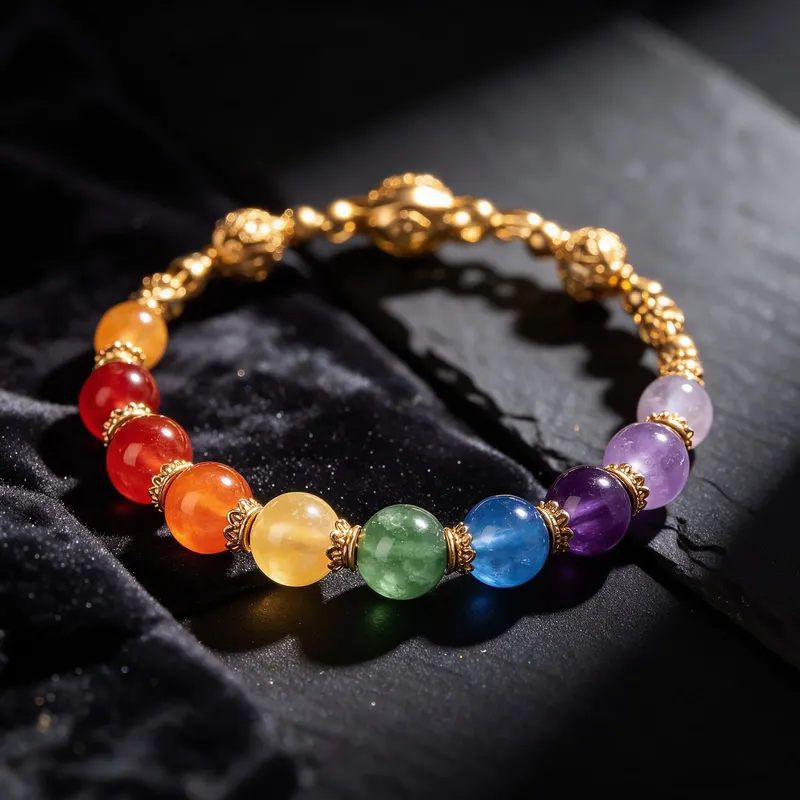
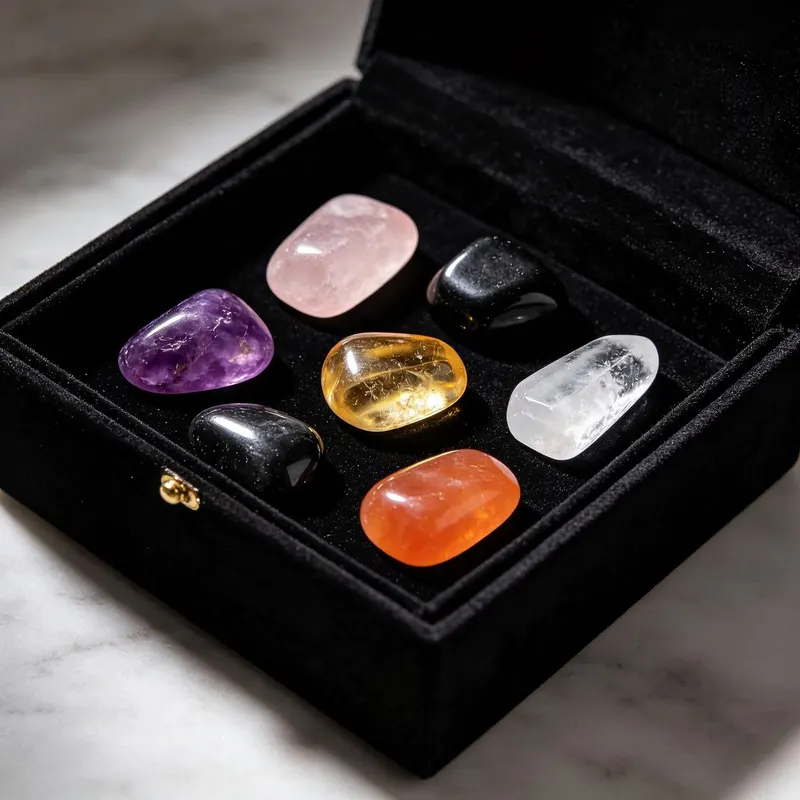
A 7 Chakra Balancing Bracelet, Natural Mixed Stones is a good choice when you don't have a single clear intention, since mixed-stone pieces are traditionally worn on either wrist for overall balance. If you're building a first collection, a Healing Crystal Starter Kit, 7 Stones + Guide lets you experiment with several stones before committing to a daily piece.
Fit, Sizing, and Everyday Wear
The wrist rule only matters if the bracelet stays on and feels good. A few practical notes:
- Measure before you buy. Wrap a soft tape measure snugly around your wrist just below the wrist bone. Add roughly half an inch (about 1–1.5 cm) for a comfortable fit, more if you like a looser drape.
- Bead size affects feel. 8 mm beads are a common, versatile size for most wrists; 6 mm suits smaller wrists or stacking; 10 mm makes a bolder statement.
- Elastic vs. clasp. Elastic bracelets are easy to move between wrists but stretch over time. Clasped or chain pieces hold their shape but need a helper to fasten on the dominant hand.
- Stacking. If you wear several bracelets, keep harder stones away from softer ones to reduce scratching. Our guide to stacking crystal bracelets goes deeper, and the sizing guide covers measurement in detail.
What tradition holds — and what we can verify
Crystal lore is rich, and it's worth being clear about which parts are tradition and which parts are physical fact. Both can be respected without confusing one for the other.
Traditional associations (belief and lore)
- Left wrist receives, right wrist releases.
- Specific stones are linked to specific themes—rose quartz with love, amethyst with calm, tiger's eye with confidence.
- Cleansing and "charging" practices, such as moonlight or selenite, are part of the tradition.
Verifiable facts (materials and care)
- Hardness varies widely. On the Mohs scale, quartz-family stones like amethyst, rose quartz, and citrine sit around 7; black tourmaline is roughly 7–7.5; fluorite is soft at about 4; selenite is very soft at about 2. Softer stones scratch easily and belong away from keys, zippers, and metal clasps.
- Water sensitivity. Selenite dissolves or damages in water, and many porous or dyed stones can fade or degrade. Take bracelets off before swimming, showering, or washing dishes.
- Sunlight sensitivity. Some stones—rose quartz, amethyst, and certain dyed materials among them—can fade with prolonged direct sun. Store them away from a bright windowsill.
- Physical care. Wipe with a soft dry cloth, avoid harsh cleaners and ultrasonic cleaners for soft or treated stones, and check elastic for fraying before it snaps.
What we can't verify is any energetic or health effect. Crystals are for reflection and ritual; they are not medical devices. If you're dealing with a health concern, a qualified professional is the right person to ask.
FAQ
People Also Ask
Which wrist is best for receiving love?
Tradition favors the left wrist for receiving, so rose quartz is often worn there to invite love and self-compassion. If you're drawn to a pendant instead, a Rose Quartz Heart Pendant Necklace, Gold-Plated keeps the stone close to the heart and sidesteps the wrist question entirely.
Does it matter if I wear it on my dominant hand?
Comfort matters too. Many people wear their stack on the non-dominant wrist and follow the receive/release rule loosely. If a stone on your dominant wrist gets in the way of work, move it—the intention travels with the bracelet, not the wrist.
Can I wear different stones on each wrist?
Yes, and it's a common practice. A receiving stone on the left and a releasing stone on the right is a simple way to hold two intentions at once. Just watch for scratching if the two bracelets touch.
Do I need to cleanse a bracelet when I switch wrists?
There's no requirement. Some people like to reset a stone—with a selenite wand, moonlight, or simply a quiet moment—when they change its purpose. A Selenite Cleansing Wand for Energy Clearing is a gentle, traditional tool for that ritual. Keep selenite dry, since it's water-soluble.
Browse the Curated Collection
If you'd like to choose a stone by intention, start with the full edit: Crystal Bracelets Collection →. Pick the intention first, then decide which wrist feels right.
Keep Exploring
Wear Bracelets · Sizing · Stacking
Crystals and birthstone lore are offered for reflection, tradition and wellness—not as medical advice. They do not diagnose, treat, cure, or prevent any condition. Crystals are for reflection and are not medical devices.