Your Desk, Your Energy: Why Crystals End Up in the Workspace
You spend a huge share of your waking life at a desk. Between back-to-back calls, a browser full of tabs, and the low hum of "I should be getting more done," it's no wonder so many people start looking for a small, tangible way to reset the tone of their workspace. For a growing number of US readers, that search leads to crystals — not as a replacement for good habits, but as a visual anchor that reminds them to slow down, refocus, and protect their attention.
That's the honest way to think about a "productivity crystal." A stone on your desk won't write the report or answer the email. What it can do is act as a cue: a quiet object that invites you to take a breath before a hard task, mark a boundary between "busy" and "focused," or simply make the space feel a little more intentional. Many people find that this small ritual genuinely helps them settle in.
This guide covers which crystals are traditionally associated with focus, calm, confidence, and creativity, how to place and care for them at work, what to look for when buying, and realistic price expectations — plus a clear separation between tradition and verifiable fact. Crystals are for reflection and are not medical devices.
How to Choose a Workspace Crystal (Without Overthinking It)
You don't need a collection to start. Most people do better with one or two stones that match the specific friction they feel at work. Use this quick checklist to narrow it down:
- Name the problem first. Distracted? Anxious before meetings? Flat and unmotivated? Drained by a difficult colleague? Pick the stone that matches that one issue, not five.
- Match the format to your desk. Bracelets and pendants travel with you and survive crowded desks; raw clusters and wands are better for a shelf or tray where they won't get knocked around.
- Consider your environment. Shared or client-facing desks call for something small and understated. A home office gives you room for a display piece.
- Check durability. Stones that sit near a keyboard will get bumped, sunlit, and occasionally splashed. Softer stones need more care (more on this below).
- Buy the stone, not the promise. Look for natural color variation and honest product photos. Uniformly neon "crystals" at suspiciously low prices are often dyed or glass.
Crystals Traditionally Associated With Focus and Concentration
When mental clutter is the issue, the tradition points toward stones believed to support clear thinking and sustained attention.
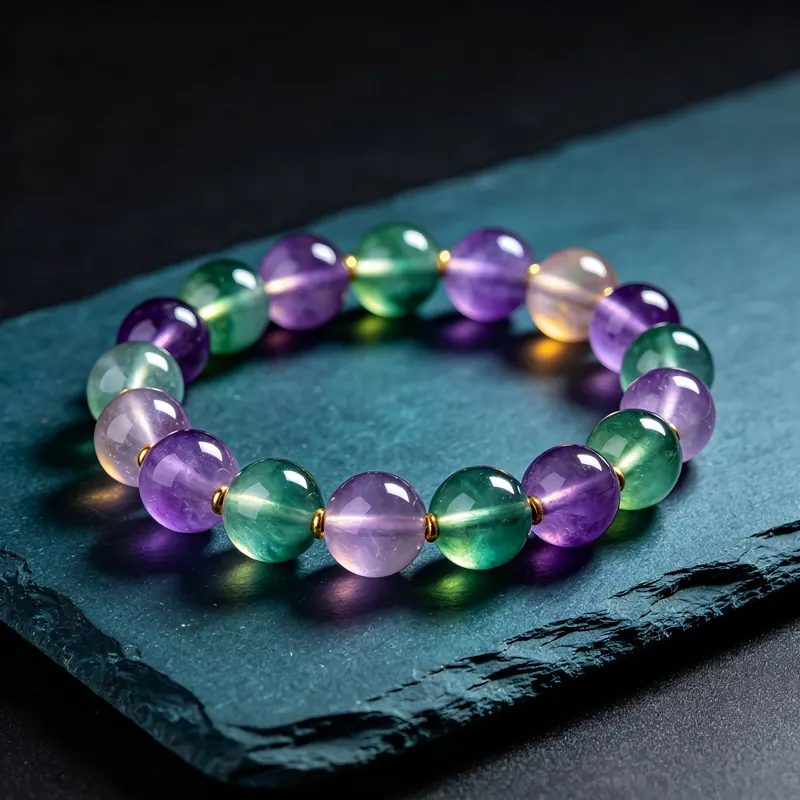
Fluorite is the classic "study stone," traditionally associated with organizing scattered thoughts and supporting concentration. A bracelet is a practical choice for desk work because it stays on your wrist and out of the way — the Rainbow Fluorite Focus Bracelet for Concentration is a good fit if you want something you can wear through a long work session. Keep fluorite out of prolonged direct sun, as its color can fade.
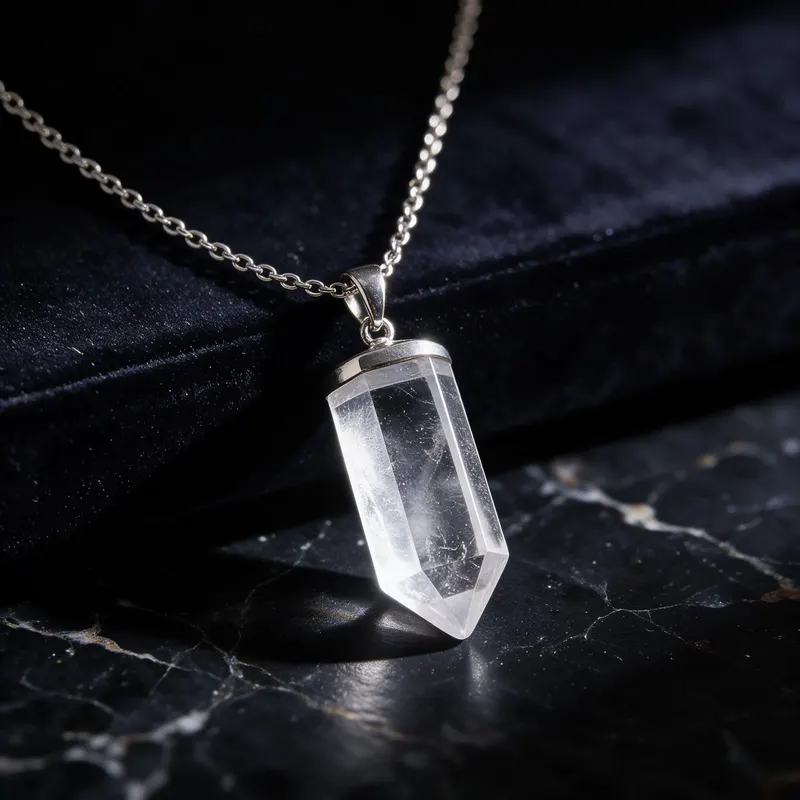
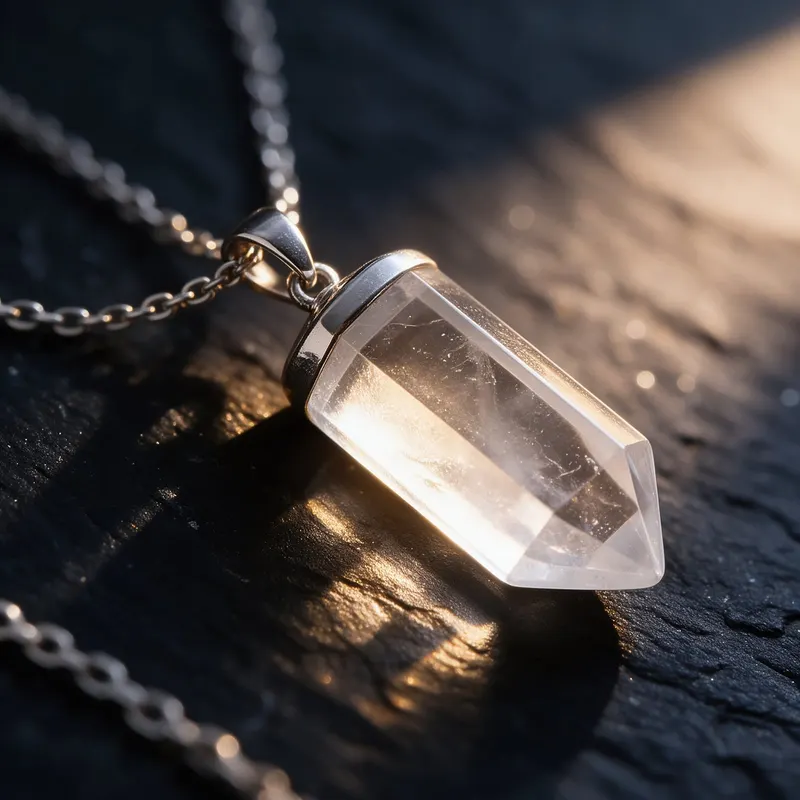
Clear quartz is often described as an amplifier — a stone that intensifies whatever intention you bring to it. A point pendant keeps that reminder close without taking up desk space; the Clear Quartz Point Pendant Necklace, Sterling Silver works for both office and video-call settings. Clear quartz is hard (Mohs 7) and easy to care for, which makes it a low-maintenance desk companion.
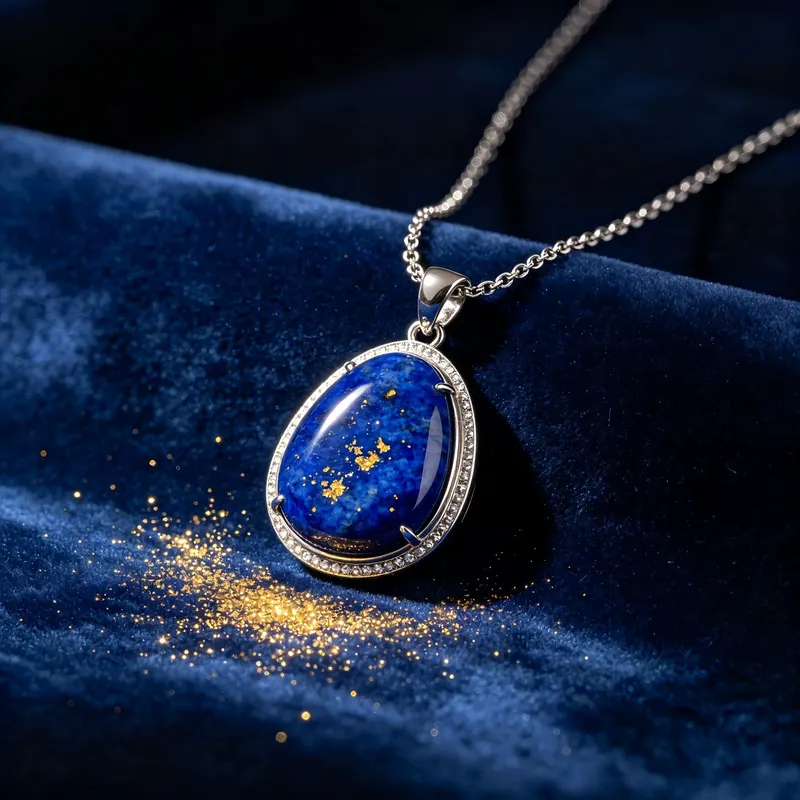
Lapis lazuli is traditionally linked with wisdom and clear communication — useful if your focus drains during meetings or presentations. The Lapis Lazuli Wisdom Pendant, Gold-Plated Chain is a subtle option. Note that lapis is relatively soft (Mohs 5–6) and should be kept away from harsh cleaners and long soaks.
Crystals Traditionally Associated With Confidence and Career Momentum
Feeling flat or hesitant at work is different from feeling scattered. For that, the tradition leans toward warmer, more energizing stones.
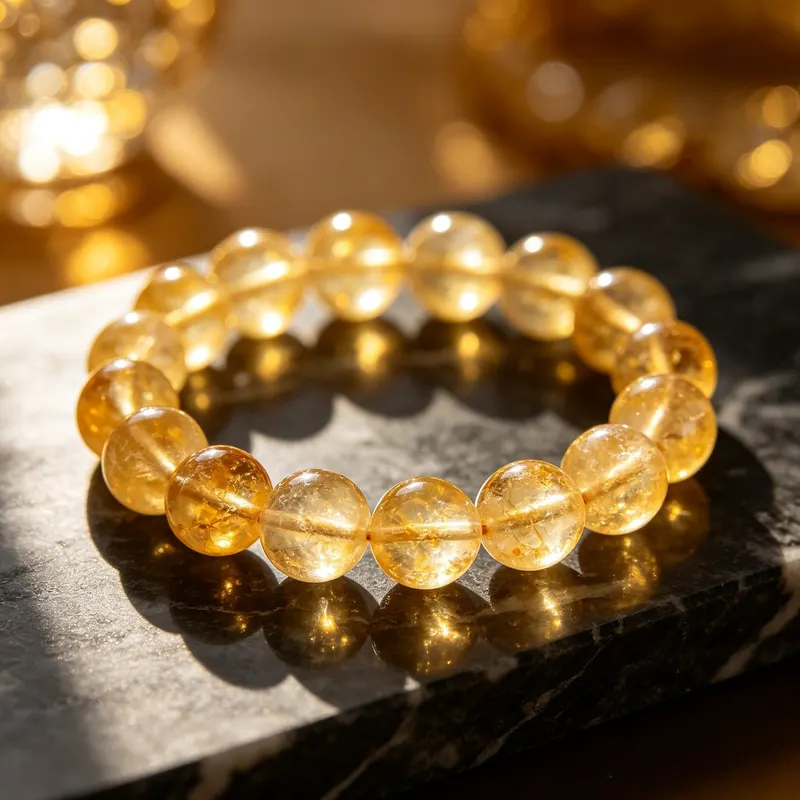
Citrine is the best-known "abundance" stone, traditionally associated with optimism, motivation, and a sense of forward motion. In feng shui practice, some people place it in the far-left corner of the desk — often called the wealth corner — though this is a traditional placement, not a guarantee of anything. The Citrine Abundance Bracelet for Prosperity & Joy is an easy way to keep it with you. Be aware that much commercial citrine is heat-treated amethyst; that's normal and widely accepted, but sellers should say so.
Tiger's eye is believed to support courage and steady confidence — the "I can handle this" feeling before a difficult conversation. The Tiger's Eye Confidence Bracelet for Focus & Courage is durable enough for daily wear. Carnelian is traditionally linked with creative fire and motivation, a good match for writers, designers, and anyone who needs to start rather than polish.
If you want a single piece that covers several bases, a mixed-stone option like the 7 Chakra Balancing Bracelet, Natural Mixed Stones is a common starting point — though be realistic that a multi-stone piece is more of a general reminder than a targeted tool.
Crystals Traditionally Associated With Calm and Stress Relief
High-pressure days are where a desk crystal earns its keep as a ritual object. A stone you can hold for thirty seconds before a hard call gives your nervous system a small, repeatable pause.
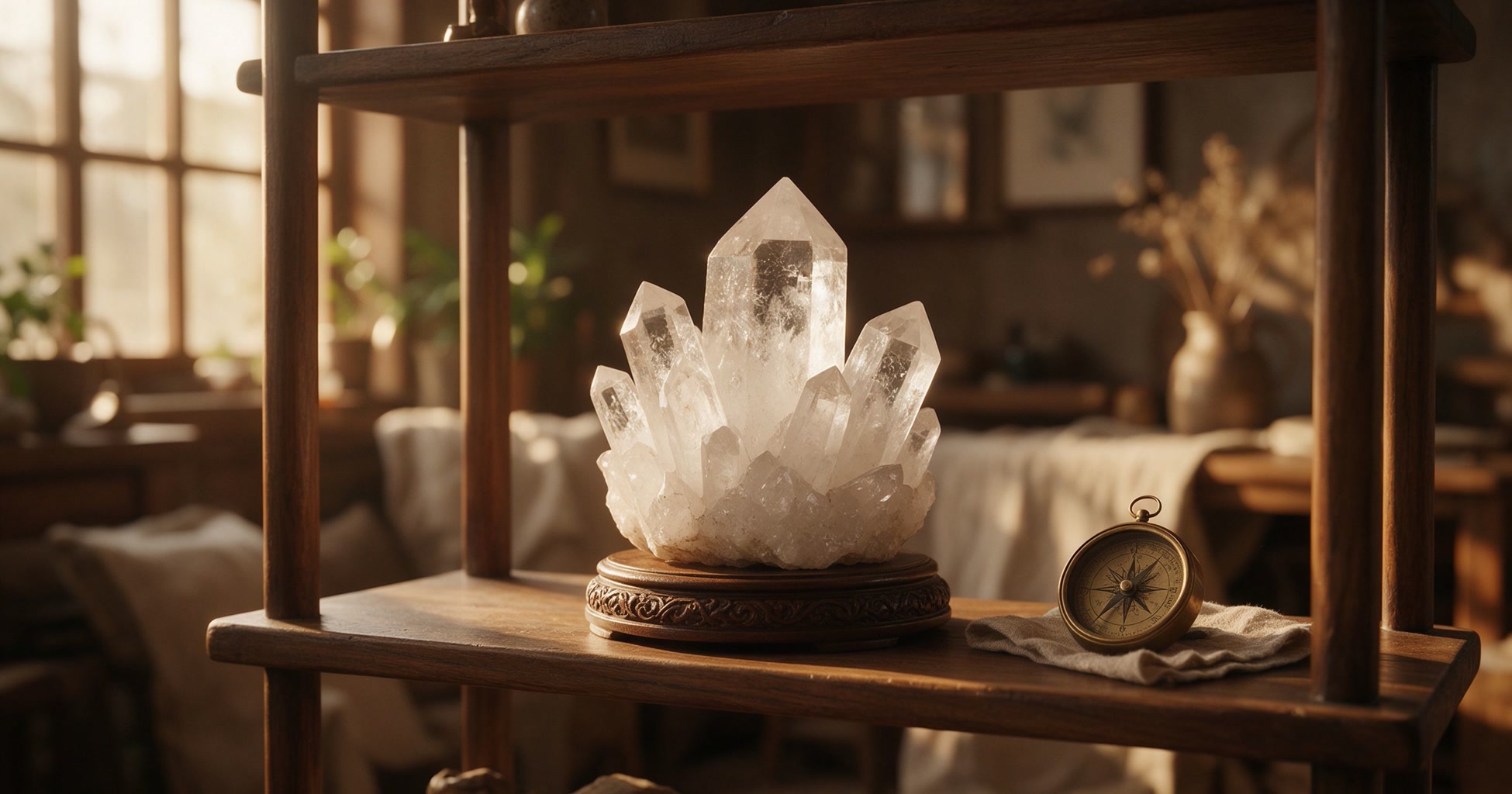
Amethyst is traditionally associated with calm and mental quiet. A small tumbled stone in a drawer or a cluster on a shelf works well; the Raw Amethyst Cluster for Meditation & Altar doubles as a visual centerpiece for a home office. Amethyst is moderately hard (Mohs 7) but its color fades in strong sunlight, so keep it out of a bright window.
Black tourmaline is the traditional "protection" stone, believed to help you feel grounded and less affected by a tense environment. Many people place it near their computer or phone — though the popular claim that it "absorbs EMF radiation" is not supported by any verifiable evidence; treat it as a symbolic boundary, not a shield. Black obsidian is another grounding option, often linked with honesty and clear boundaries.
Placement and Desk Setup: A Practical Comparison
Where a stone lives matters as much as which one you pick. This table pairs common workspace goals with a stone, a format, and a placement that actually works on a real desk.
| Goal | Stone (tradition) | Best format | Suggested placement | Care note |
|---|---|---|---|---|
| Focus and concentration | Fluorite, clear quartz | Bracelet or small point | Within arm's reach, beside keyboard | Keep fluorite out of direct sun |
| Confidence and momentum | Citrine, tiger's eye | Bracelet | Far-left desk corner (traditional) | Wipe with a dry cloth; avoid soaking |
| Calm under pressure | Amethyst | Tumbled stone or cluster | Drawer, shelf, or tray | Fades in strong sunlight |
| Grounding and boundaries | Black tourmaline, obsidian | Small stone or pendant | Near monitor or phone | Rinse briefly, dry fully |
| Creativity and motivation | Carnelian | Bracelet | On wrist or beside notebook | Moderate hardness; avoid knocks |
A few practical notes: keep stones out of the path of coffee cups and elbows, avoid placing them where a laptop fan vents hot air, and if you share a desk, choose something small enough to tuck into a tray or drawer at the end of the day.
What tradition holds — and what we can verify
Crystal traditions are old, culturally rich, and worth exploring — but they are not the same as tested claims. Here's a clear split.
What the tradition says
- Certain stones are traditionally associated with focus, calm, confidence, or creativity, and are used as focal points for intention and ritual.
- Placement systems like feng shui assign meaning to desk corners and directions.
- Some practitioners believe stones can be "cleansed" or "recharged" and that they interact with a person's energy.
What we can verify
- Hardness (Mohs scale): quartz and amethyst sit around 7; fluorite is about 4; lapis lazuli about 5–6; selenite is very soft (about 2) and scratches easily. Harder stones tolerate daily handling; softer ones need a protected spot.
- Sunlight sensitivity: amethyst, fluorite, and rose quartz can fade with prolonged direct sun. Keep them out of a bright windowsill.
- Water sensitivity: selenite and halite dissolve or degrade in water; porous or dyed stones can bleed. When in doubt, clean with a dry or barely damp cloth rather than soaking.
- Heat and chemicals: avoid hot surfaces, perfume, and household cleaners, which can dull or damage a finish.
- EMF claims: there is no verifiable evidence that any crystal absorbs or blocks electromagnetic radiation. Use a stone as a symbolic boundary if it helps you, but rely on actual device habits for actual results.
Crystals are for reflection and are not medical devices. If you're dealing with persistent stress, anxiety, or difficulty concentrating, those are worth discussing with a qualified professional — a desk stone is a nice ritual, not a treatment.
Care, Sizing, and Realistic Price Expectations
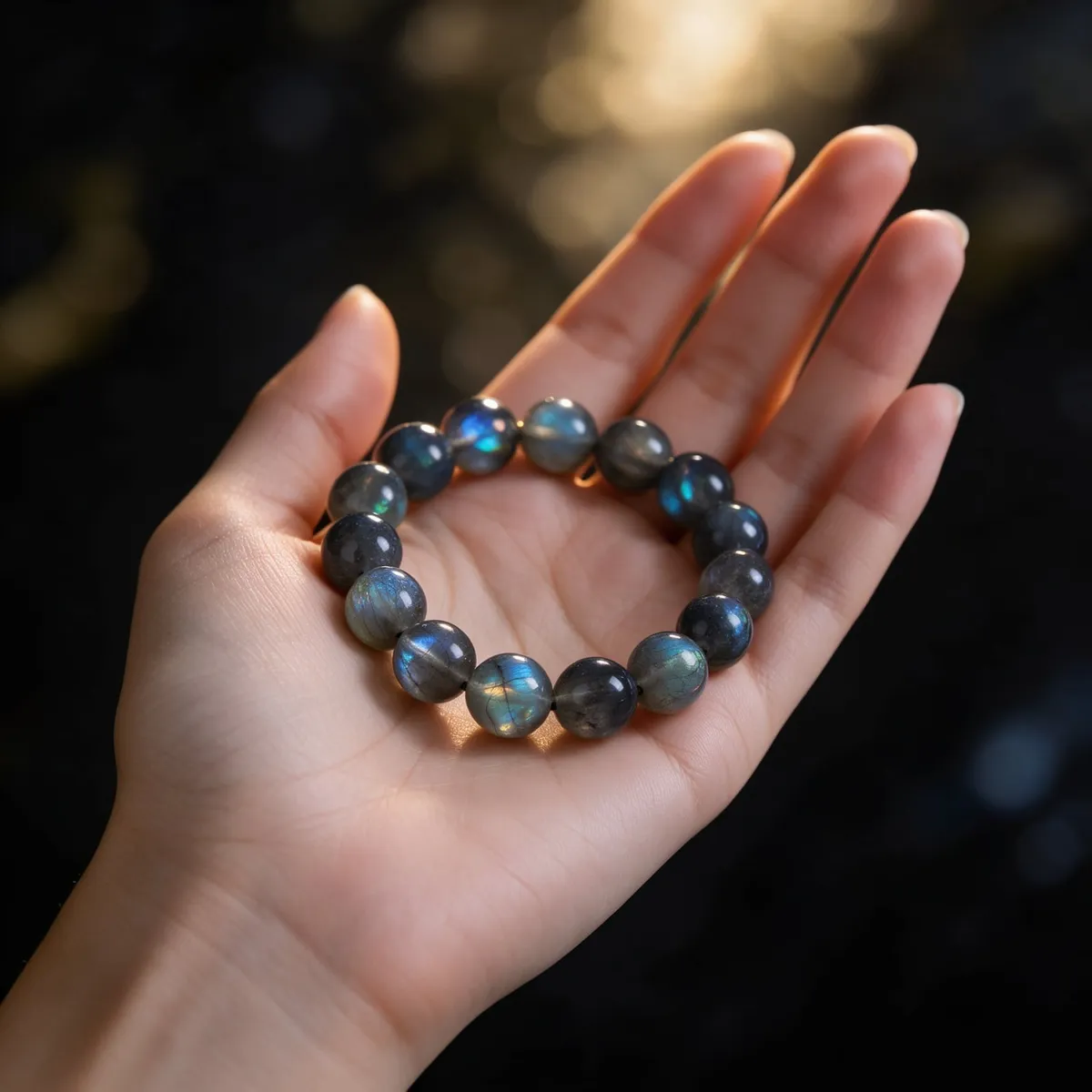
Sizing. Bracelets are usually sold in 6.5–8 inch (16–20 cm) inner circumference; measure your wrist with a soft tape and add about half an inch for comfort. Bead size matters too — 6 mm reads as delicate, 8 mm is the common unisex default, and 10 mm feels substantial. For pendants, a 16–18 inch chain sits at the collarbone; 20–24 inches hangs lower and works well over a blouse or sweater.
Care basics. Dust with a soft dry cloth. For harder stones (quartz, amethyst, tiger's eye), a quick rinse and immediate dry is fine. For softer or water-sensitive stones (selenite, lapis, fluorite), skip the water entirely. Store bracelets flat or on a soft tray so beads don't grind against each other, and keep pendants separate to avoid scratches.
What to look for. Natural color variation, visible inclusions (a good sign of real stone), honest material descriptions, and clear photos. Ask whether a stone is dyed, heat-treated, or reconstituted — reputable sellers will tell you.
Price expectations (US). Tumbled stones and small raw pieces typically run $5–$25. Beaded bracelets with genuine stones generally land around $20–$60, with premium beads or sterling accents higher. Sterling silver pendants commonly sit in the $40–$120 range; gold-plated pieces vary widely with the quality of the plating. Be cautious of "rare" stones priced far below market — that's usually a sign of glass or dye.
Frequently Asked Questions
Do I need to "cleanse" my desk crystal, and how often?
Cleansing is a traditional practice, not a requirement. Many people do it when a stone feels "stale" to them — often monthly or after a stressful stretch. Simple, safe methods include wiping with a dry cloth, resting the stone on a selenite wand, or setting a gentle intention over it. Avoid water for soft stones like selenite and fluorite.
How many crystals should I keep on my desk?
One or two is plenty for most people. A single stone you actually notice and use as a pause cue will do more than a crowded tray you stop seeing. Add pieces only when a specific need comes up.
Can I keep crystals near my computer or phone?
Yes — physically, most hard stones are fine near electronics. Just keep them out of direct heat from vents and away from where a laptop might knock them. The idea that a stone blocks EMF is traditional lore, not a verified effect.
Are more expensive crystals "stronger"?
No. Price reflects rarity, size, cut, and setting quality — not effectiveness. A modest tumbled stone that you actually use as a focus ritual is more useful than an expensive display piece you ignore.
A Small Ritual, Not a Shortcut
The best workspace crystal is the one you'll actually notice. Pick a stone that matches the friction you feel most often — scattered focus, pre-meeting nerves, flagging motivation — and give it a simple job: a thirty-second pause before a hard task, a reminder to breathe before a call, a visual boundary at the end of the day. That's a modest, honest use of tradition, and it's one that fits neatly on any desk.