It Depends on Comfort and Stone
You're lying in bed, lights out, and you notice the bracelet is still on. Maybe it's a calming amethyst you put on after work, or a grounding black tourmaline you've worn all day. Now you're wondering: is it fine to leave it on until morning, or should you take it off?
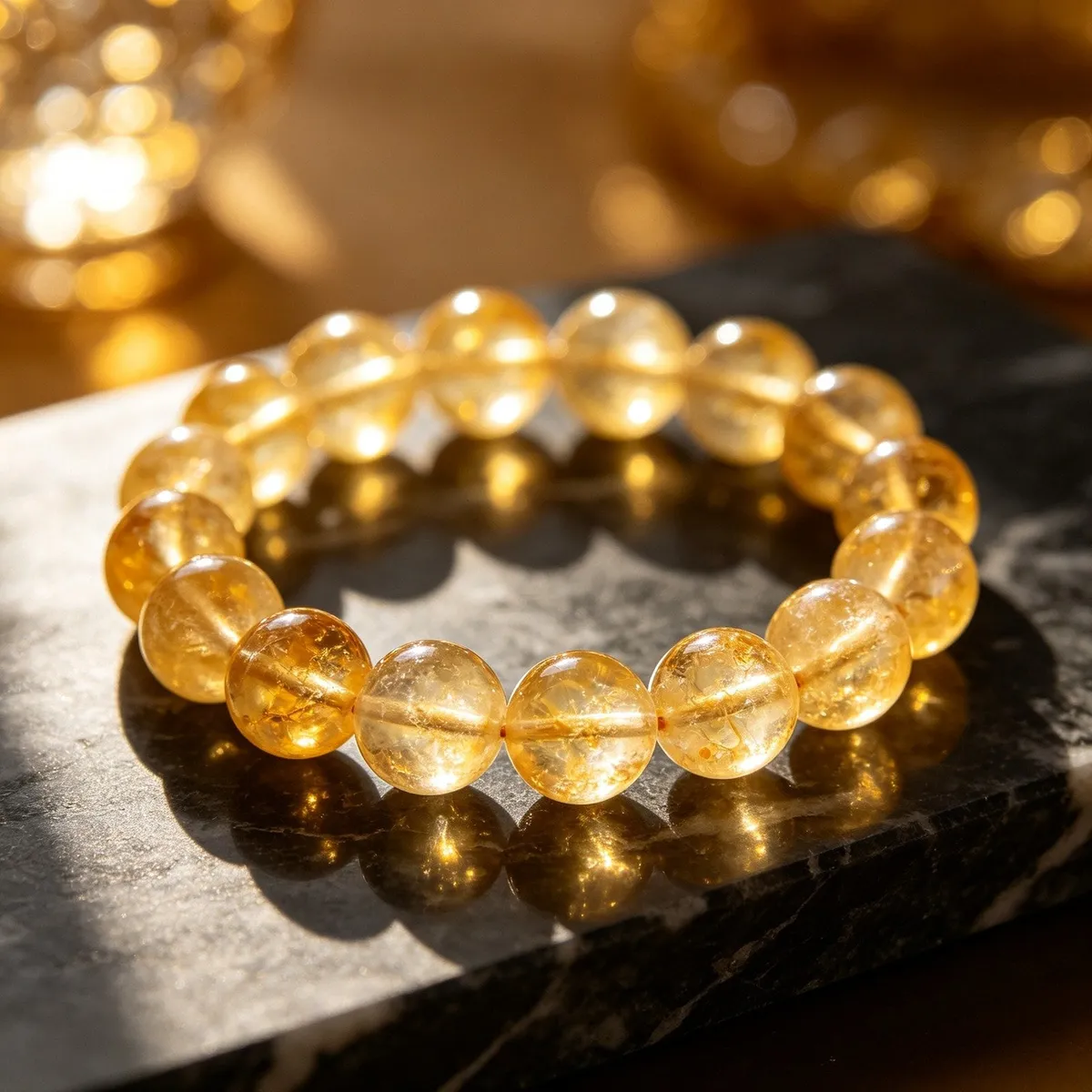
The honest answer is that it depends on three things — how the bracelet feels against your skin, how you sleep, and what the stone is. Some people sleep in a smooth, loose-beaded bracelet for months without a problem. Others wake up with a red mark on their wrist, a stretched cord, or a bead that has worked its way loose under the pillow. Neither experience means you're doing it wrong. It just means the decision is practical before it is symbolic.
This guide walks through which stones are traditionally associated with rest, how to judge whether a bracelet is bed-friendly, how to care for it so the elastic lasts, and what to do instead if you want the ritual without the jewelry. Crystals are for reflection and are not medical devices.
Quick Answer: Should You Sleep With a Crystal Bracelet On?
Yes, if it passes a simple comfort test — and no, if it doesn't. There is no rule in crystal tradition that says a bracelet must stay on overnight to "work." Many people find the ritual comforting; others find it distracting or uncomfortable. Both are valid.
Use this checklist before you decide:
- Fit: You can slide a finger between the bracelet and your wrist. A snug bracelet that leaves marks after an hour of wear is not a sleep bracelet.
- Bead shape: Smooth, rounded beads are kinder to skin than faceted, chipped, or carved beads, which can press into the wrist.
- Sleep position: If you sleep on the arm wearing the bracelet, the beads take your body weight against the mattress all night. That's the single biggest cause of discomfort and cord strain.
- Metal elements: Charms, spacers, clasps, or adjustable chains can catch on sheets and hair. Plain elastic is the safer choice for bed.
- Cord condition: A cord that already looks frayed or feels loose should come off at night, not stay on.
- Your own sensitivity: If you wake up aware of the bracelet, it's not helping you rest.
Stones Traditionally Used at Night
In crystal lore, certain stones are described as calming or settling, which is why they're the ones people most often reach for at bedtime. These are traditional associations, not clinical claims — think of them as a focus for winding down rather than a treatment for anything.
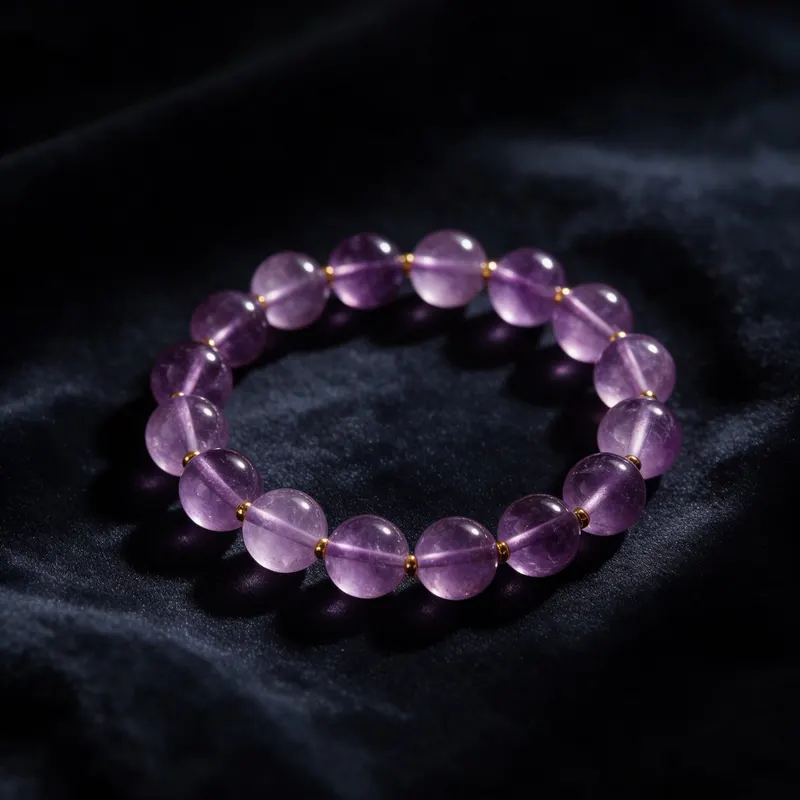
- Amethyst is the most common bedtime stone, traditionally associated with a quiet mind and a wind-down ritual. An Amethyst Healing Bracelet for Calm & Clarity is a natural pick if you want something on your wrist.
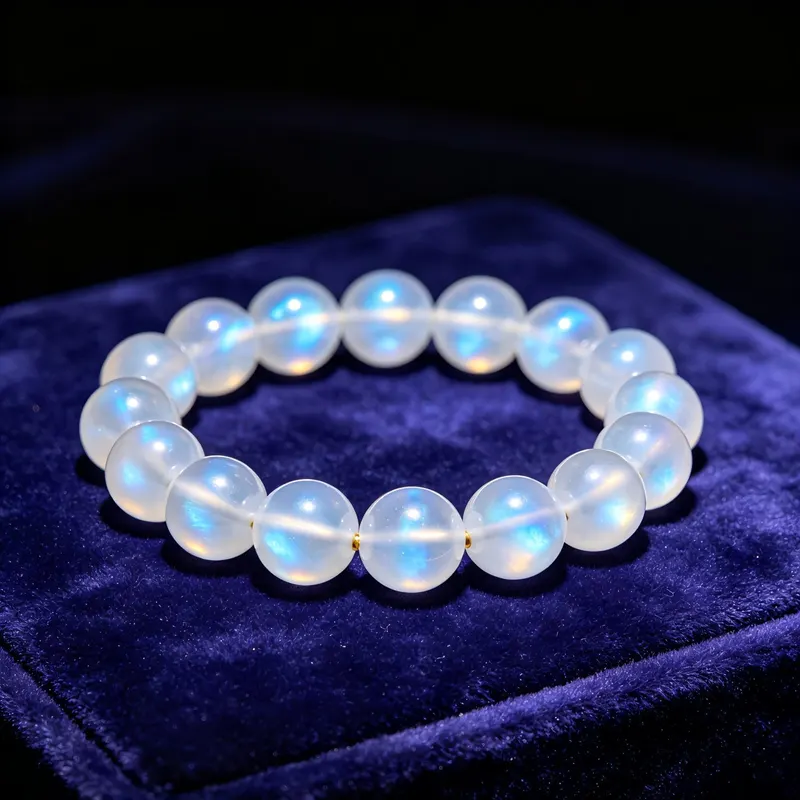
- Rainbow moonstone is believed to invite calm and reflection, and its soft sheen makes it a gentle bedside companion. The Rainbow Moonstone Bracelet for Intuition & New Beginnings suits people who prefer a quieter, less saturated look.
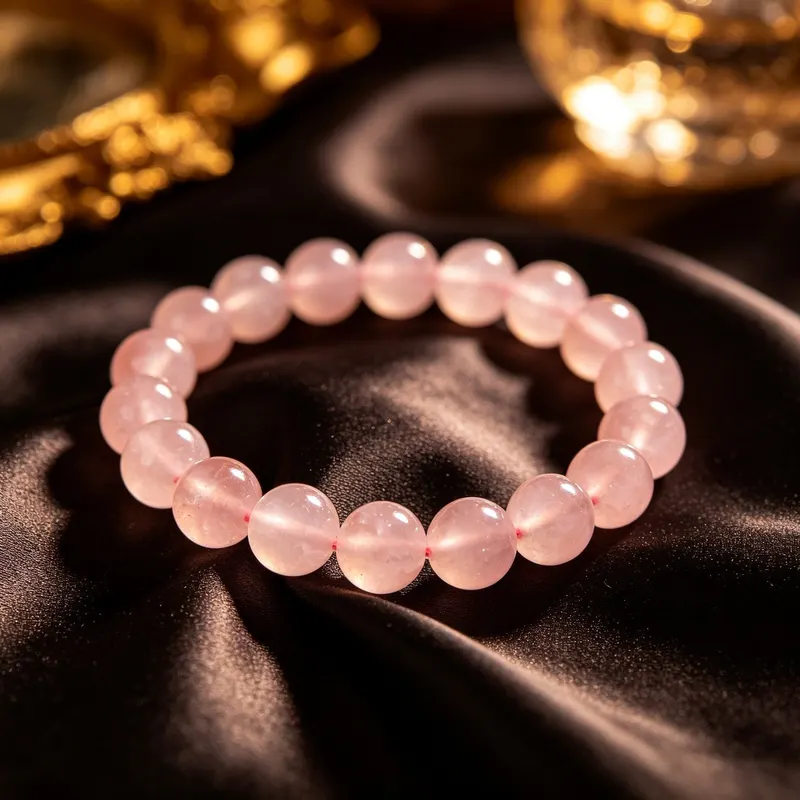
- Rose quartz is traditionally associated with self-compassion and comfort — a common choice for a wind-down routine. The Rose Quartz Love Bracelet for Self-Love & Heart is smooth-beaded and easy to wear.
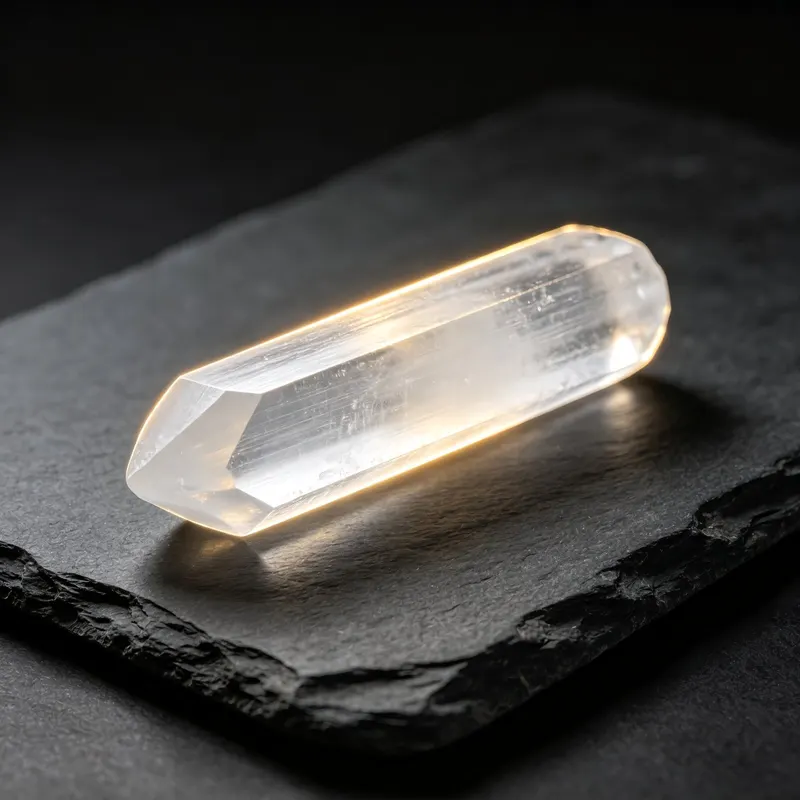
- Selenite is often kept beside the bed rather than worn, since it's a soft mineral (more on that below) and works well as a no-contact option. A Selenite Cleansing Wand for Energy Clearing on the nightstand is the classic arrangement.
- Black tourmaline and obsidian are traditionally associated with grounding and are sometimes worn at night by people who find that idea settling, though they're more often described as daytime protection stones.
If you're building a small bedside set rather than choosing one bracelet, a Healing Crystal Starter Kit, 7 Stones + Guide gives you several stones to try on the nightstand before committing to a piece you'll wear overnight.
Comparison: Wearing vs. Bedside Placement
There's no single right way to bring a crystal into your sleep routine. The table below compares the two most common approaches so you can pick what fits your habits.
| Factor | Wearing a bracelet to bed | Keeping the stone on the nightstand |
|---|---|---|
| Comfort | Depends on fit, bead shape, and sleep position | No contact with skin; nothing to notice |
| Cord and bead wear | Higher — body weight and friction strain elastic | Minimal; stone stays dry and still |
| Skin sensitivity | Possible marks or irritation from pressure | None |
| Ritual value | Continuous, tangible reminder | Visible cue at bedtime and on waking |
| Best for | Light sleepers who don't lie on that wrist; smooth, loose beads | Restless sleepers, side sleepers, anyone with sensitive skin |
| Stone suitability | Durable stones like amethyst, rose quartz, moonstone | Any stone, including soft ones like selenite |
How to Choose a Bed-Friendly Bracelet
If you want to wear a bracelet overnight, a few practical details matter more than the stone's reputation.
- Sizing: Measure your wrist with a soft tape just below the wrist bone. Add roughly half an inch (about 1.3 cm) for a comfortable fit. A bracelet that sits with a little slack is far better for sleep than one that fits snugly.
- Bead diameter: Smaller beads (around 6–8 mm) distribute pressure more evenly than large 10–12 mm beads, which can dig in when you lie on your arm.
- Elastic quality: Look for a doubled elastic cord and a knot that's tucked inside a bead rather than left exposed. This is the most common failure point on any beaded bracelet.
- Finish: Smooth, polished beads over rough or tumbled ones. Avoid anything with charms, tassels, or metal spacers for bed.
- Price expectations: A simple beaded bracelet in a genuine stone typically runs from about $20 to $60 depending on bead size and stone. Amethyst, rose quartz, and moonstone sit in the affordable range; lapis lazuli and higher-grade labradorite tend to cost more. Be cautious of anything marketed as "rare" at a very low price — it's often dyed or glass.
What to look for in the stone itself: natural color variation, slight inclusions, and a cool feel to the touch. Uniform, perfectly identical beads at a low price are usually a sign of reconstituted or synthetic material.
The traditional view, and what is verifiable
Crystal lore and materials science answer different questions, and it's worth keeping them separate. Tradition offers meaning and ritual; gemology tells you how a stone will behave on your wrist and in your care routine.
What tradition says: Amethyst is traditionally associated with calm and clear thinking; moonstone with intuition and gentle transitions; rose quartz with self-compassion; black tourmaline and obsidian with grounding and protection; selenite with cleansing and clearing space. These are cultural and spiritual associations, offered for reflection — not claims about health, sleep quality, or medical outcomes.
What we can verify:
- Hardness (Mohs scale): Quartz-family stones like amethyst, rose quartz, and clear quartz sit around 7, which makes them reasonably durable for daily wear. Moonstone and labradorite are roughly 6–6.5 and scratch more easily. Selenite is very soft at about 2 — it scratches with a fingernail and dissolves in water, which is why it belongs on the nightstand, not in the shower or on a wrist that presses into sheets.
- Water sensitivity: Selenite should never be soaked or rinsed. Many porous or dyed stones also dislike prolonged water. For most beaded bracelets, a wipe with a soft dry or barely damp cloth is safer than washing.
- Sunlight sensitivity: Some stones — including amethyst, rose quartz, and fluorite — can fade with prolonged direct sun exposure. A windowsill "charging" spot is fine short-term, but months of direct sun may dull the color.
- Elastic and heat: Elastic cord degrades faster with heat, sweat, and repeated stretching. Sleeping in a bracelet adds hours of pressure and friction per night, which shortens cord life regardless of the stone.
- Skin: Pressure marks and irritation come from fit and friction, not from the stone's metaphysical properties. If your skin reacts, take the bracelet off.
In short: tradition gives you a reason to wear the stone; hardness, porosity, and cord construction tell you whether it will survive the night.
Caring for a Bracelet You Sleep In
If you've decided to wear a bracelet overnight, a little maintenance goes a long way.
- Rotate nights: Alternate between wearing it and leaving it on the nightstand. This gives the elastic time to recover and reduces wear.
- Check the cord weekly: Gently stretch the bracelet and look for fraying near the knot or thinning between beads. Replace the cord at the first sign of weakness rather than waiting for it to snap.
- Keep it dry: Remove before showering, swimming, or washing dishes. Wipe with a soft cloth after wear to remove oils and sweat.
- Store flat or loosely coiled: Don't hang a beaded bracelet by one end for long periods — it stretches the elastic.
- Cleanse gently: Resting the bracelet on a selenite wand overnight is a low-effort, no-water method that fits neatly into a bedtime routine.
For a deeper look at cord replacement and storage, see our guide to crystal bracelet elastic cord care.
FAQ
People Also Ask
Is it bad to sleep with a crystal bracelet on?
Not inherently. It's fine if the bracelet is smooth, loose enough to be comfortable, and you don't lie on that wrist all night. Take it off if it presses, catches on sheets, or leaves marks — and consider a bedside stone instead.
Which crystal bracelet is best for sleep?
Amethyst is the most traditional calming choice, and smooth-beaded rose quartz or moonstone are also popular for a wind-down routine. If comfort is your priority, a selenite wand on the nightstand offers the ritual with no contact at all.
Can I shower or swim in a crystal bracelet?
It's better not to. Water and soap degrade elastic cord, and soft stones like selenite can be damaged by water entirely. Remove the bracelet before showering, swimming, or washing dishes, and wipe it with a soft cloth instead.
How tight should a sleep bracelet be?
Loose enough that you can slide a finger between the bracelet and your wrist, and loose enough that it doesn't leave marks after an hour of wear. If you're between sizes, size up for a bedtime bracelet.
The Bottom Line
Sleeping in a crystal bracelet is a personal ritual, not a requirement. Choose a smooth, loose-fitting bracelet in a durable stone, check the cord regularly, and take it off the moment it stops feeling comfortable. If you'd rather keep your wrists free, a stone on the nightstand — or a selenite wand beside your bed — gives you the same quiet moment with none of the wear. Browse the Calm, Stress Relief & Sleep Collection to find the piece that fits your routine.
Crystals are intended to support personal and spiritual well-being and are not medical devices. They do not diagnose, treat, cure, or prevent any disease. Crystal lore is offered for reflection, not as medical or psychological advice.