Why Crystal-Infused Water Deserves a Careful Approach
You've seen the photos: a glass bottle of water glowing on a windowsill, a rose quartz or amethyst resting at the bottom, a caption promising calm, clarity, or good energy. It looks simple, and that's exactly the problem. Crystal-infused water sits at the intersection of two things people care deeply about—their wellness rituals and their health—and the internet rarely slows down long enough to explain the risks. Some stones are genuinely unsafe to place in drinking water, and a few are dangerous even to handle carelessly.
This guide is for anyone curious about the practice but unwilling to guess. Whether you already have a bowl of tumbled stones on your nightstand or you're considering your first water ritual, the goal here is the same: help you enjoy the tradition without exposing yourself to dissolved minerals, stone dust, or contaminated water. We'll walk through the two methods (direct and indirect), explain why the indirect method is the one we recommend, and give you a clear list of stones to keep far away from your glass.
We'll also be honest about what crystals can and can't do. The ritual is real, the meaning is real, and the hydration is real. The chemistry is where caution matters—so let's start there.
Safety Comes Before Everything
Many crystals contain minerals that should never be ingested. Some release dust or trace elements into water; others are soft enough to shed particles or porous enough to harbor bacteria. Malachite, for example, contains copper and is not something you want leaching into a drink. Hematite and pyrite contain iron and sulfur compounds. Selenite is a gypsum mineral that will slowly dissolve in water. None of these belong in your glass.
The safest "elixir" never lets the stone touch the water at all. That single rule eliminates the vast majority of risk, and it's the foundation of everything below.
The Safe Indirect Method (Recommended)
The indirect method lets you keep the ritual while removing the chemistry problem entirely. The stone is present, the intention is present, and the water stays clean.
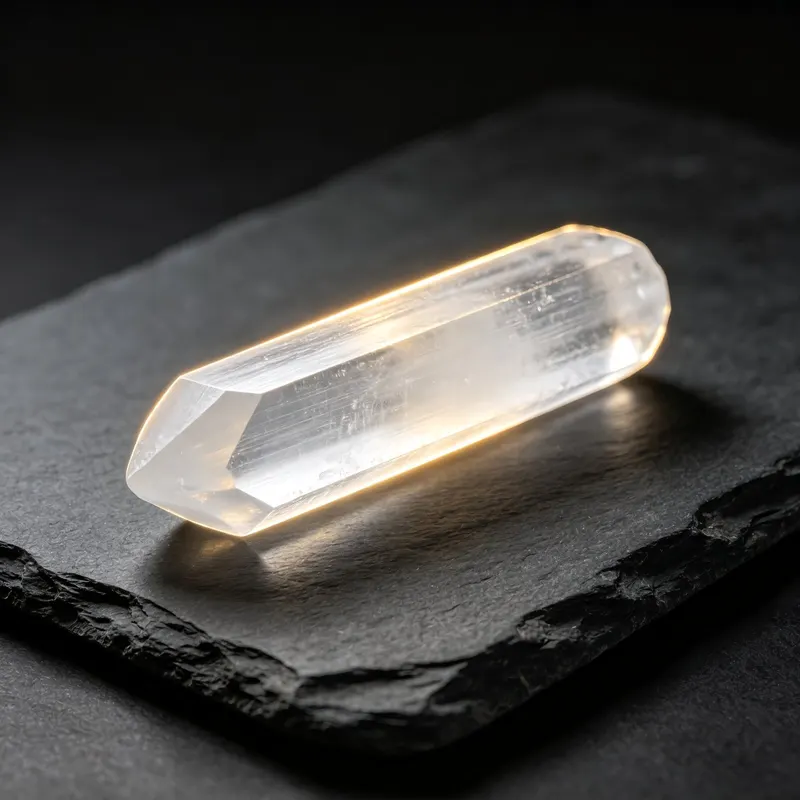
- Cleanse your stone first. Rinse it under running water or wipe it with a soft cloth, then let it dry fully. If you use a Selenite Cleansing Wand, keep the wand itself out of your drinking water—it dissolves.
- Seal the stone in a small glass jar. A clean, dry jar with a tight lid works well. The stone should be fully enclosed.
- Set the sealed jar inside a larger vessel of drinking water. The stone is surrounded by water but never touches it.
- Let it rest. Ten to twenty minutes in moonlight or a calm spot is plenty. There's no need to leave it for hours.
- Remove the sealed jar and drink the outer water if you wish. Discard the outer water if it's been sitting out for a long time or looks cloudy.
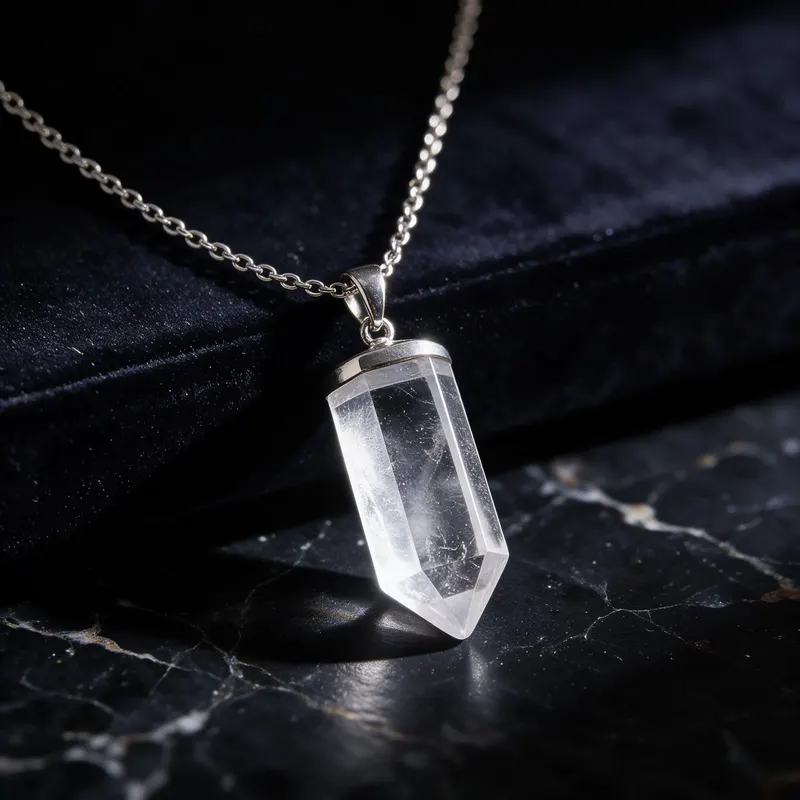
If you want to make the ritual feel more intentional, pair it with a stone you already wear. Holding a Clear Quartz Point Pendant Necklace while you set your intention is a simple, safe way to bring the practice into your day without any water contact.
The Direct Method: What It Actually Requires
The direct method—placing a stone directly into drinking water—is sometimes described as safe for "hard quartz-family stones." That's an oversimplification. Even among quartz-family minerals, you need to confirm four things before a stone touches your drink:
- Non-toxic composition. No copper, lead, arsenic, sulfur, or other harmful elements.
- High hardness. Seven or above on the Mohs scale, so the stone doesn't shed particles.
- Non-porous surface. Polished, smooth stones are easier to clean than rough or fractured ones.
- No dyes, coatings, or treatments. Dyed or coated stones can leach colorants.
Even when all four boxes are checked, the indirect method removes the remaining uncertainty—bacterial growth on a stone left in water, microscopic dust, or a misidentified specimen. That's why we recommend it as the default.
Hard Rules: Stones to Keep Out of Drinking Water
Treat this as a non-negotiable list. These stones should never be submerged in drinking water, and some shouldn't be handled with bare hands for long periods either.
- Malachite — contains copper; toxic if ingested.
- Hematite — iron-based; can rust and leach.
- Pyrite — iron and sulfur; can release harmful compounds.
- Selenite — dissolves in water and is soft.
- Cinnabar, realgar, orpiment — contain mercury or arsenic.
- Chalcopyrite, galena, and other sulfide ores — release toxic elements.
- Any dyed, coated, or "aura" treated stone — coatings can flake or leach.
- Any unknown or unlabeled stone — if you can't identify it, keep it out.
When in doubt, use the indirect method or simply hold a stone while you drink mindfully. That's a complete ritual on its own.
What is handed down — and what we can verify
Crystal traditions are rich and worth exploring, but they're not the same as chemistry. Here's a clear separation of the two.
| Claim or practice | What tradition says | What we can verify |
|---|---|---|
| Clear quartz "amplifies" intention | Traditionally associated with clarity and focus; often used in meditation. | Quartz is silicon dioxide with a Mohs hardness of 7. It's durable and non-toxic, but it does not chemically alter water. |
| Amethyst "calms" the mind | Believed to support calm and reflection; a favorite for evening rituals. | Amethyst is a quartz variety (Mohs 7). It's safe to handle and clean, but it is not a medical treatment. |
| Selenite "cleanses" other stones | Traditionally used to clear energy from other stones. | Selenite is gypsum (Mohs 2) and dissolves in water. It must stay dry and away from drinking water. |
| Drinking "elixir" water transfers stone energy | Believed to carry the stone's properties into the water. | No verifiable mechanism exists. The indirect method preserves the ritual without any ingestion risk. |
| Sunlight "charges" stones | Traditionally used to recharge and cleanse. | Sunlight can fade amethyst, rose quartz, and fluorite over time. Use moonlight or indirect light instead. |
The pattern is consistent: the ritual is meaningful, the care instructions are practical, and the health claims are not something we can verify. That's why we keep the stone out of the water.
Choosing Stones for a Water-Adjacent Ritual
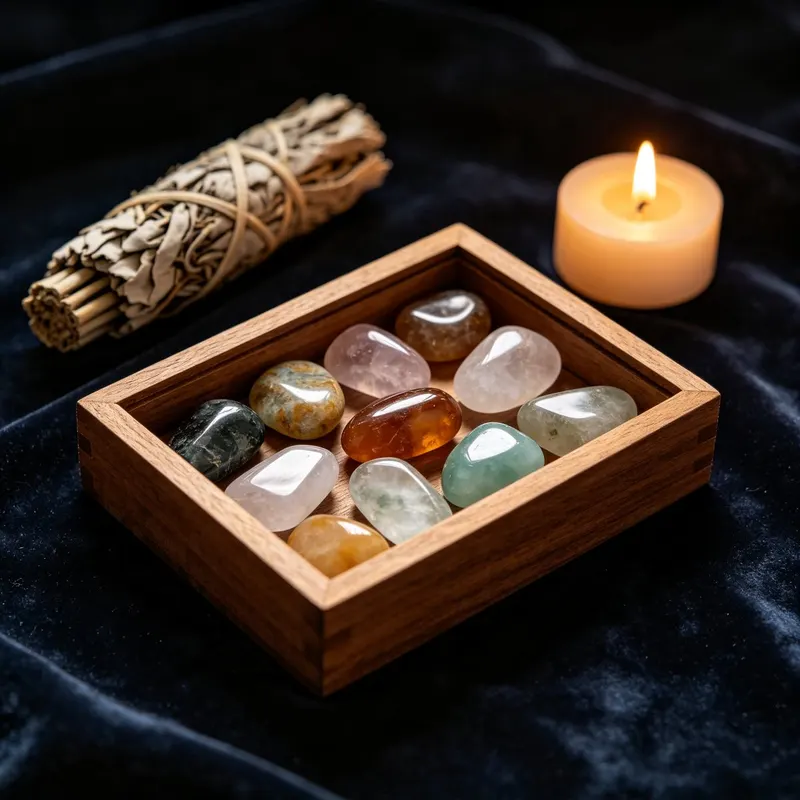
If you want to build a water ritual, choose stones that are durable, easy to clean, and safe to handle. Here's a short checklist:
- Hardness: Mohs 7 or above for anything near water.
- Surface: Polished and smooth, with no cracks or rough edges.
- Treatment: Undyed and uncoated.
- Size: A small tumbled stone or bead is easier to seal in a jar than a large cluster.
- Care: Wipe dry after any contact with moisture; store away from direct sun.
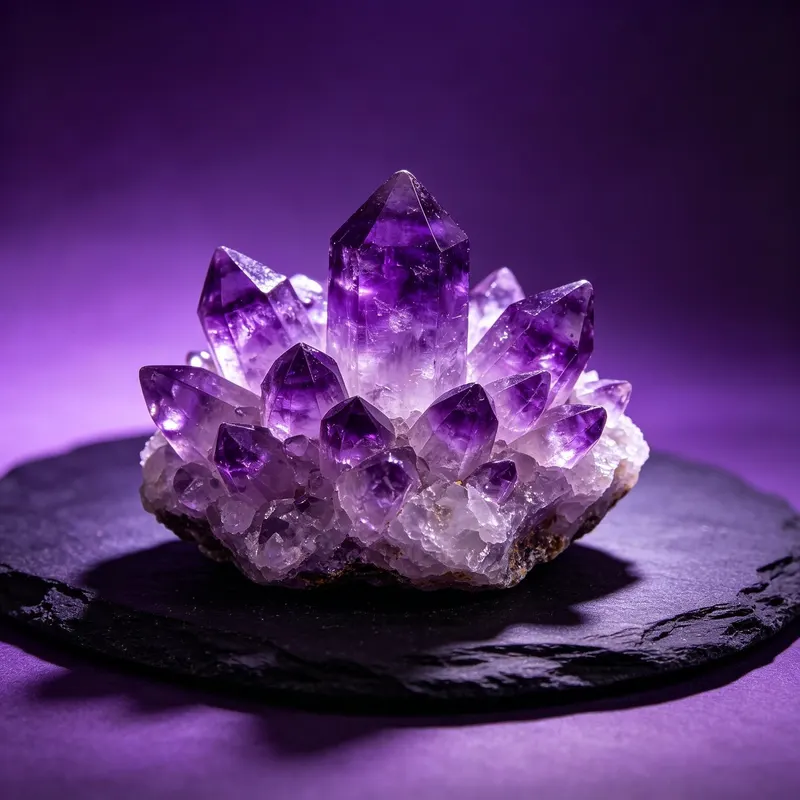
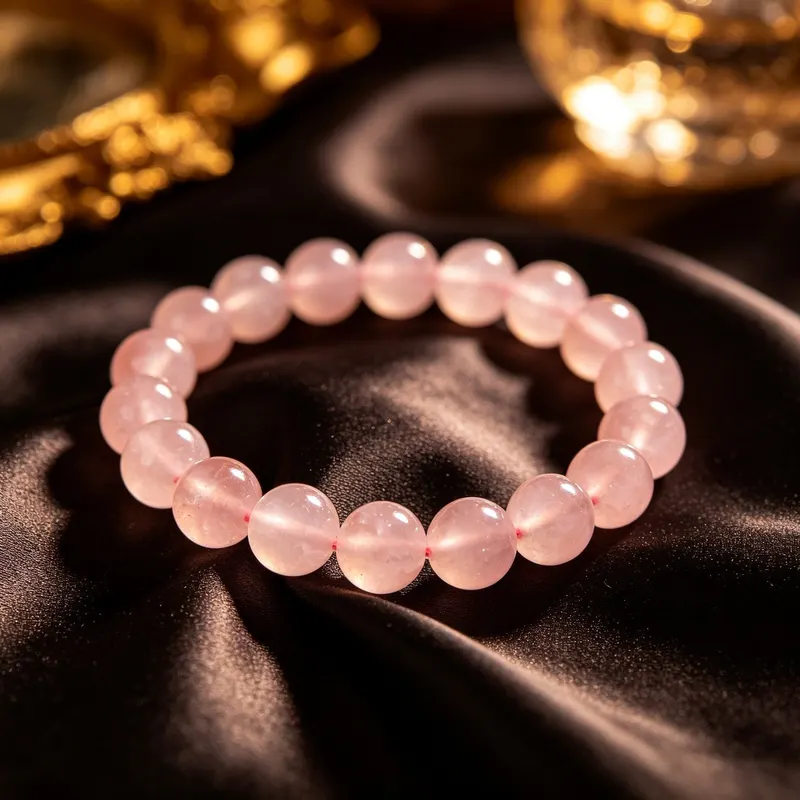
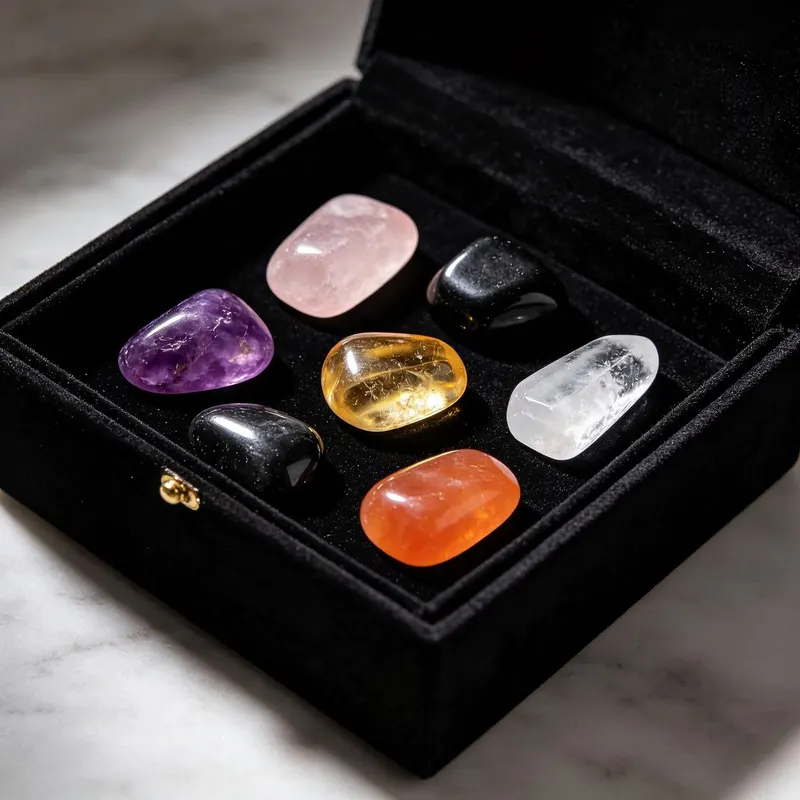
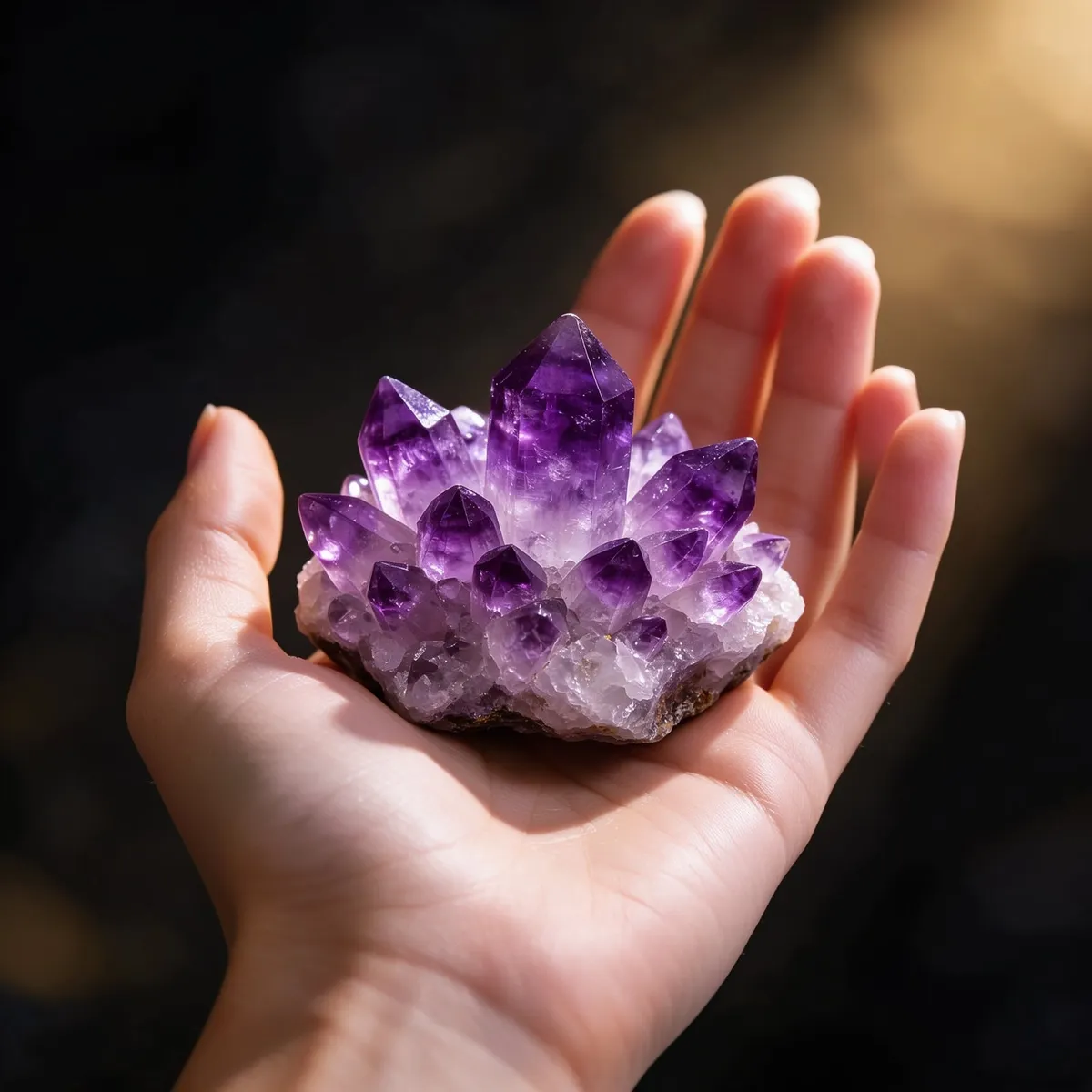
Good candidates for the indirect method include clear quartz, amethyst, and rose quartz—all quartz-family stones that are durable and non-toxic. A Raw Amethyst Cluster works beautifully as a centerpiece beside your water vessel rather than inside it, and a Rose Quartz Love Bracelet is an easy way to carry the intention with you after the ritual ends.
If you're new to crystals entirely, a Healing Crystal Starter Kit gives you labeled stones and a guide, which makes it much easier to identify what you're working with before anything goes near water.
Realistic Expectations and Price
Crystal-infused water is a ritual, not a supplement. Any benefit is ritual and hydration—drinking more water is the real plus. Never ingest water that touched an uncertain or soft stone, and never expect a stone to replace medical care.
Price expectations are modest. A small tumbled stone typically runs a few dollars; a sealed glass jar is a few more. Bracelets and pendants generally range from affordable to mid-range depending on the stone and setting. You don't need expensive equipment to practice safely—a clean jar and a stone you already own are enough.
FAQ
People Also Ask
Which crystals are safe to put directly in drinking water?
Only confirmed non-toxic, very hard quartz-family stones are sometimes used directly, and even then the indirect method removes the risk entirely and is recommended. If you can't verify the stone's composition, hardness, and treatment, keep it out of the water.
Is crystal-infused water good for you?
Any benefit is ritual and hydration—drinking more water is the real plus. Never ingest water that touched an uncertain or soft stone. Crystals are for reflection and are not medical devices.
How do I cleanse a stone before using it near water?
Rinse it under running water or wipe it with a soft cloth, then dry it fully. Avoid salt water for porous stones, and keep selenite completely dry. For more on cleansing, see our guides on running water and cleansing and charging.
Can I leave my crystal water in the sun?
Sunlight can fade amethyst, rose quartz, and fluorite, and it can encourage bacterial growth in water left out for hours. Use moonlight or indirect light, and refrigerate or discard water that's been sitting out.
Browse the Curated Collection
Ready to build a safe ritual? Explore our Raw Stones & Sets for display pieces and starter stones, or revisit our water safety guide whenever you're unsure about a stone.
Shop the Stones
Keep Exploring
Water Safety · Running Water · Cleanse & Charge
Crystals are offered for wellness and reflection, not as medical or psychological treatment. They are not medical devices.